Categories
Editorial

Was the Long Edwardian Summer Really Britain's Golden Age?

The Strength of Edwardian Britain There is no denying that there were plenty of reasons why the Britons of 1914 would want to take pride in their country’s achievement. The country had faced no serious threat of foreign invasion for a century, and no battle had taken place on British territory since the Jacobite Rebellion of 1745. The Industrial Revolution in the late eighteenth and early nineteenth century had transformed Britain into a leading industrial and commercial power. Coal production in 1913 reached a record level never ever to be surpassed. British goods, locomotives and other machinery were in demand all around the world. A look at a world map showed that a quarter of the globe was now absorbed in the British Empire. The state visit of the newly crowned King George V to India in 1913 with the colourfully clad Indian princes paying tribute to the Emperor was as clear a demonstration as you could ask of Britain’s greatness. Behind the Imperial Façade If you look deeper into the fabric of Edwardian Britain the impression of one long summer’s day of peace and prosperity appears in a different light. The rejection on health grounds of so many volunteer soldiers in the Boer War (1899-1902) shocked the public with details of the extent of malnutrition and stunted development of the youth in the country’s industrial cities. In 1899 social researcher Seebohm Rowntree carried out a survey of living standards in the city of York. Although York was a major railway junction it was not part of the northern industrial belt yet Rowntree’s study found that 27% of the city’s inhabitants were living at a level as low as that found in the slums of Manchester, Glasgow and other major industrial conurbations. While the elites of British society may have been enjoying the delights of motoring, country house parties and Rag Time music, many more of Britain’s inhabitants were living in great deprivation. Although the terrors of the Workhouse described by Dickens in “Oliver Twist” had been ameliorated to some extent people still lived in fear of ending their days in this dismal institution. The level of popular discontent can be judged by the tide of industrial unrest that swept Britain in the decade prior to the outbreak of the First World War. The growing power of the trade union and Labour movement expressed itself in national strikes on the railways, mines, ports and other key industries. The strikers enjoyed some success in forcing the employers to improve their wages. Although trading conditions were generally favourable, it can be seen in hindsight that Britain was losing its position as the world’s leading economic power. The growth of the German economy outpaced that in Britain. The advantages of the superior technical education available in Germany and France were already making themselves felt as those nations took up newer technologies with more enthusiasm than their British counterparts. The political scene was becoming increasingly confrontational. The 1906 General Election returned a substantial number of working class Labour MPs to challenge the hegemony of the Liberal and Conservative parties. The Suffragette movement had turned increasingly militant with breaking of shop windows and even arson attacks in an attempt to have women granted the franchise. Far more menacing were the voices coming from Ireland. After many attempts to introduce Home Rule for Ireland the Liberal government was close to passing the necessary legislation. The opposition of the House of Lords was overcome by a threat to swamp the House with newly created Liberal peers. The Protestant population of Ulster were strongly opposed to anything that would weaken the tie with the British mainland. Under their leader Edward Carson they organized a formidable militia determined to resist Home Rule by force. They had a number of sympathisers in key positions in the British army. The possibility of violent conflict tearing the nation apart had never been closer. Even in distant New York a small number of Indian political activists laid the foundation of the campaign for Indian independence. Some historians thus contend that the outbreak of World War One actually saved Britain from violent unrest or even revolution. The cessation of industrial and political unrest as most people united behind the war effectively relieved pressures that might have otherwise torn the nation apart.]]>


Categories
News

Unintelligent Neanderthal Is A Myth

PLOS ONE, currently available scientific evidence does not support the premise of intellectual inferiority-based extinction. The paper was the combined work of lead author Paola Villa, a researcher and curator at the University of Colorado Museum of Natural History and co-author Wil Roebroeks, an archaeologist at Leiden University in the Netherlands. They wrote the paper after executing a large scale review on recent Neanderthal research. “The evidence for cognitive inferiority is simply not there,” Villa remarked. “What we are saying is that the conventional view of Neanderthals is not true.” Villa and Roebroeks examined several hypotheses including the one that claimed Neanderthals did not apply any elaborate symbolic communication. Other hypotheses claimed that the Neanderthals were less competent hunters compared to the early anatomically modern human. Some of the hypotheses also suggest the Neanderthals used low-grade weapons and that they had a limited range of diet which forced a competitive disadvantage on their side. Not a single hypothesis was supported by the available research. Evidence from multiple archaeological sites in Europe suggests that Neanderthals hunted as a group, using the landscape to aid them. Villa and Roebroeks show that Neanderthals had the ability to strategise. There is evidence that suggest Neanderthals likely drove hundreds of bison, rhinoceros and mammoths to their death by steering them into a sinkhole and ravines in south western France. These findings mean that Neanderthals were able to communicate effectively as a group, could plan ahead and were intelligent enough to take their surroundings into calculations. At another archaeological site, excavated artefacts proved that Neanderthals did in fact have a diverse diet. There were some traces of microfossils found in Neanderthal’s teeth and food remains which lead to the conclusion that Neanderthals may have eaten nearby available foods such as acorns, wild peas, grass seeds, pistachios, wild olives, date palms, and pine nuts. Other findings including ochre, a kind of earth pigment, at sites inhabited by Neanderthals. This may have been used for body painting, while ornaments suggest that Neanderthals had cultural rituals and symbolic communication. Villa and Roebroeks said that the previous misconception of Neanderthals’ intellectual capability may be due to researchers’ affinity to compare Neanderthals from Middle Paleolithic to modern Homo sapiens from Upper Paleolithic period, the time when technology advancement occurred. “Researchers were comparing Neanderthals not to their contemporaries on other continents but to their successors,” said Villa. “It would be like comparing the performance of Model T Fords, widely used in America and Europe in the early part of the last century, to the performance of a modern-day Ferrari and conclude that Henry Ford was cognitively inferior to Enzo Ferrari.” Villa also said that there is no support of any kind from the field of archaeology despite many attempts to relate the Neanderthals’ downfall to a single cause like intellectual or technology inferiority. However, one question continues to linger in the researcher’s mind. What is the real reason behind the Neanderthal extinction if it is not because of them being cognitively and technologically inferior? Whatever the reason might be, Villa and Roebroeks are in agreement that it is possibly a complex explanation. However, both researchers are of the opinion that some hints might be found in the recent studies of the Neanderthal genome. These studies suggest the possibility of inter-breeding between Neanderthals and modern humans that lead to the birth of infertile male progenies that unable to bear children. This would then lead to a decline in the Neanderthals’ population. Another suggestion based from studies was that Neanderthals lived in small communities. This leads to the possibility of assimilation and integration into a much larger modern humans’ population. So far, there is no solid explanation regarding the real causes of the Neanderthals extinction, but we all can bet that intellect inferiority is not one of them.]]>

Categories
News

Hammer of Thor Found

Categories
Breaking News

Rome’s Colosseum Used As Condominiums in the Medieval Era

th century until the year 1349 when the iconic monument was terribly damaged by a major earthquake. This fact was uncovered after a 3-week excavation that uncovered a few arched entrances which lead into the arena. Archaeologists discovered the foundations of a 12th century wall that was used to enclose a particular property in the Colesseum, potshards and terracotta sewage pipes. According to Rossella Rea, the Director of the Roman Colosseum, these excavations allowed archaeologists to identify a complete housing lot from the Medieval era. It is believed that this unusual condominium also consisted of workshops and stables and that area within the Colosseum was rented out by friars of the Santa Maria Nova Convent who had control of the monument. Further research also indicated that all houses opened onto the area where the gladiators once used to fight. Professor Riccardo Santangeli Valenzani, teaching medieval archaeology at the Roma Tra University, believes that the area that once hosted glorious gladiator battles was transformed into a common space for the Romans living there in the medieval era. It is believed that this courtyard was buzzing with goods, animals and people. Archaeologists also uncovered cooking pottery along with the figurine of a tiny monkey that was carved from ivory. It is believed that this piece was used as a pawn in a chess set during the medieval era. The Roman Colosseum dates back to the year AD 72 when it was built by the great emperor Vespasian on the bed of a drained lake. It is considered to be the most popular remains of Ancient Rome. Many might not know this, but the Amphitheatre was actually opened in the year AD 80 by Titus, Vespasian’s son. This amphitheatre was inaugurated with a festival that lasted for 100 days and consisted of naval battles, fights and gladiatorial combats. Another reason why the Colosseum became so popular over the centuries was the fact that it survived 3 major earthquakes as well as a huge fire. It transformed into a garbage dump after emperor Honorius banned bloody gladiatorial combats as well as a stone quarry for buildings such as the St. Peter’s Basilica. The recent excavations have uncovered yet another piece of history for the Roman Colosseum. The Roman Colosseum is currently undergoing a $43 million restoration and cleaning project, the cost of which is being sponsored by Tod’s, a popular leather bag company in Italy. According to Rea, the dig should continue in the year 2015 when the second phase of the cleaning and restoration starts. More and more mysteries pertaining to the most visited monument of Italy are expected to be uncovered during the second phase of excavations. ]]>

Categories
Breaking News

Protection for World War 1 Ships in Focus

th anniversary, members of UNESCO (The United Nations Educational, Scientific and Cultural  Organization)  met in Belgium in order to discuss how to best protect the underwater heritage of the historic event. The organization is expected to extend the 2001 convention so as to safeguard a number of sites, particularly World War 1 shipwrecks that are being threatened by looting, destruction and salvaging. The 2001 Convention introduced by UNESCO aimed to help the member countries to protect their shipwrecks, submerged valuables and ruins and other fragile segments of the underwater heritage. According to UNESCO, there are about 3 million undiscovered shipwrecks that are still scattered all over the globe. This number is said to include about 12500 sailing vessels that were lost at sea between the years 1824 and 1962. The constant advancements in technology have made these shipwrecks very easy to detect, thereby making them vulnerable to salvage operations, looting and treasure hunters. The 2001 Convention had originally included sites that were sunk more than 100 years ago. However, according to the current changes, this status is expected to be extended in order to cover thousands of other sites as well. The naval losses of the World War 1 might have been lesser than the carnage seen in the trenches, but it still constitutes a significant portion of history to ensure that it remains preserved for years to come. It is said that Britain had mobilized a total of 11000 vessels out of which 1100 had been sunk. The Germans also lost hundreds of warships and as many as 35000 men. Since the locations of these sinkings are well known, it is easy to discover the ruins and undertake looting, salvaging operations and treasure hunting activities. According to reports, the number of ships being salvaged has kept increasing over the years as more and more ships are being dismantled for aluminium, copper and brass. The increase in the number of protected sites is obviously expected to place a major strain on the already strained resources of the member nations. According to Dr. Innes McCartney, the leader of the research expeditions of the ships from the Battle of Jutland, the English Channel is full of war graves that have been subjected to looting, salvaging and treasure hunting in the recent past. Dr. McCartney also states that the only way to stop the looting is to allocate the proper resources and protect many more underwater sites. He also states that the one of the major challenges would be to show people what lies out there and how important it is to the culture and the legacy of the world. UNESCO had asked all ships at sea to use a commemorative signalling on Saturday, the 28th of June 2014, by lowering the ensigns or flags to half mast. A sound signal was also made a part of the procedure that served as a symbol of reconciliation and peace, a remembrance to those who lay down their lives in the war and a reminder to the public on the need to protect the land and underwater cultural heritage. ]]>

Categories
News

Chariots and Gold Found in a Bronze Age Burial Site

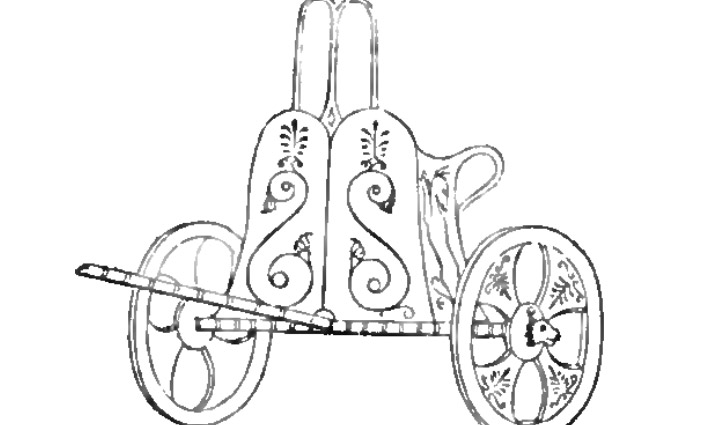
nd half of the 3rd millennium B.C. have also been uncovered in the region of South Caucasus. This leads to theories that interactions between the nomadic tribes from the Eurasian steppes and the farming communities located in and around South Caucasus were present. It is these interactions that seem to have allowed certain individuals like this Bronze Age chief to gain enough influence to receive elaborate burials. The armchair that was discovered at the site also showcases the kind of power individuals like the chief had. Scientists believe that armchairs were used to demonstrate power in the Early Bronze Age and that it was put in the kurgan as a sign of the chief’s power. The kurgan was first uncovered in the year 2012 close to the Lagodekhi municipality, eastern Georgia. ]]>

Categories
News

Ancient Chines Levees Caused Environmental Change

Categories
Breaking News

Rare Calculators Dating Back to the Incas Found in Peru

th century. This makes the present day findings even more important. ]]>

Categories
News

Story of the Largest Pre-Historic Mound in Europe: Silbury Hill

Categories
News

New Excavations at Sacred Ridge Tell a Chilling Tale

Kiva, Osterholtz concluded that power struggles, politics and ritual changes could have been the reason behind these killings. The killers could have been outsiders who came into the community to take control, and the best way they could stamp their authority was by intimidation. Based on carbon dating findings, the massacre may have been one of the last events to take place there. Sacred Ridge was abandoned at around 810 A.D.]]>