Categories
Breaking News

Origins of the T.rex: Brains Came Before Brawn

Timurlengia euotica, were discovered over the course of nine years during international expeditions to the Kyzylkum Desert of Uzbekistan. The creature lived around 90 millions years ago, and slots into a 20 million year gap in the fossil record of tyrannosaurs. Although a fellow tyrannosaur, T.eutoica is not the ancestor of T-Rex. About the size of a horse, Timurleniga could have weighed up to six hundred pounds. Its long legs mean it was likely a fast runner. “Timurlengia was a nimble pursuit hunter with slender, blade-like teeth suitable for slicing through meat,” explained Hans Sues, chair of the Department of Paleobiology at the Smithsonian’s National Museum of Natural History, in a press release. “It probably preyed on the various large plant-eaters, especially early duck-billed dinosaurs, which shared its world. Clues from the life of Timurlengia allow us to fill in gaps and better understand the life and evolution of other related dinosaurs, like T. rex.” Perhaps surprisingly, the study, published in the Proceedings of the National Academy of Sciences, suggests that brains came before brawn in the evolution of Tyrannosaurs. Prior to the development of their giant size and strength, Tyrannosaurs developed keen senses and cognitive abilities. These heightened abilities allowed them to reach the top of the food chain after other large meat eating dinosaurs had gone extinct, 80 – 90 million years ago. Although typically associated with North America, T.rex’s and other Cretaceous dinosaurs mostly had their routes in Central Asia. “The discoveries from the Kyzylkum Desert of Uzbekistan are now helping us to trace the early history of these animals, many of which later flourished in our own backyard in North America.” Sues said in the press release. The new species was discovered while Sues and a team of paleontologists led by Steve Brusatte at the University of Edinburgh were sorting through the bones brought back from the Kyzylkum Desert. CT scans of the brain case allowed the team to reconstruct Timurlengia’s brain and gather insights into the development of its abilities. “The ancestors of T. rex would have looked a whole lot like Timurlengia, a horse-sized hunter with a big brain and keen hearing that would put us to shame,” explained Brusatte. Tyrannosaurs originated in the Jurassic Period around 170 million years ago, but they were barely the size of a human. 100 million years later, in the Cretaceous Period, they had evolved into animals like T-rex, which weighed up to 7 tons. The fact Timurlengia was so small, despite living some 80 million years after tyrannosaurs had first appeared, indicates the group’s terrifying size only occurred relatively late in their evolutionary history. For more information: www.pnas.org Image courtesy of © Proceedings of the National Academy of Sciences]]>


Categories
Breaking News

Prophet Muhammad’s Covenants with Christians Path to Peace?

here Image courtesy of Wikimedia Commons user: AA]]>

Categories
News

Entire Jewish Population of York is Massacred in Pogrom

Categories
Breaking News

Discovery of Bronze Age Burial Site As Good As It Gets

the Sun newspaper as saying the find is “as good as it gets”. Hepworth and David Kierzek first came across a well-preserved chisel as well as several other objects. Archaeologists were contacted by Hepworth, following procedures outlined by the Portable Antiquities Scheme which encourages voluntary notification of archaeological finds by the public in Wales and England. Archaeologists investigating the site found the barrow (a stone and earth mound built over a grave). Early exploration has dated the burial site to 2500 BCE. The very rare find is extraordinary because most burial sites from the bronze age have typically been ploughed over or looted. Additionally, the Morecambe Bay site is significant because of its size, which initial investigations have put at 35 meters by 25 meters. It’s likely that the site was overlooked for millennia because, according to what project director Brendon Wilkins told the Sun, it “looks like any other field”, adding that barrows are “the best windows” into a time period. Ben Roberts, from Durham University and a former curator of bronze age collections at the British Museum, told the Sun, “The potential is huge because untouched, undiscovered sites are very rare indeed. What’s really special about our site is that no one knew about it before … The barrow appears to be intact and its pretty substantial”. Morecambe Bay, despite what the name suggests, isn’t a bay at all but rather a huge multiple estuary, located in northwest England, south of the Lake District National Park and east of the Isle of Man. Covering an area of 310 square kilometers (120 square miles) it’s the largest expanse of sand and intertidal mudflats in the United Kingdom. Both Hepworth, who had also found Viking silver in the same area, and Kierzek have been invited to work alongside archaeologists at the site when excavations scheduled for July begin. The work will also involve the rest of the community. The local council has agreed to provide a so-called incident room where finds can be put up for display immediately following their discovery and where footage of the dig will be broadcast. In addition to support from the Heritage Lottery Fund, excavation at the Morecambe Bay site is also partially financed as a crowdfunding project called DigVentures. DigVentures is a social enterprise headquartered in London that was founded by three archaeologists – of which Wilkins is one– to address the severe budget cuts made by local authorities and the decrease in research archaeology funded by universities. DigVentures has supporters from around the world, from ordinary people to professional archaeologists who donate money to various archaeological projects in return for the opportunity to participate in some capacity at the actual excavation site. According to their website, the enterprise is designed to put ‘archaeology in your hands”. Image courtesy of Ordnance Survey ]]>

Categories
Breaking News

12th Century Bronze Workshop Found in Cambodia

www.efeo.fr ]]>

Categories
News

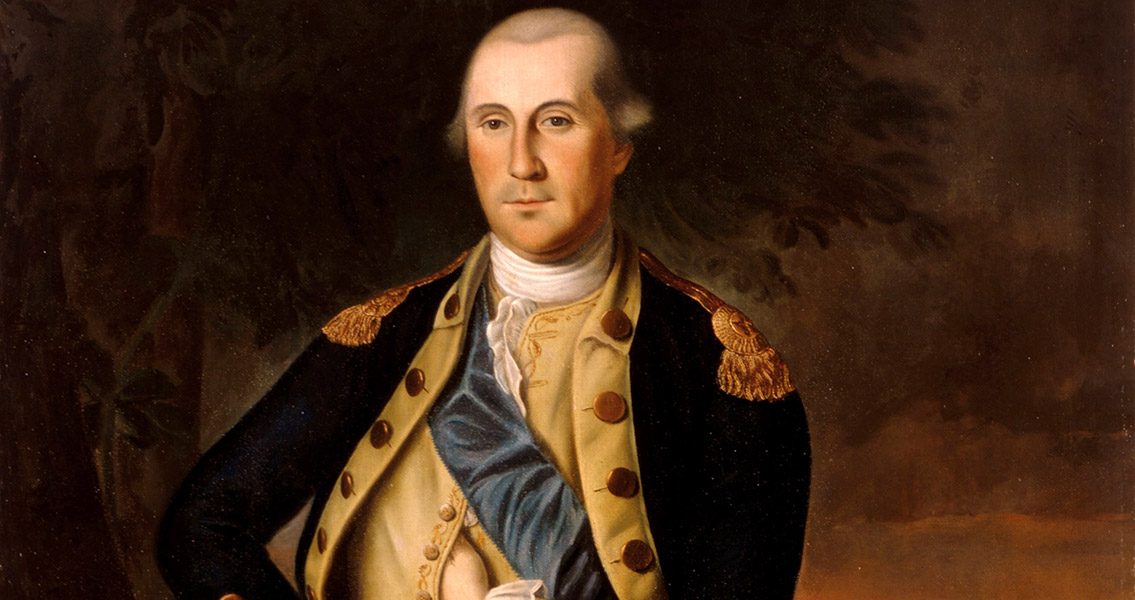
George Washington Takes On The Newburgh Conspiracy

Categories
Breaking News

A Ring Worn by Joan of Arc Returns to France

Le Parisien, “We suspected that the sale would beat all records. […] The Puy du Fou Hope Foundation could reach up to €80,000, but not beyond. Then we turned to potential donors and managed to collect the sum of €350,000.” By the end of frenzied bidding, Nicolas de Villiers had won out for the sum total of 376,833 euros ($415,063). Joan of Arc, known to some as the Maid of Orleans, is remembered for her role in the Hundred Years’ War during the fifteenth century, specifically the Siege of Orleans. Even though historians are still debating the extent of her actual participation in battle they do agree on one thing; the army was remarkably successful the short time she was with it. Born to peasant parents in northeast France in the village of Domrémy, Joan of Arc claimed to have experienced visions of Saint Margaret, the Archangel Michael, and Saint Catherine beginning when she was just thirteen. The visions instructed her to release France from English authority by supporting Charles VII. At just seventeen years old she gained distinction after several military engagements, most notably the Siege of Orleans. Shortly afterwards she was captured by the Burgundians and imprisoned at Beaurevoir Castle in May of 1490. She was later moved and tried in Rouen, England’s headquarters in France. Joan of Arc was found guilty of heresy and sentenced to death. She was burned at the stake on May 30, 1431. After her death, the charred body was exposed to avoid the claim that she had escaped, then they burned the body two more times (to protect against relics being claimed) and threw her remains into the Seine River. Joan of Arc is said to have worn the ring which was forged in brass, engraved with the initials JM and embellished with three crosses. Legend has it Joan would habitually stare down at the ring before going into combat. She was later exonerated and martyred in 1456, and canonized by Pope Benedict XV in 1920. The ring will be exhibited at the theme park Puy de Fou, which is owned by Philippe De Villiers. The park’s official website states that it “aims to contribute to the brilliance of France, its history, its wonders, and its achievements.” And that it was their “duty to end the exile of this symbol that belonged to the greatest heroine of the history of France.” ]]>

Categories
Breaking News

Iron Age Discovery First of Its Kind on Arabian Peninsula

Categories
News

Albert Einstein Born in Germany

This article was changed on 14th March 2016. It wrongly stated that Einstein won the 1921 Nobel Peace Prize, when in fact he won the 1921 Nobel Prize in Physics]]>

Categories
Breaking News

Shipwrecks Seen by Landsat Satellites

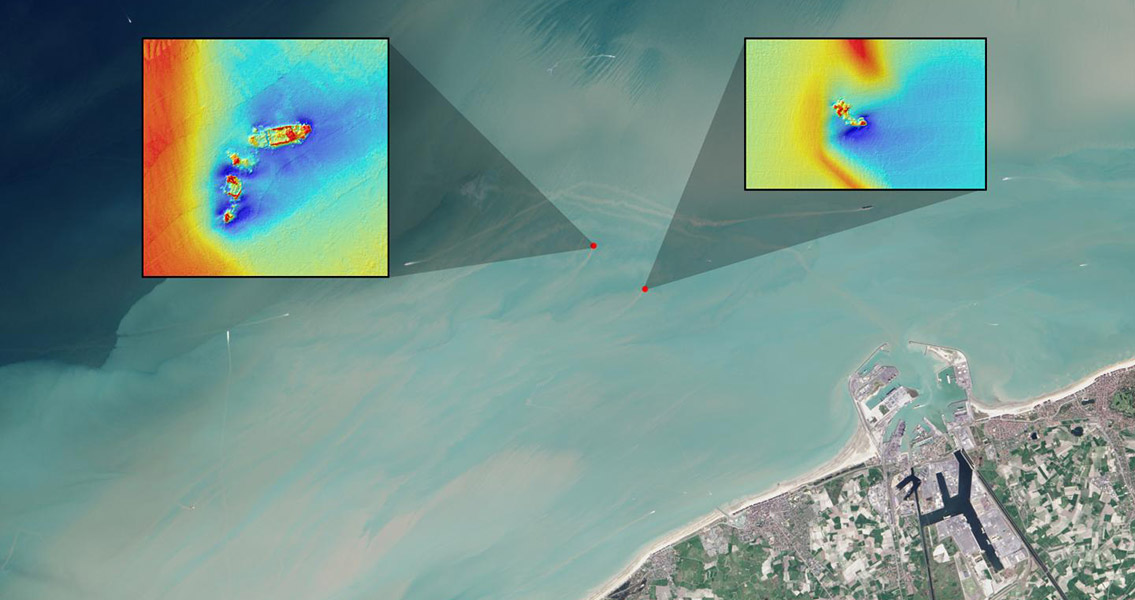
Journal of Archaeological Science. The team of researchers found that shipwrecks close to the coast can leave sediment plumes which are visible on the surface of the sea, revealing their location. Using free data from the Landsat 8 satellite, the team have detected plumes extending as far as 4 km downstream from the site of a shipwreck. It is the first study of its kind to show that Landsat 8 and similar satellites can be used to find shipwrecks in sediment heavy coastal waters. Around three million ships are scattered throughout the planet’s oceans, with the vast majority close to shore due to the abundance of navigational hazards in coastal areas. 25% of all the world’s shipwrecks are estimated to be in the North Atlantic. In particular, the narrow 100 mile stretch of the North Sea which separates England from the Netherlands and Belgium is saturated with Second World War wrecks, a consequence of mines, submarines and warships being deployed during the conflict to disrupt shipping between the Allies and Dutch and Belgian ports. So substantial is the potential environmental threat from these wrecks, the Council of Europe’s Parliamentary Assembly recommended they be mapped and monitored. This was the region that formed the focus of the researchers’ study. Taking the known locations of four shipwrecks from the Second World War: the SS Sansip, the SS Samvurn, the SS Nippon and the SS Neutron, as a starting point, the team mapped sediment plumes extending from the wrecks’ locations using Landsat 8 images and tidal models. They found that two of the wrecks which were mostly unburied created sediment plumes which could be measured during ebb and flow tides. The team suggest that the exposed parts of these ships create pits which fill with sediments during slack tides (when currents are reasonably still). During ebb and flow tides, the sediments are re-suspended in the water, creating the plumes which point to a shipwreck’s location. By mapping sediment plumes during different stages of the tides, the team postulate that it is possible to trace their origins and find as yet unearthed shipwrecks. As long as the waters in which a ship sank are shallow enough for the plumes to reach the surface, it is possible to detect them with optical satellites such as Landsat, according to the authors of the study. As coastal waters, where most shipwreck’s take place, are normally shallow and rich in sediment, the team’s findings could add a valuable new shipwreck detection method to the tool kit of marine archaeologists. Image courtesy of NASA/USGS Landsat image/Jesse Allen, NASA Earth Observatory]]>