Categories
Breaking News

Earliest Evidence of Right-Handedness Discovered

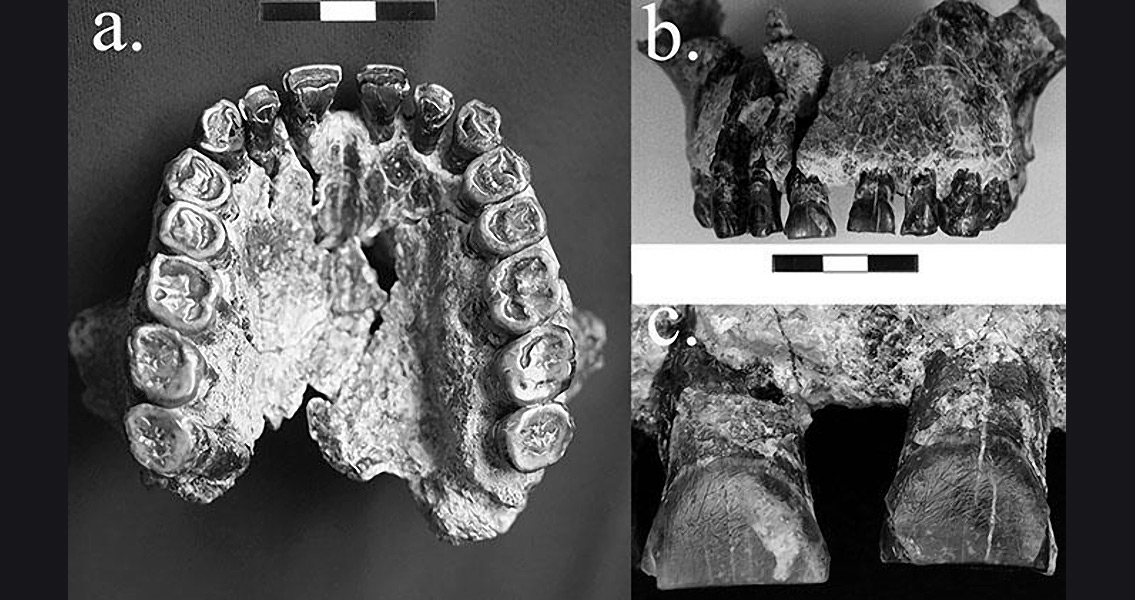
Homo habilis fossil. Although scientists have learnt a lot about “handedness”, they still haven’t been able to precisely explain why humans favour using one hand over the other, or why human populations are biased towards right handedness over left handedness. The lack of a standard, empirical definition for measuring handedness means scientists disagree on what percentage of the human population are left or right handed. However, it is agreed that the majority of humans are right handed (between 70 and 95 percent) and the minority left handed (30 to five percent). By comparison, the ratio among apes is 50:50. At 1.8 millions years old, the Homo habilis fossil studied by the University of Kansas researchers marks the oldest known evidence of right handedness in the fossil record. “We think that tells us something further about lateralization of the brain,” said David Frayer, a KU professor emeritus of anthropology and the lead author of the study, in a press release. “We already know that Homo habilis had brain lateralization and was more like us than like apes. This extends it to handedness, which is key.” Brain lateralisation refers to the fact that the left and right hemispheres of the brain are not exactly alike, leading to certain neural processes and cognitive functions being more dominant in one hemisphere than the other. Scientists have long theorised that this brain lateralisation has some correlation to a person’s handedness. Frayer and team made their discovery by analysing labial striations – small cut marks, which are lip side of the anterior teeth in the intact Homo habilis jaw fossil. Known as OH-65, the fossil was found in a stream channel of the Olduvai Gorge in Tanzania. Most of the deep cuts on the lip face of the upper front teeth veered downwards from left to right. After analysing the marks, Frayer and his team believe they most likely came from OH-65 using a tool with its right hand to cut food it was holding in its mouth while pulling at it with its left hand. The scratches can be seen with the naked eye, but the team used a microscope to accurately determine their alignment. “Experimental work has shown these scratches were most likely produced when a stone tool was used to process material gripped between the anterior teeth and the tool occasionally struck the labial face leaving a permanent mark on the tooth’s surface,” said Frayer. The direction of the marks strongly suggests that the Homo habilis specimen was right handed. Of course, OH-65 is only one sample but it could be the first evidence of a dominant handed pre-Neanderthal. As such, it could lead to the search for similar marks in other Homo fossils, allowing scientists to gain further insight into the development of handedness. “Handedness and language are controlled by different genetic systems, but there is a weak relationship between the two because both functions originate on the left side of the brain,” explained Frayer. “One specimen does not make an incontrovertible case, but as more research is done and more discoveries are made, we predict that right-handedness, cortical reorganization and language capacity will be shown to be important components in the origin of our genus.” A host of different studies have pointed towards brain reorganization, the use of tools and use of a dominant hand all occurring early in the human lineage. This latest study, published in the Journal of Human Evolution, is the first to look into the directionality of striations in the earliest specimens of our evolutionary lineage. It shows how something seemingly as basic as the dominance of one hand over the other is well embedded in our evolutionary history. “We think we have the evidence for brain lateralization, handedness and possibly language, so maybe it all fits together in one picture,” said Frayer. Image courtesy of David Frayer]]>
Categories
Breaking News

Earliest Human Cancer Pushes its Origins Back Over a Million Years

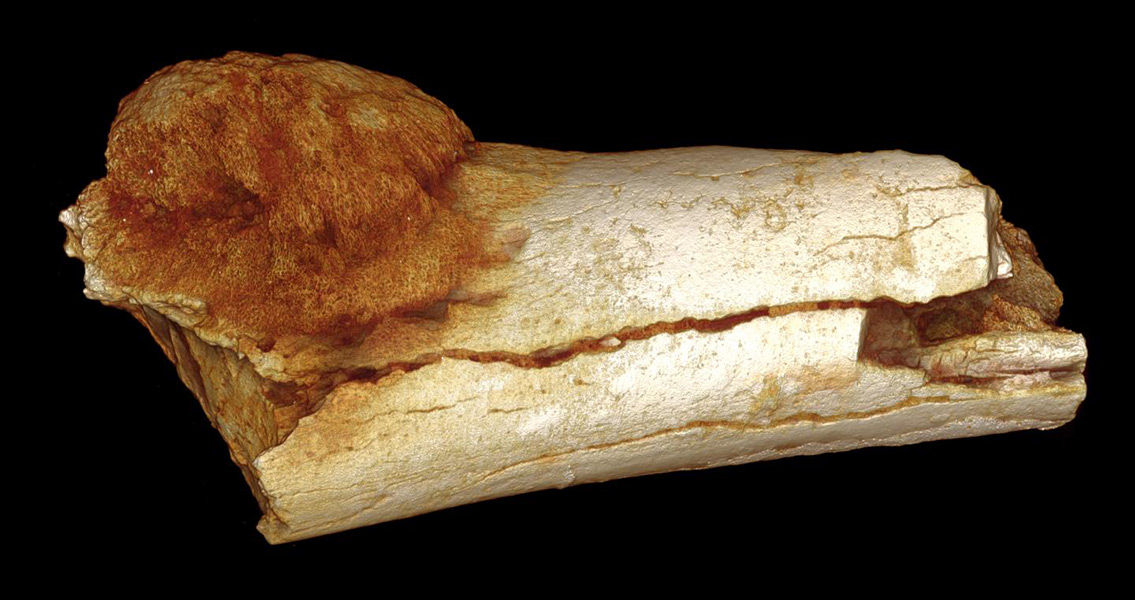
South African Journal of Science, an ancient cancer case and an ancient tumour case are detailed. Until now, the oldest documented incidence of a tumour had been discovered on the 120,000 year old remains of a Neanderthal. The two new studies suggest that cancer and tumours were in fact around well over a million years ago. A 1.7 million year old foot bone discovered in Swartrans, South Africa, bore definitive evidence of malignant cancer. Although the species to which the foot belongs remains unclear, the researchers behind the first paper say it is clearly that of a hominin or bipedal human relative. The accompanying paper identifies the oldest tumour ever found in the human fossil record. A benign neoplasm was found in the vertebrate of Karabo, the close to two million year old remains of an Australopithecus sediba child discovered at the site of Malapa. “Modern medicine tends to assume that cancers and tumours in humans are diseases caused by modern lifestyles and environments.” said Edward Odes, a Wits doctoral candidate and lead author of the cancer paper, and co-author on the tumour paper. “Our studies show the origins of these diseases occurred in our ancient relatives millions of years before modern industrial societies existed”. In the case of the foot bone, the cancer: an agressive osteosarcoma, was discovered on the metatarsal. It’s a form of cancer most commonly found in younger humans, which if left untreated proves fatal. “Due to its preservation, we don’t know whether the single cancerous foot bone belongs to an adult or child, nor whether the cancer caused the death of this individual, but we can tell this would have affected the individual’s ability to walk or run”, explained Dr Bernard Zipfel, a Wits Scientist and expert on the feet and movement of early human relatives. Both discoveries further complicate the picture we have of the causes and history of cancer and tumours. The diseases are typically linked to aspects of modern life, such as our diet, urban living and background radiation. Prevailing thought also suggests that the reason cancer and tumours seem to exhibit themselves more often now is due to increasing life expectancies. However, the tumour discovered on the child’s vertebrate is one associated with adulthood. Indeed, it is the first evidence of the disease in a young individual in the whole of the fossil record. Professor Lee Berger, the leader of the Malapa project and an author on both papers, highlighted just how much of a game changer in the study of oncology both discoveries could prove to be. “…not only has there been an assumption that these sorts of cancers and tumours are diseases of modernity, which these fossils clearly demonstrate they are not, but that we as modern humans exhibit them as a consequence of living longer, yet this rare tumour is found in a young child. The history of these types of tumours and cancers is clearly more complex than previously thought”. In both studies, cutting edge imaging technology was used to diagnose the incidences of disease. The results show the potential of modern technology to not only further our understanding of our ancient human relatives, but also the origin and development of modern diseases. “This is another good example of how the modern clinical sciences and the science of palaeoanthropology are working together in South Africa and with international collaborators to advance our understanding of diseases in both the past and the present.” said Dr Jacqueline Smilg, a radiologist based at Charlotte Maxeke Hospital, who is an author on both papers and was involved in the clinical diagnoses. Image courtesy of Patrick Randolph-Quinney (UCLAN)]]>

Categories
Breaking News

Archaeologists Find Evidence of Scotland’s Earliest Farmers

The Courier, “Evidence for ploughing and fields in Neolithic Britain is incredibly rare and so the excavation of the ard marks at Wellhill is a very significant discovery that suggests a farming economy had taken hold in this location only a few generations after farming began in Britain around 4000BC. This is an amazing insight into the lives of Scotland’s first farmers.” Additional radiocarbon dating of the pit sites shows that they may actually date back even further, into the eighth millennium BCE, meaning they’re providing evidence of the very first Mesolithic events in the lowlands of Kinross and Perth. Dr. Rebecca Jones, with Historic Environment Scotland, is quoted in The Courier as saying, “These are very significant discoveries for archaeology in Scotland and even further afield, which is thanks mainly to the endeavors of the principle excavator, Dr. Dene Wright, who recognized the potential of these astonishingly early settlements, which were then confirmed via radiocarbon dating.” Historic Environment Scotland is a public body that was established to investigate, preserve and promote Scotland’s historic monuments and structures. They are responsible for approximately 300 historically significant properties, including Edinburgh Castle. In total, these sites receive over 3 million visitors annually. The organization is also responsible for a variety of collections, including over 5 million drawings, manuscripts, and photographs, in addition to 20 million aerial images of sites around the world. The SERF project has received an archaeology grant from Historic Environment Scotland to complete excavation, geophysical surveys, reporting and archival research. ]]>

Categories
Breaking News

Earliest Evidence of European Fire Building Found in Spain

Homo heidelbergensis, a direct ancestor of Neanderthal Man, Homo neanderthalensis. Like other sites that show signs of early fire building, hominids at Black Cave left behind a variety of stone tools, indicating they possessed the technical skills needed for selecting the right material for striking sparks. Paleontologist Michael Walker with the University of Murcia explained in Science News that it’s unlikely a brush fire near the cave’s entrance could have sent sparks inside to ignite fires that were found between five and seven meters in, adding that dry brush wasn’t likely to be near the cave to begin with, given that 800,000 years ago the area bordered a swamp and a river. Other researchers told Science News they suspect the Cueva Negra’s artifacts are actually not as old as the report indicates, because it’s difficult to say where the artifacts originally were in relation to several different reversals of the planets magnetic field which are preserved in the sediment layers found in the cave. A 2011 study, published in the Journal of Archaeological Science, set an age limit for the tools made by the Homo species in Europe at no more than 600,000 years ago. Even at 600,000 years old though, the findings at the cave would still be the earliest evidence of fire making in Europe. The systematic excavation of the cave was started in 1990 and until 2004 researchers considered the site to be from the late Pleistocene era, however, rodent fossils were discovered from a species that became extinct 500,000 years ago. Other animal fossils include megaceroides (giant deer), wild boar, bison, hyena, turtles and rabbits, in addition to 60 different species of birds. ]]>

Categories
Breaking News

Earliest Massacre in History Discovered

www.nature.com Image courtesy of Marta Mirazon Lahr]]>