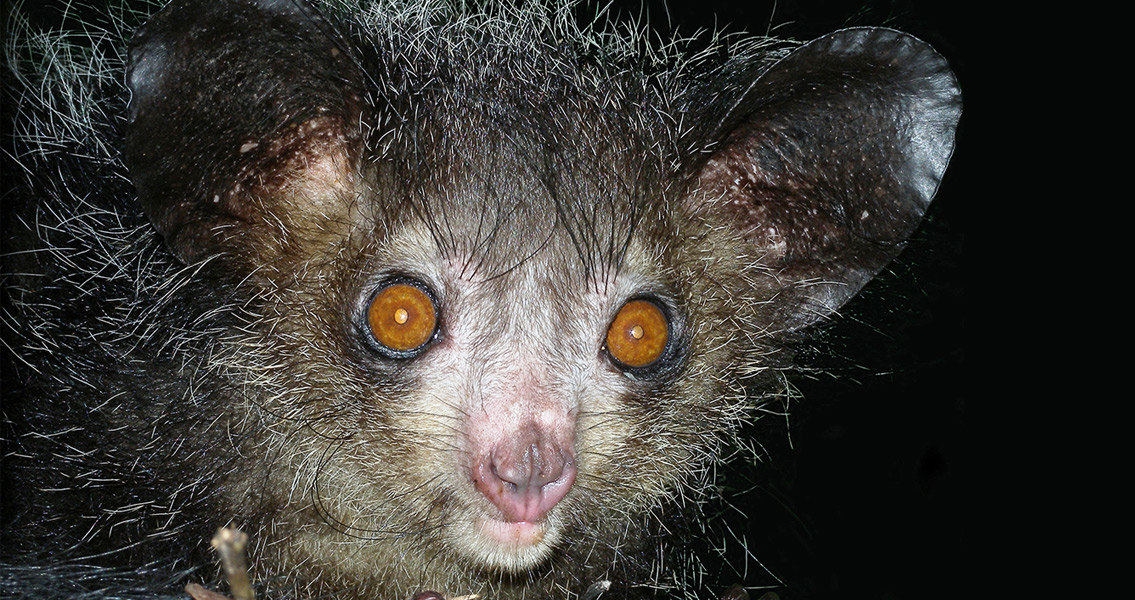
Cell Press, adding, “We’ve been working for a long time to understand the fundamental mechanisms behind rod and cone development.” Previous work completed by Swaroop and his team has shown that NRL, a transcription factor, drives retinal cells towards maturing into rods. NRL accomplishes this by suppressing certain genes involved in the development of cone cells, leading researchers to wonder if the shorter wave-length cone cells were changed into rods during the evolution process. To determine the origin of these rods, Swaroop’s team examined the cone cells and rods in mice, taken at various stages of development. The details involved in the embryonic development of an organism frequently reveals traits its evolutionary ancestors carried, like how, for instance, human embryos will initially develop a tail and gill-like slits. What they found was that two days after they were born, the still-developing rod cells had genes typically expressed in cell cones, however, once the mice were ten days old these aspects had become repressed by DNA methylations and histone. When examining zebrafish, which are cone-dominated and diurnal (active during the daytime), the experiments indicated the rod cells didn’t look like cell cones at all. To determine when the elements, which turn cone cells to rod cells, may have originated, the researchers examined the genomic sequences from a number of vertebrate animals. What the team discovered was that as the modern retina developed, the genes which are responsible for NRL regulation became more refined in placental mammals but were lost in a number of non-mammalian groups. The origin of this system seemed to coincide with the evolution of nocturnal adaptations in early mammals. The team then concluded that for mammals, NRL became restricted to the photoreceptors found in the eye, forcing these cells to convert to rods from cones, thereby giving early mammals the needed edge to adapt to an active nocturnal lifestyle. In contrast, humans depend primarily on cone cells for our vision, because our ancestors evolved to take advantage of daylight hours once again The study has been published in the online journal Cell Press. ]]>


Discovery mutinied on 22nd June, 1611. The vessel’s captain, famed explorer Henry Hudson; his teenage son and seven others were all overpowered by the ship’s crew and forced into a small, uncovered boat. Set adrift with few supplies in the harsh conditions, Hudson and the others were never seen again. The only hint to their fate came almost twenty years later, in 1631, when another expedition through the region found the remains of a shelter that could have been erected by Hudson and his eight companions. Hudson, for whom Hudson Bay is named after, was embroiled in an obsessive hunt for a Northwest Passage, a sea route through the North American continent that would connect Europe to the lucrative trading opportunities in Asia. The 55-ton Discovery had set off from London on 17th April, 1610, stopping briefly in Iceland before making its way into the Hudson Bay in August. For this expedition, Hudson had his ship cruised around the southern section of the Hudson Bay, searching for an outlet into the Pacific. Scouring the region and finding nothing, Hudson nevertheless continued his search. When the wintry Arctic conditions struck however, tensions quickly rose among the crew when the ship became trapped in the ice, with its supplies dwindling. Rumours started to spread among the crew that Hudson had started to hoard food, saving it for his favoured crew members while depriving others. He demoted Robert Juet, the ship’s first mate, while also getting into a heated dispute with another officer, Henry Green. Conspiracy began to spread around the ship, with Green and Juet recruiting men to their cause. In June, while the ship prepared to commence its journey back to Europe, the mission a failure, the mutiny took place and Hudson along with his supporters were apprehended and then set adrift. At least, that was the account provided by the surviving crew members. The Discovery eventually made its way back to England, but without Juet and Green. The surviving crew members claimed that the two mutiny leaders had been killed in a battle with Native Americans at some point on the journey home. This of course adds an interesting twist to the tale of the mutiny, raising the possibility that the crew perhaps altered certain elements of the story, or lied about Juet and Green’s fate, in order to shift blame away from themselves. Some of those who made it back were eventually tried for mutiny, but all were ultimately acquitted due to a lack of evidence. Little is known about Hudson’s early life. Likely born sometime late in the sixteenth century, in England, he earned a reputation as a formidable sailor and, ultimately, one of the world’s greatest explorers. How he gained such skill as a seafarer is unknown, with precious few details about his life prior to his first expedition as a ship’s commander in 1607 available. He embarked on four major voyages in his career, including the fateful final one. All were driven by the same aim, of finding a new passage between Europe and Asia, and with countries and businesses fighting to unearth new trade routes, funding for these ambitious expeditions was seldom hard to come by. His first two trips attempted to find a Northeast Passage, the second ultimately blocked by thick ice north of Russia. Giving up on ever finding an eastern route, he soon turned his attention to the North American continent, embarking on his first voyage there in 1609. Although ultimately failing, Hudson inspired a host of later explorers to search North America for the fabled Northwest Passage. His name, meanwhile, can be found on waterways, bridges and even towns across the continent, a mark of the esteem he is held in.]]>

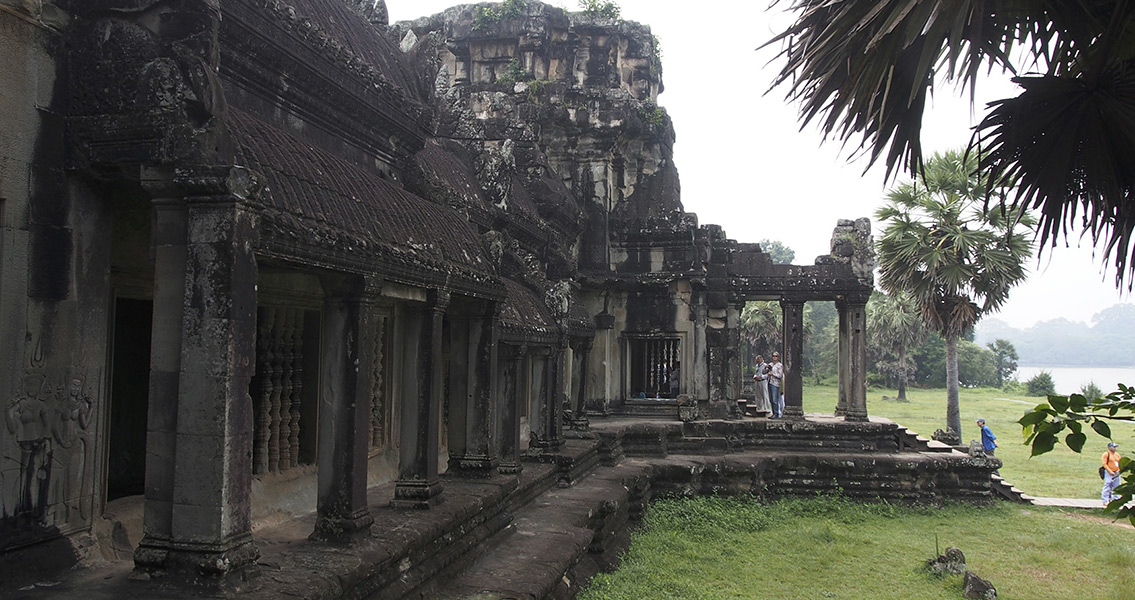
Live Science, archaeologist Damian Evans from the École française d’Extrême-Orient published the team’s findings recently, describing how low-flying helicopters were used in conjunction with laser scanning equipment in order to see beyond the Cambodian jungle’s thick foliage. The scans laid bare the dome fields as well as the telltale marks left from buildings that had once been constructed from organic materials and since decayed, Evans explained. More than 735 square miles of Cambodia were scanned by air, with the activity largely taking place during 2015. The revelations included more data about Mahendraparvata, an ancient Cambodian city that would have flourished more than a millennium ago as the Khmer Empire that once ruled much of southeast Asia rose to ascendancy. An initial scan in 2012, one that covered 140 square miles of jungle, had previously revealed a portion of the ancient city. The Khmer Empire is thought to have peaked during the twelfth and thirteenth centuries CE, with its center at the city of Angkor – the site of Angkor Wat today. However, Evans noted in the research paper that the conventional beginning of the classical Angkorian period is closely associated with Mahendraparvata, which is dated to the eighth to ninth century CE, located somewhat north of Angkor. Evans and the rest of the research team are still hard at work trying to determine the size of Mahendraparvata. However, even as they do so, evidence of archaeological topography from the Angkor period, otherwise known as the shape of the ground, seems to indicate human presence in a rough swath of around 15 to 20 square miles. Much of that region was filled with the dome fields arranged in their grid pattern. Ground excavations into these mounds have been relatively fruitless in yielding new information, however, leaving the purpose of these dome fields a mystery to researchers. The domes set out in geometric patterns have proven to be equally enigmatic according to Evans, despite how obvious it is that they were laid down in these shapes deliberately. The research paper, which was published in the Journal of Archaeological Science, is available online Image courtesy of Wikimedia Commons user Clay Gilliland ]]>