

Tennessean, Nance remarked that so far two grave shafts have been discovered at the cemetery. However, the likelihood of discovering more remains high. To date, there are at least ten discovered gravesites present at the long-buried cemetery; five of the graves still bear markers, including Mary, Bosley’s infant daughter who died in 1825, and Bosley’s wife as well. The Tennessee DEC partnered with excavation firm TRC Companies Inc. to provide the heavy equipment and manpower to conduct the lion’s share of the dig. TRC archaeologist Jared Barrett, who has been involved in several Nashville-area digs, characterized the find as celebratory; finding something that has been lost to history for more than a century is a thrill, Barrett told The Tennessean. With Nashville gaining in popularity, leading to new construction and renovation projects, thrilling finds such as the Bosley cemetery have become increasingly common. It’s no surprise to local developers when cemeteries such as the one at Aquinas College are uncovered, according to Nance, who added that many early Nashville families would have started their own cemeteries, especially since most of the areas outside of downtown Nashville were farmland. The only thing needed to start one of these cemeteries was a shovel, the archaeologist remarked. While there are graves and headstones buried beneath the ground of Aquinas College, it’s likely that the site does not host any human remains. Eleanor Whitworth, a descendant of the Bosley family, remarked in an interview that the bodies were relocated in the 1920s. Researchers plan to conduct thorough analysis to ensure the site is indeed devoid of any remains. ]]>

Tazpit Press Service (TPS), “Archaeology cannot find a man and we did not find the remnants linked to King David himself, but what we did find is archaeological evidence of the social process of urbanization in Judea.” This evidence of urbanization is in line with what the Bible describes as the formation of the Kingdom of David, when fortified towns replaced small agricultural communities. Carbon testing on olive pits unearthed at the Khirbet Qeiyafa site indicates the town was built towards the end of the eleventh century BCE, which fits the chronology of the Biblical narrative. Two aspects of the Elah Fortress were of particular interest to archaeologists, the large number of iron stones found and the wall with two unusual hollows, which encircled the site. Sha’arayim means “two gates” in Hebrew, and the hollows in the modern wall, which was constructed directly on top of the ancient wall, were in the same place, precisely, as the ancient wall’s two gates had been. The town’s geographical location also fits with the Biblical description of Sha’arayim, following the battle of David and Goliath and again in the Book of Joshua. The finds from the site include two inscriptions (in Canaanite script) which are considered to be the earliest writing examples of the Hebrew language, and a pottery shard with the Hebrew words, “king”, “don’t do”, and “judge”, easily identifiable. “Although I led the excavations, I myself was amazed to see the different pieces brought together in a way that allows visitors to get a clear picture of how the town looked and that gives them an opportunity to go back in history to the times of the kingdom of David,” Professor Garfinkel told TPS. The biblical account of the battle between David and Goliath tells of it occurring near the Valley of Elah, when the Israelites were facing the Philistines. For 40 days, twice daily, Goliath, the Philistines’ champion, challenges the Israelites to send out their own champion to decide the outcome with a single combat. No one comes forward until David accepts the challenge, taking only his staff, sling and five stones. David defeats Goliath with just one stone from his sling, and the Philistines flee. The exhibition, “In the Valley of David and Goliath”, at the Bible Lands Museum will include the pottery shards in addition to a clay model of a shrine discovered at the site and the huge stones used to build the wall enclosing the town. ]]>
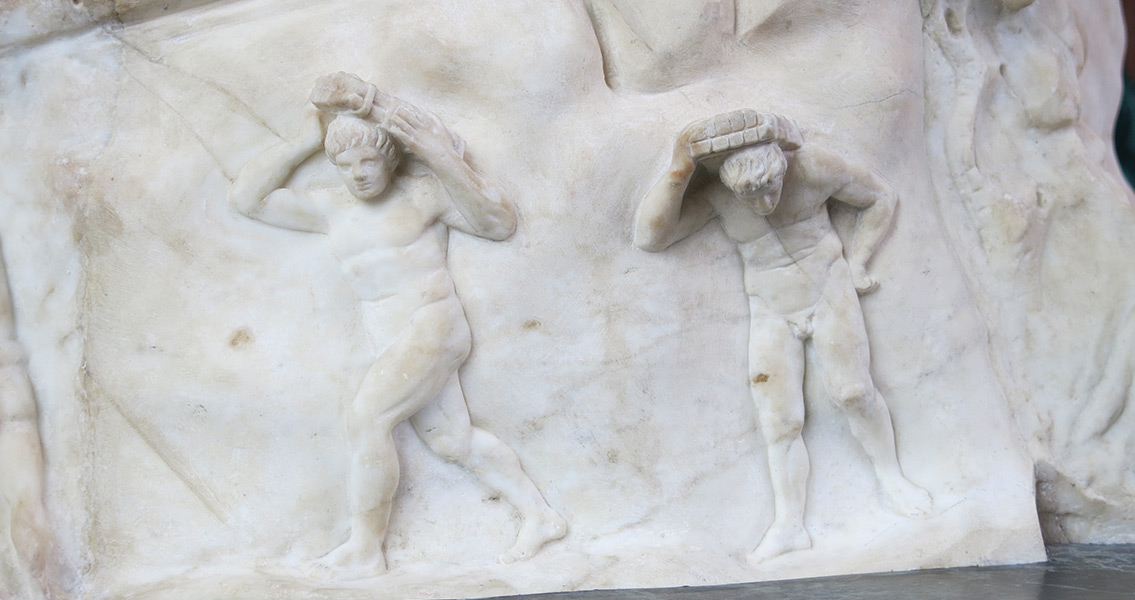
Daily Mail. “The ability to more accurately differentiate between stillborn and short-lived infants, without having to alter precious archaeological skeletons, will profoundly impact on the study of past human life.” Historians have long believed that infanticide was a fact of life for the ancient Romans. A number of explanations have been given, including attempts to manipulate the gender ratio, to control the size of families, or even as mercy killings to alleviate suffering. Some historians suggest that poor families may have killed newborns if they felt they were unable to provide for the child. Infanticide is an issue apparent even in ancient Rome’s foundation story: Romulus and Remus, the two sons of the god of war, Mars, narrowly survive after being thrown into the Tiber river. Seeming horrifically inhumane to modern eyes, in ancient Roman society babies were not considered fully human at birth. Rather, their humanity was thought to develop over time. Although not ruling out infanticide in ancient Roman society, the study results suggest it was not as prevelant as widely believed. Of course, the study was limited to a sample of just ten individuals from a single region, and is therefore far from conclusive. Other Roman burial sites at other locations would need to be studied in order to make a concrete conclusion. Meanwhile, the researchers behind the study intend to apply the x-ray microtomography technique to other remains in the Museum of London, to learn more about the history of the people of London in the Roman period and beyond. “The size of the Museum of London’s 20,000-strong collection of skeletons means we are uniquely placed to investigate research questions such as this one, as well as to provide meaningful interpretation of the results with our detailed archive information.” said Dr Rebecca Redfern, a co-author of the study in the Daily Mail interview. “We can now apply this research to infant skeletons in our collection from periods other than Roman London to investigate mortality risks and how these relate to London’s ever-changing environment and population.”]]>
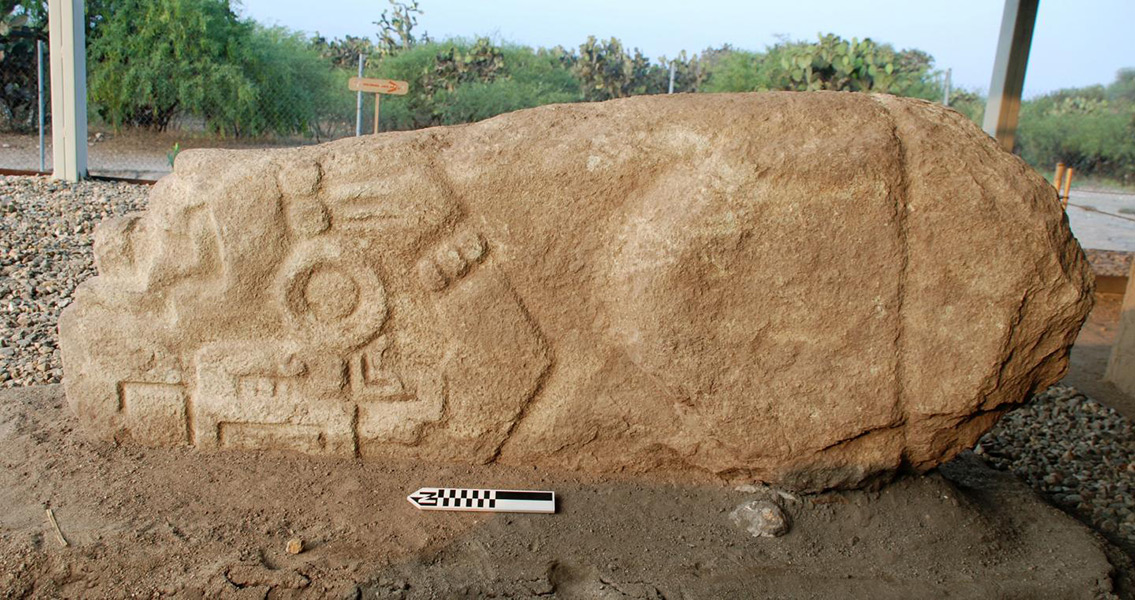


Haaretz that the edifice of the structure was significantly larger than the size of normal houses of the time, suggesting it was home to someone of great importance. The building also featured ashlar masonry: large monolithic hewn stones, in the corners of its rooms. An assortment of Philistine bichrome pottery had been unearthed at the site in the years leading up to the discovery of the palace. Part of a long-necked, bird-faced female goddess known as an Ashdod figurine, the ivory lid to a game box, amulets, a Canaanite female fertility goddess and a baby’s rattle were among the objects discovered, said Prof. Ortiz. Archaeologists still believe that the city was predominantly Canaanite, however, the Philistine artefacts suggest that they either lived in the city alongside the Canaanites, or at the very least had significant trading relations with them. Gezer is situated on an important crossroads in a pass leading from the coast to Jerusalem. The city dates from well beyond the time of Kings Solomon and David, with evidence suggesting it was occupied as far back as the Chalcolithic period, in the fourth millennium BCE. 3,400 years ago its Canaanite population was closely linked with Ancient Egypt, despite the geographic distance between them. In a previous digging season, a large cartouche (a carved tablet or drawing) of Pharaoh Amenhotep III was found at the site. Fascinatingly, Ortiz and colleagues’ discovery adds credence to other elements of the Biblical story of Gezer. The Old Testament claims the city was given by the Pharaoh as a dowry to Solomon’s wife, and that Solomon then rebuilt the city during the late tenth century BCE. The archaeologists suggest that the palace complex they’ve unearthed could only have been built by a king with substantial resources, one like Solomon… Additionally, the team suggest that the evidence of destruction found within the rooms in the complex could be associated with the Shishak invasion in 925 BCE, when the Pharaoh launched an invasion of Israel and Judah. This is another event depicted in the Old Testament. Ultimately, the objects have yet to be Carbon Dated, meaning the possible Biblical links are highly speculative. As Dr Sam Wolff, an archaeologist with the Israeli Antiquities Authority, told Haaretz: “Our 10th century date is tentative, pending further study of the ceramic assemblage and the results of carbon 14 analyses. Others may claim that the pottery we are calling 10th century is in fact 9th century.” “In this regard, I would point out that we have found a significant stratum between what we are calling the 10th century and the 8th century strata, and we date this stratum to the 9th century”, Wolff continued. “For the earliest stratum to be 9th century as well is certainly possible, but it would then squeeze two significant strata into one century. For the time being we prefer to date this earlier stratum, along with the six-chamber gate and the fortification wall connecting the two, to the 10th century; that is, to the time of Solomon.” Images of the palatial remains and other artefacts can be seen here]]>

here Image courtesy of Edward Snelling. Sourced from the Raymond Dart Collection of Human Skeletons, School of Anatomical Sciences, Faculty of Health Sciences, University of the Witwatersrand.]]>
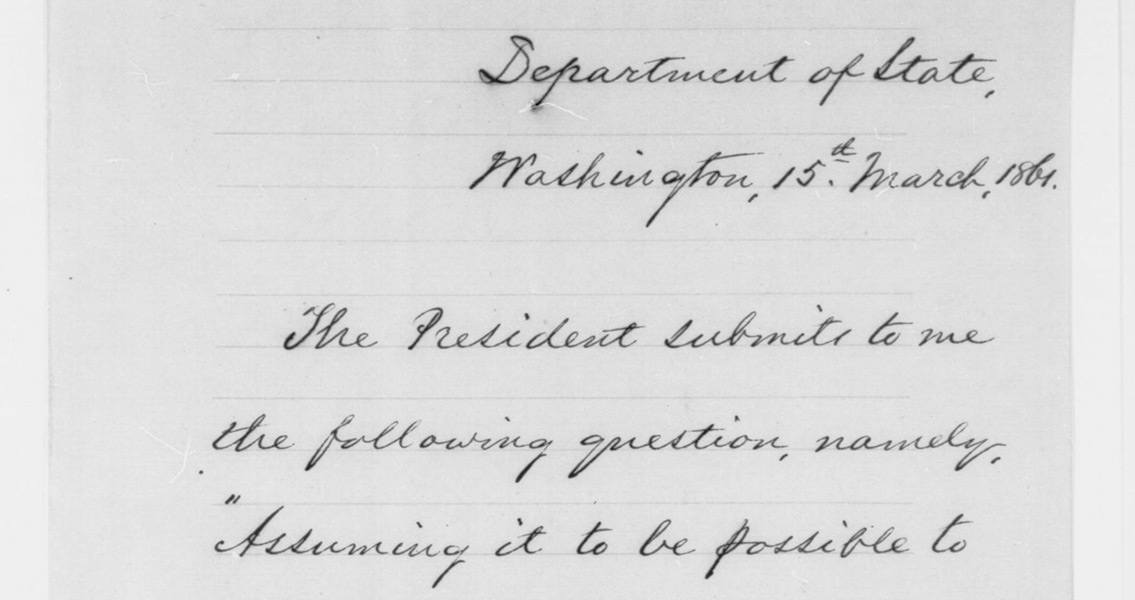
L.A. Times regarding the cache of documents and 35 leather-bound ledgers related to telegrams that were sent between 1862 and 1867. “We don’t really know what is in here. Every single telegram has a story behind it, from the president to the greatest generals and to the privates and telegraph operators. It’s like putting together a huge jigsaw puzzle.” The telegrams were kept by Thomas T. Eckert: head of the U.S. military telegraph office at the War Department and a Lincoln confidant. The Huntington has begun a Decoding the Civil War crowdsourcing campaign relying on volunteers to unravel secret texts using cipher charts. So far, over 2,100 “citizen archivists” and war buffs around the world have been able to transcribe less than a third of the collection. The project still has an open invitation for volunteers. The telegrams cover the gamut; from heartbreak, sarcasm, warning and conniving to draft riots, downed cables and cotton markets. They also include the latest news from the battlefield, like Lincoln’s venturing that Grant’s forces had “Petersburg completely enveloped” and had captured “about twelve thousand prisoners & fifty guns.” In a telegram about troop movements, Gen. William T. Sherman reflects sorrow: “my eldest boy Willie, my California boy, nine years old died here yesterday of fever and dysentery contracted at Vicksburg. His loss to me is more than words can express.” Some are less serious, like the telegraph sent by J.W. Carver that informs Eckert: “Family matters require my immediate attention at home for a few days. If not attended to at once I am utterly destroyed.” The messages, tapped out by around 1,500 telegraph operators, traveled over approximately 15,000 miles of telegraph lines and revolutionized wartime communications. Eckert, who would go on to become president of Western Union, took the telegram ledgers when he retired in 1867. Until he died in 1910, the documents were left in storage. In 2008 they surfaced and were subsequently sold at auction for $36,600 to a company that specializes in rare books, the William Reese Co. The collection was sold to the Huntington in 2012. “The telegrams were actually considered lost,” Mario Einaudi, who is overseeing the project to digitize the documents on behalf of the Huntington Library, told the L.A. Times, “They’re significant in that what we’re making available to people is raw history. The language comes through so loud and clear that it puts you back on your heels.” ]]>

The Jerusalem Post, the international team of archaeologists – spearheaded by the Zinman Institute of Archaeology from the University of Haifa – announced the find this week, remarking that with such a large quantity of olive pits, it is highly likely that these early farmers would have needed to employ irrigation techniques. Professor Daniel Rosenberd, the co-leader of the research project, stated that the revelation that ancient agrarian societies were relying on artificial irrigation could result in a fundamental change in how scientists and historians understand how sophisticated these ancient farmers were. Rosenberg and his colleague: Dr. Florian Klimsh from the German Archaeological institute, believe that the prehistoric settlements found here in northern Israel in close proximity to Jordan were instrumental in the developmental process of the Near Eastern cultures and cities of antiquity. Despite this, little is known about these ancient settlements today. In order to broaden that knowledge, the recent research into the region focused on gathering botanical evidence to make determinations regarding what the conditions would have been in the Jordan Valley seven thousand years ago. Doing so could help shed light on not just agricultural practices and diet but also the economy of the region and how these settlements were organized socially, researchers say. It is well known that olives were being used in the region at this time, based on other documented evidence. However, with the sheer number of olive seeds found on site, Rosenberg said that several questions were raised which necessitate a new look at how ancient farmers irrigated their crops – and how the olive and olive oil trade operated during the time as well. Data collection over the past four years has already revealed much regarding the lives of these ancient farmers, with evidence pointing to the inhabitants growing different plant species concurrently. These plants, which all had differing maturation cycles, were meant to be used as a back-up in the event of a poor harvest. ]]>