Nature Communications, can be found here Image courtesy of Wits University]]>
Nature Communications, can be found here Image courtesy of Wits University]]>


Saccorhytus, the miniscule sea creature that resembles nothing so much as a tiny, microscopic sack with a large mouth – a characteristic that some of its descendants today certainly share. The diminutive creature, according to a press release from the University of Cambridge, is the most primitive example to date of a broad biological category of creatures known as deuterostomes. There are several sub-groups under the deuterostome category, including vertebrates. In a recently published research study, scientists from Cambridge, Xi’an China’s Northwest University and other international locations say that Saccorhytus has the honor of being a common ancestor of a massive range of species. Additionally, the deuterostome represents the earliest stage ever discovered regarding the evolution of humans over the course of hundreds of millions of years. There is, of course, nothing even vaguely human when it comes to Saccorhytus. Measuring around a millimeter in size, its habitat was likely the seabed, being small enough to live between individual grains of sand. The microfossil that contained the creature proved to be well-preserved enough for the scientists to make several determinations – including the lack of any orifice for removing waste, such as an anus. In other words, our far-advanced evolutionary predecessor would have expelled waste the same way it came in – unappealing to say the least. One of the main authors of the study, Professor Simon Conway Morris from Cambridge’s St. John’s College, remarked that Saccorhytus looked like nothing so much as tiny black grains to the naked eye. However, under microscope magnification the level of detail preserved by the fossil was nothing less than “jaw-dropping,” the researcher added. Northwest University’s Degan Shu also commented, stating that the research team has a wide array of discoveries to its credit, including a variety of other early deuterostomes like Saccorhytus and also the earliest known instance of what could be classified as a fish. The discovery of the new sea creature, however, provides scientists a glimpse into the very first known evolutionary step of not just humans but also a wide range of related animals, the researcher said. Discovered in China’s central Shanxi Province, the Saccorhytus microfossils have been dated to 540 million years old, a good 20 to 30 million years earlier than the majority of other early deuterostome finds. Researchers were able to construct a picture of how the creature might have looked by isolating the fossils from the surrounding rock and then subjecting them to CT scans and electron microscopy. The amount of limestone the team needed to process in order to access these fossils was massive – approximately three tons, according to co-author Dr. Jian Han, Degan Shu’s colleague at Northwest university. The new research study, which was recently published in the journal Nature, can be found online here Image courtesy of S Conway Morris / Jian Han]]>
Scientific Reports believe the finger can be pointed at climate change. The researchers from the Indiana University-Purdue University Indianapolis used proxies of prehistoric temperature and precipitation preserved in finely layered lake sediments to track the dramatic environmental changes faced by the Mississippians. The lake sediments can be used to map changing climatic conditions in much the same way as tree rings can to detect historical periods of drought. Links appeared between environmental changes, and periods of flourishing or disaster for the Midwestern Native American population. The authors of the study theorise that the extreme climate change they observed likely devastated Mississippian food production, triggering the civilisation’s dramatic disappearance. “Abrupt climate change can impose conditions like drought. If these conditions are severe and sustained, as we have determined that they became for the Mississippians, it is virtually impossible for societies, especially those based on agriculture, to survive,” said corresponding author of the new study, paleoclimatologist Broxton Bird. “From the lake records, we saw that the abundant rainfall and consistent good weather — which supported Mississippian society as it grew — changed, making agriculture unsustainable.” It seems likely that the failure of the Mississippians’ main source of food would have triggered political and social instability, in turn stretching the bonds which held communities together. “Archeologists have recognized that from 1300 onward, Mississippian villages started disappearing –one after the other — almost like lightbulbs in a string, but the question has always been ‘why?,'” said archaeologist Jeremy Wilson, a co-author of the study. “Dr. Bird and his students have shown from the lake-sediment evidence that during the period known as the Little Ice Age, from 1300 to 1800, there was a profound change in climate to colder and drier conditions, which would have negatively impacted the growing of maize in and around Mississippian villages.” The decline of the Mississippians coincided with lower temperatures and reduced rainfall, a consequence of El Nino like conditions in the Pacific Ocean and an overall period of cooling during the little Ice Age. These complicated weather patterns would have ultimately caused drought like conditions in the Midwest. “Climate change had been previously postulated as one of the factors responsible for the disappearance of the Mississippians,” Bird said. “What our research did was develop the highest-resolution record yet produced of rainfall in the midcontinental U.S. for the last 2,100 years, including the time frame from the beginning of the Mississippian period — about 1,000 years ago — to 500 years ago, when much of the lower Midwest was totally abandoned by these people. Our results strongly support climate change — drought, specifically — as a significant cause of the disappearance of Mississippians from the midcontinent through its impact on their ability to farm and produce food surpluses.” Bird suggests that the fate of the Mississippians could provide a valuable lesson for those living and working in the Midwest now. “Mississippians did not have irrigation and relied on rainfall to grow their crops. Modern agriculture in the Midwest corn belt likewise relies on rainfall with very little irrigation infrastructure, making us similarly vulnerable to drought,” The authors of the study are continuing their research at additional lakes in the US Midwest, particularly those close to archaeological sites, in the hope of gaining further insight into the fate of Native American populations. ]]>
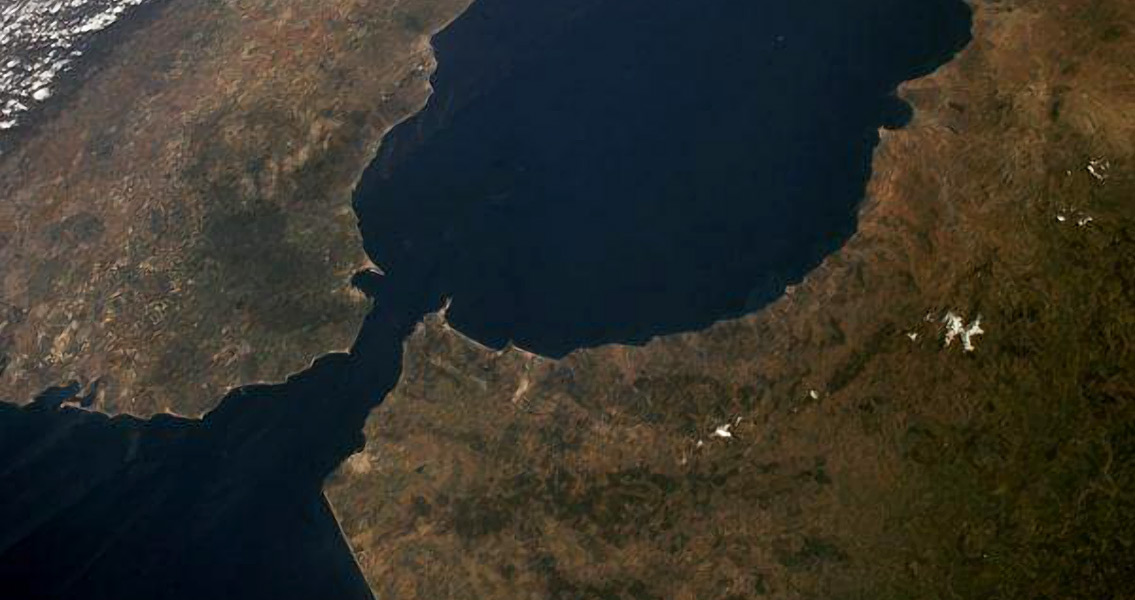
Tectonophysics, can be found online at Science Direct Image courtesy of NASA ]]>

Live Science. Since 2012, three amazingly intricate and well-preserved mosaics which once decorated the floor of the older synagogue have been found at the Huqoq site during excavations led by Jodi Magness from the University of North Carolina at Chapel Hill along with Shua Kisilevitz from the Israel Antiquities Authority. The mosaics have since been removed for conservation. ]]>
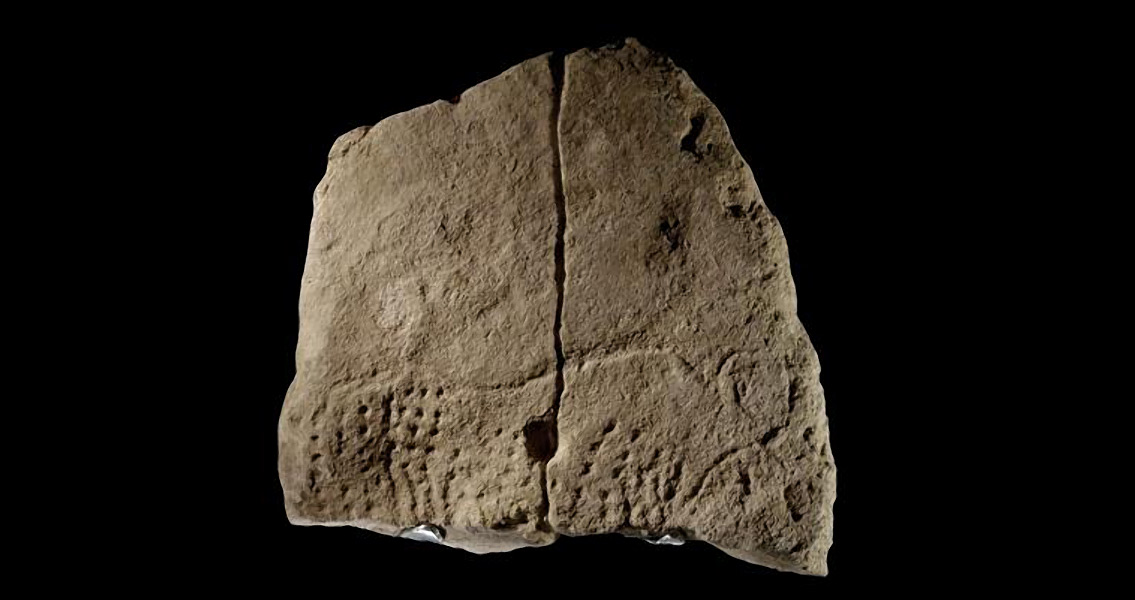
Quartenary International. “The discovery sheds new light on regional patterning of art and ornamentation across Europe at a time when the first modern humans to enter Europe dispersed westward and northward across the continent,” said White, in a press release from NYU. Depicting a complicated image involving an aurochs surrounded by a row of dots, the remarkable stone slab was excavated from Abri Blanchard. The site had undergone excavations in the early twentieth century, but starting in 2011 White and his team began a methodical exploration of the remaining deposits. Abri Blanchard is home to artefacts from the Aurignacian culture, a modern human tool making and artistic culture of Upper Paleolithic Europe. A massive diversification and specialisation in tools during the time of the Aurignacian culture (between 43,000 and 38,000 years ago) facilitated its distinctive artwork. In particular, the invention of an engraving tool known as the burin made remarkable rock engravings possible. Although anatomically modern humans first appeared around 100,000 years ago, the Aurignacian culture is widely considered to represent the first modern humans to settle in Europe. Also located in the Vézère Valley, not far from Abri Blanchard, are the Cave Paintings of Lascaux. One of the most famous archeological sites in the world, the Paleolithic cave paintings of Lascaux are remarkable for both their size and the quality of their preservation. Believed to date to sometime around 20,000 years ago, they are among the oldest known cave paintings in existence. White believes that Aurignacian art, such as the stone slab found at the Vézère Valley site, allows us to see into the lives and minds of its creators, and the societies they inhabited. “Following their arrival from Africa, groups of modern humans settled into western and Central Europe, showing a broad commonality in graphic expression against which more regionalized characteristics stand out,” he explained in the NYU press release. “This pattern fits well with social geography models that see art and personal ornamentation as markers of social identity at regional, group, and individual levels.” The oldest known engravings to have been created by a human ancestor date to around 500,000 years ago. A series of zig-zags found on a shell in Java, these markings likely made by Homo erectus constitute the oldest examples of decorative art yet discovered. Abri Blanchard has long been recognised as one of the oldest sites in Europe bearing artefacts of modern human art and symbolism. Since its discovery at the turn of the last century, hundreds of ancient items have been found there, including personal ornaments such as animal teeth, ivory and soapstone beads, pierced shells, paintings and engravings. Image courtesy of Musée national de Préhistoire collections – photo MNP – Ph. Jugie ]]>
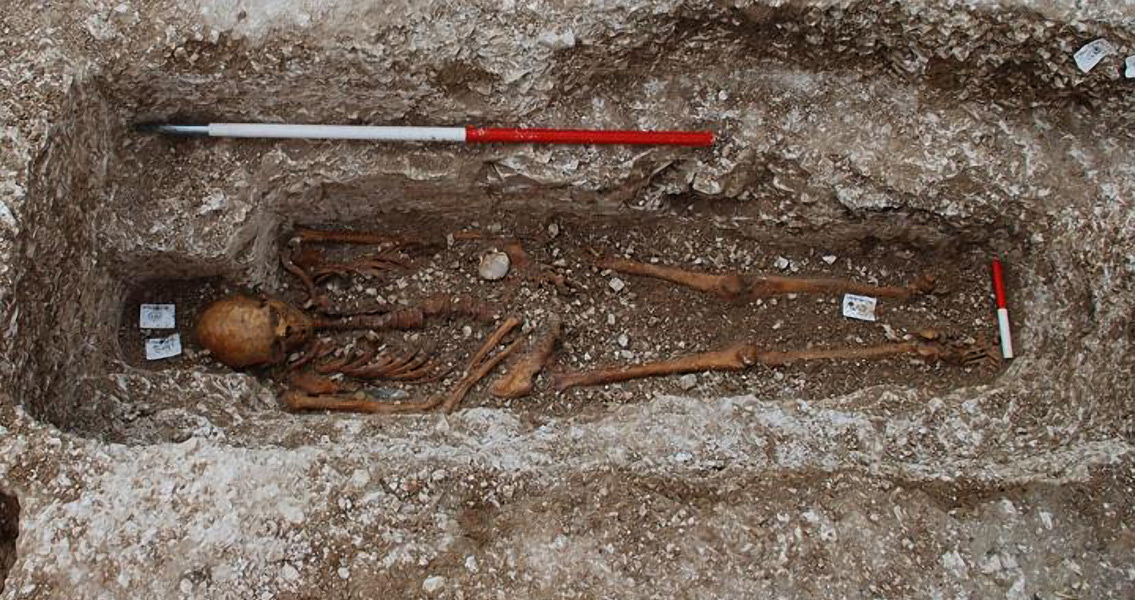
Mycobacterium leprae or Mycobacterium lepromatosis, it has affected human societies across the world for millennia. Reaching epidemic levels in the Middle Ages, leprosy continues to infect people to this day. The organisms responsible for leprosy are close relatives of M. tuberculosis, the bacteria that causes tuberculosis. Scientists theorise that leprosy enters the body through either breaks in the skin or through the mucous membranes of the nose, a theory supported by the fact that the disease tends to get transmitted after prolonged periods of close contact. Ultimately however, scientists are still unsure of the exact mechanism behind leprosy’s transmission. A multidisciplinary team investigated the strain of leprosy found in a leprosy hospital cemetery in Winchester, UK. Extensive tests were performed on a skeleton excavated from the cemetery, including genotyping, radiocarbon dating, biomolecular analysis, osteology, strontium, and oxygen isotopic analyses, as well as host of archaeological tests. Radiocarbon dating revealed that the remains studied had been buried in either the late eleventh or early twelfth century. The team believe that the individual was likely a wealthy religious pilgrim from outside the UK. As well as analysing the single skeleton in great detail, the team found that 86% of all remains sampled at the burial site displayed skeletal lesions indicative of leprosy. Simon Roffey and Katie Tucker, of the University of Winchester UK, and Michael Taylor of the University of Surrey, UK, along with their colleagues, determined that the M.leprae genome had not changed significantly since the terrible epidemic that ravaged the Middle Ages. The finding is hugely significant, suggesting that the lack of variation in the genome has allowed humans to build up a resistance to leprosy, leading to the substantial decline in the disease’s transmission. The strain of M.leprae sampled from the skeleton was found to belong to the 2F lineage, a strain which today is associated with leprosy cases in South-Central and Western Asia. Although most of the M.leprae strains found at the Winchester cemetery fall into the 2F lineage, the sample presented in the paper was genetically distinct from these isolates. It remains unclear exactly where or when the pilgrim actually contacted leprosy. Nevertheless, the team’s findings have the potential to greatly enhance our understanding of the transmission of leprosy in the past, and the present. “These findings confirm the benefits of a multidisciplinary approach which allows investigation of the wider relationship between leprosy, medieval pilgrimage and M. leprae transmission.” the authors write in the study, published in open access journal PLOS Neglected Tropical Diseases. Image courtesy of Roffey, S. and colleagues, PLOS Neglected Tropical Diseases ]]>