Categories
The Philadelphia Riots Sixty Years On



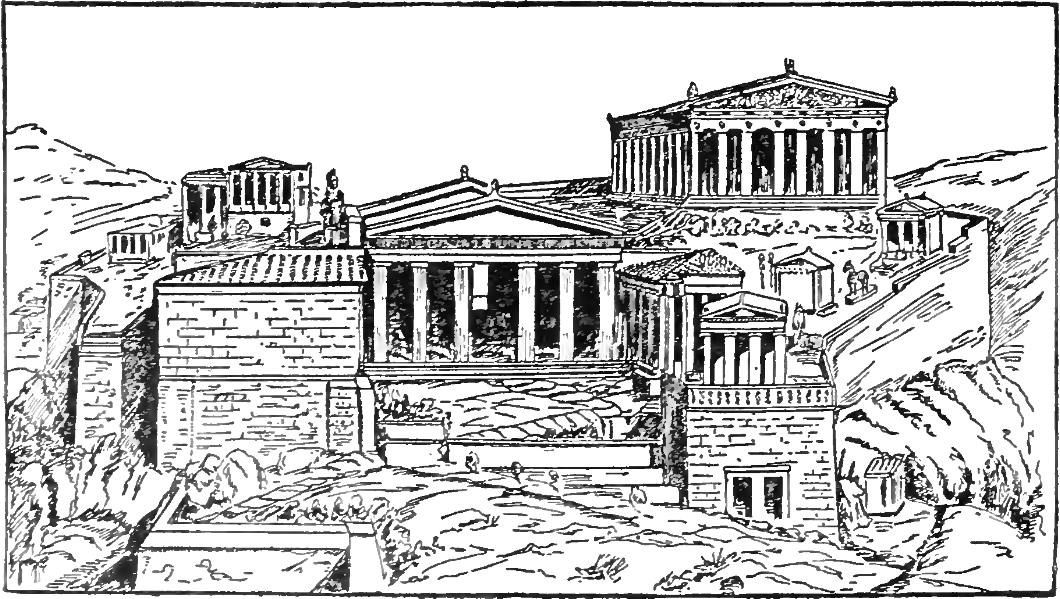
society is causing tension and problems in the US and Europe. The experience of Ancient Greece can surely provide some insight into the modern situation. On a more practical level, the U.S. is suffering from water shortages in several major areas. This is a situation with historical precedent. The Pueblo ruins in the South-west reveal a sophisticated society that abandoned its settlements between the twelfth and thirteenth century A.D. Archaeological studies suggest that the reason the society disbanded was a dramatic shift to an arid climate in this period. In contrast, there is evidence of states in the Eastern Mediterranean and Middle East that succeeded through periods of drought between 1200-1000 BC and 2200-2000 BC. Archaeology and historical studies allow us to analyse why some societies succeed and others failed. They teach us valuable lessons that could have a positive impact on policy in the future. Unfortunately, in both the US and UK, funding for archaeology is in decline, and is often insignificant in comparison to Europe and China. It is vital for us to learn about the past, not just to preserve our heritage, but to teach us about the present and future as well.]]>
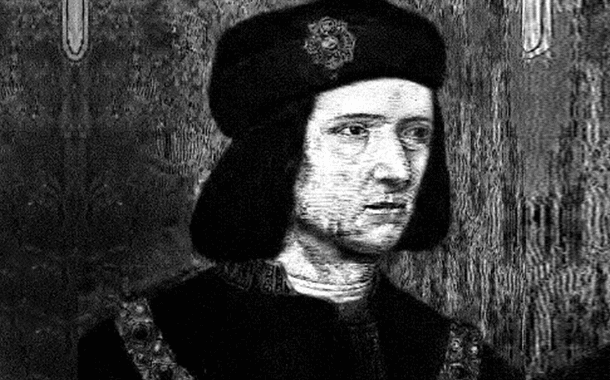
th and 27th of July the Council for British Archaeology will be coordinating the nationwide Festival of Archaeology. This annual celebration includes over a thousand events organised by museums, national parks, heritage organisations and universities to raise awareness across the country about sites of historic importance and interest. Unfortunately, a combination of budget cuts and dwindling interest in archaeology has put the future of the profession in Britain in a precarious position. Archaeological digs in the UK are still unearthing a host of fascinating discoveries that show just how important the profession is. In 2003, an archaeological survey for a road widening scheme in Essex discovered an undisturbed Saxon tomb, believed to be that of one of the Kings of Essex. In 2012, the bones of the last Plantagenet King, Richard III, were found in a car park in Leicester. Such sites are vital to piecing together the UK’s rich and diverse history, but the archaeology sector is coming under increasing pressure. The recession reduced the number of archaeologists in the UK by a third. The number of archaeologists cannot match the rate of development works, raising the prospect of important sites being lost. The situation has reached the point where only 5% of England’s heritage is designated and protected by Law. Despite the extensive level of qualification needed for a professional archaeologist, entry level salaries start at just £17,000, and jobs are often only temporary. For university departments, a vicious cycle is starting. Government funding is decided by the number of top grade students applying for a university. Archaeology departments are beginning to shrink due to the paucity of students that apply to them. In the case of Birmingham University, this led to the closing of the Institute of Archaeology and Antiquity in late 2012. At every level, sources of funding are becoming scarce. Local councils and charitable funds such as The Heritage Lottery Fund, the Arts and Humanities Research Council and English Heritage have all reduced their funding over the last few years. Digs are increasingly reliant on the enthusiasm and goodwill of volunteers. Speaking about the exhumation of Richard III, world renowned archaeologist Glenn Foard told The Independent, “We could not have found the battlefield, and surveyed it when we found it, if we had not had this volunteer input.” Other solutions are being explored. DigVentures seeks to use crowd funding techniques to create investment and engagement in sustainable archaeology. It is a self sufficient enterprise that aims to break the reliance on government or local authority grants. DigVentures’ is an innovative approach that also allows donators to take part in digs and excursions, hopefully fostering genuine engagement. It is a truly innovative approach, the only potential criticism being that it relies on choosing sites for their widespread and popular appeal. Elsewhere, the Local Heritage Engagement Network is trying to rekindle local participation in the protection of heritage. By highlighting the consequences local authority cuts can have for the historical environment, they hope to encourage local groups to campaign for the protection of archaeological services. It is vital that there are enough archaeologists to keep pace with the rate of redevelopment and building work in the UK. Unfortunately, the difficulties facing the sector raise the very real prospect of important sites being lost forever. The key seems to be reigniting the general public’s fascination with the past and appreciation of archaeology’s value.]]>

The George and the Dragon story There are several versions of this story. Usually it is set in North Africa. One story recounts how the brave knight arrived in Libya after a very long and arduous trip by land and sea. Here he met a hermit who told him about a terrifying dragon that was terrifying the people of Libya. The dragon had an unpleasant habit of devouring young maidens. The problem the country faced was that all the young maidens had been eaten with the sole exception of the king’s daughter. It was her turn to be the dragon’s lunch tomorrow. The King of Egypt was offering his daughter in marriage to any brave knight willing to rid the land of this dragon. This was exactly the kind of challenge George was searching for. He galloped off the valley where the beast lived just in time to see the princess of Egypt being led to this grisly death. He comforted her with the news that he was off to kill the dragon and she need not fear. True to his words he rode on to the cave where the dragon lived. The huge beast with a fifty foot long tail and a huge head was understandably furious at this intrusion on its territory. It came out of its cave roaring like thunder. George charged at the dragon and speared it but its scales were so thick his spear broke. George was dismounted but found refuge under a magical tree conveniently on hand for some emergencies. The tree’s magical powers shielded him against the dragon’s poison. When he had recovered from the failure of the first attack he went after the dragon again with his sword. The dragon doused him in poison and his armour fell apart. Everything was almost lost but George noticed just in time that there were no scales under the wings of the beast. He struck it under its wings with his sword and at last succeeded in dispatching the monster. Interpretations On the most basic level George and the dragon is an attractive fairy story. We learn about the triumph of good over evil in a manner that leaves no room for alternative interpretations. On a deeper level it is easy to detect in the persona of the dragon a symbolic representation of our fears of the unknown, or situations we perceive as very threatening. The dragon can be seen as almost insurmountable obstacle or approaching terror threatening our very existence. The conquest of the dragon shows that we have the abilities to overcome our most dreaded enemies with sufficient determination and courage. These ideas appeal to individuals. They also clearly held appeal for an island nation fearing invasion from its more powerful Continental neighbours. If you want to connect the dragon slaying with some episode in early history, there is no evidence that Saint George is modelled on a person whom we know lived in a certain historical period. However, it is interesting to note that many cultures have stories featuring dragons. Some scholars suggest that one explanation for this maybe the survival of dinosaurs into a much later period than we used to believe. The theory has always been that dinosaurs died out before man came on the scene. These scholars postulate that early man might have seen dinosaurs and conceivably needed to defend himself against them. If this really was the case there may have been a real prototype for Saint George – an ancient warrior who fought and killed one of these prehistoric monsters. His exploits would have been talked and sung about for generations and so this story may have a germ of truth in its origins. More prosaically the stories of dragons may have been sparked by the discovery of dinosaur skeletons, which would certainly have the power to terrify a superstitious and uneducated farmer. In truth, we will probably never know. ]]>

The Strength of Edwardian Britain There is no denying that there were plenty of reasons why the Britons of 1914 would want to take pride in their country’s achievement. The country had faced no serious threat of foreign invasion for a century, and no battle had taken place on British territory since the Jacobite Rebellion of 1745. The Industrial Revolution in the late eighteenth and early nineteenth century had transformed Britain into a leading industrial and commercial power. Coal production in 1913 reached a record level never ever to be surpassed. British goods, locomotives and other machinery were in demand all around the world. A look at a world map showed that a quarter of the globe was now absorbed in the British Empire. The state visit of the newly crowned King George V to India in 1913 with the colourfully clad Indian princes paying tribute to the Emperor was as clear a demonstration as you could ask of Britain’s greatness. Behind the Imperial Façade If you look deeper into the fabric of Edwardian Britain the impression of one long summer’s day of peace and prosperity appears in a different light. The rejection on health grounds of so many volunteer soldiers in the Boer War (1899-1902) shocked the public with details of the extent of malnutrition and stunted development of the youth in the country’s industrial cities. In 1899 social researcher Seebohm Rowntree carried out a survey of living standards in the city of York. Although York was a major railway junction it was not part of the northern industrial belt yet Rowntree’s study found that 27% of the city’s inhabitants were living at a level as low as that found in the slums of Manchester, Glasgow and other major industrial conurbations. While the elites of British society may have been enjoying the delights of motoring, country house parties and Rag Time music, many more of Britain’s inhabitants were living in great deprivation. Although the terrors of the Workhouse described by Dickens in “Oliver Twist” had been ameliorated to some extent people still lived in fear of ending their days in this dismal institution. The level of popular discontent can be judged by the tide of industrial unrest that swept Britain in the decade prior to the outbreak of the First World War. The growing power of the trade union and Labour movement expressed itself in national strikes on the railways, mines, ports and other key industries. The strikers enjoyed some success in forcing the employers to improve their wages. Although trading conditions were generally favourable, it can be seen in hindsight that Britain was losing its position as the world’s leading economic power. The growth of the German economy outpaced that in Britain. The advantages of the superior technical education available in Germany and France were already making themselves felt as those nations took up newer technologies with more enthusiasm than their British counterparts. The political scene was becoming increasingly confrontational. The 1906 General Election returned a substantial number of working class Labour MPs to challenge the hegemony of the Liberal and Conservative parties. The Suffragette movement had turned increasingly militant with breaking of shop windows and even arson attacks in an attempt to have women granted the franchise. Far more menacing were the voices coming from Ireland. After many attempts to introduce Home Rule for Ireland the Liberal government was close to passing the necessary legislation. The opposition of the House of Lords was overcome by a threat to swamp the House with newly created Liberal peers. The Protestant population of Ulster were strongly opposed to anything that would weaken the tie with the British mainland. Under their leader Edward Carson they organized a formidable militia determined to resist Home Rule by force. They had a number of sympathisers in key positions in the British army. The possibility of violent conflict tearing the nation apart had never been closer. Even in distant New York a small number of Indian political activists laid the foundation of the campaign for Indian independence. Some historians thus contend that the outbreak of World War One actually saved Britain from violent unrest or even revolution. The cessation of industrial and political unrest as most people united behind the war effectively relieved pressures that might have otherwise torn the nation apart.]]>
Vandalism a crime, not art
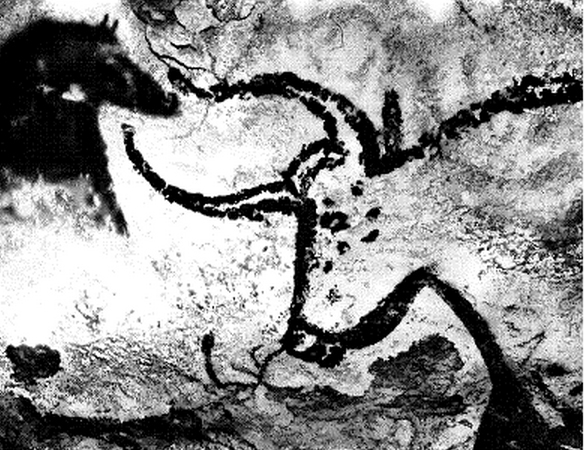
Rock art could be used for understanding ancient symbols, religions, cultural boundaries, origins, beliefs and even factors like gender relationships and should be protected from Vandalism
Rock art can be an extremely precious phenomenon especially depending on the era it belongs to, the impact of the images and the significance of historic background. They are supposed to be preserved the way they are, so archeologist and anthropologists can extract the comparative study of the human societies that existed before, their culture and development. It is a complex field as well, as one has to predict the most accurate depiction of these pieces of art and establish a link, if any.
 Thanks to the Pharaoh, Egypt is an example many of us know for rock art reflecting heritage and culture. The Egyptians had their Gods and language carved all over the ancient rocks is an evidence of how they lived, what their beliefs were, what their culture was, what psyche they followed and much more can be concluded from these precious pieces of artifacts. But not being famous for rock art does not mean that there are no such sites reflecting heritage anywhere else in the world.
Every place has a history and heritage to go with and same is the case with Australia. Australia has a number of sites that contain rock art that date back to 40,000 or even 100,000 years old. The rock art is a reflection of the culture and beliefs of these localities. These indigenous pieces of art, especially those in the Kimberly, are believed to be 60,000 years old, which is five times older than the Egyptian pyramids. These pictures of men, women and children with their tools, animals and the different actions reflect a lot about how they lived and what their beliefs were.
This rock art should be protected from a serious crime, vandalism, as no one wants to lose track or disrupt history. A recent case of vandalism was witnessed in Burrup Peninsula, where the biggest and most important collection of rock carving can be found which is dated back to the ice ages. The maximum fine for such an act is a hefty one as well of up to $20,000.
These sites have to be protected by the Government in case of vandalism. The Australian Government should also make sure that all the sites of rock art and ancient rocks are recorded and registered with all the details so we never lose track of them in the times to come. They should start a campaign about such sites and what they reflect about our heritage. In fact, one should cover the 100 most important sites across the globe and have a comparative analysis of the heritages worldwide.
With the rain, dust and reptiles crawling over these precious pieces of art, they have survived and they will survive in the future as well, only if protected from vandalism. Such rock art that reflects history is a precious symbolic sign of the past, one can relate to. These sites are a library for history, and should be registered and recorded which is a very inexpensive process.]]>

A professor was proclaimed as the Real-Life Indiana Jones when he made a groundbreaking decoding on a mysterious ancient manuscript.
Fictional Indiana Jones may have found his real- life counterpart when a professor from the University of Bedfordshire decoded the legendary and mysterious Voynich manuscript. Recently Stephen Bax, a professor of Applied Linguistics, has attracted international attention by becoming the first professional linguist to crack the code of the 600 year-old manuscript.
 The Voynich manuscript is a pictorial codex hand-written in a mysterious writing system, named after Polish book dealer Wilfrid Voynich, who purchased it in 1912. The pages of the codex, which was written on vellum, have been carbon dated to the early 15th century, between 1404 and 1438. The content features illustrations of exotic plants, stars, and mysterious human figures, as well as many pages written in an unknown text. Its origin is unknown, with the earliest confirmed owner a Polish alchemist named Georg Baresch.
Professor Bax has begun to unlock the mystery meanings of the Voynich manuscript using his wide knowledge of mediaeval manuscripts and his familiarity with Semitic languages such as Arabic. He is working through it letter by letter using careful linguistic analysis.
He explained, “I hit on the idea of identifying proper names in the text, following historic approaches which successfully deciphered Egyptian hieroglyphs and other mystery scripts, and I then used those names to work out part of the script.”
“The manuscript has a lot of illustrations of stars and plants. I was able to identify some of these, with their names, by looking at mediaeval herbal manuscripts in Arabic and other languages, and I then made a start on a decoding, with some exciting results,” he added.
The term for Taurus is one of the words he managed to identify. Other than that, a constellation of of seven stars which may be the Pleiades, and also a picture of the plant Centaury, a known mediaeval herb, as well as a number of other plants.
Professor Bax was reported to have conducted a lecture that focused on the procedure and problems in decoding the manuscript, and also discussed moves to identify the underlying language of the manuscript. The Voynich manuscript has earned a reputation for being ‘the most mysterious’ manuscript on the planet. Even though he has so far managed to crack only part of the manuscript, that alone is quite a breakthrough and will no doubt pave a path for like-minded enthusiasts to join the manuscript-decoding party.
The Voynich manuscript is a world-renowned case in history of cryptography. Many cryptographers, professional and amateur, have tried and fail. Even codebreakers from World War 1 and World War 2 were unable to penetrate into its inscrutable content. Its obscure reputation grew with the emergence of some rather grand theories. Some suggested it was the work of a young Leonardo da Vinci, various secret groups, or even Aztecs. Some even went further and proclaimed it was transcribed by something not from this earth, while other, more pessimistic people stated that the manuscript might be nonsense.
Even though the manuscript is not fully decoded yet, Professor Bax’s work would undoubtedly serves as a much-needed trigger that would launch the journey of its full decipherment to its eventual success.]]>