Categories
Magna Carta
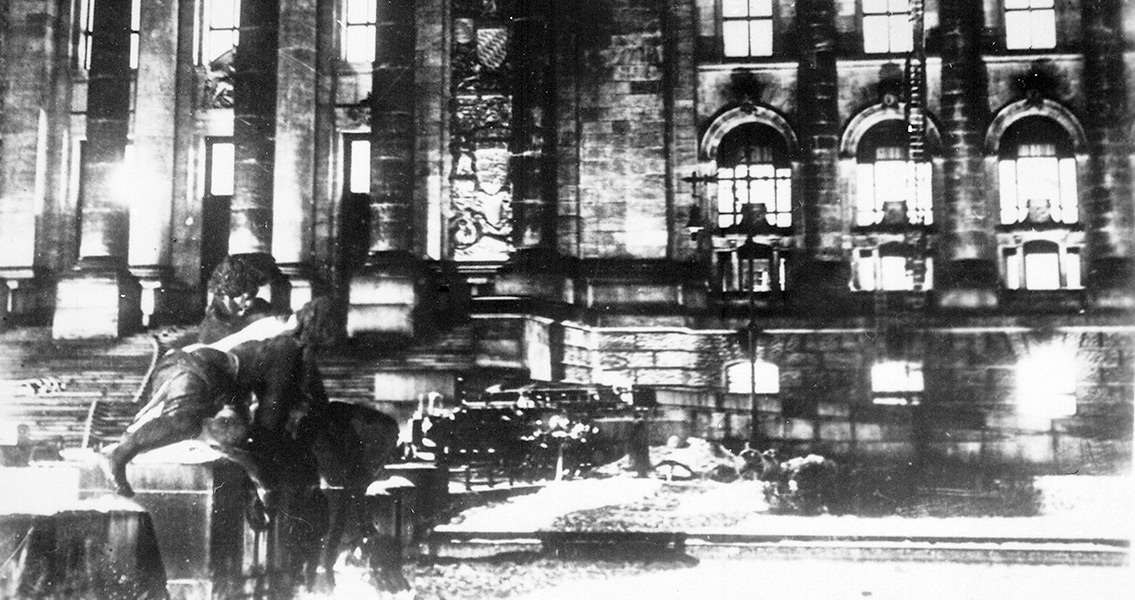
Central European History. “It tells us about the subterranean forces, especially of legal and political interest, that have shaped the master narrative; and it tells us about our attitudes toward different kinds of sources and authors.” Hett argues that the two conflicting arguments about who started the Reichstag fire – van der Lubbe acting alone, or the blaze being instigated by the Nazis – allow us to view major trends in the history of Germany. The version of the Reichstag fire in which the Nazis were the culprits was a narrative developed and presented by victims of Nazism, Hett explains. The theory that van der Lubbe was the sole culprit, on the other hand, began as a self-serving perpetrators’ story. “The critical moment in the development of the single-culprit narrative—and in the Reichstag fire controversy overall—came in late 1951 or early 1952 when the Lower Saxon interior ministry ordered Fritz Tobias to research the fire in an effort to defend Lower Saxon police official (and former Nazi political police detective)Walter Zirpins”, Hett writes. It is very difficult to use victim narratives as historical sources as they are often personal accounts of people in extreme situations. As a result, victim narratives have evoked discomfort for earlier historians; only recently have these stories been examined. “It was precisely such [victim narrative] sources that tended to tell of Nazi responsibility for the Reichstag fire,” Hett notes, explaining why the single-culprit narrative has been so pervasive. Researchers are still in the very early stages of an important process of determining which accepted narratives need to be re-examined. Through much of the postwar era, Hett notes, victims have repeatedly been lost in the historiography because historians discounted their testimony, favouring ‘objective’ sources. Contemporary history is a troublesome area in particular, because it is not removed from the present. Accounts of the recent past are often intertwined with current political interests. Hett, among others, has effectively shown that accepted accounts of the past require significant scrutiny. For more information: www.journals.cambridge.org Image courtesy of Wikimedia Commons user: DIREKTOR]]>

DNA analysis that the Neanderthals started declining in numbers very soon after the first modern humans set foot in Europe. Part of the reason may have been the new diseases that modern humans brought to the Neanderthals, and the fact that the latter had no immunity against them, unlike the modern humans. Climate change also had a big part to play in the decline of the Neanderthals, with some authors suggesting the cause of the change was a series of volcano eruptions, which could explain why they declined so fast. It seems one could say with a reasonable degree of certainty that there was no one single reason why the Neanderthals died out and modern humans thrived, but each of the reasons so far identified allows us a deeper understanding of this stage in human evolution and greater insight into how our own species came to be where it is today. For more information: Rabbits and hominin survival in Iberia Image courtesy of Wikimedia Commons user: Bernard Dupont]]>

Haaretz interview with Annette Nagar, the head of the IAA, the NRC is funding the current excavation of the remains of the church site. “The road station and its church were built in the Byzantine period beside the ancient road leading between Jerusalem and the coastal plain,” said Nagar, adding that while the road itself survived the end of the Byzantine era, the church and road station have fallen into disuse and disrepair in the 1,500 years since they were used regularly. The church, when in its heyday, was around 16 meters in length. To the side was a small alcove measuring 6.5 meters by 3.5 meters, thought to have been used as a secondary chapel; in the northeast corner of this smaller chapel is a baptismal font constructed in the shape of a four-leaf clover, which was an early symbol of Christianity used to represent the cross. Directly west of the church are the remains of the roadhouse, a building that would have been used to provide lodging for travelers and pilgrims on their way to and from Jerusalem. A plethora of archaeological finds were discovered in both the remains of the church and the roadhouse in the form of smaller artifacts, which included fragments of marble, shells made of mother-of-pearl, glass drinking vessels, coins and small oil lamps. The walls of the church were likely decorated with frescoes as evidenced by countless shards of red-colored plaster strewn about the ruin, according to Nagar. This isn’t the first archaeological find that has been uncovered along the road from Jerusalem, especially in the region surrounding Abu Ghosh. Nagar remarked that there were some uncovered within the town itself as well as the proposed site of the Biblical town of Emmaus, the site where Jesus is said to have appeared shortly after his resurrection after his crucifixion. Once the NRC completes its excavation and the IAA concludes its investigation of the site and any artifacts uncovered during the dig, the remains of the church and the roadhouse are slated to be re-buried once more. This will preserve the site for posterity, the IAA says; it could also pave the way for additional research and study on the site at a later date without having to oversee the site and preserve it from the elements in a more active manner. ]]>


Population genomics of Bronze Age Eurasia ]]>

Discovery News that they most probably came south from the subarctic territories of Canada and thrived in Utah in the second half of the thirteenth century, a time when other indigenous peoples in the region were having trouble simply surviving because of environmental and social factors. While their neighbours were struggling to survive, the Promontories had enough resources to live in relative comfort and entertain themselves with various games. One of these probably involved shooting darts through a hoop, another was a hand guessing game in which players had to guess what object another player held in his or her hand, and some were possibly board games in which dice were used. It seems most of the dice games, however, were played by the women in the tribe: most of the dice were found near the entrance of the cave, dubbed simply Cave 1, around a large hearth, where women likely gathered after their chores were done, Ives’ colleague Gabriel Yanicki related to Westerndigs. The stakes in these games tended to be small, including swapping chores and personal items. The dice were made of cane pieces, with burnt markings on their sides. The men of the tribe were less likely to take part in the dice games but they did bet on the outcome, Yanicki went on to say. At the same time, they partook in other leisure activities such as the dart-throwing game, where there were two participants who aimed to shoot their darts through a rolling hoop. In the men’s games, the researchers believe, the stake tended to be significantly higher. In fact, Yanicki suggests that these games were not played just for fun but may have replaced other, more hostile encounters between groups. This is likely to have strengthened the social ties between these neighbouring groups and hence their economic exchanges. The Promontory cave was discovered in the 1930s by University of Utah archaeologist Julian Steward. However, not much progress was made until recently as to understanding the real significance of the artefacts found in the cave. These include animal hides and bones, but also around 200 pairs of moccasins, a lot of them in children’s sizes. Analysis of the moccasins revealed that the style they were made in was typical of the people living in subarctic Canada, which led to the conclusion that the Promontory culture came from the north and settled in the southwest of North America. Native American cultures like the Apache and the Navajo may well have then sprung from the Promontory. The research team has speculated that the Promontories probably brought with them not just the moccasin style but their gambling habits as well, and these spread across the continent like the culture’s descendents. Image courtesy of Wikimedia Commons user: NASA]]>