Etruscan Studies. Image courtesy of Mugello Valley Project]]>

Etruscan Studies. Image courtesy of Mugello Valley Project]]>

Siberian Times, “For such an ancient epoch, this woman has a lot of items in her grave. We have not encountered anything like this in other burials from this time, and it leads us to suggest that the items in her grave had some ritual meaning. We hope to get even more rare and spectacular finds next year, when we will continue to study this unique (burial) mound and open the central burial plot.” The funerary items which had been buried with her include approximately 100 decorations (made with the teeth of various animals), bone and horn carved items, an incense burner, bone needles, jars, and a bronze knife. Additionally, her funeral costume was embellished with more than 1,500 beads. Researchers were particularly excited after the discovery of a clay incense burner because it’s decorated with the same sun-shaped faces previously-discovered on ancient rock art in Siberia. Polyakov explained in the Siberian Times, “Its importance is hard to overestimate. All such images previously discovered had been found only on cliffs or separate stones. Now there is the prospect to find out when they were made,” adding, “Now, thanks to our current research, we can definitely say that these rock arts were made by the representatives of the Okunev culture.” The location where the grave was found is known as the Itkol II burial site. Excavations at the site started in 2008, with around 560 archeologically significant finds unearthed so far. The culture owes its name to the nearby city of Okunev, in the south region of Khakassia, where the first burial site was discovered in 1928. The Okunev Steles, anthropomorphous stone columns which are several meters high, are the most well-known monuments attributed to the Okunev culture. Dr. Polyakov is quoted in the Siberian Times as saying, “Okunev archaeological culture is a unique phenomenon of the Early Bronze Age of Southern Siberia. We have a huge quantity of artistic heritage in the form of numerous images – ‘masks’, carved or engraved on the rocks. They have special style, which is a kind of symbol of Okunev culture.” After the incense burner has been restored and precisely dated it will be exhibited at the Hermitage Museum in St Petersburg. ]]>

The Guardian, Wilkinson made the decision to begin translating the new anthology to close a gap in the modern understanding of ancient Egypt. He was particularly interested in providing access to “the life of the mind, as expressed in the written word” of ancient Egyptians. With writing found on nearly every temple wall and within every tomb, the nearly 3,500 year written tradition of Egypt is much more than decorative. Wilkinson added. The researcher felt that the public were being denied a deep literary tradition, especially with many museums displaying papyrus scrolls covered with hieroglyphs as artifacts instead of texts. The new translations should provide surprises for readers, Wilkinson hopes, adding a much-needed dimension to the ancient people besides pyramids, pharaohs, and Tutankhamun’s famous sarcophagus and mask. While hieroglyphics are pictograms, Wilkinson says that the concepts they convey could be as sophisticated as any Latin or Greek script. The passages he’s chosen to translate offer a glimpse into the life of the ancient Egyptians and are rich with symbolism and metaphor, and include eyewitness accounts of natural disasters and military battles. The researcher, who has written several books on the subject of ancient Egyptians, says that many texts in the collection haven’t been translated for nearly a century. These older translations, only some of which are in English, use diction and idiom that are “very old-fashioned and impenetrable”, Wilkinson said, something that makes it even harder to relate to ancient Egyptians. The problem is not unique to ancient Egyptian; in fact, translating an archaic text into a modern language in a way that provides a close approximation of the original intent without making it unreadable to modern audiences is a dilemma prevalent in many academic translations. However, Wilkinson says that the new translations are much more relatable, even to a modern audience. He attributes this to focusing on the emotional impact of the texts, which are a wide, varied collection of tales that contain literary fiction, correspondence between a farmer and his overseer, and a description of a catastrophic thunderstorm that caused widespread destruction and flooding. The new anthology, which has been titled Writings from Ancient Egypt, is available this week from Penguin Classics. ]]>


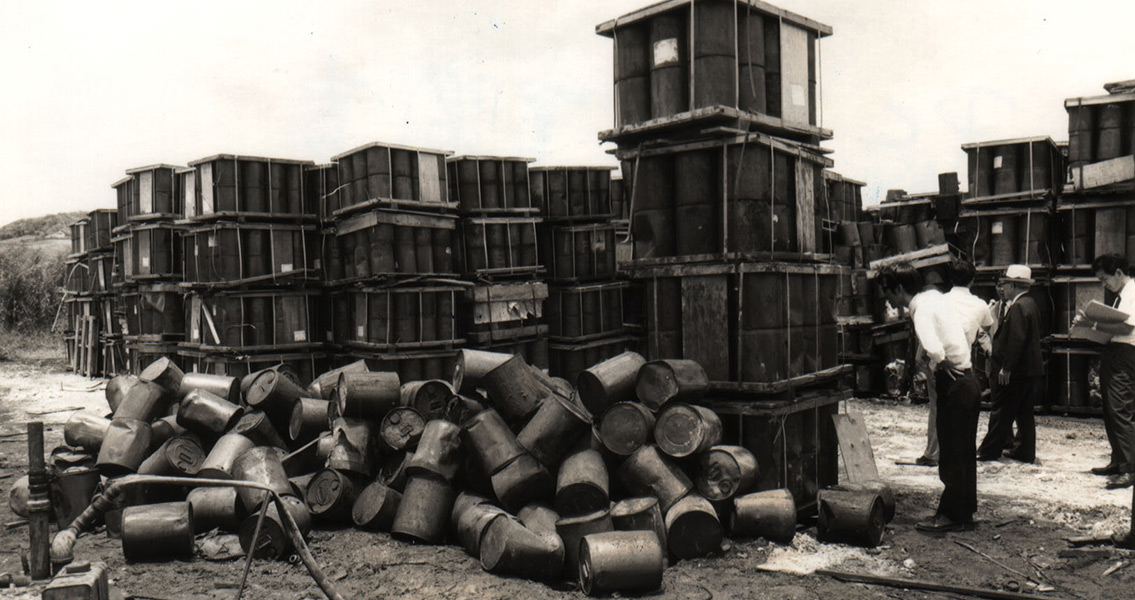
Environmental Health Perspectives. Organochlorine chemicals, used in pesticides and insulating material, were banned in 1977. The dangerous compounds were thought to have been confined to history; but the recently published study suggests that they might still be haunting us in the form of a link between higher levels of exposure to the chemicals during pregnancy and an increased risk of autism spectrum disorder in children. The results suggest that children born after being exposed to the highest levels of certain compounds of the chemicals during their mother’s pregnancy were 80% more likely to be diagnosed with autism compared to those who had only been exposed to the very lowest levels of these chemicals. Despite the 1977 US ban on organochlorine chemicals, such as DDT, the compounds remain in the envrionment. Human exposure to the chemicals comes when they are absorbed into animals whose meat make up part of our diet. “There’s a fair amount of research examining exposure to these chemicals during pregnancy in association with other outcomes, like birth weight — but little research on autism, specifically,” said Kristen Lyall, ScD, assistant professor in Drexel University’s A.J. Drexel Autism Institute and the lead author of the study; in a Drexel University press release. “To examine the role of environmental exposures in risk of autism, it is important that samples are collected during time frames with evidence for susceptibility for autism — termed ‘critical windows’ in neurodevelopment. Fetal development is one of those critical windows.” Two different classes of organochlorine chemicals formed the basis of the study: olychlorinated biphenyls (PCBs, which were used as lubricants, coolants and insulators in consumer and electrical products) and organochlorine pesticides (OCPs, which include chemicals like DDT). Rachel Carson’s 1962 book, Silent Spring, documented the detrimental effects pesticides such as DDT had on the environment. It was a watershed moment in the history of environmentalism in the USA, challenging the disinformation propagated by chemical companies and ultimately leading to the ban on DDT and other organochlorines. Lyall and colleagues’ work however, has shown the long term impact of the historical use of these chemicals. “Exposure to PCBs and OCPs is ubiquitous,” said Lyall. “Work from the National Health and Nutrition Examination Survey, which includes pregnant women, shows that people in the U.S. generally still have measurable levels of these chemicals in their bodies.” For the test, participants from a population sample of 1,144 children born in Southern California between 2000 and 2003, were divided into three groups: 545 who were diagnosed with autism spectrum disorder, 181 with intellectual disabilities but no autism diagnosis, and 418 with a diagnosis of neither. Blood tests taken from the second trimester of the mother’s pregnancy were then used to determine the level of exposure to PCBs and OCPs. Lyall stressed that the level of exposure was key in determining risk. “Adverse effects are related to levels of exposure, not just presence or absence of detectable levels,” she said. “In our Southern California study population, we found evidence for modestly increased risk for individuals in the highest 25th percentile of exposure to some of these chemicals.” The consequences of the chemicals were not restricted to autism; the highest exposure to PCBs seemed to double the risk of a child being diagnosed with intellectual disabilities when compared with the cases of the lowest exposure. “The results suggest that prenatal exposure to these chemicals above a certain level may influence neurodevelopment in adverse ways,” Lyall said. The team plan to continue their work, to gain more of an understanding of how chemicals banned decades ago continue to haunt us in the present. “We are definitely doing more research to build on this — including work examining genetics, as well as mixtures of chemicals,” Lyall said. “This investigation draws from a rich dataset and we need more studies like this in autism research.” The full study is available here ]]>

Chinese Cultural Relics. Based on the tomb’s design and the artifacts recovered from inside, researchers were able to determine that the woman lived around 1,500 years ago; just a few decades prior to the end of the Northern Wei dynasty, which controlled that region of northern China from 386 until 534. The historical records indicate that Datong City, where the tomb was found, served as the capital of the dynasty until 494. The earrings recovered from the tomb were made from gold and bear the images of a human face and dragons. The researchers described the designs in Chinese Cultural Relics: “The human figure has curly hair, deep-set eyes and a high nose; wears a pendant with a sequin-bead pattern on its neck; and has inverted lotus flowers carved under its shoulders”. Adding: “In recent years, many gold earrings have been unearthed from Northern Wei dynasty tombs, but the earrings unearthed from this tomb are surely some of the most exquisite.” Additionally, the earrings are decorated with gold, teardrop-shaped designs inlaid with gemstones; with amethysts and gold chains which would have hung down on each side of Farong’s face. Similar designs have been found on earrings discovered in northern Afghanistan, indicating that the Northern Wei dynasty maintained cultural ties with the people in central Asia. The thread which held together the necklace Farong was wearing when she was buried had long since decomposed. However, because the beads remained relatively concentrated and unmoved when this occurred, researchers were able to successfully reconstruct it. The article states: “The small beads are the size of millet grains, some black and some green, and all are oblate, each with a perforation in the middle.” The Northern Wei dynasty was founded by the Tuoba clan of the Xianbei, and ruled northern China during the era of Southern and Northern Dynasties. Considered a period of political turbulence and intense cultural and social change, the Northern Wei dynasty is notable for the unification of northern China and the introduction of foreign ideas, including Buddhism. Images of the jewelry can be found at LiveScience Image courtesy of Wikimedia Commons user: Nicor ]]>
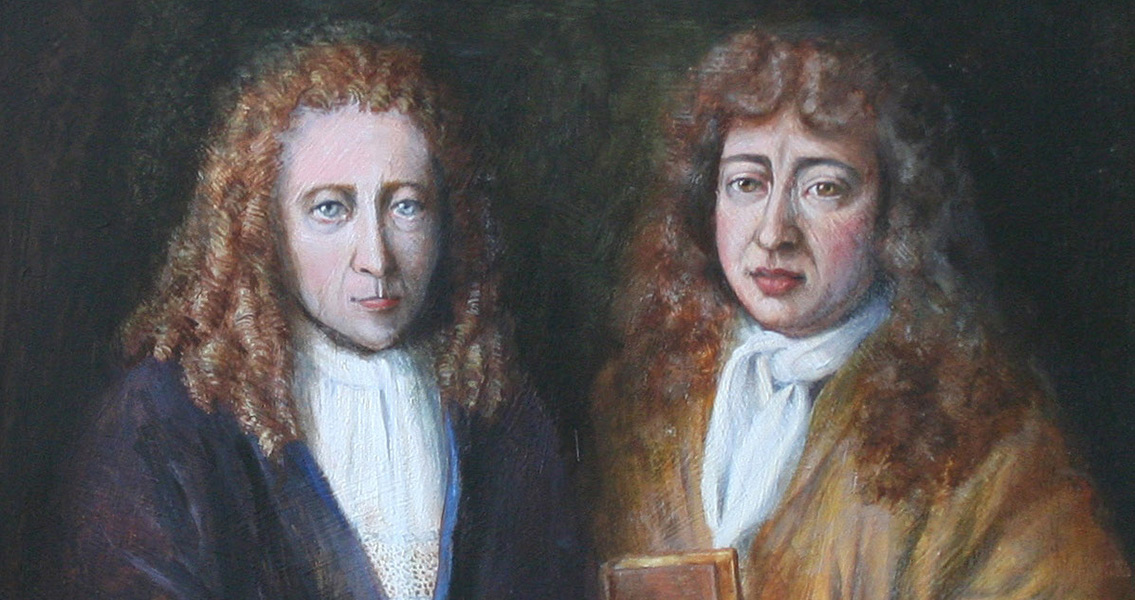
His pioneering work with microscopes led to his famous engraving of a fly’s eye. Just as remarkably, his early studies of petrified wood and other fossils made him one of the first to realise they were remains of once living things – a fact so well known now it seems obvious, but revolutionary at the time. How did a man involved in so much innovation, slip into obscurity? It is not as if Hooke was unappreciated in his own time. His book, Micrographia, was a bestseller, inspiring interest in the use of microscopes. He was a longtime president of the Royal Society, showing the regard in which his scientific work was held. However, he also had a powerful rival: Sir Isaac Newton. The two clashed bitterly in attempts to forge reputations as the greatest scientific minds of their age. In life this battle may have been a close run thing, but through history Newton became the undisputed winner. The first signs of conflict between these two massive egos came in 1672, when Newton submitted his first paper to the Royal Society. In the work, Newton claimed light was a particle, contradicting Hooke’s own ideas on the matter. A number of scientists launched attacks on Newton’s paper and methodology, but Hooke’s were the most scathing and his position at the Royal Society meant they also carried the most humiliating weight for Newton. Correspondence between the two became increasingly acrimonious; a major rivalry had started. This simmering tension exploded when Newton published his Principia in 1687, containing his Law of Universal Gravitation. Newton wasn’t the first to postulate about a force holding celestial bodies in place, it was an idea the scientific community had been moving towards for years. Hooke was one of the key figures behind it in the 1670s, suggesting the planets were attracted to the Sun, and that this force of attraction got stronger the closer the objects were together. Crucially, Newton was the first to create rigorous mathematical proof for the idea, but Hooke was convinced Principia would have been impossible if he hadn’t first postulated about the attraction between celestial bodies. A bitter dispute unfolded, Hooke trying to gain credit for his influence, Newton denying it (with the exception of a cursory mention in the third volume of Principia). In part, Hooke was a victim of his own approach: a polymath forming brilliant ideas in a variety of different fields but seldom creating the in depth, rigid proofs needed to back them up. An innovator who often failed to solidify his theories into something tangible and timeless, allowing his contributions to be overshadowed. In 1703 Hooke died, with some medical historians suggesting he suffered from diabetes in his later years. Newton became his successor as the president of the Royal Society, and some say he went to great efforts to tarnish his predecessor’s reputation. The only portrait of Hooke was removed from the Royal Society during Newton’s presidency. It has been suggested this was because he’d ordered it destroyed, or intentionally left it behind when the society moved buildings. As Newton’s reputation grew, Hooke’s deteriorated: a narrative forming that he was a bitter scientist unjustifiably trying to take credit from the work of others. As Newton’s influence continued to extend through the centuries, Hooke’s legacy seemed ever more vindictive, pathetic and jealous. Newton wasn’t the only scientist of the era to come into conflict with Robert Hooke, there are various accounts of his frequent arguments with others regarding credit for ideas. Sometimes Hooke was justified in his anger, sometimes not. Most of the time it is impossible to say due to a lack of evidence. Undoubtedly this was a dark side to his personality, but surely it should not be allowed to overshadow the brilliant contributions he made to the world of science.]]>

PLOS ONE, can be found online here Image courtesy of F. Botas]]>