Categories
Breaking News

Scientists Say Irrigation Used in Prehistoric Olive Cultivation

The Jerusalem Post, the international team of archaeologists – spearheaded by the Zinman Institute of Archaeology from the University of Haifa – announced the find this week, remarking that with such a large quantity of olive pits, it is highly likely that these early farmers would have needed to employ irrigation techniques. Professor Daniel Rosenberd, the co-leader of the research project, stated that the revelation that ancient agrarian societies were relying on artificial irrigation could result in a fundamental change in how scientists and historians understand how sophisticated these ancient farmers were. Rosenberg and his colleague: Dr. Florian Klimsh from the German Archaeological institute, believe that the prehistoric settlements found here in northern Israel in close proximity to Jordan were instrumental in the developmental process of the Near Eastern cultures and cities of antiquity. Despite this, little is known about these ancient settlements today. In order to broaden that knowledge, the recent research into the region focused on gathering botanical evidence to make determinations regarding what the conditions would have been in the Jordan Valley seven thousand years ago. Doing so could help shed light on not just agricultural practices and diet but also the economy of the region and how these settlements were organized socially, researchers say. It is well known that olives were being used in the region at this time, based on other documented evidence. However, with the sheer number of olive seeds found on site, Rosenberg said that several questions were raised which necessitate a new look at how ancient farmers irrigated their crops – and how the olive and olive oil trade operated during the time as well. Data collection over the past four years has already revealed much regarding the lives of these ancient farmers, with evidence pointing to the inhabitants growing different plant species concurrently. These plants, which all had differing maturation cycles, were meant to be used as a back-up in the event of a poor harvest. ]]>

Categories
Breaking News

New Insight into the Deadly Reach of Sixth Century Plague

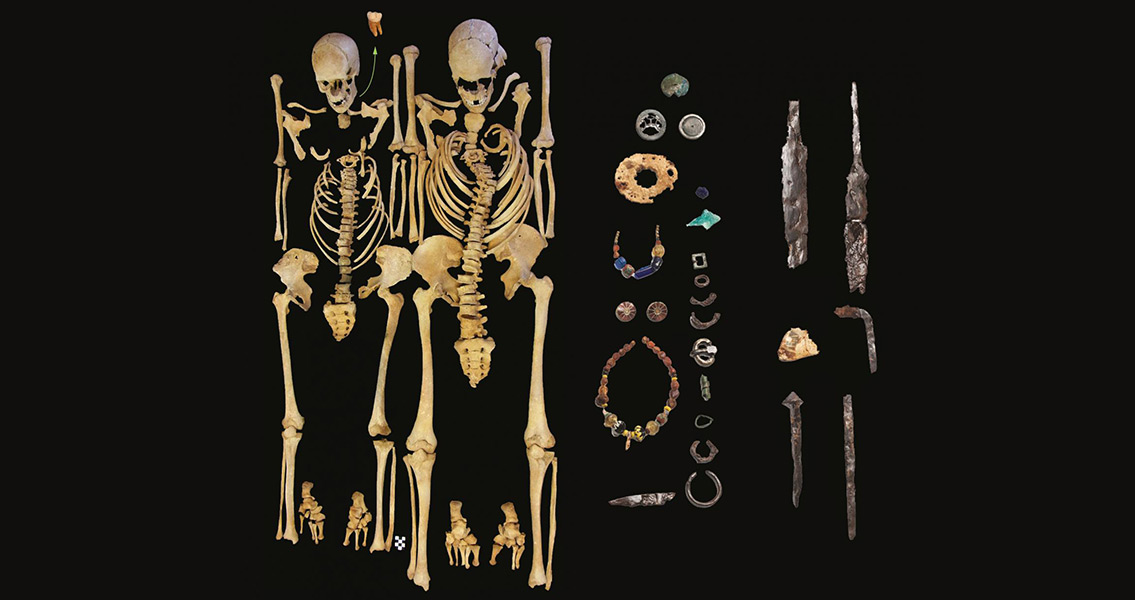
Yersinia pestis, the bacterium behind the Black Death, could also have been behind the sixth century plague epidemic. Michal Feldman, Johannes Krause and Michaela Harbeck, scientists based in Germany who are among the authors of the study, have recovered the bacterial culprit from sixth century skeletons found in Altenerding, an ancient southern German burial site near Munich. The genome found at Altenerding dates back to the beginnings of the outbreak of the plague, and confirms Yersinia pestis was the bacteria behind the outbreak. The new sequence reveals new insights into the molecular evolution of Yersinia pestis since the Byzantine period. It has also revealed new features that couldn’t be detected in a previous ‘draft genome’ of the bacterium, including 30 newly identified mutations and structural rearrangements unique to the Justinianic strain. “The fact that the archeological skeletons which gave these exciting insights were excavated over 50 years ago underscores the importance of maintaining well curated anthropological collections,” said Harbeck. “We were very fortunate to find another plague victim with very good DNA preservation in a graveyard just a few kilometers from where the individual analyzed in Wagner et al. [a recent study describing a draft genome] was found. It provided us with the great opportunity to reconstruct the first high quality genome in addition to the previously published draft genome.” Harbeck and colleagues’ results suggest that the strain of Yersinia pestis behind the Justinian Plague was more genetically diverse than previously thought. They are still unable to determine how and why the lethal pathogen reached Germany, however. Beyond simply analysing the development of a sixth century disease, the study could have far reaching applications. The authors have used the results to develop new guidelines that may improve the quality and authenticity of genetic data recovered from ancient pathogens. In addition, with plague re-emerging in certain regions of the world, the study provides a historical resource for the evolutionary changes, adaptation and human impact of the disease. “Our research confirms that the Justinianic plague reached far beyond the historically documented affected region and provides new insights into the evolutionary history of Yersinia pestis, illustrating the potential of ancient genomic reconstructions to broaden our understanding of pathogen evolution and of historical events,” said Feldman. “Our reanalysis of previous datasets stresses the importance of following strict criteria to avoid errors in the reconstruction of ancient pathogen genomes.” Image courtesy of State Collection of Anthropology and Palaeoanatomy Munich]]>

Categories
Breaking News

Scientists Identify 6 Million Year Old Galactic Shockwave

The Astrophysical Journal Letters, is available online here ]]>

Categories
Breaking News

Scientists Working Above the Arctic Circle Find 1,000-year-old Persian Cup

Siberian Times: “From the 6th and 7th centuries AD Central Asian merchants began to appear in the Upper Kama region. They exported walrus tusks, hunting birds and fur from the north. Through the Kama region they had penetrated to the Ob region in 7th and 8th centuries.” The Persian items that traders brought north with them often took on ritual meanings for the indigenous Khanty and Mansi peoples who lived in the area. They were seen as gifts to gods and spirits, stored in holy places and often used as serving dishes to carry ceremonial food given to the gods at festivals. Since the second millennium BCE, the regions between the Kama and the Irtysh rivers have been home to the indigenous Khanty and Mansi peoples. A number of researchers believe the Khanty’s ancestors were the prehistoric Andronovo culture, which are known for their ancient metalworking skills. Other researchers claim that the Khanty originated in the Ural steppe and then moved north to their present location around 500 CE. Traditionally, Khanty religion was closely connected to nature. The Crow Spring celebration is celebrated in April, while the Bear Celebration follows each successful bear hunt. The Bear Celebration can last 5 or 6 days (depending on the sex of the bear), and includes over 300 songs and presentations. With the arrival of Soviet power and the establishment of collective farming came the persecution of Khanty shamans along with the destruction of their burial grounds. Khanty children were even forcibly removed and sent to boarding schools. After an outburst of resistance, known today as the Kazym rebellion, the Khanty were brutally suppressed by the Soviet army; Khanty villages were burned along with anything else connected with their culture. Following that event, anyone who participated in the traditional bear funeral rites faced ten years in prison. In a census taken in 2010, only 30,943 people identified themselves as Khanty. The intention of the research expedition that brought the scientists to the Arctic to begin with was a project to monitor and compare the depth of the permafrost over a 30 kilometer area near Lake Parisento, on Gydan Peninsula. The scientists installed the monitoring equipment and then compared the recorded data with information that was obtained from the same location 25 years previously. Image of the artifacts can be seen here ]]>

Categories
Breaking News

New Species of Flying Dinosaur Discovered in Patagonia

Allkauren koi by the researchers behind the discovery. Preserved in remarkably good condition, the skull remains have revealed new information about the evolution of the braincase of pterodactyloids, a major suborder of Pterosaurs. The name Pterosaur comes from the Greek for ‘wing lizards’. These spectacular creatures dominated the skies during the Jurassic and Cretaceous periods, and included the largest vertebrate ever known to fly: Quetzalcoatlus from the late Cretaceous period. Members of the long extinct group were incredibly diverse, ranging from the size of a sparrow to the size of an airplane. Intriguingly however, Pterosaurs evolved flight separately from bats and birds; they are not closely related to either creature. The group had extraordinary adaptations enabling them to take to the skies: pneumatic bones drastically reducing their weight and an elongated digit supporting a wing membrane. The neuroanatomy of Pterosaurs has remained shrouded in mystery however, the consequence of a paucity of three dimensionally preserved remains. It is this that has afforded the latest discovery such importance, giving new insight into the intermediate forms of Pterosaurs. The study describing Allkauren koi, published in the journal PeerJ, provides new information about the origin, tempo and mode of evolution in the Pterosaur group. Allkauren koi has been named from the language of the Tehuelche, the group of indigenous peoples of Patagonia. ‘All’ comes from the Tehuelche word for ‘brain’, while ‘kauren’ is their word for ‘ancient’. It joins the over 150 other species of Pterosaur discovered so far. The remains, including the amazingly preserved, uncrushed braincase, were discovered in northern central Chubut Province, Patagonia Argentina. Through computer tomography, the researchers have been able to study the creature’s cranial anatomy, observing in three dimensions the cranial endocast and the inner ear. From this starting point a comprehensive phylogenetic analysis of the Pterosaur group was performed, one which “fills an important gap”, according to the study. “Allkaruen, from the middle lower Jurassic limit, shows an intermediate state in the brain evolution of pterosaurs and their adaptations to the aerial environment”, said Dr. Diego Poll, a member of the research team, in a PeerJ press release. “As a result, this research makes an important contribution to the understanding of the evolution of all of pterosaurs.” ]]>

Categories
Breaking News

Scottish Landmark May Bear Traces of Roman Invasion

Categories
Breaking News

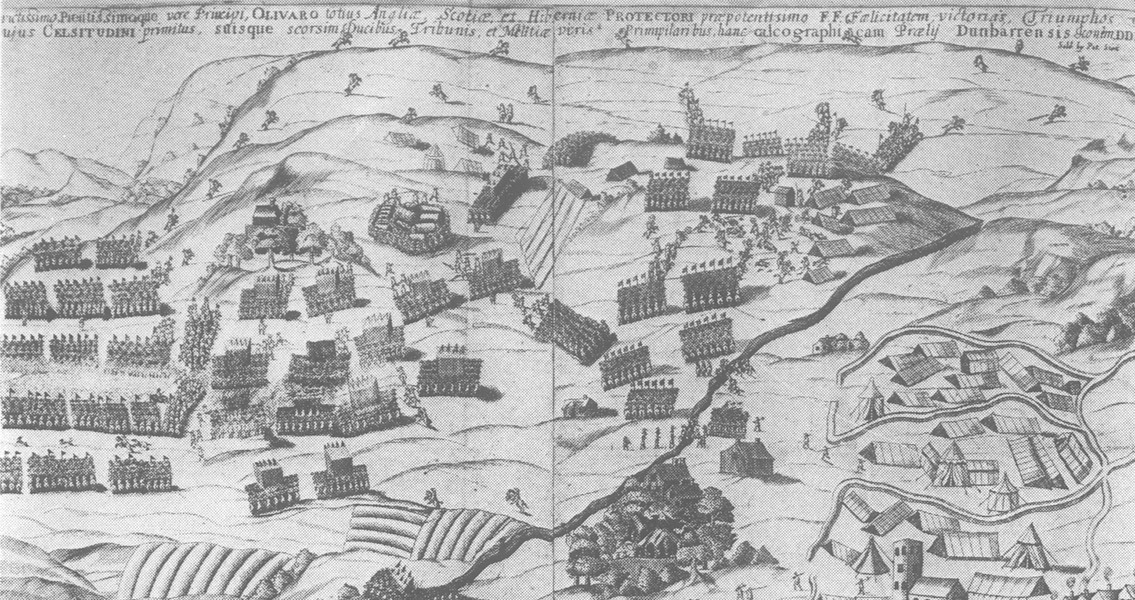
Remains of Soldiers from the Battle of Dunbar will Remain Together

Categories
Editorial

Robin Hood, From Violent Criminal to Movie Hero

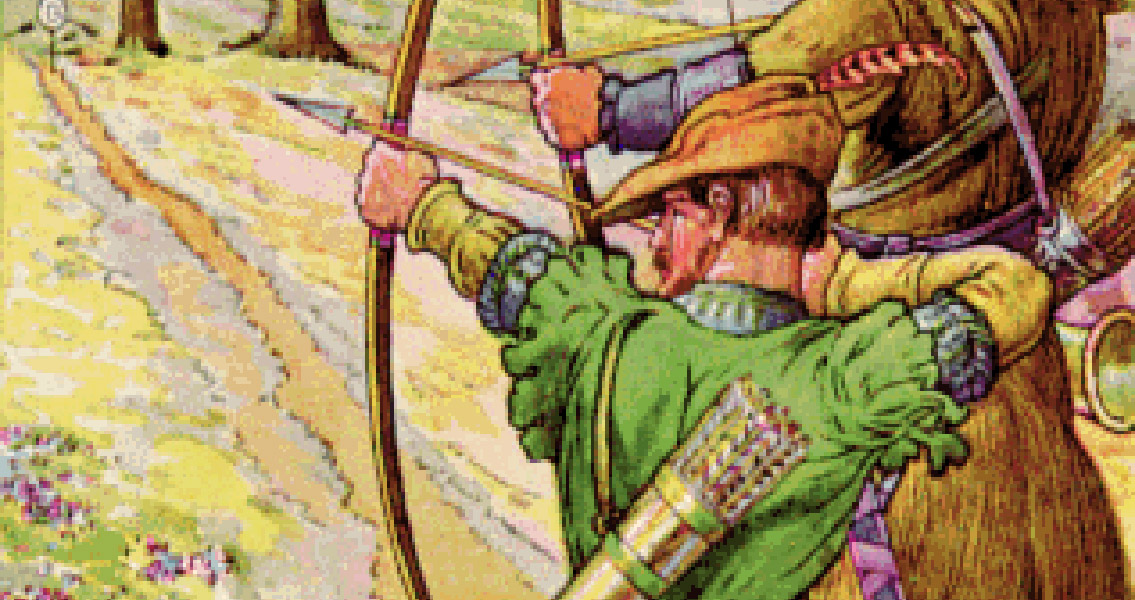
The Vision of Piers Plowman, contains the earliest known mention of Robin Hood, “I kan nought parfitly my Paternoster as the preest it syngeth, But I kan rymes of Robyn Hood and Randolf, Erl of Chestre.” Although the reference in Langland’s poem is vague: it is far from clear whether ‘Robyn Hood’ and ‘Randolf Erl of Chester’ are connected in someway or if the ‘rymes’ are from unconnected traditions, it does at least show that a character by the name of Robin Hood had entered the popular imagination by this point. Going back even earlier, historians have found evidence in thirteenth century English legal records of criminals being labelled with the epithets “Robehod” or “Rabunhod”. Crucially, this highlights that contrary to the heroic, romanticised Robin Hood depicted in recent movies which fall into simple narratives of good versus evil, the name was initially synonymous with violence and crime. The high minded rebel who stole from the rich to give to the poor is a more recent construction. Fourteenth century ballads describe a violent yeoman who lived in Sherwood forest and clashed with the Sheriff of Nottingham. Later, perhaps in the wake of events such as baronial rebellions and the 1381 Peasants’ Revolt, the ballads of Robin Hood started to take on their philanthropic edge. One of the earliest recorded about Robin Hood: The Lyttle Geste of Robyn Hode, concludes with the line that he “did poor men much good”. In a time of growing discontent at the feudal system, it’s likely that stories of a man who challenged the forces of law and order became increasingly appealing. Through the centuries the stories of Robin Hood twisted, changed and evolved to the point it has become almost impossible to determine when the rebellious outlaw was supposed to have carried out his daring acts, let alone if he ever really existed. Sixteenth century historian John Major’s ‘History of Great Britain’ depicts Robin Hood as a follower of King Richard I (1157 – 1199). It describes him as a fallen nobleman who defied Richard’s cousin King John while the rightful king was imprisoned. This is a narrative of Robin Hood’s life that is hugely popular now, however, Major was the first to describe it. Earlier accounts placed Robin Hood in different times and regions, while court rolls from the fourteenth century describe a number of ‘Robin Hoods’ active during the reign of Edward II (1284 – 1327). Whereas some historians suggest that the whole story of Robin Hood could be traced back to one real individual (with a number of candidates as to who this person was and when he lived), others suggest that he was an amalgamation of a number of people. As historian David Baldwin told History Extra last year, although Robin Hood was an invented hero, “There were men like Robin Hood, however, such as fugitives who flouted the harsh forest laws [unpopular laws that retained vast areas of semi-wild landscape over which the king and his court could hunt], and these fugitives were largely admired by the oppressed peasantry.” Beyond its origins, Robin Hood is a folklore tradition that has evolved and expanded with the times, developing in sync with changes in society and reflecting the cultures who tell the story as much as the one from which it originated. ]]>

Categories
Breaking News

Beetles Discovered in Amber Pollinated Orchids 20 Million Years Ago

American Entomologist, the new study by George Poinar Jr. from Oregon State University describes beetles preserved in fossilised amber with orchid pollen in their mouths. Pollination is crucial to the reproduction of plants. Pollen grains produced in the anther, the male part of a flower, must be transferred to a stigma: the female part of a flower, of a plant from the same species. Central to this process are pollen vectors, creatures which play a key role in pollination by transporting the pollen between the flowers. Insects are the most common pollen vectors, with bees and butterflies the ones most likely to spring to mind, but certain beetles are also known to pollinate plants. “My paper points out that beetles may play a more important role in pollinating orchids than originally thought, and that they have been doing so for some 20 million years,” said Poinar, in a press release from the Entomological Society of America. Although it is already known that some present day beetles use orchids for nectar, no fossil evidence has ever been found showing beetles pollinating orchids in their evolutionary past. The evidence presented by Poinar’s study is therefore hugely significant. The first specimen in the study was a hidden-snout beetle discovered in amber from the Dominican Republic. After closer analysis, it was found the beetle had pollinaria from an orchid known as Cylindrocites browni attached to its thorax. A second specimen, a toe-winged beetle, was found in amber from Mexico. This time, pollinaria from an orchid described as Annulites mexicana was found attached to the beetle’s mouth parts. It is estimated that the beetle in Dominican amber was alive between 20 and 45 million years ago, while the beetle in Mexican amber is thought to date to between 22 million and 26 million years ago. Curiously, the current day descendants of the two beetles under study are not among the species of beetle usually associated with orchid pollination. No modern day hidden-snout beetles have been seen visiting orchid plants and no toe-winged beetles have been seen with pollinaria. Poinar says that this doesn’t necessarily mean the current-day toe-winged and hidden-snout beetles aren’t involved in pollination. Rather, it’s an anomaly that could be explained by their secretive behaviour, and the difficulty this leads to when it comes to gathering data about them. “While no present-day cryptorhynchid weevils or ptilodactyline beetles are known to carry pollinaria, past and future collections of these and other beetles should be examined to search for attached pollinaria,” Poinar said. “Orchids may have evolved beneficial associations with a much wider range of beetles and other insects than we thought possible.” Image courtesy of Entomological Society of America]]>

Categories
Breaking News

Clues to The Great Dying Event Found in the Arctic

Science Daily. Knies is a co-author of a new study that looked to the Arctic for clues as to exactly what slowed the return of life to the world´s oceans. The results of the study illustrate the potential long-term impacts to marine ecosystems of global warming. “What used to be the northwestern continental margin of the supercontinent Pangaea is now Canadian High Arctic. There we found evidence in geological records for a significant nutrient gap during this period. This means that global oceans were severely poor in nutrients such as nitrogen,” Knies says in Science Daily, adding, “The high temperatures caused deepening of the thermocline and nutricline in the ocean so that upwelling of nutrients from the bottom to the surface of ocean ceased. With that the marine algae productivity was stalled.” This nutrient gap was likely caused by the extremely high temperatures of the ocean surface following the extinction event. The planet’s oceans are not just a single layer of water. They consist of boundaries and layers defined by nutrients (nutricline) and temperature (thermocline) among other things. With no algae present, which are at the bottom of the food chain, life in the ocean couldn’t thrive. When the oceans finally began cooling between 6 and 7 million years after the event, the nutrient rich waters returned. “The boundaries that kept the nutrients from reaching the surface were weakened and the ocean waters were mixed. This caused the upwelling of nutrients, resuscitating the oceans, and leading to an explosion of life. The ecosystem voids created by the worst mass extinction in Earth history were finally filled.” Knies explains in Science Daily. The Permian-Triassic mass extinction altered the evolution of both marine and terrestrial life, and made it possible for dinosaurs to evolve. They were left to die off in yet another mass extinction event 66 million years ago. Today there are scientists that contend we’re now facing a new period of mass extinction, caused by human activities for the most part. ]]>