Categories
Breaking News

Ancient African Farming Method Could End Food Shortages

Categories
Editorial

A History of British Football Hooliganism

Football hooliganism has been around, in one form or another, as long as football itself. Recent events at the European Football Championship, particularly the running street battles and stadium fights between British, French and Russian supporters, have brought football hooliganism back into the media limelight however, providing a reminder of the most provocative element of one of the world’s most popular sports. A hooligan is defined as “a violent young troublemaker, typically one of a gang”. The etymology of the word is far from clear, but it is generally believed to have originated at some point late in the nineteenth century. When used in connection to football, the term is deeply evocative, bringing to mind the violent, sometimes tragic clashes between rival supporters in the later decades of the twentieth century. Significantly, these clashes were not simply random acts of violence, but organised confrontations between massive gangs of fans, referred to as ‘firms’ in the UK.

Origins of Football and Hooliganism

Football originated, in a rudimentary form, in England in the thirteenth century. A game played between villages, often on religious holidays and using a pigs bladder as a ball, it was so violent it was almost incomparable to the modern form of the game. Teams from rival villages would essentially battle with each other, the aim seemingly to kick the ball into the other village’s church. It was banned in 1349 by King Edward III of England, partially because he felt it was distracting his subjects from their military training, but also because of the social unrest which inevitably surrounded the brutal game. Even when football took on a form closer to today’s, social unrest was rarely far away. In the 1800s violent outbreaks were reported at matches, with the riot act having to be read out at a game in Derby in 1846. As the nineteenth century wore on and the rules of the game became increasingly rigid the violence continued, with mobs either attacking the opposition’s fans or on occasion the players themselves. One of the most shocking outbreaks of violence came in Glasgow in 1909 at a game between Glasgow Rangers and Celtic, a fixture which remains infamously inflammatory to this day. After officials refused to allow extra time to settle a draw between the two clubs, a riot broke out. Reports claimed that up to 6,000 spectators were involved in the shocking event, which resulted in serious injury to over fifty policemen, and massive damage to the football grounds. The surrounding area wasn’t even spared, with the police report stating that every street lamp in Hampden had been smashed by the rampaging fans. Hampden Football Ground 1909

Post-WWII and Organised Violence

Although media coverage after the Second World War gave the social unrest which surrounded football matches extensive coverage, eventually leading to the term hooligan being used to describe unruly fans for the first time, violence around football had been present in the UK long before. Crucially though, the 1960s onward witnessed a new kind of organisation, where social unrest was planned rather than just occurring in sporadic outbursts. The hooliganism of the 1960s was very much symptomatic of broader unrest among the youth of the post war generation. Equally, it also played into the media narrative of civil unrest, meaning it garnered widespread coverage. Groups of football hooligans gathered together into firms, travelling the country and battling with fans of rival teams. In an interview with ESPN, a former member of a Manchester United supporting firm, known as ‘Hotshot’, described the rituals involved with being a football hooligan in the 1980s “The buzz about the kick off — you were Man United, you weren’t running anywhere or you weren’t getting into the Red Army. We wasn’t boozing, we’d be out before, ambushing other firms before the match started.” Media notoriety became a form of point scoring for the different bands of hooligan. Before kick-off, different gangs would ambush each other, starting fights on the street. In the grounds themselves, the aim was to attack the opposition fans, victory achieved by forcing them from their viewing area behind the goal. In the 1988 – 89 Premier League season, 6,185 arrests were made on hooliganism charges. A 1985 domestic cup tie between Luton and Millwall saw the visiting Millwall fans battle with police and local supporters. 81 people were injured and 31 arrested in a single evening. That same year the situation reached a tragic conclusion in the European Cup final between Italian team Juventus and Liverpool Football Club. The Liverpool fans charged their Italian counterparts, inadvertently causing a wall in the stadium to collapse, killing 39 people. The late eighties proved something of a turning point, the authorities clamping down on hooliganism. The introduction of stadium seating, and a greater police presence at stadia, gradually calmed down even the most vitriolic local fixtures. Violence still occurred, but it was generally isolated to clashes between small groups of fans on the streets before or after a fixture. Nevertheless, events in France show that even with these tighter controls, the violence that has long surrounded football remains.]]>

Categories
Breaking News

Ancient Fragment of Mythical Mycenaean Throne Found?

Categories
News

Imre Nagy Executed In Hungary

Categories
Breaking News

Submerged Ancient Naval Base in Athens Uncovered

Categories
Breaking News

Past Biodiversity Patterns Different to Today's

Proceedings of the National Academy of Sciences. ]]>

Categories
News

1943 Race Riot Ignites in Beaumont, Texas

Categories
Breaking News

Huge Discovery in the Shadows of Petra

Dawn. Archaeologists throughout the years have been aware that something was there, but most assumed the structure was part of the city’s terrace walls. Tuttle collaborated with Sarah Parcak on the research. Parcak, who is with the University of Alabama at Birmingham, uses satellites to survey a variety of sites. The research team took subsequent excursions to examine and measure the site on the ground. It was during this trip that they unearthed the scattered pottery, which indicates the site could date back to the time Petra was founded. Petra was constructed by the Nabateans in around 150 BCE, when the civilization was accumulating great wealth through trading with the Greeks and Persians. Eventually, the city was absorbed by the Ottoman, Byzantine and Roman empires but its ruins remain famous for the work completed by the city founders, including spectacularly carved facades in the canyons and on the cliffs. It was abandoned sometime around the seventh century, and rediscovered in 1812 by Johann Burckhardt, a Swiss explorer. In addition to the Nabatean pottery, the researchers found fragments of pottery which had been imported from the Hellenistic groups who often traded with Petra, as well as pottery from the Byzantine and Roman eras. In the mountains, canyons and valleys that surround Petra, there are numerous small cultic shrines and various platforms, but nothing matching the scale of the recently discovered platform. It’s believed these sites, along with a big, open plateau called the Monastery, were used for political activities or cultural displays and this newly found platform may have served the same purpose. The giant staircase doesn’t face the city center, meaning it doesn’t have any apparent relationship to Petra, unlike the others, which the researchers see as peculiar. Because the builders didn’t leave any written records it’s difficult to fully understand the purpose of the platforms. Similar to other Semitic cultures at the time, the Nabateans often used an iconic style which indirectly represented their divinities, such as stelae, niches and carved blocks. Sometimes even an empty niche can represent a god. Due to the ongoing trade with other Mediterranean cultures however, the Nabateans also adopted figures as representations as well, with gods that aligned with Zeus and Aphrodite. The work has been published in the Bulletin of the American Schools of Oriental Research, and although there are no current excavations plans at the site, they’re hopeful they will be able to continue their work in the future. ]]>

Categories
Breaking News

Ancient Red Deer Populations May Have Migrated Seasonally

here Image courtesy of Suzanne Pilaar Birch]]>
Categories
News

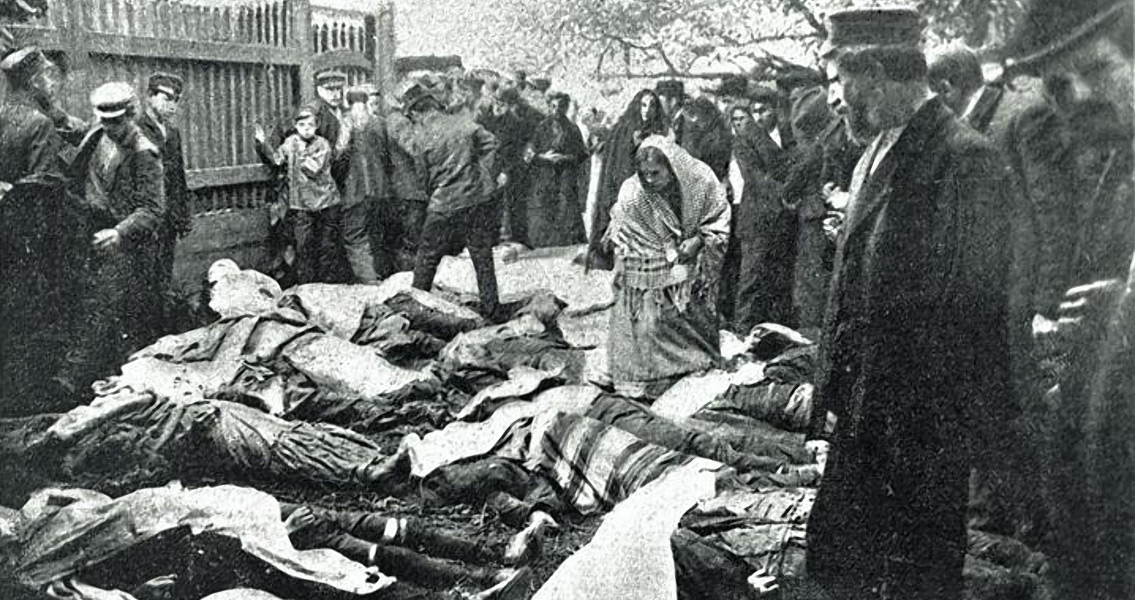
Conspiracy and Anti-Semitism Lead to Bialystok Pogrom