


Veratrum album plant. There is evidence that some dissatisfaction had spread through Alexander’s senior officers in the last few years of his life, shown by a strike in 325 BCE when his army refused to march through India. It is possible, therefore, that Alexander was the victim of a conspiracy among his commanding officers, launched perhaps out of fear that the campaigns Alexander was planning during his stay in Babylon would be too costly. Whatever the cause, Alexander’s death over 2,000 years ago drastically altered the course of history in the Ancient World, creating a power vacuum which descended into a period of intense fighting among his former subordinates and subjects. ]]>
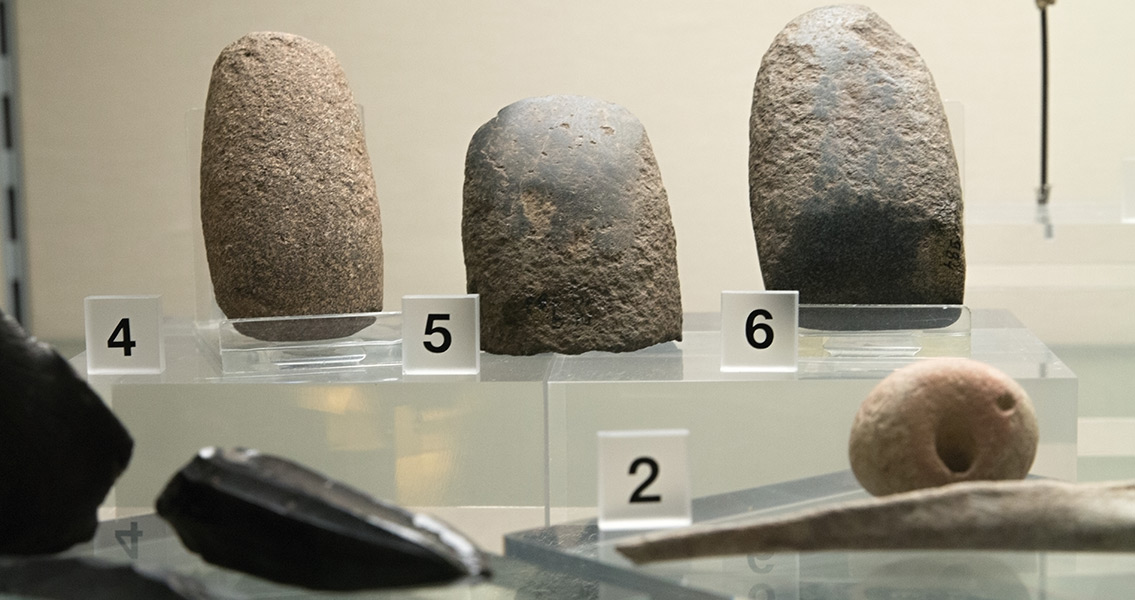
Proceedings of the National Academy of Sciences. Image courtesy of Wikimedia Commons user: Zde ]]>
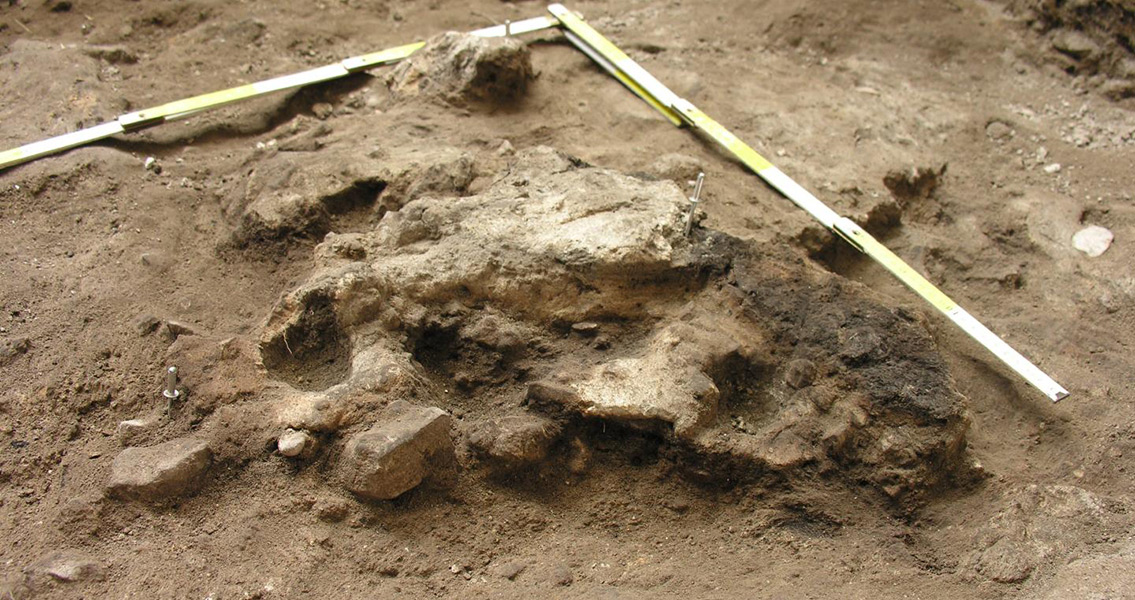
here Image courtesy of UPV/EHU]]>
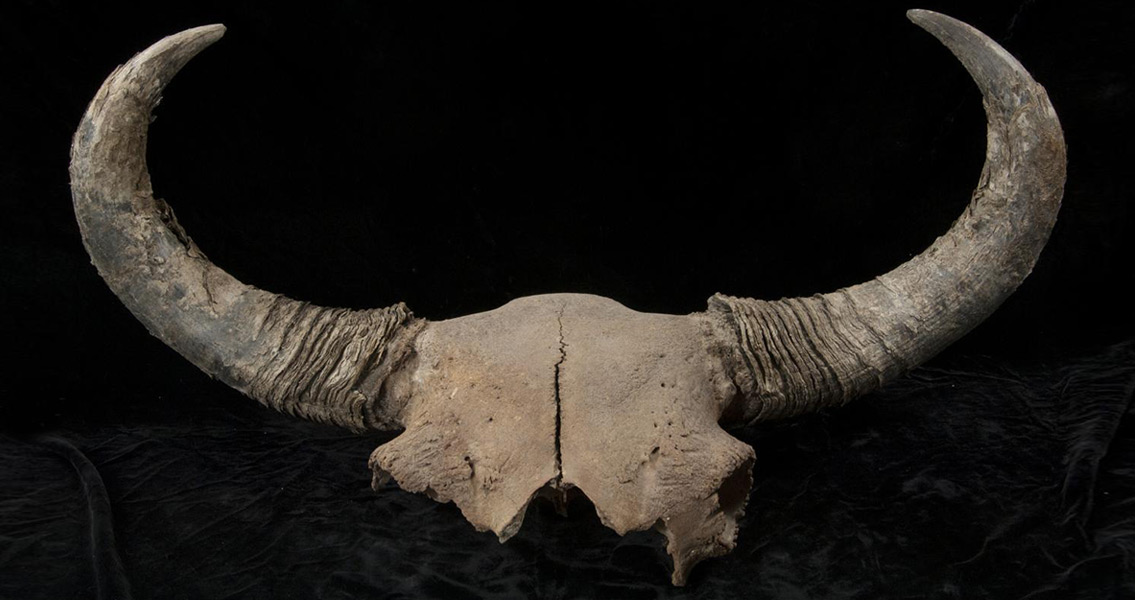
Proceedings of the National Academy of Sciences, their study argues that the corridor was fully open by around 13,000 years ago. The results suggest that although the corridor could account for the later movement of humans and animals, both northward and southward, it couldn’t explain the initial dispersal of humans from Alaska into the rest of North America. Around 15,000 years ago the first humans migrated southwards from the furthest reaches of North America, colonising the rest of the continent. In the 1970s, geological evidence was taken as proof that this initial movement was facilitated by the ice free corridor through the Rocky Mountains. More recent research suggested that the Cordilleran and Laurentide ice sheets merged together at the peak of the last Ice Age, closing the corridor before humans made their initial migration. It was a revelation which pointed to a Pacific coast route for humans into southern North America, yet the Rocky Mountain corridor has long remained a source of interest. “The opening of the corridor provided new opportunities for migration and the exchange of ideas between people living north and south of the ice sheets,” said Peter Heintzman, a postdoctoral researcher at UC Santa Cruz and lead author of the study. Previous work by one of the co-authors of the study, Ben Shapiro, had shown that the bison populations north and south of the ice sheets were distinct by the time the corridor opened. This meant that through genetic analysis it was possible for scientists to track the movement of both northern and southern bison through the corridor. “The radiocarbon dates told us how old the fossils were, but the key thing was the genetic analysis, because that told us when bison from the northern and southern populations were able to meet within the corridor,” explained Heintzman. From the genetic analysis, it became clear that the southern bison started moving northward around 13,400 years ago, suggesting the southern part of the corridor had opened first. The corridor became fully open by around 13,000 years ago, allowing the northern bison to migrate southward and shown in the first signs of population overlap within the corridor. As for human migration through the corridor, Shapiro suggests it was mostly from south to north. Sites from the Clovis culture were abundant south of the corridor by around 13,000 years ago, but declined from south to north in the corridor region. “When the corridor opened, people were already living south of there. And because those people were bison hunters, we can assume they would have followed the bison as they moved north into the corridor,” Shapiro said. Image courtesy of Government of Yukon]]>

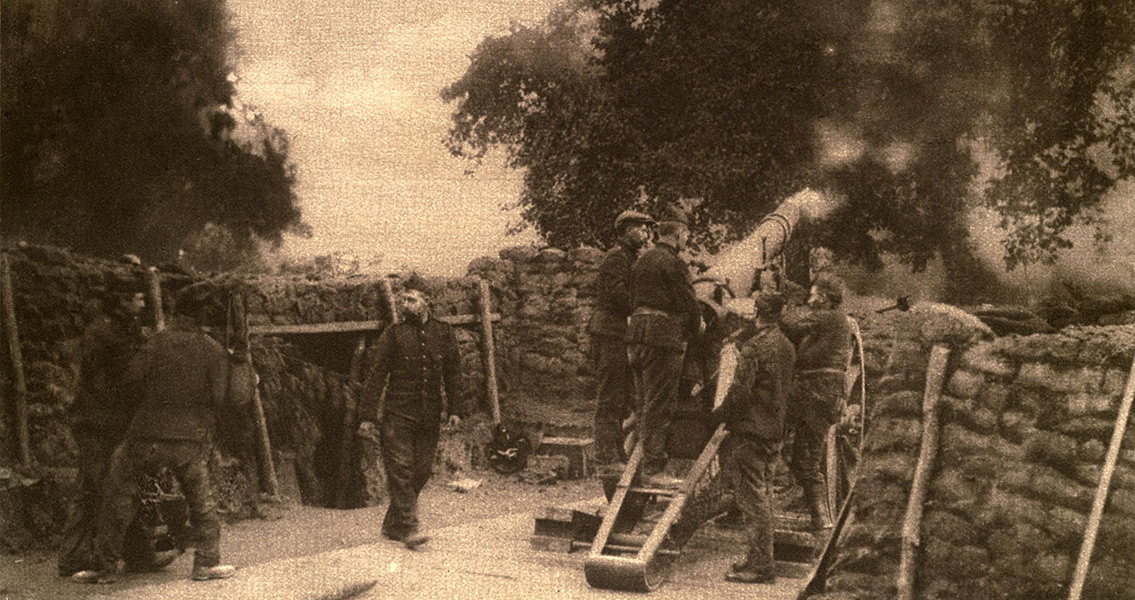

Homo floresiensis, a mysterious, pygmy like human species, were first found on the island of Flores, Indonesia, in 2003. The unusual creatures have been nicknamed hobbits, in reference to their similarities to the characters from J.R.R Tolkien’s popular fantasy books. The first specimen, discovered in the Liang Bua cave on Flores, was surrounded by stone tools and animal remains. Thirty years old at the time of death, the female H.floresiensis would have been about 3.5 foot (1.06 metres) tall. Subsequent discoveries of jaw and skeletal remains from eight similarly diminuitive individuals led scientists to conclude in a 2009 study that the initial discovery had not been an anomaly. Exactly when H.floresiensis actually lived is far from clear, but a 2005 paper in Nature suggested they could have been around as far back as 95,000 years ago until as recently as 12,000 years ago. Now, remains of hominins that were roughly the same size as H.floresiensis but ten times older, have been excavated from Mata Menge, a site in open grasslands 70 km east of Liang Bua, Indonesia. Several isolated hominin teeth, as well as a fragment of lower jaw, were found in a layer of sandstone which had been deposited around 700,000 years ago next to a lakeside stream. The findings are reported in the journal Nature. “We have unearthed fossils from at least three individuals, including two children, along with stone tools that are almost identical to those made by the much younger Homo floresiensis,” said Dr. Adam Brumm from Griffiths University, who was involved in the excavations. Along with colleagues from the Geology Museum and Geological Survey Institute in Bandung, Indonesia, Dr. Brumm has been carrying out excavation work at Mata Menge since 2004. “There is a striking similarity in size and form between the Mata Menge hominins and the Liang Bua hobbit, which is surprising given the former are at least several hundred millennia older.” Dr. Brumm explained in a press release from Griffiths University. “This suggests the Mata Menge individuals belonged to a population of ancient hobbit-like hominins that gave rise to Homo floresiensis. They may even have been a very early form of hobbits, which would mean this species existed for far longer than anyone had anticipated.” Since the initial discovery in 2003, scientists have struggled to explain where H.floresiensis fit into the human family tree. Although broadly agreed that the ‘hobbits’ evolved from an archaic branch of hominins that existed prior to the emergence of our own species in Africa some 200,000 years ago, exactly which hominin group spawned them has divided opinion. One hypothesis is that H.floresiensis descended from Asian Homo erectus, also known as Java man, an early hominin that reached the island of Java 1.5 million years ago. The hypothesis suggests that a group of these ‘Java men’, which were similar in size to a modern human, somehow became stranded on Flores and gradually reduced in body size. The other hypothesis is that H.floresiensis came from an even more ancient ancestor, such as Homo habilis, or perhaps even an ape like hominin forerunner. The Mata Menge discoveries seem to add considerable support to the first theory. “While only a handful of fossils has been found at Mata Menge so far, characteristic features of the teeth strongly imply an ancestral relationship with Homo erectus,” Dr. Brumm said. “This lends weight to the theory that the hobbit was a dwarfed version of the famous Java Man, which somehow got marooned on the island. The fact that they were found with fossils of extinct pygmy elephants (Stegodon) and giant rats also supports the idea of an isolated group of Homo erectus undergoing a dramatic evolutionary change owing to the Island Rule.” These conclusions are far from conclusive of course. Brumm and colleagues are hopeful however, that more skeletal remains will be excavated from Mata Menge, which could provide further insights into H.floresiensis‘ history. “Mata Menge is a goldmine,” said Dr Brumm. “I expect that further excavations at this site will eventually yield a hominin skull, which will finally allow us to put a face and a name to the hobbit’s ancestor. Then we will know how this experiment in human evolution got started”.]]>

Homo heidelbergensis, a direct ancestor of Neanderthal Man, Homo neanderthalensis. Like other sites that show signs of early fire building, hominids at Black Cave left behind a variety of stone tools, indicating they possessed the technical skills needed for selecting the right material for striking sparks. Paleontologist Michael Walker with the University of Murcia explained in Science News that it’s unlikely a brush fire near the cave’s entrance could have sent sparks inside to ignite fires that were found between five and seven meters in, adding that dry brush wasn’t likely to be near the cave to begin with, given that 800,000 years ago the area bordered a swamp and a river. Other researchers told Science News they suspect the Cueva Negra’s artifacts are actually not as old as the report indicates, because it’s difficult to say where the artifacts originally were in relation to several different reversals of the planets magnetic field which are preserved in the sediment layers found in the cave. A 2011 study, published in the Journal of Archaeological Science, set an age limit for the tools made by the Homo species in Europe at no more than 600,000 years ago. Even at 600,000 years old though, the findings at the cave would still be the earliest evidence of fire making in Europe. The systematic excavation of the cave was started in 1990 and until 2004 researchers considered the site to be from the late Pleistocene era, however, rodent fossils were discovered from a species that became extinct 500,000 years ago. Other animal fossils include megaceroides (giant deer), wild boar, bison, hyena, turtles and rabbits, in addition to 60 different species of birds. ]]>