


here Image courtesy of Wikimedia Commons user Alex]]>

presented radar data at a news conference in March which they claimed showed evidence of two empty spaces, or hidden cavities, behind the North and West walls of the chamber. According to officials the scans also suggested that organic and metallic substances were present within the voids. Nicholas Reeves, Egyptologist and Director of the Amarna Royal Tombs Project, has posited that the cavities could contain the burial of Tutankhamun’s stepmom, Queen Nefertiti. These radar scans were conducted in part to either confirm or negate these theories. It’s been noted by experts that in the Valley of the Kings region, the geology contains a lot of natural voids which radar has difficulty differentiating from archaeological features. “It does not appear that these GPR [ground-penetrating radar] data have been processed, or that any of the so-called anomalies are visible in the raw data that are provided,” Lawrence Conyers, an anthropology professor with the University of Denver, told Live Science. Conyers wrote the book, literally, on the archeological use of ground-penetrating radar (GPR). According to Live Science, Conyers suggests that the researchers make raw data available to outside GPR experts for peer review prior to allowing the Antiquities Ministry to release statements discussing all the treasure supposedly hidden behind these walls. The consensus of scientists following the peer review process would reduce the criticism and speculation which has been zipping around the internet since the announcement. Michele Pipan, a professor of geoscience with the University of Trieste (Italy) was reported in Live Science as saying that while the radar images the Antiquities Ministry released do show some interesting features, they also lack things which would have facilitated an accurate interpretation, for example vertical and horizontal scales, details related to the inversion/interpretation procedure, and information regarding to radar velocity. Additional radar surveys are scheduled to be conducted within a few days, and the Egyptian Antiquities Ministry will hold a news conference following that work in Luxor in early April. Coincidentally, tourism numbers in Egypt have fallen dramatically since the revolution in 2011 which forced Hosni Mubarak (President at the time) from office, other experts told Live Science. The country has been the target of terrorist attacks by the Islamic State and Egyptologists were hopeful the discovery of Nefertiti’s tomb behind the wall of Tutankhamun’s burial chamber would bring tourists back, thus boosting the suffering economy. Reeves himself was recently quoted in the The New York Times as saying, “For anyone interested in Egyptian history, this is the time to plan a trip, because you’re not going to get jostled by others the way you would have pre-revolution. And, it’s also a more affordable destination because prices have dropped.” ]]>
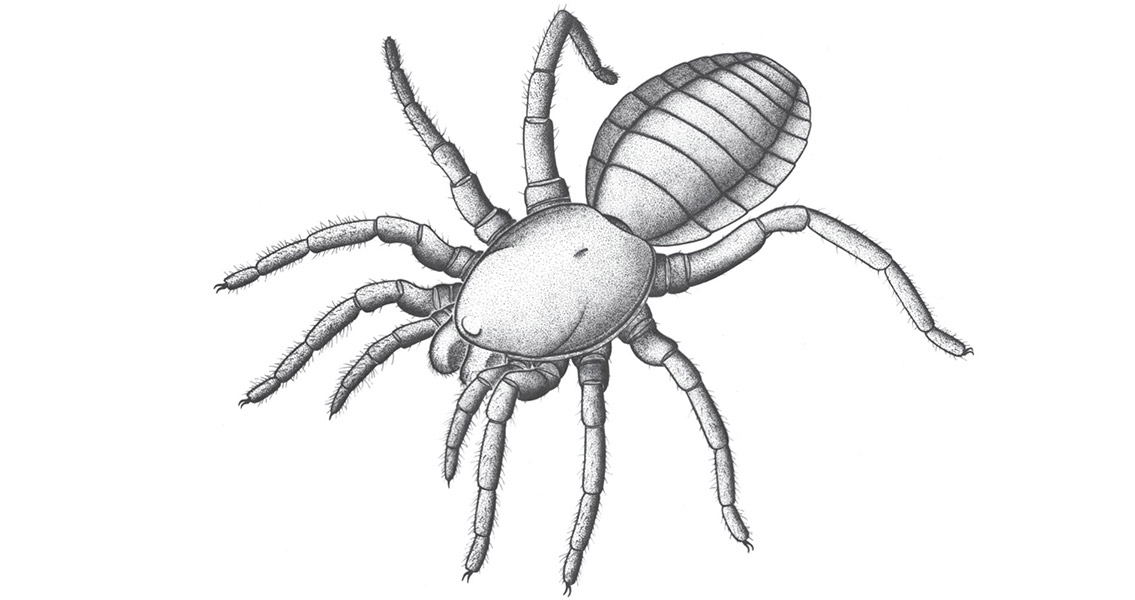
Idmonarachne brasieri as a nod to Idmon, the father of Arachne from Greek mythology – the woman who was transformed into a spider out of the jealousy of the goddess Athena. With the process of evolution producing an arachnid just one step removed from a “true” spider, naming I. brasieri in such a manner seems highly appropriate. The evolutionary journey from arachnid to spider is further complicated by the fact that there is evidence of true spiders living alongside their almost-spider arachnid relatives. The oldest known spider fossil, discovered in eastern France at a Montceau-les-Mines coal seam, also happens to be 305 million years of age. Garwood remarked that this shows an arachnid subspecies that were nearly identical to spiders – though one that eventually died off – likely split from a common ancestor before that date. It has been difficult to pin down the origins and evolutionary pathways of arachnids, said Garwood. One of the first species to dwell on land, arachnids – or their progenitors – began to adopt a terrestrial way of life 420 million years in the past; little of this early history has been recorded in the fossil record. Meanwhile, using DNA analysis to trace the evolutionary relationships between arachnid species also presents difficulties due to the rapid diversification of the creatures. This has resulted in little to no evolutionary changes in their genetics that can be traced. The results are that there is little in the way of knowledge when it comes to how other arachnids like scorpions and spiders are interrelated in the overall scheme of evolution. Garwood and his colleagues say that there are plans to continue to study arachnid fossils in an attempt to glean more information on their mysterious origins. Image courtesy of Garwood, Russell J.; Dunlop, Jason A.; Selden, Paul A.; Spencer, Alan R.T.; Atwood, Robert C.; Vo, Nghia T. & Drakopoulos, Michael (2016)]]>

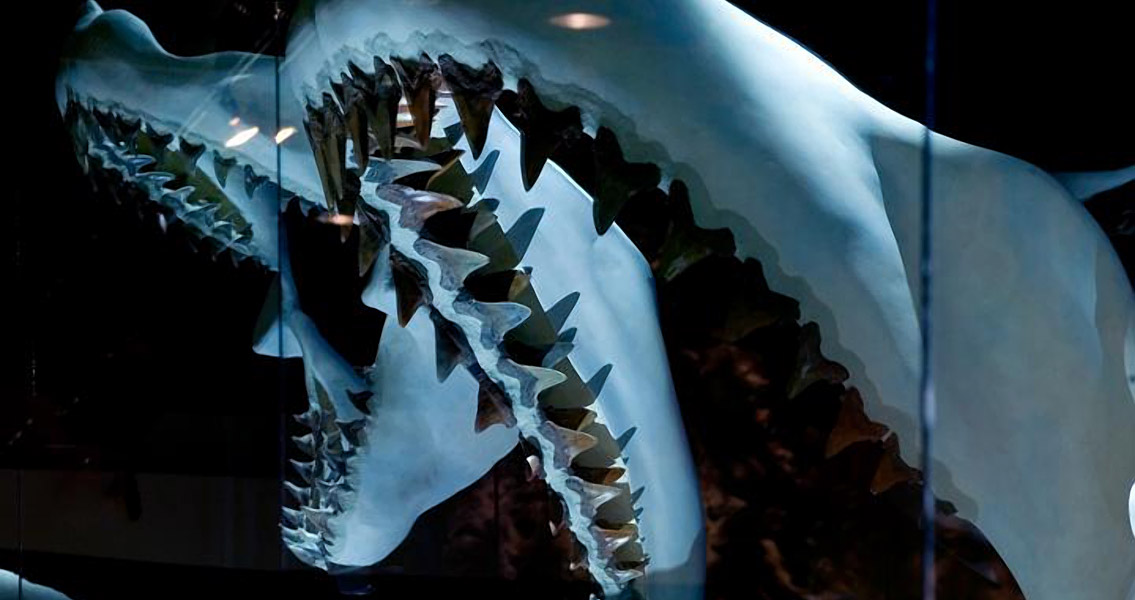
Carcharocles megalodon was the largest shark in the history of the planet, the fossil record suggesting body lengths of up to 18 metres (59 feet). By way of comparison, the giant great white shark which starred in the movie Jaws was meant to be just seven metres (25 feet) long. Although fossilised teeth of the monster sharks have been found in Africa, North America, South America, India, Australia, Japan, and Europe, little else is known about them. In particular, why these terrifying creatures went extinct has long been a mystery. In a recently published study, researchers from the University of Zurich suggest that megalodon died out because the diversity of its prey decreased, and new predators arrived on the scene as competitors. The team’s conclusion is based on an innovative study of the giant shark’s geographical distribution over time. Led by Catalina Pimiento from the Paleontological Institute and Museum of the University of Zurich, the team of researchers examined 200 megalodon records in museum collections and databases from across the globe. Their results have recently been published in the Journal of Biogeography. The data allowed Pimiento’s team to chart the range and abundance of the giant sharks. During the early Miocene, lasting until roughly 16 million years ago, megalodon were mainly found in the warm waters of the Northern Hemisphere, off the coasts of Europe and North America, as well as in the Indian Ocean. Later, they penetrated further into the seas around Australia, South America and Asia. The population of the species peaked during the middle Miocene, while they acheived their widest geographic dispersion during the late Miocene. Around five million years ago megalodon entered a state of continuous decline, seemingly coinciding with the beginnings of the Pliocene glacial period. Until now, most explanations for megalodon’s extinction have been directly connected to this period of climate change. The fossil record has led most researchers to conclude that the giant sharks lived in warm waters. As the temperature of the oceans started to decrease, its hypothesised they would have become uninhabitable for megalodon, and the species slowly died off. Another suggestion is that the freezing waters forced Megalodon’s prey to migrate, starving the giant sharks. The University of Zurich study throws serious doubt on this climate change explanation. “We were not able to ascertain any direct link between the extinction of C. megalodon and the global fluctuations in temperatures during this time.” explained Pimiento in a press release. “Changing climatic conditions do not appear to have had any influence on the population density and range of the giant sharks,” Evolutionary narratives of other species showed the greatest connection with the development of the monster sharks, according to the new study. At a time when a multitude of smaller marine mammals were disappearing, the megalodon range also decreased. Similarly, the arrival of other major predators, such as the ancestors of the killer whale and the great white shark, also coincided with a decline in the megalodon population, suggesting the new species provided too much competition for the increasingly scarce prey. Image ©Jeff Gage / Florida Museum of Natural History]]>

