Categories
Breaking News

Ancient Worm Fossil Smiles for its Close-up

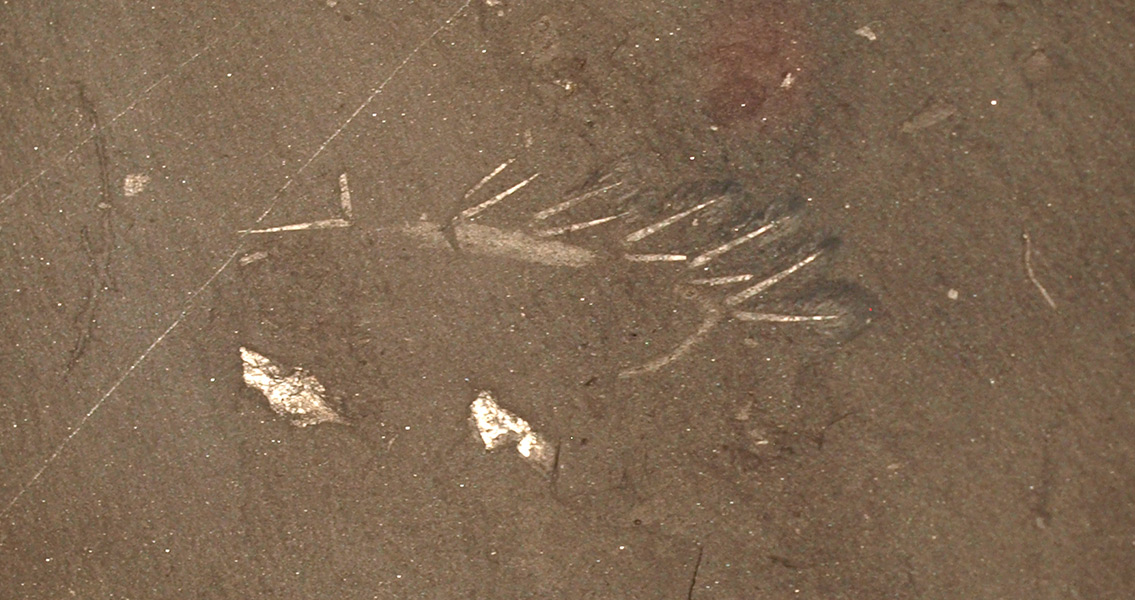
Hallucigenia sparsa, a marine worm that lived some 500 million years in the past during the Cambrian period, has proven to be a tough nut to crack based on what it left behind in the fossil record. Originally discovered in the 1970s, the spiny, 15-millimeter long worm left such strange impressions in its fossilized form that for decades researchers thought that its spines were actually its legs. While the scientific community eventually managed to figure out which side of H. sparsa was up, there was one last problem related to its study – no one could figure out which end was the front. A new research study into the diminutive, worm like marine animal has not only identified the creature’s front end from the back, it has also revealed the unique characteristics of its face. According to paleontology and evolution researcher Martin Smith from the University of Cambridge, the co-author of the study, while the research team expected to at least find a pair of eyes under the microscope they also found a “grinning” mouth lined with sharp teeth. Additional teeth were found lining the interior of H. sparsa’s mouth, angled backwards to direct food deeper into the creature to begin digestion. In an interview with Live Science, Smith said that the circular, toothy mouth of H. sparsa might end up being an evolutionary link to modern species such as nematodes, spiders and tardigrades. “You look at a spider today, and you would have no idea, but actually, its simple mouth used to be much more complicated,” Smith remarked, pointing to the more complex mouth of H. sparsa. The fossils that Smith and his colleagues used to make the discovery were sourced from Canada’s Burgess Shale, located in the mountainous terrain of British Columbia. The rock formation is noteworthy for harboring some of the most well-preserved examples of fossilized intact soft tissue and is one of the oldest fossil beds in the world where soft tissue fossils can be found. Several dozen H. sparsa specimens were examined by researchers as they carefully chipped away at the shale surrounding the ends of the fossils with the help of a micro-engraving tool. Once the specimens had been cleaned sufficiently, they were placed under a microscope for further study, which is when the eerie “smile” of the creature was revealed. While the proper end of H. sparsa has finally been revealed, there is still speculation as to what it actually ate. Smith suggests that the marine creatures could have been filter feeders, using their two long front limbs like tentacles to pluck detritus from the water. Another possibility is that H. sparsa used its legs to latch on to sponges and attach its lamprey-like mouth to feed. For more information: www.nature.com Image courtesy of Wikimedia Commons user: Captmondo]]>
Categories
Breaking News

13,000 Year Old Fossilized Footprints Found in Canada

Categories
Breaking News

Scientists Carbon Date Macaw Remains from Pueblo Ruins

www.pnas.org Image courtesy of Wikimedia Commons user: Snowmanradio with permission from Tropical Birdland, Leicestershire, England. ]]>

Categories
Breaking News

Remains of Norman Castle Discovered in City Park

Categories
Breaking News

Bishop from 17th Century Found Buried with Child

Categories
Breaking News

Kennewick Man a Native American, DNA Research Says

www.nature.com Image courtesy of Wikimedia Commons user: LavaBaron]]>

Categories
Breaking News

Hieroglyphs on Ancient Maya Sarcophagus Deciphered

Categories
Breaking News

New Excavation Slated in the Shadow of Stonehenge

Categories
Breaking News

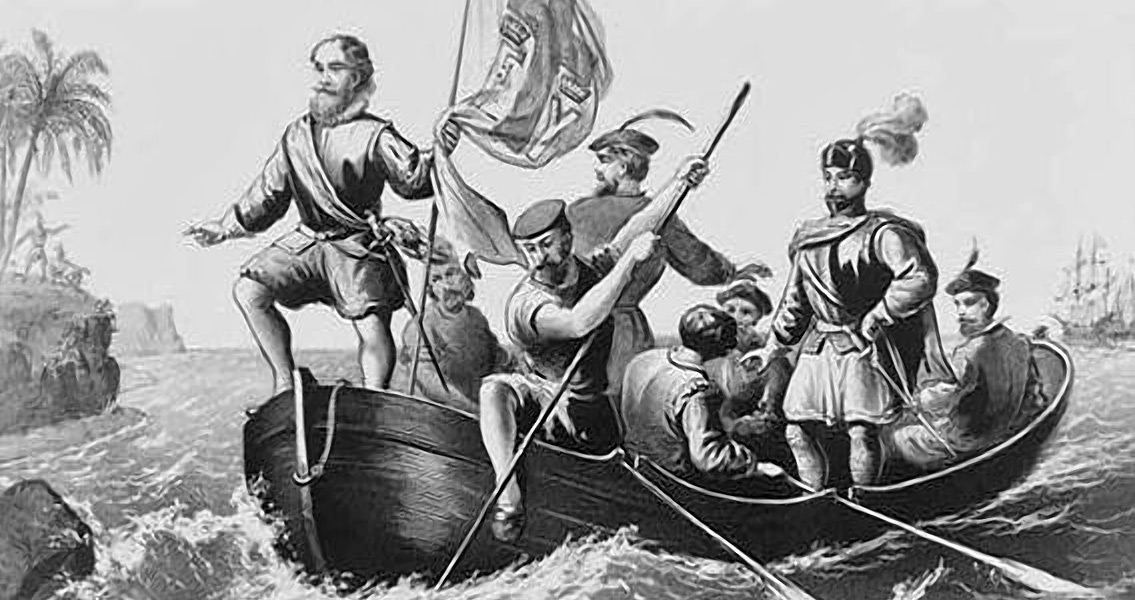
Spectral Imaging Ties Map to Columbus Expedition

YaleNews that the team had “recovered more information than we dared to hope for.” The historian said that the revealed details strongly indicated that the map – or a copy of it – was used as a basis for the map cartographer Martin Waldseemüller drafted in 1507 which bears the first recorded instance of the New World being labeled as “America.” Van Duzer says that it’s nearly certain that Columbus had gained access to the Martellus map prior to his journey, based on several pieces of historical evidence. A journal kept by a crew member on the initial voyage describes how it was believed that the expedition was sailing by island chains thought to be present in southern Asia according to the Martellus map, with the crew member describing the region using language similar to that found on the map. Additionally, texts originating from Ferdinand Columbus, the son of Christopher, recount how his father had been laboring under the expectation that he would come across Japan where the Martellus map indicated it would be. Columbus had expected to find the island chain in the same orientation and location that Martellus describes; from all the other maps dating to the period that have survived history, only the Martellus map lists this specific orientation and location for Japan. Around 80 percent of the text on the map has been recovered at this point, according to the research team. A published paper will accompany the group’s final findings once the project has been completed. ]]>

Categories
Breaking News

Economic Development Led to Major World Religions

Current Biology, has posited that the development of major world religions in the so-called “Axial Age” of 500-350 BCE cannot be traced to the rise of complex political institutions or to growth in population. Instead, the rise of religions such as Judaism (and its eventual offshoots of Christianity and Islam), Buddhism, Daoism, Brahmanism, and Jainism resulted from increases in economic development and better standards of living, according to the authors of the study. A research team from the École Normale Supérieure, led by research scientist Nicolas Baumard, delved into the study of the formation of world religions during the Axial Age in order to make a determination as to what led to the proliferation of such religions concurrently yet in such disparate geographical locations around the globe. The Axial Age was characterized by new beliefs supplanting the older ones commonly held by hunter-gatherer societies. Nomadic cultures from before the advent of agricultural pursuits tended to have spiritual beliefs that focused more along tribal lines and were primarily concerned with warding off misfortune, enforcing taboos, and ritual offerings and sacrifices. In comparison, the researchers point out that once the economic status of civilizations improved – partly thanks to adopting agriculture and focusing less on itinerant lifestyles – abundance for these civilizations increased, leading individuals to begin to have the ability to focus on things besides subsistence. The rapid advancement in living standards which occurred in the Axial Age could have been the catalyst for spiritual development that delved beyond the nomadic campfire ring, the research suggests, although the most rapid and dramatic advances in living conditions were likely reserved for the richer and more powerful members of these societies. According to Baumard and his colleagues, it was at this point that these new religions began to develop and focus more on “personal transcendence” instead of taking ritualized steps to ensure the survival of the group. The study points out that these later religions focused on the “purpose” of human existence independent of survival, “a moral existence and the control of one’s own material desires, through moderation (in food, sex, ambition, etc.), asceticism (fasting, abstinence, detachment), and compassion (helping, suffering with others).” However, Baumard and his team remain unconvinced that morality alone is responsible for successful civilizations. In an interview with Scientific American, the researcher remarked that “some of the most successful ancient empires all had strikingly non-moral high gods. Think of Egypt, the Roman Empire, the Aztecs, the Incas, and the Mayans.” More likely is the idea that morality exists independently from religion or spirituality, and it was only the increased economic security and affluence of these Axial Age civilizations that gave enough breathing room for morality to exist without having to be subsumed by the vicissitudes of tribal survival, a sentiment echoed by other researchers not associated with the new study. For more information: www.cell.com Image courtesy of Wikimedia Commons user: Gunnar Bach Pedersen]]>