

Azania: Archaeological Research in Africa. ]]>

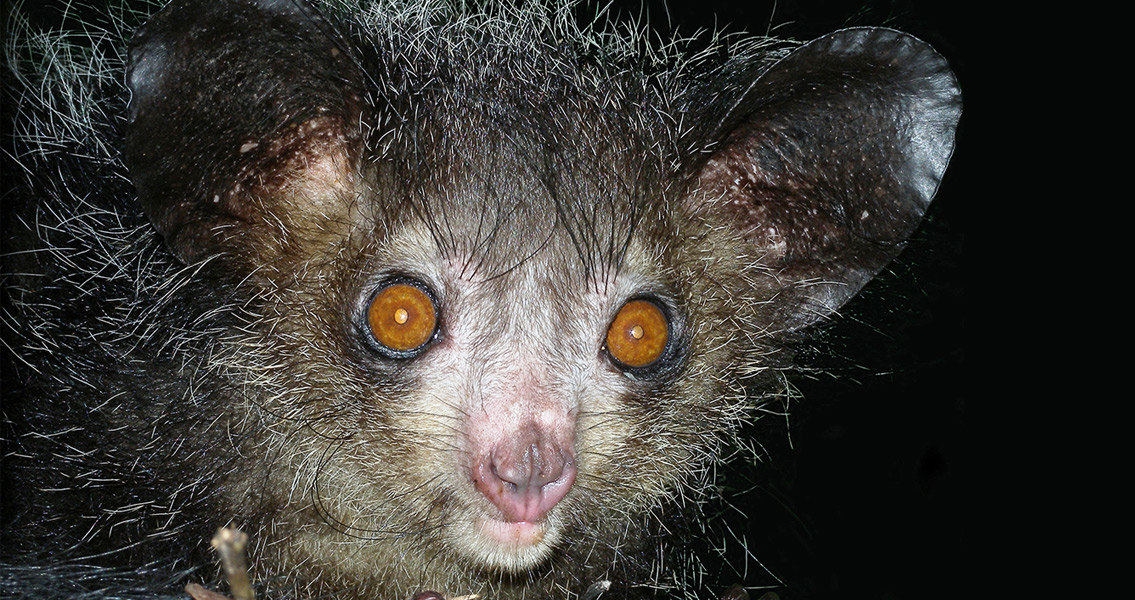
Cell Press, adding, “We’ve been working for a long time to understand the fundamental mechanisms behind rod and cone development.” Previous work completed by Swaroop and his team has shown that NRL, a transcription factor, drives retinal cells towards maturing into rods. NRL accomplishes this by suppressing certain genes involved in the development of cone cells, leading researchers to wonder if the shorter wave-length cone cells were changed into rods during the evolution process. To determine the origin of these rods, Swaroop’s team examined the cone cells and rods in mice, taken at various stages of development. The details involved in the embryonic development of an organism frequently reveals traits its evolutionary ancestors carried, like how, for instance, human embryos will initially develop a tail and gill-like slits. What they found was that two days after they were born, the still-developing rod cells had genes typically expressed in cell cones, however, once the mice were ten days old these aspects had become repressed by DNA methylations and histone. When examining zebrafish, which are cone-dominated and diurnal (active during the daytime), the experiments indicated the rod cells didn’t look like cell cones at all. To determine when the elements, which turn cone cells to rod cells, may have originated, the researchers examined the genomic sequences from a number of vertebrate animals. What the team discovered was that as the modern retina developed, the genes which are responsible for NRL regulation became more refined in placental mammals but were lost in a number of non-mammalian groups. The origin of this system seemed to coincide with the evolution of nocturnal adaptations in early mammals. The team then concluded that for mammals, NRL became restricted to the photoreceptors found in the eye, forcing these cells to convert to rods from cones, thereby giving early mammals the needed edge to adapt to an active nocturnal lifestyle. In contrast, humans depend primarily on cone cells for our vision, because our ancestors evolved to take advantage of daylight hours once again The study has been published in the online journal Cell Press. ]]>


Homo erectus, in the desert of the East African country of Eritrea. It’s believed the prints date back approximately 800,000 years, and although their age has yet to be verified, it’s anticipated they will provide a wealth of information about the movements and gait of this extinct species of hominid. Alfredo Coppa, an archaeologist with Sapienza University in Rome, along with his Italian research team and researchers with Eritrea’s National Museum discovered the 26 square meter stone slab that contained the footprints. Today, the region where they were found is in the middle of a desert, but 800,000 years ago the environment was very different. The fossilized footprints, which are practically indistinguishable from our own, were left in the sandy sediments on the shore of a lake, which archaeologists believe was part of the landscape at the time. The shapes of the footprints indicate they filled with water directly after they were formed and before they dried out and were eventually buried. The footprints suggest movement from the north to the south, and amazingly, there were also tracks from an animal similar to a gazelle around them, suggesting perhaps our early ancestors were on a hunting expedition. “Fossilized footprints are extremely rare,” Coppa explained to the Italian publication, The Local, “We need to carry out more digs in the area, which has so far turned up the fossilized remains of five or six different Homo erectus specimens.” Homo erectus (which means “upright man”) lived through most of the Pleistocene epoch which lasted from about 2,588,000 years ago up to 11,700 years ago. The earliest Homo erectus fossils date back 1.9 million years, and there are two schools of thought on how and where they evolved. The first theory has Homo erectus evolving from the Australopithecina, in East Africa, and migrating (around 2 million years ago) as a result of the desertifying conditions which were developing in northern and eastern Africa at the time. H.erectus joined other migrations travelling through the “Saharan Pump” and spread throughout much of Eurasia, getting as far as India, Georgia, Sri Lanka, Indonesia, and China. The second theory is that H.erectus evolved in Eurasia and then migrated to Africa, based largely on evidence which has been discovered at the Dmanisi site in Georgia which shows they inhabited the area around the same time or even slightly before the earliest evidence of H.erectus in Africa. What has been decided is that we, Homo sapiens, evolved from African Homo erectus approximately 200,000 years ago. Even if the footprints are found to be the oldest left by Homo erectus, they aren’t even close to being the oldest prints left by a hominid species; a team of researchers in Tanzania discovered the tracks of our first upright ancestor, Australopithecus, which were 3.8 million years old. ]]>


Proceedings of the National Academy of Sciences. ]]>