Categories
Breaking News

Evidence that Evolution Follows Path of Least Resistance

Paranthropus boisei (from eastern Africa) and Paranthropus robustus (southern Africa), who lived between 4.2 and 1.3 million year ago, researchers discovered that the dental anatomy traditionally associated with the early hominins who ate a hard food diet was also being used by others to eat a primarily plant-based diet. Even with different diets, they had similar teeth and anatomies, characterized by big, flat teeth covered in thick enamel, and faces and jaws which indicate the presence of strong muscles for chewing. These characteristics are commonly thought to have been adapted for smashing hard foods. However, by analyzing the microwear and isotope values of the teeth, Ungar’s team was able to conclude the two creatures actually had markedly different diets. P. robustus subsisted on a diet of plant foods and only occasionally consumed foods like roots or nuts, while P. boisei consumed softer, tougher and even more abrasive foods such as grasses. Tellingly, neither diet consisted of the hard, crunchy food indicated by the facial structure and large muscles both of the early humans possessed. More crested molars (like gorillas have) would prove more efficient in ripping fibrous plant material, but flattened molars (like we have) with a thicker layer of enamel, are what advanced genetically. This simpler tooth architecture proved more adaptable for a number of challenging diets throughout time, so although it isn’t the optimal solution, it’s the one that continued on as our species developed. These findings have been published in Science. Image courtesy of Wikimedia Commons user: Mike Peel]]>
Categories
Breaking News

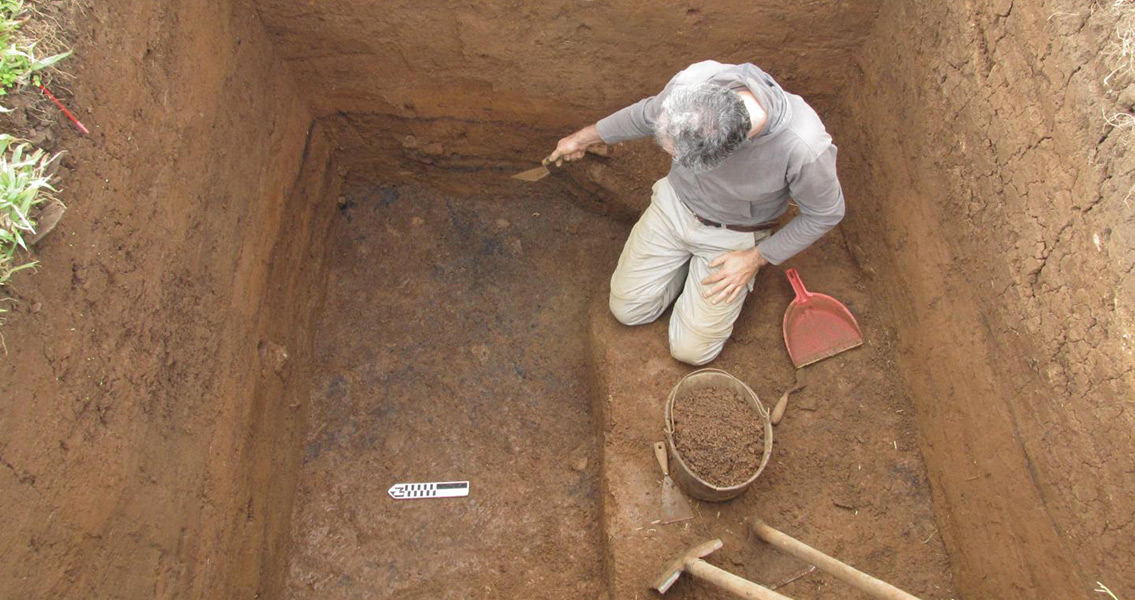
New Research Shows Brazilian Pit Houses Were Homes to Generations

PLOS ONE. Image courtesy of University of Exeter ]]>

Categories
Breaking News

Homo Naledi May Not Be Such a Distant Relative

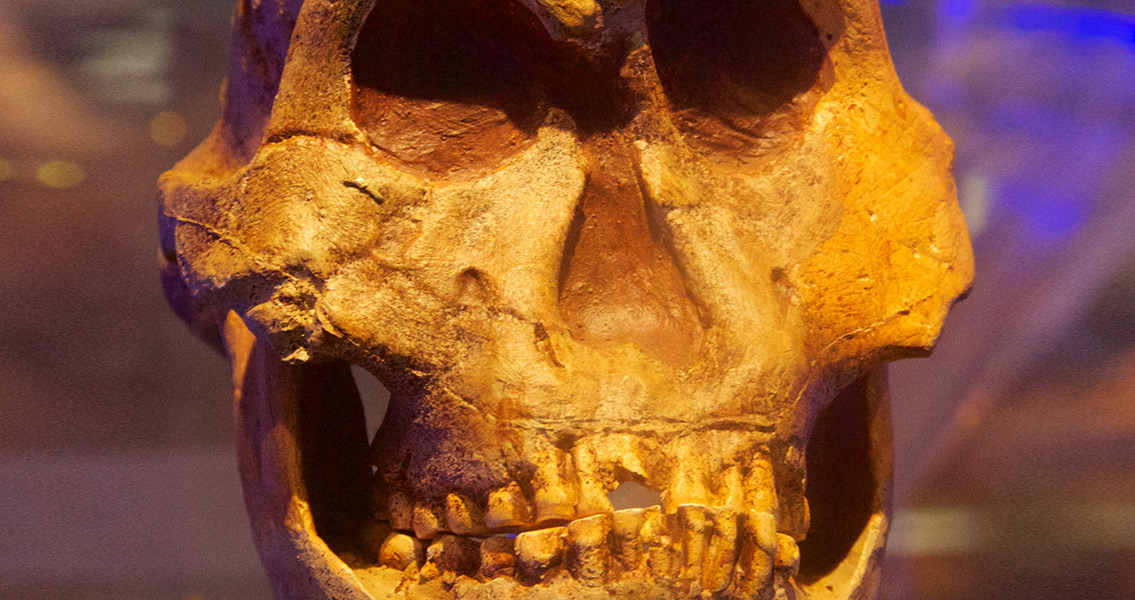
H. floresiensis may have done in Southeast Asia with the larger-brained H. erectus and H. sapiens. H.naledi was first discovered in 2013, when fossil skeletons of 15, at minimum, individuals (over 1,550 specimens in total) were unearthed in South Africa’s Rising Star Cave system, which is part of the Cradle of Humankind World Heritage Site. There are some signs which indicate the individuals might have been placed in the cave deliberately at the time of their death. The word “naledi” means “star” in the Sotho language, chosen in reference to the cave system where the specimens were found. It’s estimated that adult males stood approximately 150 cm (5 ft.) tall and weighed about 45 kg (100 lbs.), while females were likely somewhat shorter and lighter. These sizes are within the range of sexual dimorphism associated with small-bodied humans. A skeletal analysis suggests H. naledi stood upright and walked on two legs, and his hands appear much better suited for manipulation of objects than earlier humans, with thumb, wrist and palm bones that were more modern, yet his fingers were curved, like those of earlier humans. Homo naledi first impressed researchers with the Rising Star Expedition for being remarkably similar to Australopithecus, given the number of shared features between it and the ape-like species. Ultimately, it was determined the species shared even more features with the Homo group, and thus landed in our genus. These same archaic features also led researchers to believe H. naledi existed around 2 million years ago. Now, paleoanthropologist Mana Dembo with the Simon Fraser University in Burnaby, Canada, and her research team, have provisionally dated H. naledi as having lived less than a million years ago. After analyzing 60,000 potential evolutionary trees to determine which one provided the best fit for the tooth and skull measurements of 21 hominid species, chimpanzees, gorillas and H. naledi, they’ve dated H. naledi based on the rate of development of these features. While the new research affirms H. naledi’s place in our genus, which hominid species he’s most closely related to, whether Homo sapiens, Australopithecus sediba or Homo floresiensis (hobbits), remains uncertain. The team found no indications the bones of H. naledi presented as a variant of Homo erectus, as argued previously. H. erectus originated in Africa around 1.8 million years ago and spread quickly into West Asia. Additional statistical comparisons which would include measurements of trunk and limb bones may help in clarifying these evolutionary relationships. This research can be found in the Journal of Human Evolution. Image courtesy of Lee Roger Berger research team ]]>

Categories
Breaking News

Outhouses Uncovered in Philadelphia Flush with Artifacts

Huffington Post as coming from a tavern which occupied the location on Chestnut Street, including red earthenware which was made from known local potters. Another particularly impressive piece that the team found and reassembled is a delftware punch bowl, believed to be English. Delftware (also known as Delft pottery or Delft Blue) is white and blue pottery that was made in and around the town of Delft, in the Netherlands, during the sixteenth century. The bowl is embellished with a picture of the Tryphena, a brigantine ship that carried the colonists’ petition contesting the Stamp Act to Liverpool from Philadelphia in 1765. Philadelphia, Pennsylvania, was the location of the First and Second Continental Congress, a meeting of delegates from all thirteen colonies. Soon after the Second Convention, which began meeting in 1775, it was declared that the American Revolutionary War had started. The Second Congress oversaw the colonial war efforts, and moved slowly towards independence from England by adopting the U.S. Declaration of Independence on the 4th of July, 1776. By directing strategy, raising armies, appointing diplomats and writing formal treaties, like the Olive Branch Petition, the Congress performed as a de facto national governmental body of what in the future would become the United States. The recovered items are an eclectic mix; a large assortment of seashells linked to a local button shop, 1,400 fruit pits (mostly cherries) in one vault suggesting a nearby baking operation (no pie pans though), 750 individual pieces of printers’ type associated with the city’s budding press industry, two whole raccoons, 66 birds, wig curlers, and a curiously large amount of alcoholic bottles, along with an abundance of items from private residences, and of course the usual collection of garbage. Some pieces from the collection are expected to be on display inside the Museum of the American Revolution when it opens in 2017. ]]>

Categories
Breaking News

Police are on the Case of 1,000-year-old Whodunit

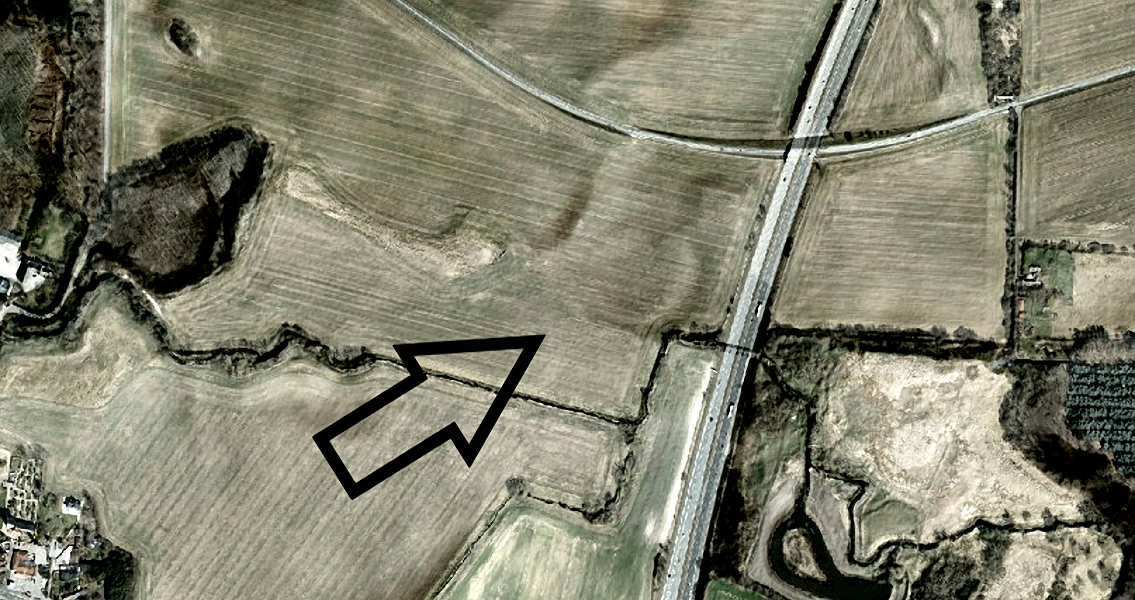
Copenhagen Post. Harald “Bluetooth” Gormsson, the king of Denmark during the late 900s, was likely the master builder of the half-completed structure, as he had been for four fortresses constructed in this unique style during his lifetime. King Harald had powerful enemies, a consequence of him having worked his army too hard, and one theory held by Ulriksen and his team is that the ring fortress had been attacked. “Our theory right now is that other powerful men in the country attacked the castle and set fire to the gates,” said Ulriksen. King Harald is probably most famous for erecting the Jelling Stones, considered by Encyclopedia Britannica as the best known runic inscriptions in Denmark, in honor of his parents. His biography can be summed up by the stone’s inscription: “King Harald bade these memorials to be made after Gorm, his father, and Thyra, his mother. The Harald who won the whole of Denmark and Norway and turned the Danes to Christianity.” King Harald’s conversion to Christianity is a contested bit of history, most likely because of the conflicting accounts of how it occurred given by medieval writers like Adam of Bremen and Widukind of Corvey. Widukind of Corvey, who wrote during the lifetime of King Harald, claims that he was converted by a cleric named Poppa who, as the story goes, carried a “great weight” of heated iron without suffering any burns when the king asked him to prove his faith in Christ. Adam of Bremen wrote his account of the event 100 years after the king’s death and described Harald’s forced conversion at the hands of Otto I, the German king and emperor of the Roman Empire from 962, after being defeated in battle. Widukind’s account makes no mention of this event. Furthermore, four hundred years later the Heimskringla (the best known saga of the Old Norse kings) tells of how King Harald, along with Earl Haakon, was converted willingly by Otto I. How King Harald acquired his nickname, Bluetooth, is another contested aspect of his life. Bluetooth first appears in the Chronicon Roskildense (the first comprehensive account of Danish history) accompanied by the explanation that Harald must have had a conspicuously bad tooth which appeared “blue” (black in other words, as blue meant dark). However, according to a curator at the Royal Jelling Hans Ole Mathiesen, King Harald was often, if not always, clothed in blue, the blue color being the most expensive during this period. Harald was killed while fighting off a rebellion which his son Swein led, in either 985 or 986. Researchers are hopeful the police investigator will bring in dogs to help sniff out unearthed bones and other evidence at Vallø Borgring. Image courtesy of Danskebjerge]]>

Categories
Breaking News

New Records Show Shakespeare Established His Own Brand

Categories
Breaking News

Passage Graves from 4000 BCE May Have Been Used as Telescopes

Daily Mail, in order to accurately detect and time the very first appearance of this star, it has to be viewed at twilight. At the time the graves were constructed, between 4,300 and 3,700 BCE, Aldebaran would have risen between April 18th and 27th, in the exact spot in the sky that’s visible from inside every entrance passage at Carregal do Sal. The first sighting of Aldebaran may have been used by early humans to mark the seasons. Upon the star’s arrival, Neolithic communities would have likely moved their cattle to higher pastures located nearby in Serra da Estrela. Additionally, given that the tombs were widely considered sacred places, this ability to detect stars too faint for anyone outside of the tomb to see may have been considered a sort of secret knowledge, obtainable only in the company of their deceased ancestors. How does it work? There are several factors at play, according to what Dr. Silva told the Daily Mail. The long entrance behaves like a telescope without a lens, simply a long tube, the characteristics of which affect how and what you see. For instance, your attention is directed to a particular area while the distraction of other stars is removed, and the total darkness of the structure would be helpful for adjusting your eyes to the darkness of the sky – which in turn makes it easier to detect faint details like distant stars. Previous studies have shown that the majority of passage tombs located in Portugal are positioned to align with two or three different stars, Aldebaran being the primary attraction. Although there are over a thousand known passage graves throughout Europe, it’s estimated that only around 10% of them are oriented towards a particular star, including the well-known passage graves at Bryn-celli-Ddu on Anglesey, and Newgrange in Ireland; which appear to have been orientated towards either the sunset or sunrise on the winter or summer solstice. The research was presented at the 2016 Royal Astronomical Society’s national meeting during a special session about how historical societies and cultures studied the sky. Image courtesy of ESO/Luis Calçada/Herbert Zodet ]]>

Categories
Breaking News

With the Dinosaurs Gone the Speed of Human Evolution Tripled

Phys Org as saying, “Our findings refute those of other studies which overlooked the fossils of placental mammals present around the last mass extinction. Using rigorous methods, we’ve successfully tracked the evolution of early placental mammals and reconstructed how it changed over time. While the rate differed between species, we see a clear and massive spike in the rates of evolution straight after the dinosaurs become extinct, suggesting our ancestors greatly benefitted from the demise of the dinosaurs. The huge impact of the dinosaur extinction on the evolution of our ancestors really shows how important this event was in shaping the modern world.” The study was funded by the Natural Environment Research Council and published in Proceedings of the Royal Society. ]]>

Categories
Breaking News

Ancient Stone Furnaces Discovered Under a Road to Russian Tourist Spot

Siberian Times. “The first finds were made in 1998 and the numerous discoveries came in the following years showing us that the Baikal region was one of the largest metallurgical regions in Asia at the end of first millennium B.C., and early in the first millennium A.D.” Despite the migration processes occurring at the time, these metallurgical technologies not only continued, they were improved upon and passed on to future generations. The earliest known metal used by humans appears to have been gold which is naturally occurring. Small quantities of natural gold have been unearthed in Spanish caves used during the late Paleolithic era (around 40,000 BCE). Silver, tin and copper can also be found in their native form, and allowed for limited metalworking in ancient cultures. ]]>

Categories
Breaking News

Discovery in Devon Expands the Boundary of Roman Rule in Britain

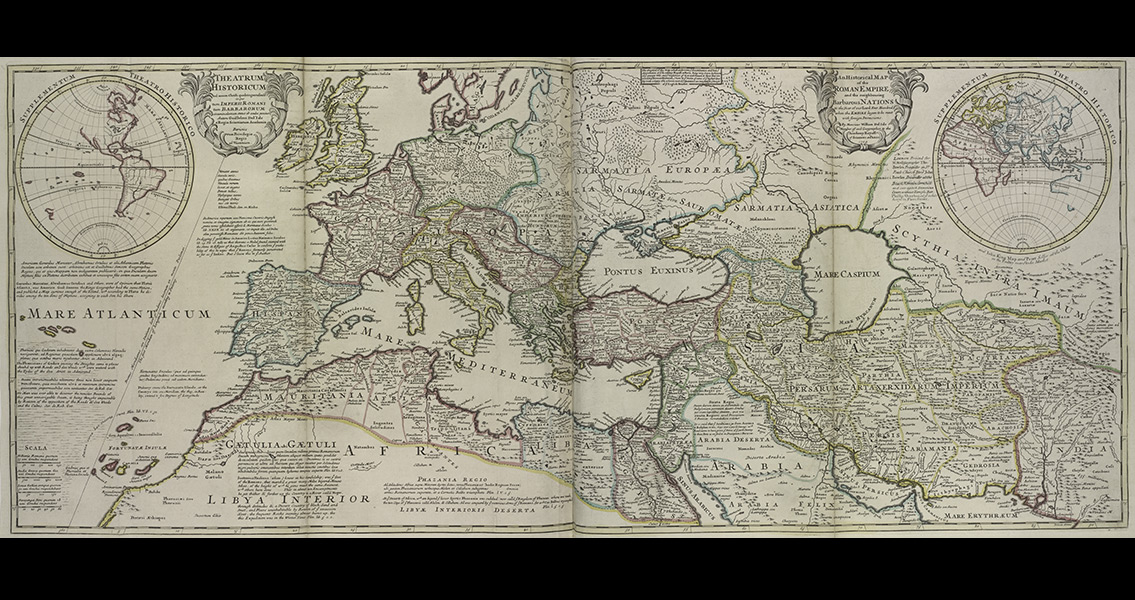
This article was changed on 1st July 2016. The original wrongly claimed that the Roman Empire had ruled over the entirety of Great Britain]]>