Categories
Breaking News

Construction Workers in Boston Unearth a Ship Out of Water

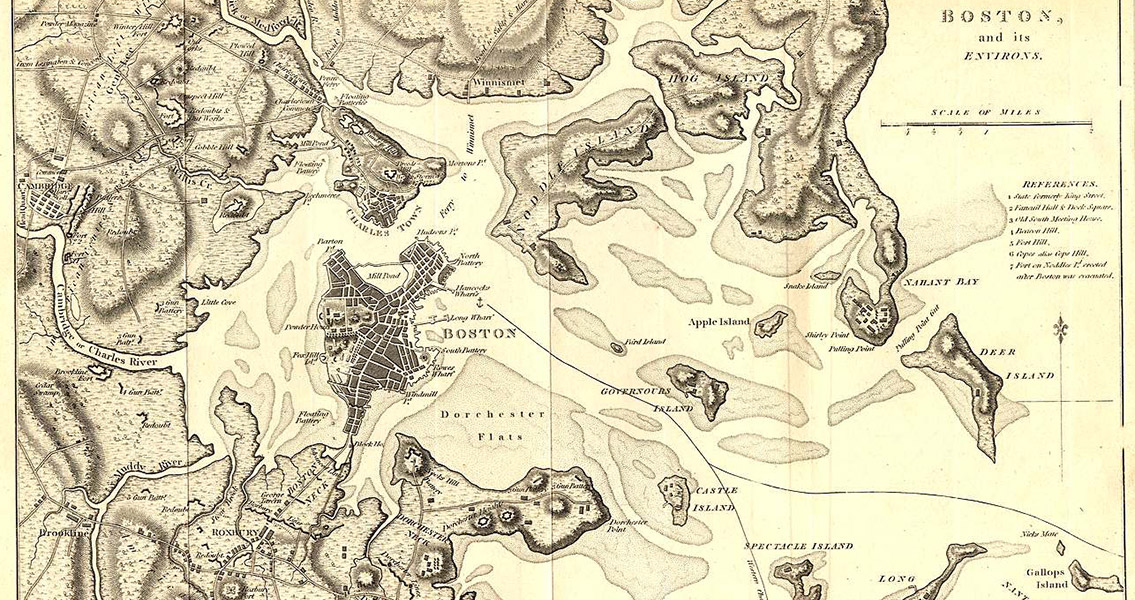
WBZ–TV in Boston that this is the second shipwreck found in an area of the city that had been filled in, and the first shipwreck found in this particular part of the city. He also explained that it isn’t yet clear what exactly caused the shipwreck. Possible scenarios include the ship running aground or crashing on the mudflats during a storm, and then being burned by the crew to reduce its weight as it sank into the mud; or that it was deliberately scuttled in the mudflats after the fire had started. Other artifacts found at the site include pieces of a ceramic vessel, construction tools, two forks, two knives and burned plates. Skanska Construction, the contractor working on site, has voluntarily stopped construction and hired an independent consultant to help city staff research and examine the shipwreck. Due to the severe deterioration and age of the wood, it’s highly unlikely the ship can be removed intact, however, all appropriate measures are being taken to preserve as much of the ship as possible. The team of experts working at the site include archaeologists, nautical archaeologists and others from the Public Archaeology Laboratory, the State of Massachusetts, and the City of Boston.]]>

Categories
Breaking News

Has Aristotle's Tomb Been Found?

Categories
Breaking News

Evidence of Manmade Fires Well Before Clovis Culture

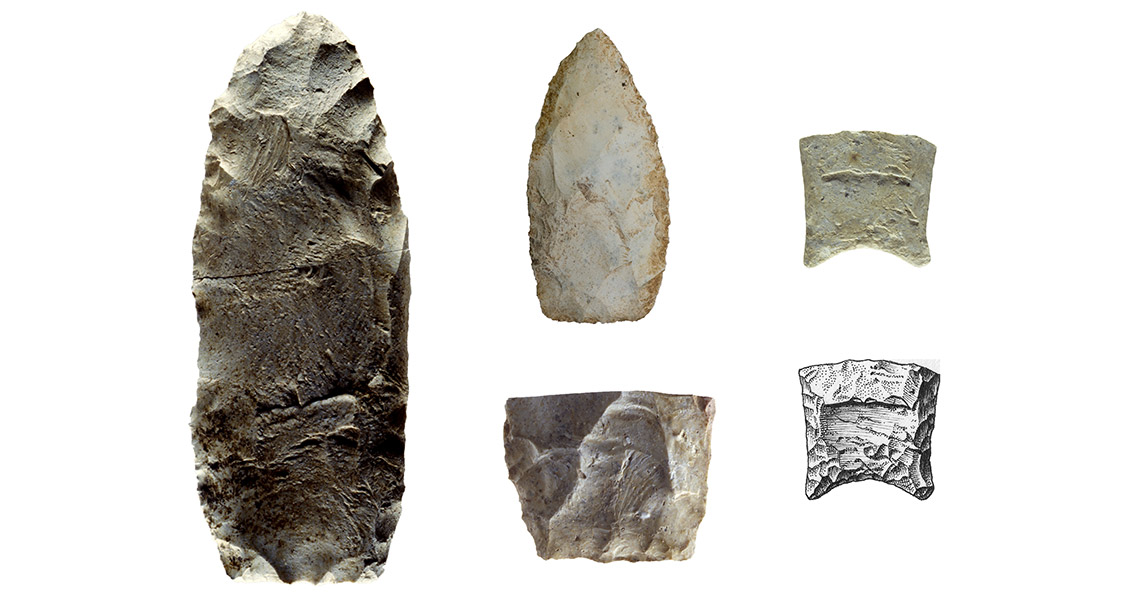
The Post and Courier in Charleston, adding, “I have no doubt that this will be a hotly debated topic for some time, as paradigm shifts often take a while to gain acceptance, but the evidence appears to be solid.” It all started with a chert chopper (also known as the Topper Chopper) – a piece of rock with the face of a blade hammered out of it, that was discovered in the early 1990s by Al Goodyear, who has since retired from the S.C. Institute of Archaeology and Anthropology at the University of South Carolina. The pieces were relatively small, as were the blades cut into them, suggesting they may have been used to carve ornaments from ivory, bone, and antler. They were dug up from soil sediments deeper than the Clovis tools which date humans in North America back to between 12,000 and 13,000 years ago. Critics argue whether or not the stone tools were actually pre-Clovis and whether or not the stone pieces had actually been hammered by humans or split apart by nature. Recent analysis of Goodyear’s artifacts has ascertained they could not have occurred naturally. The dispute is still ongoing in certain quarters, and now the team has gone even deeper and found even earlier evidence of humans. Since the 1930s, it’s been widely accepted that the first humans to inhabit North America were the Clovis people, who appeared around 13,500 years ago. Artifacts from the Clovis culture are found across most of the United States and as far as Panama to the south. This theory has seen challenges in recent decades following the discovery and dating of pre-Clovis sites in Texas (Buttermilk Creek) and Virginia (Cactus Hill). The research team is currently organizing the findings to be published for peer-review. Image courtesy of the University of South Carolina]]>

Categories
Breaking News

Prehistoric Rock Paintings Seen in Living Color

Internet Archaeology. The virtual model is available here]]>

Categories
Breaking News

Study Shows a Quick Evolutionary Recovery by Marine Reptiles

Phys Org as saying, “We show that when marine reptiles first entered the oceans in the Triassic period, they rapidly became very diverse and had many morphological adaptations related to feeding on varied prey. Within a relatively short space of time, marine reptiles began feeding on hard-shelled invertebrates, fast-moving fish and other large marine reptiles. The range of feeding-related morphological adaptations seen in Triassic marine reptiles was never exceeded later in the Mesozoic.” This new research utilized the fossil record of Mesozoic marine invertebrates to measure variations in the function and shape of their teeth and jaws. Up until now, studies have been based primarily on estimations of the creatures’ biodiversity through time. The new study looks at the range of sizes and shapes, and then ties characteristics of the shape to modes of life, including their specialized feeding modes. Michael Benton, professor and co-author of the study, told Phys Org, “We always knew that the marine reptiles expanded relatively fast into a world in turmoil, after a devastating mass extinction event that killed as many as 95 per cent of species. But what was unusual was that they were inventing entirely new modes of life that had not existed before the End-Permian mass extinction. Our work shows they expanded into nearly every mode of life, indicated by their feeding habits and range of body sizes, really much faster than might have been imagined.” Interestingly, only 30 million years after the evolutionary burst of marine reptiles, they were victims of a number of extinction events which occurred in the Late Triassic that wiped most of the groups out. The research shows these events removed numerous specialized niches and adaptations, and had a long-term effect on the evolution of marine reptile. This research has been published in the journal Paleobiology ]]>

Categories
Breaking News

Stolen Columbus Letter Makes Another Trip Across the Atlantic

Categories
Breaking News

We’ve Been Remembering the Alamo Incorrectly

Categories
Breaking News

Decade Old Discovery Leads to New Dinosaur Species

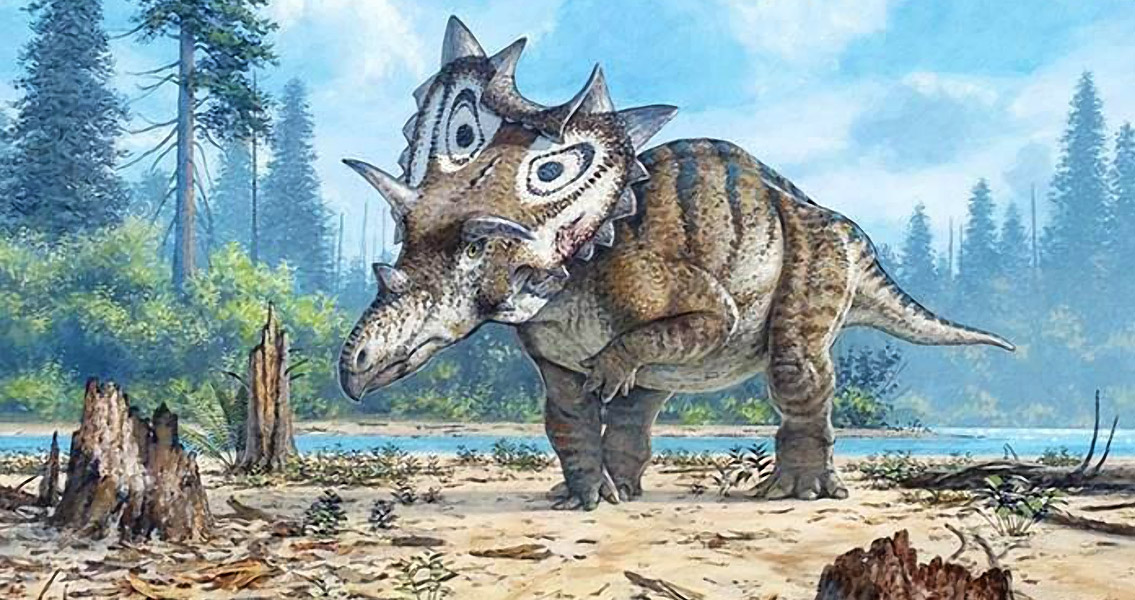
Spiclypeus shipporum. This discovery brings the total known dinosaur species found in the Judith River Formation in Montana to nine. This new dinosaur was identified by bones that had been preserved in a silty slope which had once been part of an ancient floodplain, including the skull, backbone, hips and part of the legs from a single animal. What makes Spiclypeus shipporum unique among horned dinosaurs is the manner in which the bones over its eyes were oriented sideways out from the skull, and the unusual way bony spikes emanated from the edge of the frill, with some projected outward as others curled forward. “This is a spectacular new addition to the family of horned dinosaurs that roamed western North America between 85 and 66 million years ago,” Jordan Mallon, the author of the study, explained in a press release from the museum. “It provides new evidence of dinosaur diversity during the Late Cretaceous period from an area that is likely to yield even more discoveries.” After the first bone fragments were found simply lying on the ground, a team from the museum spent another two years excavating and recovering the remaining fossils. An examination of the bones suggests a life of pain for the dinosaur, with the upper section of the arm bone showing obvious signs of bone infection and arthritis. Despite this condition, further analysis involving the growth rings found inside of the bones indicates the dinosaur lived long enough to reach maturity, and was around 10 years old at the time of death. Ceratopsids were megaherbivores which arose within the Late Cretaceous period and quickly diversified in North America and Asia, becoming one of the most expansive dinosaur groups at the time. Their horned craniums and ornamental frills make them easy to recognize. The study, which was published in PLOS ONE, notes that none of the nine species found at the Judith River Formation has been unearthed in states lying to the south of Montana, which suggests the dinosaur fauna found in western North America 76 million years ago were highly localized. Some of Mallon’s earlier research shows that communities of herbivores that are considered as being species-rich may have been possible because of dietary specializations, a phenomenon referred to as niche partitioning. Recognized as historically important, the Judith River Formation (included within the Judith River Group) is a geologic, fossil-bearing formation located in Montana. It dates back to the Cretaceous period, 80 to 75 million years ago, and corresponds to the “Judithian” age of land vertebrates. The dinosaur’s name, Spiclypeus, is derived from the Latin word which means “spiked shield”, and shipporum is to honor the Shipp family. For more information, the full article is available here Image courtesy of Mike Skrepnick (c) Mike Skrepnick]]>
Categories
Breaking News

5,000-Year-Old Kurgan-Style Tumulus Discovered in Istanbul

Categories
Breaking News

New Research Describes Roman Fort Built After Boudican Revolt

An Early Roman Fort and Urban Development on Londinium’s Eastern Hill. ]]>