Categories
Breaking News

Scientists May Have Finally Answered Why We Have Such Big Brains

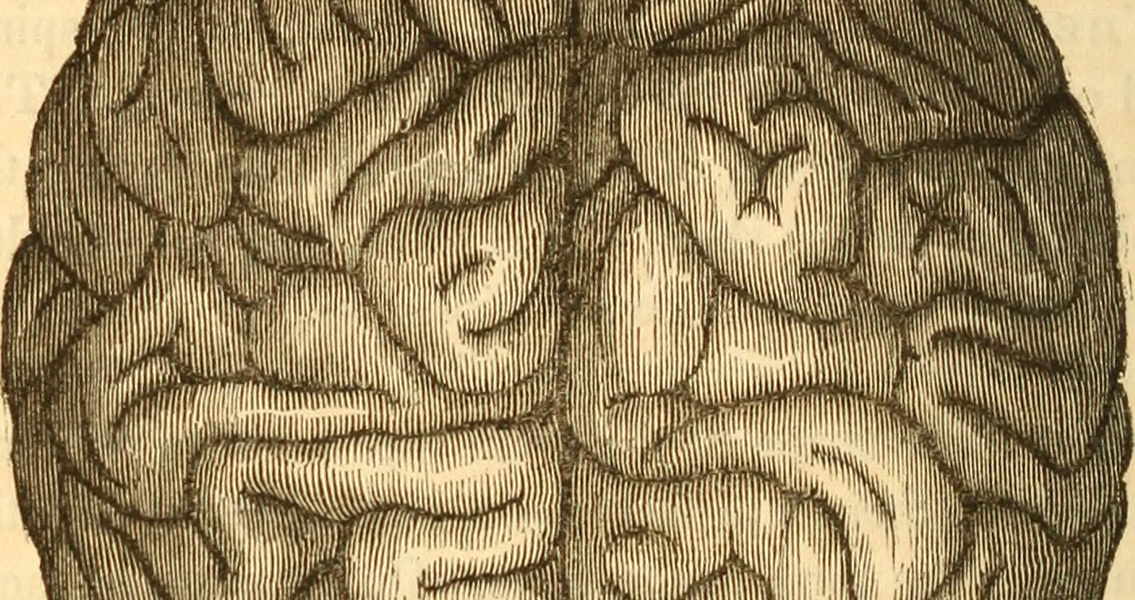
Scientific Reports, the newly released study suggests that the incredible development of the brain is connected to the formation of large, cooperative social groups. As humans started having to judge a person’s relative standing and making decisions about who to cooperate with, their brains’ were challenged like never before. The team of computer scientists from Cambridge believe it was this which promoted the rapid expansion of brain size over the last two million years. The authors also claim that their results show that evolution favours those who are willing to help and cooperate with others who are at least as successful as themselves. “Our results suggest that the evolution of cooperation, which is key to a prosperous society, is intrinsically linked to the idea of social comparison – constantly sizing each up and making decisions as to whether we want to help them or not.” explained lead author Roger Whitaker, from Cardiff University’s School of Computer Science and Informatics. “We’ve shown that over time, evolution favours strategies to help those who are at least as successful as themselves.” In comparison to almost every other animal, human brains are larger as a percentage of body weight. More remarkably, since the emergence of the first species of the Homo genus some two million years ago, the human brain has more than doubled in size. Compared to more distant ancestors such as the australopithecines, which lived between two and four million year ago, human brains have more than tripled in size. What accounted for this remarkable increase has long puzzled scientists. The Cardiff University team used computer modelling to run hundreds of thousands of simulations, or ‘donation games’, as a means to understand decision making strategies in simplified humans. From these simulations they attempted to understand why certain types of behaviour strengthened over time. For each round of the donation game, two simulated players were randomly selected from the population. The first player then made a decision on whether or not to donate to the second, based on a judgement of the second player’s reputation. If the player elected to donate, the first suffered a cost while the second received a benefit. Their reputation was then updated in light of their decision, before the next game was initiated. According to the team, the results suggest making relative judgments to help others has been important for human survival. They also claim that the complexity involved in having to regularly assess and reassess individuals has been difficult enough to promote the expansion of the human brain through the generations. Professor Robin Dunbar, an evolutionary psychologist from Oxford University who was involved in the study, previously proposed the social brain hypothesis. “According to the social brain hypothesis, the disproportionately large brain size in humans exists as a consequence of humans evolving in large and complex social groups.” he explained. “Our new research reinforces this hypothesis and offers an insight into the way cooperation and reward may have been instrumental in driving brain evolution, suggesting that the challenge of assessing others could have contributed to the large brain size in humans.” The implications of the study are not just limited to understanding our most ancient history, however. The authors suggest it could also be applied to engineering and in particular to the development of autonomous machines. “The models we use can be executed as short algorithms called heuristics, allowing devices to make quick decisions about their cooperative behaviour,” Professor Whitaker said. “New autonomous technologies, such as distributed wireless networks or driverless cars, will need to self-manage their behaviour but at the same time cooperate with others in their environment.” ]]>
Categories
Breaking News

Terrifying 300 Million-Year-Old Sharks Were Filial Cannibals

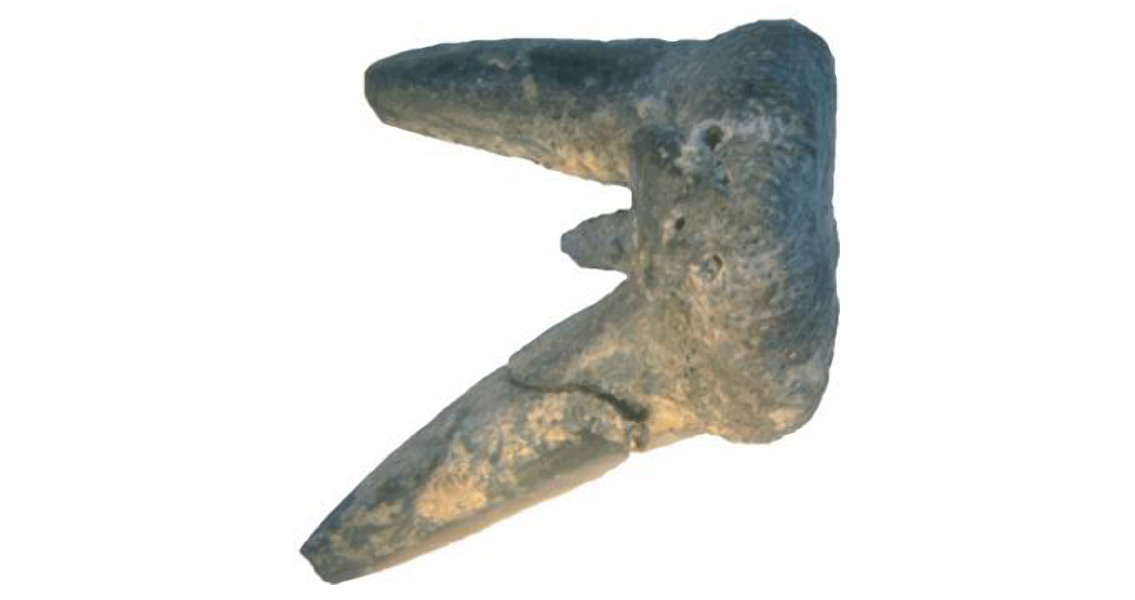
Paleontology. Image courtesy of Aodhán Ó Gogáin (Trinity College Dublin)]]>

Categories
Breaking News

Victims of Great Irish Famine Exposed to Tooth Analysis

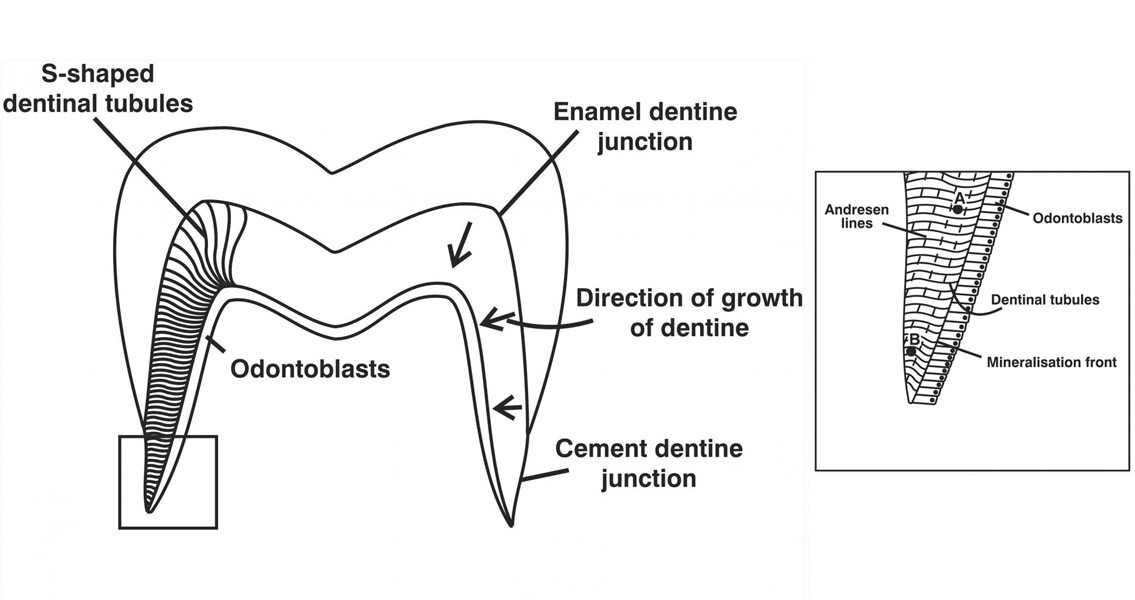
here Image courtesy of Beaumont et al. (2016) ]]>

Categories
Breaking News

Has Evidence of Human Sacrifice in Ancient Greece Been Found?

Categories
Breaking News

Ancient Incantations Found at Serbian Gravesite

Categories
Breaking News

New Study Shows How America’s Earliest People Didn’t Get There

Categories
Breaking News

New Evidence Revealed for Intelligence of Human Ancestors

Categories
Breaking News

Sherlock Holmes Writer Wasn't Involved in Human Ancestor Hoax

Homo erectus. Scientists around the world accepted the fossil’s validity and the shocking implication that the British Isles had played a much more prominent role in the evolution of modern humans than anyone previously imagined. For forty years the fossils misdirected the study of anthropology, as scientists struggled to interpret them. The results suggested a species with an ape like jaw, but the cranium of a modern human. Chemical tests eventually revealed the hoax, showing that the bones had been deliberately stained to make them seem much more ancient. Now, a new study of the forgeries argues that it was carried out by a lone perpetrator. The results, published in the journal Royal Society Open Science, show that the fraudulent fossils were created from a limited number of specimens that were all constructed using the same techniques. A host of people have been accused of involvement in the hoax, most famously Sir Arthur Conan Doyle, the creator of Sherlock Holmes. Suspicion fell on the writer because he was a fossil collector who lived close to Piltdown Common. In his 1912 novel: The Lost World, Conan Doyle mused about how easy it would be able to create a fake fossil, and the consequences of such a forgery. For many, this was seen as a hint to the Piltdown Man Hoax. According to the authors of the new study however, Arthur Conan Doyle can be cleared of any involvement in the hoax; responsibility likely resting on only one pair of shoulders. “Although multiple individuals have been accused of producing the fake fossils, our analyses to understand the modus operandi show consistency between all the different specimens and on both sites. It is clear from our analysis that this work was likely all carried out by one forger: Charles Dawson”, said Dr Isabelle De Groote from Liverpool John Moores University, the lead author on the paper. The research was undertaken by a multidisciplinary team from institutions in London, Cambridge, Liverpool and Canterbury. Their aim was to uncover exactly how a forgery that fooled the world for four decades was pulled off. DNA analyses revealed that several of the teeth found at each site likely came from the same orangutan. The shape of the molar from the second Piltdown site suggests it was almost certainly from the other side of the jawbone discovered at the site of the initial Piltdown Man discovery. Many of the bones and teeth were filled with Piltdown gravel, to aid the deception. Dental putty was used to fill in holes in the skulls, as well as to reset teeth in the jaw and reconstruct one of the teeth, which may have been broken while being ground down. Although the hoax took place over a century ago, the authors of the study point out that it carries important lessons for today. “Even today, over a hundred years after the Piltdown fraud was perpetrated, it remains relevant because of the huge impact it had on the course of Palaeoanthropological research at the beginning of the twentieth century.” explained Dr Laura Buck, co-author of the paper from the Division of Biological Anthropology, University of Cambridge. “Fossil human remains from Africa, such as the Taung child from South Africa, were largely ignored when first found because they didn’t fit with preconceptions of what an early human relative would look like, based on Piltdown Man. This serves as an important reminder to researchers today to study what is there and not what we think should be there,” Buck continued. The Piltdown Man forgeries themselves are kept at the Natural History Museum in London. Image courtesy of Natural History Museum]]>

Categories
Breaking News

Mycenaean and Egyptian Artefacts Discovered in Cyprus Grave

Categories
Breaking News

Greek Ministries Clash over Fate of Elliniko Airport

Greek Reporter has just revealed that the Greek Ministry of Defense, Infrastructure, and Finance has received a letter from the Culture Ministry on behalf of the General Directorate for Antiquities and Cultural Heritage that could place the future of the Elliniko site, and the ability of Greece to move forward with recovering from its myriad financial woes, in jeopardy. The original plans for the site included a small portion of the area to be reserved as an archaeological site, according to the Culture Ministry. However, new developments at the airport have revealed that the scope of the dig site is much more expansive than it was originally estimated to be. In its letter, the Culture Ministry has urged recipients to respond urgently to the new plans. Regardless of whether the Culture Ministry succeeds in setting aside larger swathes of Elliniko for archaeological study, the bureaucratic result is likely to be at the very least a delay in the privatization project – something that has been in development since 2014. Additionally, there are fears now that delays may expose the Greek government to litigation from Lamda Development in the wake of the recently signed memorandum of understanding between the two parties. According to the Greek-language newspaper Kathimerini, opposition leaders in the Greek government have responded angrily. Stavros Theodrakis, leader of the centrist To Potami political party, spoke out in condemning the move, going so far as to accuse factions within the ruling Syriza Party and a handful of government ministers of coming together in collusion to delay the Elliniko project. Likewise, Union of Centrists leader Vassilis Leventis felt that it was unnecessary to discuss Elliniko’s archaeological significance after the investment had already been agreed upon. The Elliniko privatization project will provide the equivalent of more than $1 billion USD to the Greek government. Additionally, it will create around 70,000 new jobs after construction is completed on the new tourist center, which will include hospitality staff for the numerous new hotels, restaurants, and other amenities set to be created for the region in an effort to create the largest metropolitan park of its kind. The plans also call for the creation of a kilometer’s worth of new recreational beachfront. ]]>