

Marine Geology. The analysis was carried out with researchers from OSU, Camosun College in British Columbia and Instituto Andaluz de Ciencias de la Tierra in Spain. Running from northern California to British Columbia, the Cascadia Subduction Zone separates the Explorer, Gorda and Juan de Fuca plates from the North American one. In the past 10,000 years there have been 43 major earthquakes on the subduction zone, some affecting the whole zone at once, others only parts of it. The occasions when the whole zone is involved are believed to be capable of generating earthquakes of 9.1 magnitude. It is widely believed that the southern portions of the Cascadia Subduction Zone, south of Newport, Oregon, tend to rupture more frequently. From Newport to Coos Bay ruptures occur every 300 – 380 years, and every 220 – 240 years from Coos Bay to Eureka, California. Although the latest study doesn’t deny that the ruptures in the subduction zone occur more often in the southern section, it has found they’ve occurred more frequently than traditionally thought in the north. The data used in the study is the most comprehensive ever collected. 195 core samples containing submarine landslide deposits caused by subduction zone earthquakes were analysed by the team. Previous research was restricted to only a dozen such core samples. The findings could have significant implications for the major cities in the northern sections of the subduction zone, such as Vancouver, Seattle and Portland. A section of the zone stretching from Newport to Astoria, Oregon, was believed to rupture only once every 400 – 500 years. The new study suggests that in reality that average is every 350 years. Further north, a section from Astoria to Vancouver island has been found to rupture every 430 years, much more often than the previously believed average of every 500 – 530 years. “What this work shows is that, contrary to some previous estimates, the two middle sections of the Cascadia Subduction Zone that affect most of Oregon have a frequency that’s more similar than different,” said Goldfinger. Based on the results, the possibility of earthquakes in the next fifty years have been revised upwards. On the part of the zone off central and northern Oregon, the chances of an event in the next half a century have been changed from 14-17% to 15-20%. In the northern most section, off Washington and British Columbia, the chances have been increased from 8 – 14% to 10-17%. The results also suggest that the biggest earthquakes: caused by the entire Cascadia Subduction Zone rupturing at once, occur more frequently than previous research suggested. The new data suggests that of all the ruptures in the Cascadia Subduction Zone over half affect the whole zone, previously that was thought to be the case only 50% of the time. It was in January 1700 that the last major earthquake occurred on the Cascadia Subduction Zone. The event is well documented, as it triggered a massive tsunami which crossed the Pacific Ocean and struck Japan. The new findings have allowed scientists to use the past to gain a greater understanding of what lies ahead. “Part of what’s important is that these findings give us more confidence about what’s coming in our future,” said Goldfinger. For more information: www.sciencedirect.com ]]>

Journal of Anthropological Archaeology, the quartet describe how they determined the possible reason Neanderthals perished during the Ice Age while early humans survived, by looking at what’s been found at each groups’ campsites. It’s not what the researchers found by analyzing the data related to Neanderthal campsites that is so significant, but what they didn’t: any evidence the Neanderthals used animal fur to stay sufficiently warm. When the campsites of modern humans and Neanderthals were compared, the researchers discovered the one glaring difference at the Neanderthal sites was the absence of animal remains of the type that would have been used to make the parka style clothing needed in a cold climate. By comparison, numerous examples of fox, mink, rabbit and wolverine remains were identified at 56 locations of early human campfires, many of which might have been skinned for use in crafting fur coats or parkas. The discovery of wolverine remains in particular was of note because it’s the animal which people living in the Arctic often use to keep warm, as it works extremely well as a fringe and lining on the hood. The Neanderthal extinction happened suddenly, at around the same time modern humans started to expand into Eurasia. Since the discovery of the first Neanderthal remains, both their place within the human family tree and their relationship to modern humans has been a hot topic of debate. They’ve been classified, at different times, as both a separate species known as Homo neanderthalensis, and as a subspecies named Homo sapiens neanderthalensis. Following an analysis of 40 individual Neanderthal sites in western Europe, researchers concluded in 2014 that the Neanderthals became extinct around 40,000 years ago. Although much earlier than previous estimates, this date was established using improved methods of radio carbon dating (Neanderthals could have survived longer in Siberia and eastern Europe). Theories on the Neanderthals’ extinction include: an inability or failure to adapt to the changing climate, or competitive exclusion as a result of the encroachment of modern humans. It’s also possible their extinction was hastened by violent conflicts with early humans. Warfare and conflict were pervasive features within hunter-gatherer social groups. Additional evidence of early humans creating warm clothes has also been found, for example, bone needles and other types of tools used to scrape animal pelts. Also, a number of figurines discovered in Siberia, which have been dated back to around 24,000 years ago, were found wearing parka-like animal fur coats. No evidence of Neanderthals wearing or crafting cold weather clothing has ever been discovered. Why the Neanderthals didn’t have clothes warm enough to survive the colder climate remains a mystery, the researchers suggest in their paper that they might have lacked the know-how, or perhaps their cultural traditions somehow prevented it. ]]>

Radio Focus Varna. Other recently discovered artifacts unearthed during the excavations in Kastritsi include a Lydian stone, very rare in Bulgaria, which was used to test the carats of silver and gold coins and was an essential instrument in commercial dealings. Additionally, archaeologists unearthed a small anvil and a mold used to forge silver icons of the Virgin Mary, from the middle of the fourteenth century. Another mold, used to forge icons of Jesus Christ the Pantrokrator, was found during earlier work at the site. Researchers also discovered cattle, pig and lamb bones inside the kilns at the medieval inn, as well as tuna and turbot bones and fish hooks. The exposed parts of the medieval inn are located in Cape Yani, the same location that Tsar Ferdinand, the Third Bulgarian Tsardom ruler between 1887 and 1918, would watch the sea while sitting on a stone throne. The throne was later destroyed during construction of a breakwater in the Communist period. Many of the amazing discoveries found at the Kastritsi Fortress include coins: a hoard of 36 coins featuring Ottoman Sultan Bayezid I the Thunderbolt who ruled from 1389 until 1402, along with a cache of silver coins featuring his father Emir (Sultan) Murad I, who ruled between 1362 and 1389. Another coin unearthed at the site features Bulgarian Tsar Ivan Alexander (ruled 1331-1371) and Despot Dobrotitsa, ruler of the Principality of Karvuna in northeast Bulgaria (1347-1385). Coins from Egypt, Asia Minor, Italy, Wallachia and Poland have also been found. Archaeologists in Bulgaria have excavated over one-fifth of the Kastritsi Fortress site, part of which is open to the public. Images of the Inn can be found here: here Featured Image, Euxinograd Palace, Courtesy of Wikimedia Commons user: Dimcho Panayotov (Benkovski)]]>

New York Times, team leader Qinglong Wu says that a new lake caused after a landslide, precipitated by an earthquake, dammed the Yellow River near the Jishi Gorge, close to the Tibetan plateau. The water level rose by around 800 feet, according to data gathered by the researchers. Water accumulated for between six and nine months, only for the dam to finally give way, releasing a deluge of 3.8 cubic miles of water – easily one of the most extreme floods of the last 10 millennia. Researchers say that there was so much water the flood wave could have traversed as far as 1,250 miles down the course of the Yellow River, easily obliterating the natural banks of the river and causing unprecedented flooding. The course of the river itself could have been altered by this event, they added. While floods can be difficult to place in the historical record, in this case the same earthquake that led to the landslide that dammed the Yellow River also destroyed the local village of Lajia around 16 miles downstream. The flood and the earthquake seem to have occurred in the same year, as fissures created by the earthquake had been filled completely and exclusively with flood-borne sediment. The earthquake that destroyed Lajia has been pinpointed to around 1920 BCE, after the remains of three children killed by the natural disaster were radio carbon dated. Researchers estimate the beginning of the Xia dynasty at between 2070 and 1914 BCE based on records dating from the time, and 1920 BCE is squarely within this period. Additionally, the stories of Emperor Yu organizing the dredging of drainage canals in order to help the region recover from the Great Flood seem to be much more plausible in light of the new discoveries. While there could have been a great many floods over the millennia in the region – and a great many chances to recover from them, the jury is still out on whether this new evidence will be enough to legitimize the annals of Emperor Yu’s reign as historical fact – but Wu and his team believe it’s a step in the right direction. The results of the team’s research, which have been published in the journal Science, can be found online here ]]>


American Antiquity, the focus of the new study is Mound 72: a massive burial site discovered in 1967 by archaeologist Melvin Fowler. The impressive Mound 72 held five mass graves, the smallest containing only twenty bodies, the biggest over fifty. Dozens of other bodies were buried individually or in groups there, some directly over the mass graves. By the end of his study, Fowler had identified 270 bodies in the mound. Some of them had been placed in cedar litters, leading Fowler and his team to conclude they had been people of high status during life. Later studies determined that all of the bodies had been interred between 1000 CE and 1200 CE. Cahokia was at its peak during this period, with historians claiming the city’s population was as high as 20,000 during the eleventh century. “Mound 72 burials are some of the most significant burials ever excavated in North America from this time period,” said ISAS (Illinois State Archaeological Survey) director Thomas Emerson, who conducted the most recent study with physical anthropologist Kristin Hedman and skeletal analysts Eve Hargrave of ISAS, Dawn Cobb of the Illinois State Museum Society, and Andrew Thompson of the University of Cincinnati College of Medicine. “Fowler’s and others’ interpretation of these mounds became the model that everybody across the east was looking at in terms of understanding status and gender roles and symbolism among Native American groups in this time.” Fowler’s remarkable discovery, and subsequent interpretation of Mound 72, were hugely influential. However, Emerson and colleagues have found that some of the original conclusions were based on inaccurate or incomplete information. According to them, a key misunderstanding relates to the beaded burial, where two bodies were buried on top of each other on a partial bed of beads. Several other bodies, interred at the same time, were buried around the centrally placed pair. For Fowler, this unique burial was interpreted as two high status males surrounded by their servants. The pattern of the beads around the bodies was thought to resemble a bird’s head. In many Native American traditions birds are associated with warriors and supernatural beings, something which led Fowler to conclude the beaded burial represented mythical warrior chiefs. This interpretation came to be taken as evidence that Cahokia was a male dominated hierarchy, but the new analyses by Emerson and his team have thrown this conclusion into doubt. Firstly, they found that there were in fact 12 bodies involved in the beaded burial, not just six as previously reported. Most dramatically, the team concluded that the two bodies at the centre of the burial were a male and a female, not two males. Further study by the team revealed other inconsistencies. There were other male and female pairs in or near the burial. There was also evidence of the bones of disarticulated bodies being gathered up and placed for burial next to these important couples. The team even found the remains of a child. “We had been checking to make sure that the individuals we were looking at matched how they had been described,” said Hedman. “And in re-examining the beaded burial, we discovered that the central burial included females. This was unexpected.” “The fact that these high-status burials included women changes the meaning of the beaded burial feature,” Emerson explained. “Now, we realize, we don’t have a system in which males are these dominant figures and females are playing bit parts. And so, what we have at Cahokia is very much a nobility. It’s not a male nobility. It’s males and females, and their relationships are very important.” It’s a conclusion which fundamentally changes the image of Cahokia society, showing it to be class based rather than split along gender lines. For Emerson, this wasn’t a surprise based on his experience at other Cahokia sites. “For me, having dug temples at Cahokia and analyzed a lot of that material, the symbolism is all about life renewal, fertility, agriculture,” he said. “Most of the stone figurines found there are female. The symbols showing up on the pots have to do with water and the underworld. And so now Mound 72 fits into a more consistent story with what we know about the rest of the symbolism and religion at Cahokia.” The scientist believes the misinterpretation of Mound 72 is an example of archaeologists projecting the practices of other North American indigenous cultures onto the Cahokia, and subsequently missing much of what made the civilisation unique. “When the Spanish and the French came into the southeast as early as the 1500s, they identified these kinds of societies in which both males and females have rank,” he said. “Really, the division here is not gender; it’s class.” Emerson said “People who saw the warrior symbolism in the beaded burial were actually looking at societies hundreds of years later in the southeast, where warrior symbolism dominated, and projecting it back to Cahokia and saying: ‘Well, that’s what this must be… And we’re saying: ‘No, it’s not.'” Graphic by Julie McMahon]]>
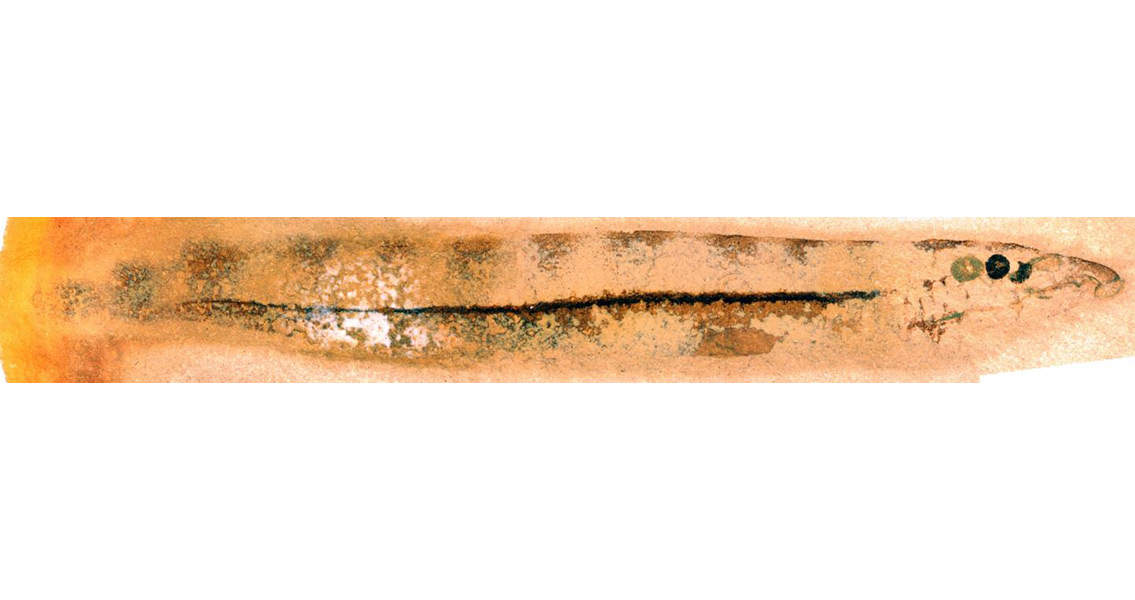
The Proceedings of the Royal Society B, can be found online here Image courtesy of Rober Sansom]]>
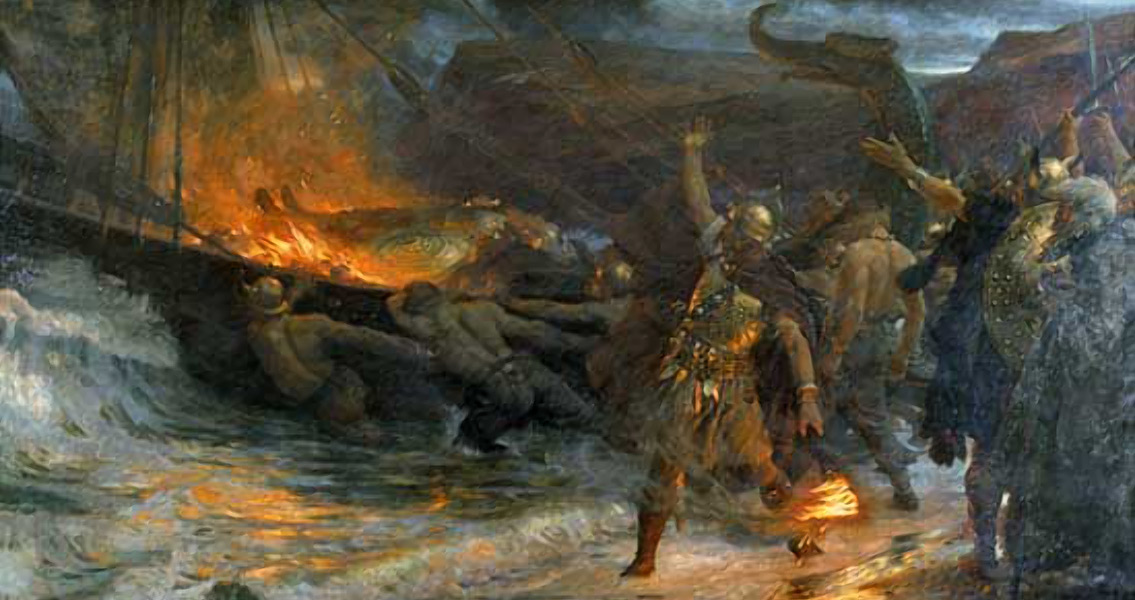
News Corp Australia, Kirsten Nelleman Nielsen, the leader of the excavation, says that the axe is exceedingly large, and would have been the kind of weapon that would have struck fear into the hearts of the wielder’s enemies. Known as the “Dane Axe”, the weapon would have been analogous in the Viking Age to the machine gun of the modern era, the researcher added. The weapon was likely not a ceremonial one, as it is simple and without adornment. Additionally, as it was the only object buried with the man, it is likely to have been a prized possession in life, leading Nielsen and his team to surmise that the tomb contains the remains of a warrior. Nielsen said the find was more than a little extraordinary, as this particular axe is much larger and heavier than other axes found in similar graves. The handle of the weapon would have been very long, requiring the use of both hands to wield effectively. Originally discovered in 2012, the multi-roomed dødehuse was stumbled upon during the construction of a highway in the district of Harup; the timber structure measures 13 meters by 4 meters and is part of an extensive burial ground. Within were found a trio of graves, which have all been dated to 950 CE. The front of the tomb held a man and a woman, seemingly buried together, while the back was the final resting place of the axe-wielding warrior. The couple seem to have been highborn or otherwise people of import, as their grave goods were sourced from across Europe. According to University of Copenhagen, Denmark archaeologist Henriette Lyngstrøm, silver coins originating from ancient Afghanistan and ceramics from the Baltic point to an international reach. Additionally, the female was found with a set of keys, thought to have been symbolic of her power, and the two were found within a wagon that is thought to have been used by Danes of noble birth during the time they were alive. The man, perhaps her husband, was found with a more modestly-sized battle axe. Nielsen remarked that finding a male and a female buried together in such pomp and circumstance is noteworthy, as it explodes the myth of the male-dominated nature of Viking society by affording equal status between the two. ]]>