Categories
Editorial

History of Democracy in the UK (Part 2)

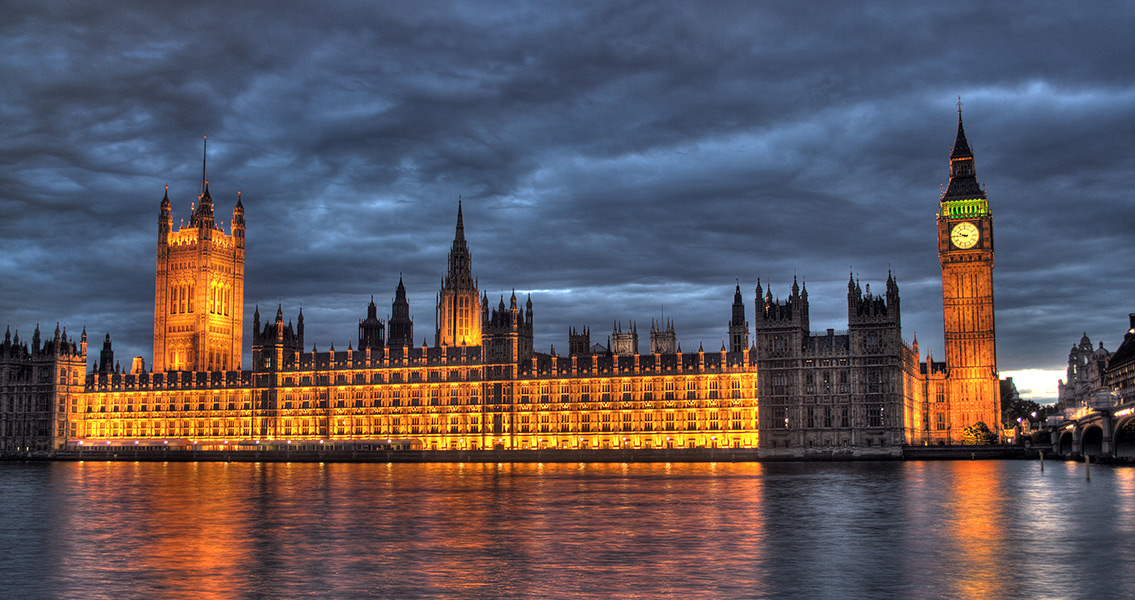
history focused on the relationship between monarchy and parliament, and the key events in restricting the powers of the monarch as Parliament became increasingly significant. The second part looks at the expanding of the franchise, and the various campaigns to make democracy more inclusive. The Glorious Revolution The Glorious Revolution of 1688 came at a time when the dislocation and chaos of the English Civil War was still fresh in the memory. The revolution, which ended King James II’s reign, was a response to the King’s obvious desire to have Catholicism returned as England’s religion. James’ reign was characterised by unrest and conflict with Parliament, a situation the revolution hoped to bring to an end. Both Tory and Whig politicians in the United Kingdom took it upon themselves to send an invitation to William of Orange, the protestant Prince of Holland, to take the throne of the United Kingdom and rule alongside his wife Mary, the daughter of James II. In November 1688, William’s forces landed in the United Kingdom, and James fled to France the following month. In January 1689, legislation was passed to enshrine the revolution, and William became King of England. Although a controversial event: one which led to bloody conflicts in Scotland and Ireland (both predominantly Catholic), can be interpreted as a legalised invasion of the UK, and restricted Catholic freedoms, the Glorious Revolution was crucially important in British constitutional history. Before being offered the crown, William and Mary were made to agree to a document which was eventually passed into law as the Bill Of Rights. It laid out a number of key constituional principles, such as the need for regular parliaments, the illegality of creating new taxes without parliamentary approval, and the prohibition of dispensing powers through royal prerogative. As was often the case, it took time for these new laws to be adopted in practice, but the Glorious Revolution laid the frame work for the modern, constituional monarchy. The Great Reform Act The nineteenth century was a period of drastic change in the United Kingdom, influenced by events both at home and abroad. The French Revolution of 1789 had proved an inspiration for the drive to achieve social change across Europe, leading to the nineteenth century being dominated by political and social upheaval. The French Revolution was also a warning to governments of the need to respond to the voice of the people to prevent revolution. At the same time, the Industrial Revolution had swiftly altered British society, leading to mass urbanisation and a swift redistribution of wealth. Both of these factors put pressure on the establishment to create a political system that reflected reality. Allowing men who rented property to vote as well as property owners, the 1832 Reform Act increased the franchise to over a million people, or about one in six of the population. The act also redrew the barriers of constituencies, meaning fairer political representation was given to the densely populated cities that had sprung up after the industrial revolution. A second Reform Act, passed in 1867, expanded the enfranchise to include all male householders, regardless of the property’s value. The act doubled the franchise yet again, incorporating a large swathe of the urban working class. The Twentieth Century Into the twentieth century, reforms still needed to take place to reach the democratic representation present in the United Kingdom today. Throughout the late nineteenth and the early twentieth century the movement for female suffrage had grown increasingly vocal and difficult to ignore. Different female suffrage groups deployed methods of various extremes in an attempt to expand the franchise, most notably in 1913, when Emily Davison was killed at the Epsom Derby after she ran out in front of a horse, holding the banner of the Women’s Social and Political Union. Finally, at the end of the First World War, the ‘Representation of the People Act’ was passed, significantly expanding the franchise once again. All property restrictions were removed for male voters, allowing many soldiers who had fought in the war the chance to vote for the first time. Women over the age of thirty were also allowed to vote for the first time and stand for election, although some property conditions were included. These restrictions were lifted ten years later, allowing any woman over the age of twenty one the right to vote. Image courtesy of Wikimedia Commons user: Maurice]]>

Categories
Editorial

History of Democracy in the UK (Part one)

The Magna Carta Although ultimately proving something of false start for the establishment of democracy in England, the Magna Carta, signed in 1215, laid down some initial principles which would later be crucial. The Charter, signed by King John and the barons, is most widely remembered for consolidating judicial rights, including habeas corpus: the right not to be unlawfully imprisoned. Other clauses however, were vital in decentralising power, taking it away from the body of the king and spreading it across a wider group of people. Magna Carta’s 61st Clause, referred to as the Security Clause, stated that a council of twenty five barons should be created with the power to overule the will of the King. Shortly after the signing of Magna Carta, John repealed this clause and it was largely ignored by subsequent medieval kings. Nevertheless, it had raised crucial ideas which would reappear in the construction of the English Constitution. Simon de Montfort The brother-in-law of King Henry III, Simon de Montfort led a rebellion in 1254 which laid the foundations for the modern parliament. Henry had grown increasingly unpopular with his barons, as a result of repeatedly committing English resources to wars fought on the behalf of the Papacy. More importantly, the parliament of barons felt increasingly ignored by the King. A famine proved the final straw, and the barons demanded reforms to the way the King ruled the country. Significantly, the powerful and influential de Montfort sided with the barons. The Pope ruled that the barons’ demands for reform were unconstituional, but the tensions did not go away. In 1263, de Montfort led another campaign for reform, ultimately leading to war with Henry. At the Battle of Lewes in 1264, Henry was captured. In the King’s name, de Montfort called a parliament to discuss the next step. This parliament was unlike any that had been called before. Alongside barons, English towns were also asked to send representatives to advise on the next step for English politics. For the first time, democracy had been opened up to a much wider demographic. Historians often question whether de Montfort was motivated by a genuine desire to further democracy, or total self interest. Either way, his actions were hugely important in the development of Parliamentary Democracy. The 40-Shilling Franchise As alluded to above, a parliament had existed in Britain since the late thirteenth century. Exactly who could partake in it however, was far from set. Since 1341, Parliament had been divided into two houses, the knights and burgesses sitting in what became the House of Commons, and the clergy and nobility sitting in the House of Lords. A drastic change occurred in 1429, with a new statute specifying who was entitled to vote in elections. A concern had grown that the House of Commons had become overcrowded by people of “low estate”, that is, the poor and uneducated. Essentially a reactionary step by the aristocracy to strengthen their own political influence, the 40 Shilling Franchise greatly reduced the number of people who were eligible to vote. Following the passing of the statute, only freemen owning freehold land (land that was not rented from a landlord) with a value of more than 40 shillings were allowed to vote. The 40 Shilling Franchise put restrictions on who could vote that lasted for over four centuries… ]]>

Categories
Editorial

George L. Mosse: Unconventional Historian

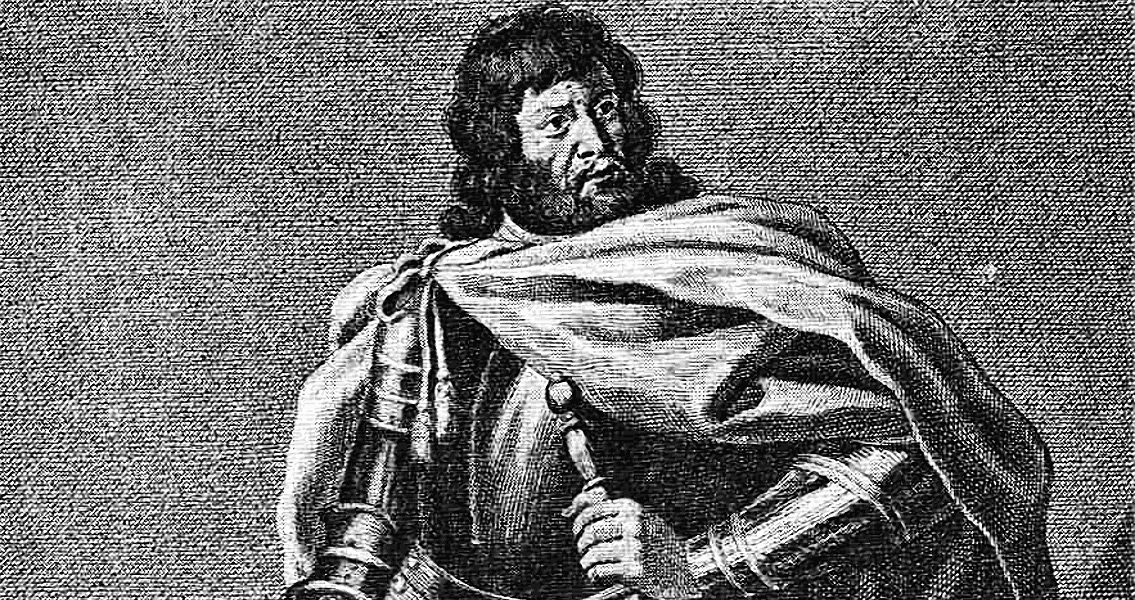
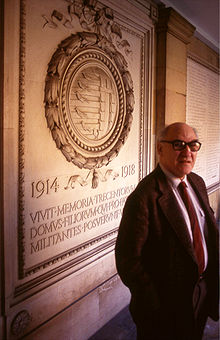
Tageblatt, and started one of the first modern advertising agencies. During the Spartacist Revolt of 1919, Mosse’s father was sent out to negotiate with Rosa Luxemburg who were among the activists who occupied the office of the family publication. Liberal, influential and rich, Mosse’s family was also, for different reasons, everything the Nazis held in contempt. Mosse, the future historian who later had to flee the Nazis, had the experience of seeing his family despised by forces from both the left and right. His objective mind, saw in the Nazi movement, especially at their rallies, elements of charisma which were attractive. Further, he realized there was nothing in the Bildung cosmopolitan liberalism of his family circle which could comprehend or resist fascism, but also the criticism of mass movements more broadly. Bildung is a German word that suggests a creative self-cultivation, rooted in philosophical meditation, which leads to maturity. It need not lead to cynicism or a tragic sense of life.   At the University of Wisconsin, after first dabbling in British history, Mosse, as teacher, began to focus on his German-Jewish identity, and pull the yarn of the alienation and repressed striving within himself. As he meditated on Nazi ideology, within its anti-modernism, he saw mass aspirations to overcome loneliness. Despite its racism, it offered a ritual faith and spectacle as it forged new community formations. Overcoming alienation, in certain respects, it left state power and capitalism untouched.   Within Nazi ideology, and the study of nationalism more generally, could be found complicated contours of sex and gender. Originally coded in Mosse’s work, they came more to the surface as he came out as a homosexual. A German Jewish exile and gay man in America, before the multi-cultural turn and gay liberation movement, he always reviled nationalism. Yet he found his way ultimately to teach at universities in Israel captivated by the ethos of new Jews who rejected humiliation and internalized anti-Jewish bigotry but were blind to the brutal occupation of the Palestinians. The ethos of the “tough Jew,” that strived to overcome self-hating middle class archetypes, later became the subject of a study by Mosse’s student Paul Breines. Mosse, like many historians, remained an ambivalent individualist. At the end of his life he was able to establish an open, secure, and loving relationship. But, in important ways, he never transcended in practice the haughty Enlightenment impulse found among progressive multi-culturalists even today. Ahead of the curve, as the American plural community was expanding through struggle, allowing for more expressions of diverse identities and personal autonomy, Mosse was part of the imperceptive fusion of cosmopolitan intent with empire.   Mosse could accept empire, as later many of his militant students would, as tragic, once he (again) had a secure place in it, as something to be ameliorated perhaps, even dialogued with, but not something to oppose. But there were other inclinations coded within his historical narratives, which official cultural history has yet to excavate and likely never will.   Of course Mosse was a historian of European intellectual and cultural history but this was the backdrop for insights which were not unique to the Occident, and were pregnant with possibility for other sectors of the world. While he pioneered cultural histories of the contours of nationalism, and gay history, this heritage is clearly embraced and is not his repressed legacy today. But something more is required to see this contemporary disciplining than being trained in the proper graduate program in history.   For those who have given up or who were never interested in challenging state power, not merely its wars, but its presidents and parliaments as the embodiment of representative government, the fight over proper cultural representation suggests a thin fight for social equality. Popular culture is a space where ordinary people’s heroism, latent understanding, and true character can be embraced – but cannot explode beyond containment. Mosse actually was trying to tell us something very different. The masses when historically tired of the compromises of liberalism and pragmatism in an environment of defeat in war, rising unemployment and poverty, are not interested in their depiction in cultural representations, unless aspiring rulers can get them to worship themselves. There are many contemporary contributions to this temple of the familiar.   Monuments and museums to past freedom struggles, festivals and parades, toys, postcards, and souvenirs, distinguished cemeteries, sports and polemical theaters, as sources of public and cultural history, it was true they were contested symbolic spaces for Mosse. More properly he wished them to be and made them so. But the dilemma was not simply in how history, culture, and memory were understood or could be better transformed. As an observer of intellectual history, Mosse observed as well the manipulations of culture by nationalist and fascist movements.   Mosse’s histories illustrate time and again that repression is when hierarchical regimes encourage societies to produce cultural representations of an animated popular self-reliance which is in fact false. Totalitarianism (and now neo-liberal and social democratic pluralism) did not so much regulate culture. It was mastering who could govern. These historical and cultural endeavors then, as Mosse’s most dynamic volumes make clear, were to keep the actual tasks and deliberations of government separate and removed from the passions and creative desires of people where direct democracy was a real aspiration and possibility.   From Napoleonic Europe to World War I, there was a repressed striving among ordinary people not denying their self-expression in culture but their desire to discard representative government. There was a radical impulse not merely toward autonomous ethnic, labor, and sexual identities that was being disciplined and might be subsequently teased out of history.   Instead elites and regimes, Mosse argued the most fascist and totalitarian in particular but also radical Jacobin regimes, continued to have an investment in not merely disciplining human bodies but harnessing their sense of glory toward worshiping themselves as the essence of modern nations that subtly but willingly carried out horrors against their fellows and themselves. This could even be done in an environment which elevated friendship, based on homo-erotic sublimation, as central to national cultures.   For Mosse, popular culture and public history produced myths which legitimized war, death, and reshaped historical memory to trivialize the conquering of people. Scholars may find this easy to understand today. There is an increasing preference for transnational cultural histories to make this point. Yet as a history teacher I find such texts have proven not to clarify for students the relations of empire but have left the intellect, especially the progressive mind, impotent before an affirmative action empire objecting to only half the ruling class. Siding with alternatively the half which proposes that ordinary people need more culture, consciousness, and development, cultural studies is often a field where hegemony is contemplated by those who supposedly know better, and then they vote for representatives of imperial governments. Expertise on the politics of symbolism does not necessarily produce people with organizational acumen and passionate desires to overturn regimes, especially beyond intermittent electoral cycles.   The Europe and United States, the spheres of George Mosse’s existence as a student and teacher who escaped the Holocaust, is now distinguished by greater ethnic and cultural pluralism. It might seem passé to underscore that racism brought to a climax tendencies inherent in the alliance between nationalism and respectability denigrating outsiders. Or that fascism’s approach to sexuality and homosexuality was not simply one of oppression, rather it demanded a strictness of form, a distinction between the normal and abnormal, which was a definite wobble, even as it bashed and executed gay people. Yet Mosse’s intellectual legacies, if not the man’s life, reveals more untimely truths.   The multicultural project is not immune from fascist intellectuals within, not simply fascist attacks external to it. All nationalism claims to provide stability in a restless world seeing itself as a civic religion with a claim toward timelessness. A more perfect union can be claimed as a civic project for a long time, even by those who would have been enslaved and conquered by its previous advocates.   It is here where Mosse foreshadows future problems of multi-cultural history but could not speak to them directly. He understood the United States could condemn Nazis’ racist policies but maintain white supremacy against Blacks, and some of its government officials could still resort to Jewish slurs. Mosse was ambivalent but aware of what he termed the eerie similarity between racist and anti-racist regimes. He avoided explicitly pointing the figure at post World War II imperial regimes in his scholarship. Mosse was aware all nation-states needed a counter-type to erect a supremacist image of itself, not just explicitly fascist regimes.   Mosse saw that the legacy of the French Revolution as well as Nazi Germany, was that both stoked a feeling of participatory democracy which was specious. It offered instead a claim on a more authentic or genuine community. Cultivating mass enthusiasm for such a meaningful community was far more important than everyday people being encouraged to be involved themselves with direct popular government, not merely keeping up with the crimes of political representatives.   The search for the authentic popular will of ordinary people can appear to discard hierarchy and privilege as it re-engineers a more democratic nationalism. Mosse understood this project could tolerate ethnic differences. His histories can be selectively mined toward a conclusion of contemporary relevance; there can be a cosmopolitan pluralistic fascism.   Mosse, it is true, in his personal life, wished to humanize nationalism, patriotism, and its racist temptations. He wanted more sexual freedom for himself as a courageous gay man coming out of the closet, as a Jewish exile in the United States, as someone sympathetic to locating freedom dreams in Israel. Still, the great scholar of the contours of nationalism could never center that liberty for him had to be crafted in two nations riddled with settler-colonialism as he ran for his life from fascism. I don’t conclude from this that Mosse, a great scholar, was hypocritical in his scholarship.   He understood that fascist culture did not diverge from mainstream European or American culture. That it rooted itself in mainstream culture and unlike most socialisms did not try chauvinistically to elevate the cultural tastes and consciousness of labor. Fascism accepted ordinary people’s preferences and went on to direct them (or appeared to do so) toward their own ends. If fascisms of the past clearly had a white supremacist masculine prototype, respectability politics has many icons today. Mosse’s fascism, like nationalism racist and more cosmopolitan, understood that a certain type of elitism, those which professed to be guardians of values and traditions, could captivate the popular will, if it managed the aesthetics of politics in such a way that it showed reverence for the passions, instincts, and latent understandings of ordinary people.   The progressive or welfare state of mind, its basic pragmatism in the face of catastrophe, its voluntary offer to manage not smash them, and instead design new imaginaries, produces popular resentment. Religious right or fascist technocratic nationalism are no better, when they have much in common with the former besides cultural clashes.   George L Mosse’s histories revealed a common consensus by elites to terrorize while posing conflicting cultural representations of who ordinary people might be at their best, in order to train and punish them. From music videos to “reality” television, we don’t need to make popular cultural representation <i>more inclusive</i>. Rather, we need to turn over a new leaf.   There are Europhile and plural cosmopolitan images of self-reliance, which beautifies regimented and alienated work and wageless cultures that project solitary individuality and the family as respectability. Even civilization’s discontents can reinforce this discipline as we, like voyeurs, consume them. We may not even realize that as we worship ourselves that we are still the despised and rejected, with a sense of empowerment which is a fallacy.   The lives of unemployed people of color, and even yesterday’s sexual and gender deviant, can also be rendered entertainment, self-worship, and cultural adornments for economies and nation-states which kill. This seems hardly conceivable if our frame of reference is the 1950s and early 1960s and we are permanently enamored with how far the conquered and repressed have come.   Popular culture’s vanity is at an all-time high through anti-social media, where the autonomy of plural cultural choices is expressed freely like never before, with little desire to observe governments too closely because their damned nature is widely understood or we no longer can stand the pain of paying attention too closely. The new generation’s attention, with partial insights to be sure, is distracted. So far their rebellious discontents have been nationalized.   Mosse insisted there is a latent temptation among everyday people to act unconventionally. While there is some indication, since he was a free spirit for his epoch, that he would have enjoyed benefiting from this new technology, especially iPhone apps that work like a GPS to find the proximity of individuals of one’s sexual preference, the repressed unconventional thesis that is ignored today is another fascination of Mosse’s besides sexuality. He was dynamic in how he explained the popular instinct toward direct democracy.   This was part of Mosse’s challenge to imagine a different type of morality besides bourgeois morality. This was his conclusion toward a study in which he explored what he termed a general theory of fascism. He warned time and again about what was being papered over by the cheap, thin, but attractive “nationalization of the masses.” Critics of this view might conclude Mosse was aware of direct democracy, he could distinguish between fascism and the rebellion of the sans-culottes, but to suggest he intended to embrace direct democracy goes too far. He was really warning against totalitarian impulses (but only on Tuesdays). If this is so, that would make Mosse quite a conventional historian.   If the historian’s craft may produce pent-up frustrations and insights which will always be disciplined and restricted (sooner or later), the unconventional reader will still find George Mosse to have been a historian for their place and time. He unleashed many perspectives on how direct democracy could be sublimated by counter-cultures – something crucial which must be clarified today.   Among progressive cultural historians who organize festivals of participation while still siding with the vote mob and the tragedy of American empire, in reality leaving the state and capitalism untouched, these illuminations will be lost. The hidden heritage of George Mosse may be a part of what he and his disciples once aspired to, wished to identify with, but never achieved. They could not confront their own role in history, discarding genuine resistance for creating the cultural front of an emerging affirmative action empire. This empire of liberty, with the atmosphere of a permanent festival of diversity, is distinguished by leadership with the identities of the historically oppressed, who in a benevolent spirit, remind they could never facilitate torture, degrade, repress, and conquer, having known what it is to be personally despised. At his most perceptive, George Mosse, despite being entertained and even profoundly moved by all this, would not have believed them. If he wasn’t always at his best, this too is a part of being an unconventional historian.   For Further Reading: Paul Buhle and Nick Thorkelson. “George Mosse Finds Himself in Comics.” The Jewish Daily Forward. December 31, 2014. Online: http://blogs.forward.com/the-arty-semite/211787/george-mosse-finds-himself-in-comics/   George L. Mosse. (2000) Confronting History: A Memoir. Madison: University of Wisconsin, 2013. ——————–. (1964) The Crisis of German Ideology. New York: Shocken, 1988. ——————–. Fallen Soldiers. New York: Oxford University, 1990. ——————–. The Fascist Revolution. New York: Howard Fertig, 1999. ——————–. Germans and Jews. New York: Howard Fertig, 1970. ——————–. The Image of Man: Creating Modern Masculinity. New York: Oxford UP, 1996. ——————–. Nationalism and Sexuality. Madison: University of Wisconsin Press, 1985. ——————–. (1975) The Nationalization of the Masses. New York: Howard Fertig, 2001. ——————–. (1966) Nazi Culture. Madison: University of Wisconsin Press, 2003. ——————–.   (1978) Toward the Final Solution. New York: Howard Fertig, 1997. ——————–. (1980) Masses and Man. Detroit: Wayne State, 1987.]]>
Categories
Editorial

April History News Round-Up

Neanderthals The fate of our closest, extinct relatives: the Neanderthals, as well as the relationship modern humans had with them, have been a constant source of fascination. This month, intriguing new ideas and considerations have been added to the ongoing discussion of what happened to the Neanderthals. A study by Anna Goldfield, an archaeologist from Boston University, and Ross Booton, a mathematical biologist from Sheffield University, used mathematical modelling to determine the impact of the mastery of fire on both human and Neanderthal populations. Although there is evidence that Neanderthals used fire, it is clear that they did not use it as consistently as humans. Mastery of fire has a number of major benefits. Firstly, of course, cooking food kills bacteria, making it safer to eat. It also increases the amount of processable protein that can be taken from the food. Therefore, the populations that mastered fire had a much better chance of survival. Based on the model, Booton and Goldfield concluded that modern humans using fire consistently would have allowed their populations to grow, while the Neanderthals would have declined. Fire mastery allowed modern human populations to flourish, which in turn led to them depriving Neanderthals of crucial resources. Other studies released this month have added further theories to the discourse about why the Neanderthals became extinct. A study by authors from Cambridge and Oxford Brookes Universities has used genetic analysis to conclude that disease spread could have led to the Neanderthal’s extinction. The authors argue that humans migrating out of Africa brought new diseases with them which the Neanderthals would have lacked immunity to. Elsewhere, a study by researchers at the University of Bologna, in Ravenna, analysed various hominin and Neanderthal teeth fossils and concluded that the Neanderthal decline started shortly after modern humans had first arrived in Europe. This adds significant weight to theories which argue humans played a part in the Neanderthal’s decline. Connections Between the Past and Present Other studies have focused on issues from the past that remain poignant in the present. Data collection by governments or private institutions, whether on their own citizens or those of other countries, is a civil liberties concern that has remained at the forefront of public discourse for the last few years. A study by Margo Anderson, Professor of History and Urban Studies at the University of Wisconsin, has shown that government collection and use of ‘Big Data’ is far from just a recent development. Anderson argues that following the Japanese attack on Pearl Harbour, the US government used 1940 census data to round up the Japanese ancestry population living on the West Coast of the USA. In total, some 100,000 people were held in US concentration camps for the duration of the war. In 1790, Congress had forbid the use of census data to ‘harm’ US citizens. The treatment of Americans of Japanese ancestry shows how perceived ‘national security threats’ could lead to reinterpretations of exactly what government collected information could legitimately be used for. Recent riots in Baltimore, as well as last year’s in Ferguson, have highlighted the continued controversies over policing in the United States. Undoubtedly, there are a host of complicated social, political and economic issues behind the riots in these two cities, that cannot be fairly analysed here. What is clear however, is that a sense of racial discrimination by various police forces has been an important factor. An article by Themis Chronopoulos, from the University of East Anglia, has argued that a reaction against police misconduct was a major theme in the African American Civil Rights Movement of the 1960s. Histories of the Civil Rights Movement tend to focus on discrimination in schools, voting rights, public housing and employment law as the major causes for protest. Chronopolouos claims, “Survey after survey during the period revealed that one of the overriding concerns of urban blacks was police misconduct and that this issue functioned as one of the primary causes of riots.” This conclusion can perhaps help us frame the riots in Baltimore into a wider historical context. Both the study on the Civil Rights Movement, and the one on state use of data, provide a valuable reminder of the constant connetion between history and the present. ]]>

Categories
Editorial

Britain's Long History of Immigration

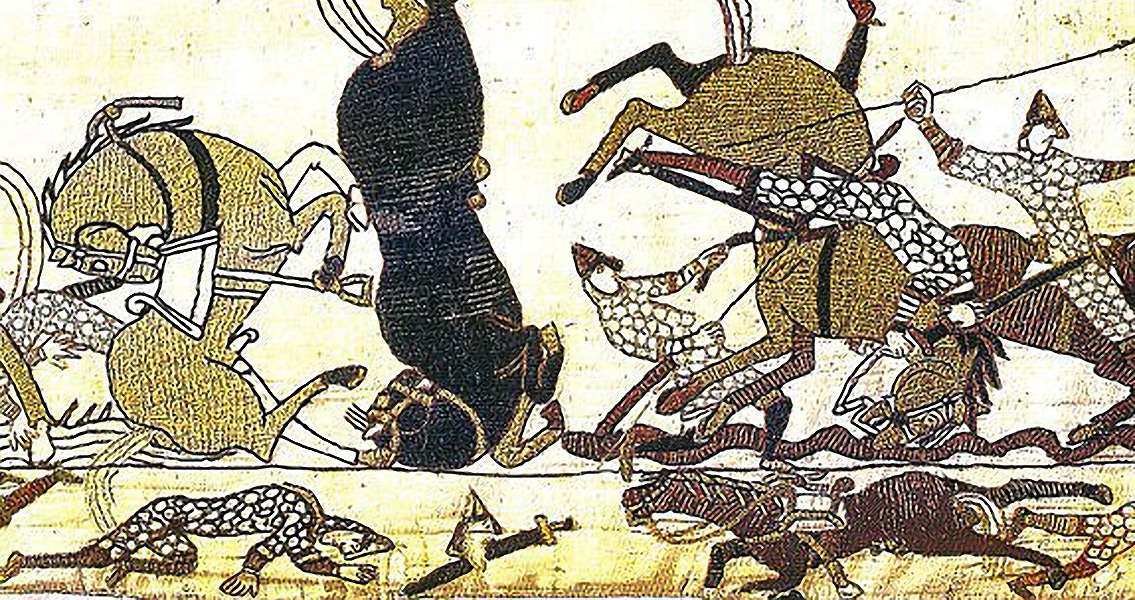
Geography providing the basis of much our knowledge. The Roman Conquest, starting from 43 CE, led to a significant increase in diversity. Traders from across the Roman Empire were drawn to the Roman colonies in England, and soldiers from as far away as Africa were deployed there. Following the Roman withdrawal many of these people left Britain, but there is little doubt that the years of Roman occupation led to a diversification of the inhabitants of the British Isles. After the Romans abandoned their colonies in Britain, several centuries of colonisation by Germanic Tribes followed. These groups, the Angles, Jutes and Saxons, settled in the south of England, and slowly became the ‘English’. This was followed by Viking influences, starting from the eighth century. Initially raiders who attacked and pillaged Anglo-Saxon communities, Norse armies began to settle in the north of England from the ninth century. Again, the Vikings ultimately left the British Isles, but they undoubtedly left a mark on the population. The final major invasion of the British Isles in the early medieval period came in 1066, with the Norman Conquest. The story of William the Conqueror is well known, but it is important to acknowledge the long term impact the Normans had on English culture. French influence permanently altered the largely Germanic language, and can still be heard in modern English. Norman traditions also filtered through into British politics and law, with traces that can still be seen to this day. The Norman, Viking and Roman immigration to Britain was largely facilitated though invasion and military expansion. In the centuries since, immigration has remained a central part of British history, one far too complex to discuss here. As politicians debate ideas of immigration and British identity, it is important to remember just intertwined foreign influence is with the country’s past.]]>

Categories
Editorial

An Appreciation of Wilson Moses

Categories
Editorial

The USA and Latin America: A History of Meddling?

Argentina that the US is continuing to meddle in their countries’ affairs. On the one hand, the US President is claiming that the USA’s interference in Latin American is over, while on the other the leaders of two countries in the region have both accused the US of meddling in their affairs within the last month. This continued controversy reveals the at times bitter history of the relationship between the United States and Latin America. European Conquest of the Americas The background of any analysis of the history of US intervention in Latin America has to be the conquest of the Americas by the European Powers in the fifteenth and sixteenth centuries. Eduardo Galeano argued in his book ‘Open Veins of Latin America’ that the conquest of South America by the Portuguese and Spanish Empires set in place a pattern of domination that has continued into the present, with the only change being which ‘imperial’ power received the benefit of this domination. On this basis, the United States has taken control of the benefits of the economic exploitation of Latin America started by the Spanish Conquistadors. Galeano’s description of political economy and exploitation in his book, first published in the 1970s, is of course controversial, but even if one disagrees with the arguments about exploitation, the connections it draws between the Old European Powers and the United States in terms of relationships with South America can provide a useful framework for studying the history of the continent. Within a hundred years of Columbus’ first discovering America, most of the New World was under the control of the Spanish and Portuguese Empires. Whole civilisations had been wiped out, and the resources of the Americas were being expolited to form the basis of Spanish and Portuguese imperial success. Years later, other European powers, and in particular Great Britain, France and Holland, began to try to take advantage of the riches offered in the New World. Acts of piracy, as well as attacks on Spanish colonies, took place in an attempt to secure control of the riches offered in South America and the Caribbean. The key fact is that from the moment of discovery, the Americas were often treated as an economic resource to fight over. The Monroe Doctrine On 2nd December, 1823, President James Monroe announced in his annual message to Congress that “The American continents … are henceforth not to be considered as subjects for future colonization by any European powers.” The declaration, issued in response to a territory dispute with Russia, came to be known as the Monroe Doctrine and has become a defining moment in the development of US Foreign Policy. A bigger concern behind the doctrine was the decline of Spanish authoirity in South America. As revolution against Spanish rule spread throughout the South American colonies, the United States wished to prevent France, Spain, and other European powers attempting to re-exert their influence in the region. The Monroe Doctrine was a means to guarantee mercantile freedom for the United States in Latin America and the Caribbean, bringing to an end the threat of a return of the strict trade laws associated with the Spanish Empire. The Roosevelt Corrollary An extension to the Monroe Doctrine, Roosevelt’s Corollary declared that European Powers would no longer be able to use force to extract debts from Latin American countries. For many historians however, the Corrollary was a justification for direct US involvement in Latin American affairs. The Corollary coincided with the beginnings of increased US activity in the Caribbean and South America. The Spanish-American War of 1898 had officially been fought to liberate Cuba from Spanish rule. In the Platt Amendment to the Cuban-American Treaty of 1903 however, restrictions were placed on Cuban economic and political freedom which lasted until the Castro revolution of 1959. Over the course of the first decades of the twentieth century, the United States increasingly used military force to ensure stability in Latin America, but also to secure the success of governments sympathetic to it. US Navy vessels were used to obstruct Colombian military vessels attempting to suppress the Panamanian Revolution in 1903. The success of the Panamanian Revolution saw the country achieve independence, and guaranteed US control of the vital trade route of the Panama Canal. By 1934, the Dominican Republic, Nicaragua, Cuba and Haiti had all been partially occupied by US forces at some point. Latin America and the War on Communism US intervention in South America continued following the Second World War, and was often linked with broader Cold War foreign policy aims of restricting the spread of Communism. In Cuba, the Bay of Pigs incident of 1961 was a well documented diplomatic catastrophe that saw the United States provide CIA training and financial support to a group of Cuban exiles attempting to reverse the Cuban Revolution and overthrow the recently formed government of Fidel Castro. In Chile, the United States played a key role in the coup led by General Augusto Pinochet which overthrew the democratically elected left-wing governent of Salvador Allende. Exact details of how much aid the USA gave Pinochet are unclear. The withdrawal of economic support, and a banking embargo during Allende’s government however, were a clear attempt to destabilise Chile. Tellingly, economic aid was restored once Pinochet’s government had secured power. The Iran-Contra scandal, where the administration of Ronald Reagan attempted to covertly and illegally fund the Contra rebels against the Sandanista government in Nicaragua, was another clear example of the United States attempting to remove a left-wing anti-American government in South America. There are countless other example of US ‘meddling’ in the Cold War period, many of which are still shrouded in ambiguity. The consistent theme however, was an attempt to prevent left-wing governments, particularly those who attempted to nationalise their countries’ industry, from securing power in the region. Significantly, the late Venezuelan President Hugo Chavez frequently claimed the CIA plotted against him. These accusations were never confirmed, but reveal that the image of the USA meddling in Latin American affairs is well entrenched. Today As mentioned above, South American leaders still accuse the United States of meddling in the affairs of their countries. Galeano’s argument that the United States’ (and previously Europe) are directly responsible for the comparatively weaker economies of the Latin American countries is of course a highly subjective one which has been widely debated, but it is useful for highlighting the connection between the United States and Latin America. Since the Monroe Doctrine there has been a clear connection of interests between the United States and Latin America. Arguing the morality and benefits of this connection is of course a deeply controversial and perilous task, but it is clear that the image of the United States meddling in Latin American affairs is one that is well entrenched and likely difficult to shift. Image courtesy of Wikimedia Commons user: TownDown]]>

Categories
Editorial

The Origins of Easter

Categories
Editorial

70 Years Since the Death of Anne Frank

Categories
Editorial

February History News Round-Up

Research by the University of California at Berkley (UCB) has provided an explanation for the abandonment of the Mesoamerican city of Cantona in 900 CE. The pre-Aztec city had a population of 90,000 people at its peak, but was left completely deserted. Analysis of sediments in the nearby Lake Aljojuca allowed researchers from UCB to determine that the region had undergone a period of frequent drought, lasting over 500 years from 600 CE. They were also able to glean insights into population movements in the period of drought, noting that initially Cantona’s population had increased, possibly as a result of mass immigration to the city by those searching for water, before its sudden decline. Elsewhere, researchers from the University of Arizona applied social network analytical methods to archaeological data, and gained insights into the ancient importance of community. During the 250 year period starting from 1200 CE, huge swathes of the North-American South-west became uninhabited. Through their study, the researchers determined that the communities that survived in this period tended to be those with extensive connections to other communities. Essentially, the study provided an analysis of the significance of social networks, on a regional scale. Finally, a combined study, produced by academics from the University of Colorado in Boulder and the Santa Fe Institute, compared the urban growth patterns of ancient and modern civilisations. The study, which focused on pre-contact sites along the basin of Mexico, concluded that ancient cities in the region developed in much the same way as modern ones. The research throws into question the commonly held belief that modernity and industrialisation have made modern day cities distinct from ancient. Two meditating monks Tukdam is an advanced state of meditation achieved by Buddhist monks. It is thought that remaining in this state for more than three weeks leads the body to shrink, and appear mummified. Buddhist doctors, such as Dr. Barry Kerzin, have long argued that many Buddhist mummies are not in fact dead, but in this advanced state of meditation. Two discoveries in February have brought Tukdam and Buddhist mummification into the limelight. In Mongolia, a startlingly well preserved, two hundred year old monk was discovered in the Lotus position, suggesting he had been meditating when he died. The monk’s body demonstrated very few sings of decomposition, aside from a slight grey tint to his skin and his body being slumped to one side. In Holland, researchers from the Drents Museum carried out tests on a mummified Buddhist monk encased in a statue. Although it had been known previously that the monk was in the statue, the researchers were stunned to find that organs of the monk had been removed, and pieces of paper containing ancient Chinese writing inserted into his body. The pieces of paper are currently being translated, in the hope of gaining more insight into the monk and his burial. Migration Two unrelated studies have both provided fascinating insights into the spread and migration of species. The first, by academics from Tel Aviv University in Israel, made a startling conclusion about when humans first colonised Eurasia. An almost complete, 55,000 year old skull found in the Manot cave near Galilee, has provided direct anatomical evidence of when humans first colonised the Levant corridor, the piece of land connecting Africa to Europe. The discovery has raised some fascinating questions, firstly suggesting that Homo Sapiens inhabited the Levant Corridor at the same time as other Hominins, and secondly that the first H.Sapiens in Europe were not in fact direct migrants from Africa, but descended from those that had settled in the Corridor. Another study looked at the migration of Solenopsis geminata, or Red Fire ants. University of Illinois academics analysed the genetic code of ants from 192 locations to determine a time frame for their “Global invasion”. The biologists concluded that the spread of the ants to Africa, the Americas, Australia, India, and Southeast Asia, took place because Spanish Galleons unwittingly transported them in the sixteenth century. Essentially, the biological invasion by the fire ants was directly linked to the Spanish Empire establishing the first globalised trading network. Both study’s are fascinating, as they reveal the new detail with which ancient migration and population dispersal of different species can be monitored. Ancient Egyptian Healthcare System Perhaps one of the most startling stories from February concerns Ancient Egypt. Excavations at Deir el-Medina, a village built for workers tasked with constructing tombs during the New Kingdom (1550-1070 BCE) period, has revealed that the workers received extra amenities from the state in exchange for their services. Recently discovered papyri texts from the site have suggested that grain distribution in the village had remained consistent, even at times when workers were unable to work due to sickness. This suggests that the state provided some level of sick pay to the workers it valued so highly. The discovery reveals the seemingly never ending stream of new information that can be gleaned about the incredibly complex societies of Ancient Egypt. Image courtesy of Wikimedia commons user: Tomascastelazo]]>