Categories
Breaking News

High Energy X-Ray of Little Dinosaur Produces Big Results

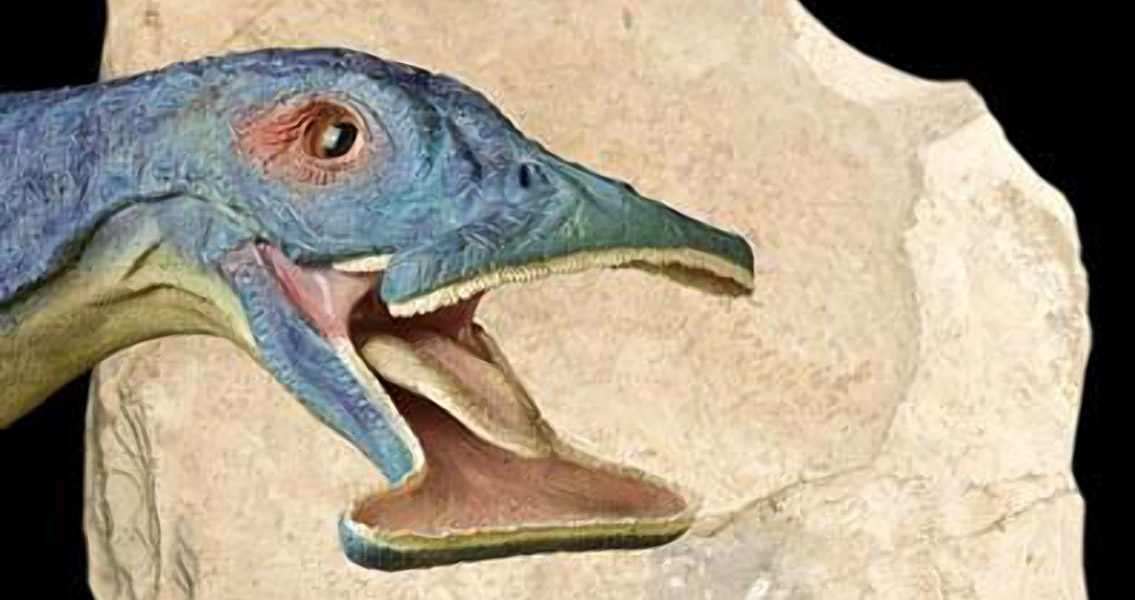
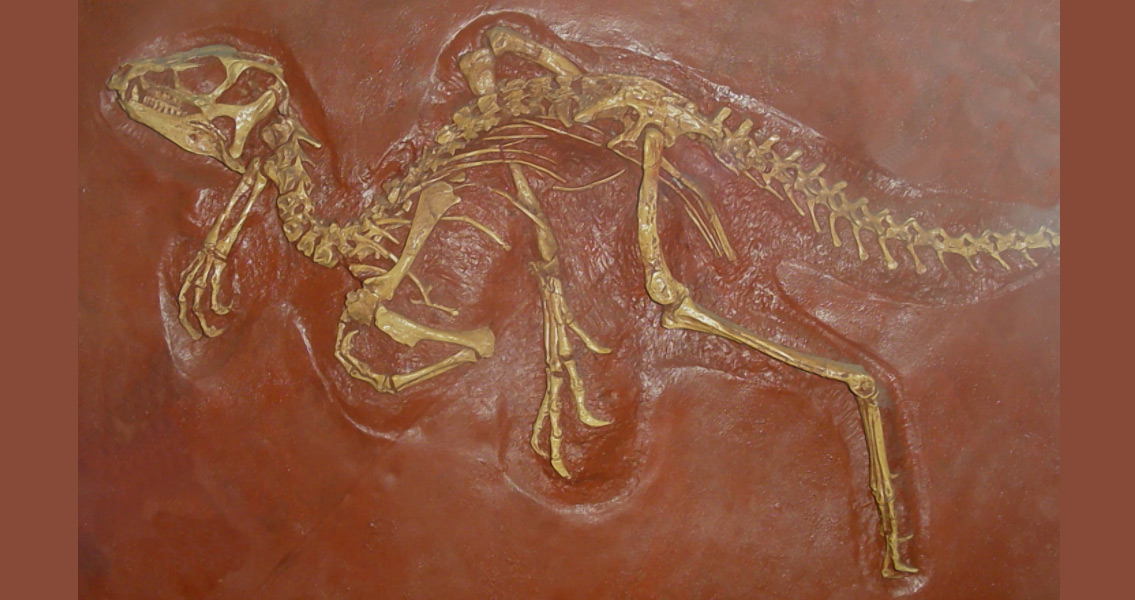
Heterodontosaurus tucki, a small herbivorous dinosaur that roamed Earth 200 million years ago, paid a visit recently to the European Synchrotron Radiation Facility (ESRF), or at least its fossilized skeleton did. The purpose was to study the dinosaur’s anatomy, through the collaborative efforts of scientists from the Evolutionary Studies Institute at the University of the Witwatersrand, South Africa, and paleontologists at ESRF. Synchrotron-generated light produces X-rays that are brighter than hospital X-rays by a factor of 100 billion. Simply put, the x-rays are produced at the ESRF by high energy electrons that sprint around a circular tunnel (a storage ring) that measures 844 meters around. ESRF has been designing these non-invasive techniques used specifically for paleontological studies since 2000, using their own team of paleontology experts and several beamlines dedicated solely to X-ray imaging. These beamlines provide the unique combination of high brilliance, high-energy, and the wider X-ray beams which are necessary to scan large dinosaur fossils. The beam’s high coherence is a key factor for this research because fossilized bones and the rock which typically surrounds them have almost identical densities, with ESRF’s high level of coherence there is a distinct contrast between the two materials. This is critical for “virtually” excavating a fossil. The dinosaur specimen was discovered in the Eastern Cape province of South Africa. Because the small skeleton was embedded in hard rock, any attempt to extract the bones would have caused irreparable damage, so to study Heterodontosaurus’s anatomy, the X-rays provided by the ESRF were used to reconstruct the skeleton, non-invasively and in incredible detail. Heterodontosaurus was a plant eating animal, with big canines in the front of the jaw and grinding teeth in the back. In order to understand how the dinosaur moved, ate and breathed, the scientists scanned the specimen over a five-day period, and then examined the X-rays created by the ESRF. What they got was a three dimensional reconstruction of the skull from which they were able to determine that the specimen was most likely a juvenile (based on the weak bond of the skull bones), and gained insight into how it held its head, based on the reconstructed balance organs, and how the dinosaur interacted with his environment – all examples of data that a two dimensional image wouldn’t have revealed. The dinosaur skeleton was discovered within a stream bed, on a farm in the Eastern Cape province. With assistance from the Albany Museum in Grahamstown and Rhodes University Geology Department, the fossil was excavated and enough rock was painstakingly removed from the bones to be able to identify the specimen. Any additional preparation work, however, was close to impossible considering the size and fragility of the skeleton and how hard the rocks around it were, meaning the scientists couldn’t fully study the skeleton’s anatomy. Using synchrotron technology scientists are able to reconstruct skeletons with amazing detail, and no damage. ]]>
Categories
Breaking News

Terrifying Flesh Eating Marsupial Discovered in Queensland

Whollydooleya tomnpatrichorum. It is believed W.tomnpatrichorum would have weighed between 20 and 25 kilograms in life. By comparison, a modern adult Tasmanian Devil weighs around just 10 kilograms. The creature marks the first formally identified discovery from New Riversleigh, a recently unearthed site in a remote part of Queensland littered with the remains of a plethora of strange, previously unidentified creatures. A description of W.tomnpatrichorum has just been published in Memoirs of Museum Victoria. W.tomnpatrichorum‘s distinct teeth are the focus of the new paper. One of the animal’s molars was excavated from an area of New Riversleigh known as Whollydooley Hill, named after Genevieve Dooley, one of the volunteers excavating the area. The tooth was found by Dooley’s partner, Phil Creaser. University of New South Wales Professor Mike Archer, the lead author of the new study, provided an insight into the just how the animal used its ferocious looking teeth. “W. tomnpatrichorum had very powerful teeth capable of killing and slicing up the largest animals of its day,” The late Miocene period in Australia, during which the newly discovered creature lived, is one of the least well understood in Australia’s history. Stretching from twelve million to five million years ago, it was characterised by drastic climate change as the continent began to dry out and megafauna there were forced to evolve and change in response. Due to the aridity of the period, precious few land animal fossils remain. That scarcity of fossils makes New Riversleigh so valuable to scientists. The site was discovered in 2012 by remote sensing using satellite data, close to the already famous fossil site of Riversleigh. “New Riversleigh is producing the remains of a bevy of strange new small to medium-sized creatures, with Whollydooleya tomnpatrichorum, the first one to be described,” explained Professor Archer. “These new discoveries are starting to fill in a large hole in our understanding about how Australia’s land animals transformed from being small denizens of its ancient wet forests to huge survivors on the second most arid continent on Earth.” Although the remains of a host of medium to large sized late Miocene animals have previously been found in fossil deposits in Australia’s Northern Territory, much less is known about the small to medium sized creatures that lived in that time “which generally provide more clues about the nature of prehistoric environments and climates”, Professor Susan Hand from UNSW, a team member on the project, explained. Dr Karen Black, post-doctoral researcher in paleontology at UNSW, added: “The small to medium-size mammals from the New Riversleigh deposits will reveal a great deal about how Australia’s inland environments and animals changed between 12 and 5 million years ago – a critical time when increasing dryness ultimately led to the Ice Ages of the Pleistocene.” According to Professor Archer, the W.tomnpatrichorum specimen discovered at New Riversleigh could have been one of the last of its species. “While it was at least distantly related to living and recently living carnivorous marsupials such as Devils, Thylacines and Quolls, it appears to have represented a distinctive subgroup of hypercarnivores that did not survive into the modern world.” “Climate change can be a merciless eliminator of the mightiest of mammals,” Archer remarked. For more information www.museumvictoria.com Illustration: Karen Black/UNSW ]]>

Categories
Breaking News

World’s First Plant-Eating Marine Reptile Discovered

Atopodentatus unicus, a sea-dwelling reptile that was around the size of a crocodile, was originally discovered in 2014. The fossil was nearly intact except for its head, which seemed to indicate that the creature had a beak similar to a modern flamingo. However, new research into A. unicus conducted by Dr. Li Chun from the Chinese Academy of Sciences has revealed the true story of the creature’s curious so-called beak, unveiling evidence gathered from two additional specimens that A. unicus had a spade-like mouth adapted for feeding on plants on the seafloor. The two new A. unicus specimens, also discovered in southwestern China, plainly indicate that the upper and lower jaws of the creature formed a horizontal “hammerhead” shape. The marine reptile’s mouth was lined with peg-like teeth on the edge, followed with more needle-like teeth further within. According to Olivier Rieppel, co-author of the study, from the Field Museum of Natural History; the arrangement is less than ideal for catching and chewing live prey, indicating that instead A. unicus would have used its front teeth to tear algae or other underwater plants free from rocks and then filtered the contents of its mouth by forcing water through its side teeth – much in the same way baleen-whales filter feed today. Based on these findings, A. unicus is the oldest known plant-eating marine reptile. In fact, the next earliest filter-feeding marine animal that ate plants doesn’t show up in the fossil record for an additional eight million years, according to the research team. The bizarre creature with the unique feeding adaptation first appeared during the early Triassic Period, just 10 million years or so after the largest mass extinction in the history of the Earth. A. unicus’ appearance so relatively quickly after this extinction event implies that life not just returned but diversified much more swiftly than currently understood. However, the time after the extinction event around 252 million years in the past is certainly characterized by strange creatures in the sea, such as the 17-foot long reptile known as Dinocephalosaurus – which had a neck fully half the length of its body, according to fossil remains. A. unicus is such an unusual specimen that its position on the reptile family tree is hard to place, according to co-corresponding study author Dr. Nicholas Fraser of National Museums Scotland. The fossil record for the creature is largely complete, Dr. Fraser added, pointing out that this will necessitate that scientists find the fossilized remains of close relatives of A. unicus that have yet to be discovered, in order to determine these evolutionary connections. For now, the researcher said he would classify A. unicus as at least tangentially related to the plesiosaur, a marine reptile that had a similarly long neck but is believed to have been an oceanic apex predator during the era of the dinosaurs. The research study, which was recently published in the journal Science Advances, can be found online here Image courtesy of Institute of Vertebrate Paleontology and Paleoanthropology (IVPP) of the Chinese Academy of Sciences]]>

Categories
Breaking News

Ichnology Has a New fossil – Lepeichnus Giberti

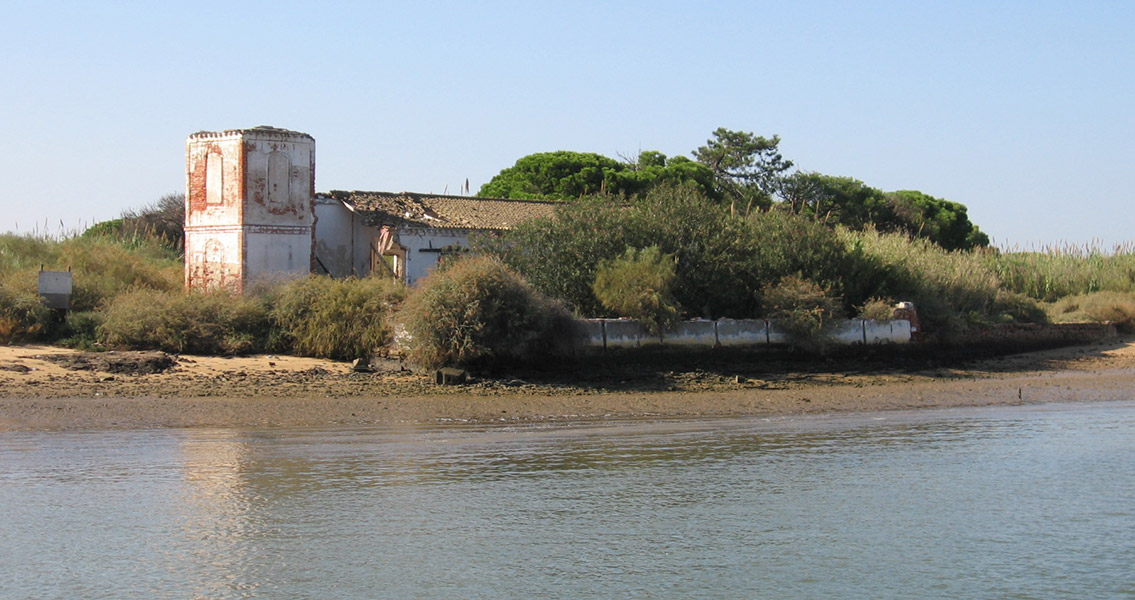
Lepeichnus Giberti. The organism that created the burrows is unknown but believed to have been a type of swimming crustacean. Dr. Zain Belaústegui from the University of Barcelona and the article’s main author explained to Heritage Daily that what makes L. Giberti exceptional is that all stages of the fossil, from its origin to its final phase, have been recovered – a total of 9 separate and consecutive ichnogenetic phases within the fossil. A modern comparison would be if you took a series of pictures of an animal burrowing, but instead of seeing the burrowing process in a series of pictures, the stages were kept as fossils. Ichnofossils are valuable for several reasons; since they are typically preserved in situ, they provide environmental information for the time in which they were formed, they’re a record of an animal’s behavior, and often times they’re the only record of certain (soft-body) organisms which have no fossilization characteristics. The preserved state of the L. Giberti is exceptional in large part because of the sandy silt which filled the burrows after they were abandoned by their organisms and helped preserve even the most delicate details. The sandy silt also helped aid in the collection process. Approximately 90 samples have been collected, and the fact that the samples vary in size, from 1cm to 10cm wide, indicates to researchers that the animal or organism had the same burrowing behavior whether young or old. A bay, likely affected by tides, was present 6 million years ago in the area where the fossils were found. Relatively shallow and protected from storms and waves, it would have been an ideal location for large communities of organisms of this nature to gather. Other organisms, such as anemones, other crustaceans, and possibly cetaceans would have also lived in the area. At this time, scientists know of no other organism, ancient or modern, that digs a burrow with the characteristics of L. Giberti’s. Several similar traits are found in today’s upogebiid (a crustacean) which burrows on the sea floor. It’s possible the burrowing habits of the new organism are an extinct behavior of the upogebiid. The degree of fossilization and preservation of the various evolutionary stages of L. Giberti has experts proposing a new term in the field of Ichnology; ichnogeny. Ichnogeny describes the evolution and origin of a fossil or modern print, burrow or trace, found in both soft and hard substrates. The name of the new fossil – Lepeichnus Giberti – pays tribute to the town of Lepe and the memory of Dr. Jordi Maria de Gibert Atienza, a distinguished leader in Spain’s ichnology research. Image courtesy of Wikimedia Commons user: Daniel Toscano Díaz]]>

Categories
Breaking News

Australopithecus afarensis Was Surprisingly Adaptable

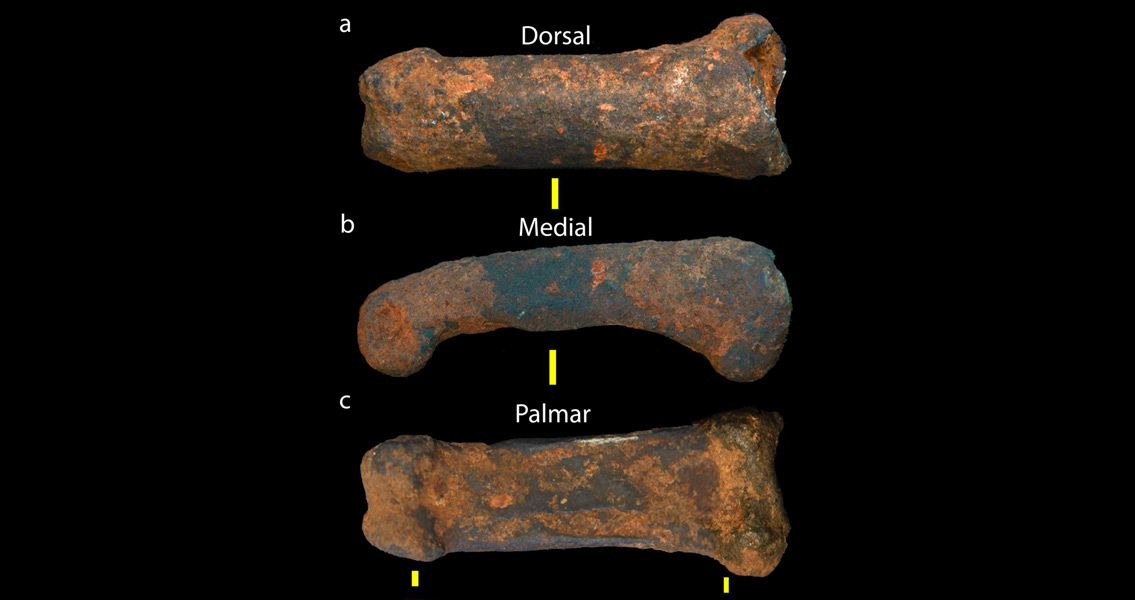
Australopithecus afarensis fossils unearthed in Kenya suggest that the early hominid lived across a much broader area than previously thought. Until the latest discovery, all A. afarensis fossils had been found on the floor of the Great Rift Valley, a trench which marks the separation of the Nubian and Somali plates. The latest find marks the first time that fossils of the species have been identified east of the valley, suggesting A. afarensis lived much farther eastward than hitherto believed – as far as the highlands of Kenya. Emma Mbua of Mount Kenya University and Masato Nakatsukasa of Kyoto University led the international team responsible for the findings. In their report, published in the Journal of Human Evolution, they detail the fossilised teeth and forearm bones from an adult male and two infant A.afarensis discovered in an exposure eroded by the Kantis River in Ongata-Rongai, a settlement in the outskirts of Nairobi. “So far, all other A. afarensis fossils had been identified from the center of the Rift Valley,” explained Nakatsukasa in a press release. “A previous Australopithecus bahrelghazali discovery in Chad confirmed that our hominid ancestor’s distribution covered central Africa, but this was the first time an Australopithecus fossil has been found east of the Rift Valley. This has important implications for what we understand about our ancestor’s distribution range, namely that Australopithecus could have covered a much greater area by this age.” A. afarensis is one of the most well studied early human species. Based on the fossil record available, which includes specimens from over 300 individuals, paleontologists estimate the species lived between 3.85 million and 2.95 million years ago, a 900,000 year period four times longer than modern humans have existed. First discovered in 1974, with the famous ‘Lucy’ fossil, the species has played a ground breaking part in developing our understanding of human evolution. A.afarensis exhibited characteristics of both humans and apes. Their face and brain case were very much reminiscent of primates, as were their long, curved arms which would have allowed them to climb trees with ease. On the other hand, their small canine teeth, and body which stood on two legs were very similar to other early humans. Significantly, the Kantis region where the latest remains were unearthed would have been different to environments usually assumed to have been the domain of A. afarensis. Stable isotope analysis of the surrounding area revealed that three million years ago Kantis was a humid, plain like environment with markedly fewer trees than the other sites where evidence of A.afarensis has been discovered. “The hominid must have discovered suitable habitats in the Kenyan highlands. It seems that A. afarensis was good at adapting to varying environments,” Nakatsukasa noted in the press release. Nakatsukasa and Mbua’s findings force a reevaluation of the geographic distribution of some of our oldest ancestors, while also suggesting A.afarensis was much more adaptable than previously believed. For more information: www.sciencediret.com Image courtesy of Masato Nakatsukasa / Kyoto University]]>

Categories
Breaking News

Fossil of Strychnine Ancestor Discovered

Nature Plants. The specimen belongs to the genus Strychnos, one which eventually gave rise to some of the world’s most lethal poisons, including strychnine and curare. Asterids are a family of flowering plants which have developed into some of the most crucial species in the world, giving us everything from potatoes to tomatoes, tobacco and cocoa. Providing vital foodstuffs for humans, asterids are an incredibly diverse group of plants spread across ten orders, 98 families and about 80,000 species. All together, they cover around a third of earth’s flowering plants. Two 20-30 million year old fossil flowers were found perfectly preserved in a piece of amber. The discovery was made in what is now the Dominican Republic. “The specimens are beautiful, perfectly preserved fossil flowers, which at one point in time were borne by plants that lived in a steamy tropical forest with both large and small trees, climbing vines, palms, grasses and other vegetation,” said George Poinar, Jr., a courtesy professor in the College of Science at Oregon State University. Prof. Poinar is one of the world’s leading experts on plant and animal life preserved in amber. Visually stunning, the plant was also likely deadly. “Species of the genus Strychnos are almost all toxic in some way,” explained Prof. Poinar. “Each plant has its own alkaloids with varying effects. Some are more toxic than others, and it may be that they were successful because their poisons offered some defense against herbivores.” The study results confirm that plants from the inherently toxic Strychnos genus were around on earth millions of years before humans’s evolved. There are currently around 200 species of Strychnos plants around the world, predominantly found in the tropics. Strychnine is nowadays mostly found as a white, odorless powder. Just a small amount of the dangerous substance triggers severe effects in humans, and can be fatal. Surprisingly however, it also has some medicinal uses and used to be sold in pill form. Its most common application though is in rat poisons, and pesticides. The most readily available source of the poison now is the Strychnos nux-vomica plant from southern Asia and Australia, giving an insight into just how far the genus spread from the Dominican Republic. Curare has long been used in weapons, with indigenous South American tribes using it either with arrows or blow darts for hunting. A strong muscle relaxant, it is able to paralyse hunted prey. Although poisonous, it has medical applications, particularly during surgery. “Specimens such as this are what give us insights into the ecology of ecosystems in the distant past,” explained Poinar. The discovery of the fossils in an area that was once Late Cretaceous forest suggests that many other related plant families could have evolved within similar environments. For more information: www.nature.com Image courtesy of George Poinar, Jr., courtesy of Oregon State University]]>

Categories
Breaking News

The Cradle of Humankind Reveals Another Clue to Our Origin

Homo naledi – and more like Australopithecus afarensis, a much older species. A fossil’s degree of curvature is often associated with arborealism, but the new find lacks the expected muscle attachments. The shape is similar to the incomplete Homo habilis specimen from Olduvai Gorge, except it’s much larger. The second new fossil is relatively small by comparison; a tooth, an adult’s almost complete 1st molar tooth. This fossil is strikingly similar in shape and size to Homo habilis teeth as well. The cones on the tooth surface in particular suggest the specimen belonged to an early Homo genus member. Additional and more detailed analyses are currently being planned. The network of underground caves at the Sterkfontein site are filled with fossil bearing sediments which were deposited there for more than 3.67 million years. Very few however, have been excavated so far. Image courtesy of Jason Heaton]]>

Categories
Breaking News

Extinct Insect Bears Resemblance to Modern Butterfly

here Image courtesy of Wikimedia Commons user: Charlesjsharp]]>

Categories
Breaking News

Chinese Artifacts Repatriated

Categories
Breaking News

Life on Earth Started Much Earlier Than Thought

3.8-Ga zircon that contains primary graphite inclusions”, states the study. The presence of graphite – pure carbon – is hugely significant. The zircon was completely crack free until the scientists opened it, meaning the carbon could not have come from contamination during another geological process. The distinctive signature of the carbon contained in the zircon, a specific ratio of carbon -13 and carbon 12, is one typically associated with the presence of photosynthetic life, giving an insight into the complexity of the organisms that might have existed over 4 billion years ago. “There is no better case of a primary inclusion in a mineral ever documented, and nobody has offered a plausible alternative explanation for graphite of non-biological origin into a zircon”, Harrison said in the UCLA press release. The ratio of uranium to lead in the zircon told the scientists that the zircon was 4.1 billion years old. The graphite must be older than the zircon itself, but it is impossible to determine exactly how much older. The results of the study, which has been published in the Proceedings of the National Academy of Science, could have far reaching consequences for the understanding not just of the development of life, but the history of the planet in general. It’s traditionally believed that around 4 billion years ago the world was a boiling, molten, hellish place. As Harrison explained in the UCLA press release, this assumption now seems increasingly unlikely, “The planet was probably much more like it is today than previously thought.” For more information: www.pnas.org]]>