Categories
Breaking News

2-Million-Year-Old Skin Found in South Africa

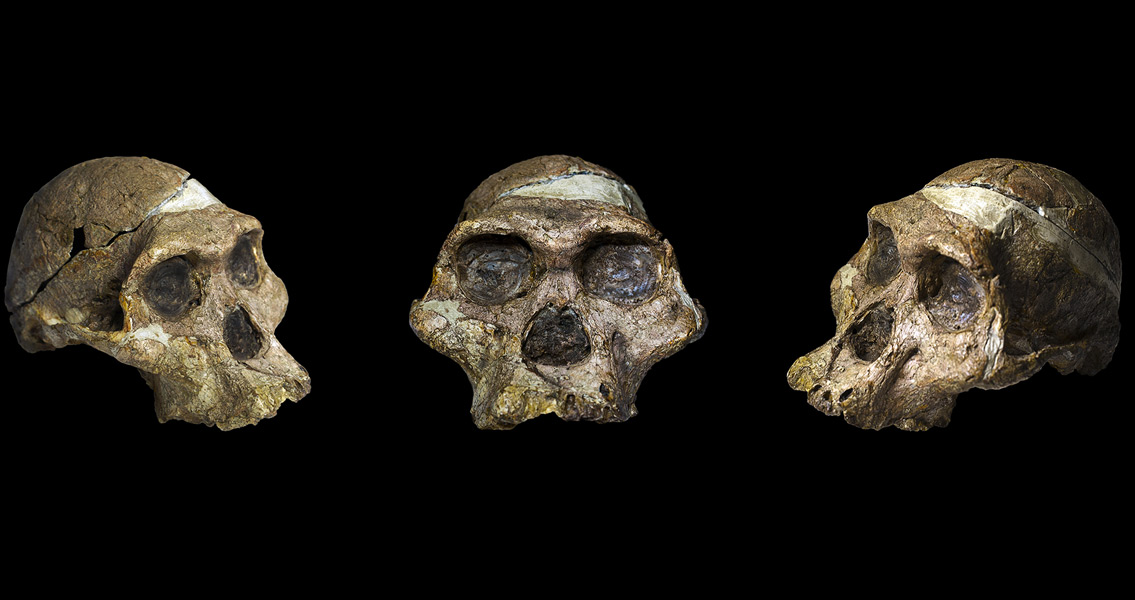
Australopithecus remains have announced that one of the fossils had skin on. The six fossils discovered so far have been dated to 2 million years ago and belong to the species Australopithecus sediba, which combined features of both the original Australopithecus, the first erect hominin species, and of modern Homo species. The find is all the more fascinating because, in addition to this being possibly the oldest hominin skin ever discovered, the fossils contain traces of organic matter from the food these ancient human ancestors ate. The initial discovery was made by chance: the lead researcher’s son stumbled across a human fossil in the Malapa Reserve near Johannesburg, in 2008. Until then, science did not even know this species had existed. Since then, excavation works have expanded significantly, and the team has even built an on-site laboratory where they can examine their finds in a secure environment. So far, the site has yielded bones belonging to six individuals, including an almost complete skull. Based on the evidence, the researchers have established that representatives of the Australopithecus species were much shorter than modern humans, standing at some 1.30 metres, and with a correspondingly smaller frame. While they walked on two legs, they also had more curved fingers than later hominins, suggesting they were also skilled climbers. Yet the most striking feature, according to Lee Berger, the leader of the research team, is the Australopithecus seiba’s head, which was disproportionately small, with the brain about the size of a modern man’s fist. The skin remains found on the fossils could tell the scientists a lot about those hominins’ lifestyle, while the organic substances between the teeth of some of the fossils could reveal something about their diet. This would be possible due to the kind of rock in which the fossils were found, which, unlike other sorts of rock, is capable of preserving organic substances. Two million years ago the site used to be a cave in the ground, Berger told the Naked Scientists podcast. It later collapsed in on itself, creating conditions he compared to a pool filled with liquid concrete, in which the bones were then thrown and preserved. The team has no way of knowing how these proto-humans got into the cave but suggest it may have been a trap they didn’t notice or contained something that lured them in. The team expects to unearth more human remains from the ancient cave and in order to protect them from environmental factors, has actually built a whole laboratory on the site. This will most likely turn the place into a tourist attraction and already the scientists are allowing visitors to look at the excavation site. The endeavour was challenging because the place is part of a nature reserve but, says Berger, the team came up with a structure that organically fits in its surroundings. This has made this site a unique one, where tourists will be able to witness the ongoing work of the researchers as they further their insight into the nature of this species and possibly establish where exactly they stand in relation to modern humans. Image courtesy of Wikimedia Commons user: Lee Berger]]>

Categories
Breaking News

New Technique Dates 3.67 Million Year Old 'Little Foot'

Australopithecus, first discovered 21 years ago in a cave in Sterkfontein, central Africa, is around 3.67 million years old. This makes the skeleton, nicknamed ‘Little Foot’ due to the diminutive size of its bones, one of the oldest ever found. This new date for Little Foot means that it is an older relative of Lucy, a famous 3.2 million year old Australopithecus skeleton found in Ethiopia. Australopithecus evolved in Africa about 4 million years ago before spreading across the continent, eventually becoming extinct soon after 2 million years ago. It is believed that Australopithecus is an evolutionary ancestor of modern humans, and that the genus Homo derived from Australopithecus sometime after 3 million years ago. These early hominins showed the presence of the duplicated SRGAP2 gene responsible for causing increased length and ability of the neurons in the brain. The discovery of Little Foot has a long history. In 1994, the first four footbones were found in a box of animal fossils. Three years later, the position of the end of Little Foot’s shin bone was found in a deep deposit of the Sterkfontein caves, known as Member 2, in the Silberberg Grotto. Excavations at the Silberberg Grotto were particularly difficult. Concrete-like deposits combined with the fragile and scattered nature of the bones to sow the seeds of a long and arduous excavation. It was not until 2010 that the whole skeleton had been exposed. The Sterkfontein area has been internationally famous since the 1930s, when key hominid and paleontological discoveries were made there. No direct dating of deposits, however, have been made without significant controversy. Little Foot, especially, has had a large amount of confusion surrounding its age. In 1999, palaeomagnetic dating of flowstones suggested an age of 3.3 million years. In 2003, cosmogenic nuclide burial dating of the sediments containing the fossilised skeleton proposed it was closer to 4 million years old. Later uranium-lead dating techniques indicated the age of Little Foot to be 2.2 million years old. These major discrepancies surrounding the skeleton have meant its significance has not been understood, until now. Published in this week’s issue of Nature, a collaborative study has precisely dated Little Foot to be 3.67 ± 0.16 million years old. This collaboration between Darryl E. Granger and Ryan J. Gibbon, amongst others, represents the first precise dating for Little Foot. It was made possible by two major technological advances. The first major development was using an ‘isochron’ method. An isochron uses multiple samples from the same site to check that all assumptions are correct; whether the sediment has been reworked, for example. Secondly, the team developed a gas-filled-magnet at Purdue University’s PRIME Lab. This gas-filled-magnet allows for a much better measurement of samples, meaning more precise burial dating. The new research reveals the cutting-edge of anthropological research. It allows us to more precisely map the development of early hominins and, by extension, our own species. Image courtesy of Wikimedia Commons user: Archaeodontosaurus For more information: www.nature.com]]>

Categories
Breaking News

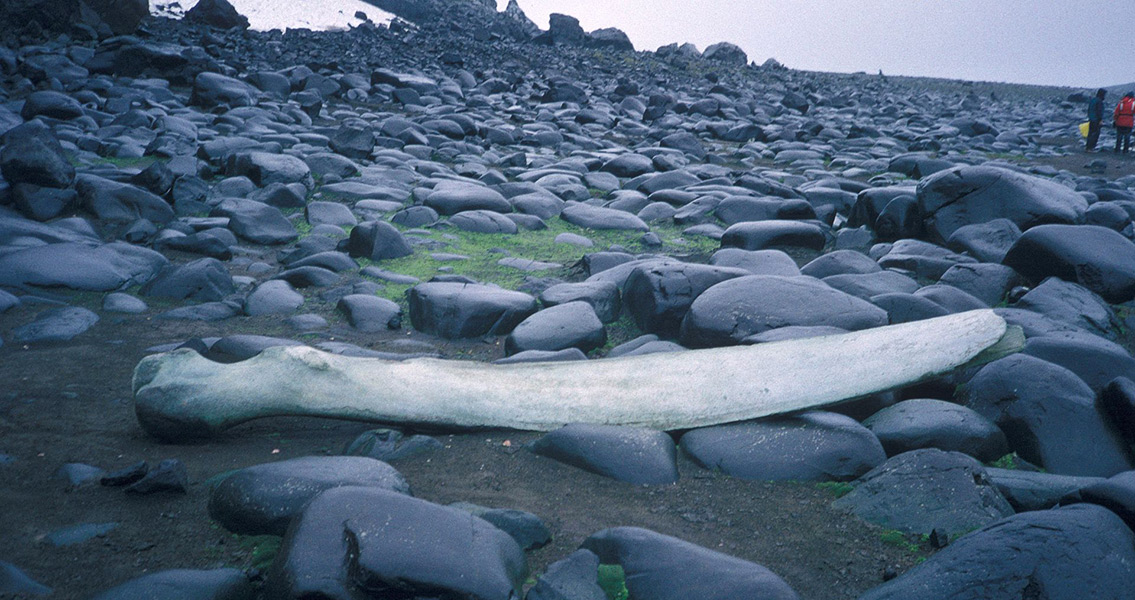
Ancient Whalebone Tells When East Africa Began to Rise

Categories
Breaking News

Ancient Bird's Nest Shaped Fossil Discovered in China Reveals More About Ancient Sea Life

Categories
Breaking News

Drexel University Scientists Reveal Largest Dinosaur Ever

Categories
Breaking News

How Fish Walked on Land 400 Million Years Ago

Categories
Breaking News

Reliable Neanderthal Extinction Date Found

Nature. ]]>

Categories
Breaking News

New Species of Flying Dinosaur Discovered

Categories
Breaking News

Mystery Ancient Fossil Identified

Canadia sparsa, a misnomer as he had mistakenly identified it as an ancestor of today’s earthworms and leeches. The specimen was reported to have had seven pairs of spiny legs and a row of soft tentacles along its back. It was considered to be an evolutionary misfit because of its features. Now scientists have reclassified the species as a worm. About sixty years after its discovery, Canadia sparsa was renamed Hallucigenia sparsa because scientists had started to disagree with Walcott’s annelid classification. Twenty years later, in 1991, Lars Ramskold of the Swedish Museum of Natural History led a team that realized that the tentacles reported to be on the specimen’s back were actually legs, what were thought to be spiny legs were just spines, and the featureless grey head was actually the tail. They argued that the fossil had initially been interpreted backwards and upside-down. Now scientists from Cambridge University have concluded that Hallucigenia was an ancestor of the velvet worms mostly found in tropical rainforests around the world, ending fears that the specimen signified an evolutionary dead end. The scientists at Cambridge used the specimen’s claws to identify the Cambrian species. Based on fossil records the Cambrian Radiation, or Cambrian Explosion, refers to the rapid appearance of major phyla in the animal kingdom, around 530 million years ago. Before this, life on earth was mostly made up of single-celled organisms, which sometimes organized themselves into colonies. Over a period of 70 to 80 million years, the rate of evolution sped up to develop the species that are similar to the animals we see today. The Cambrian expansion ended about 488 million years ago. Since the 1970s, the Hallucigenia was thought to be closely related to the velvet worm, but evidence linking them was hard to find, plus the Hallucigenia’s claws hadn’t been studied in detail like they were recently. It was through analysis of the claws that the connections between the prehistoric creature and today’s creatures were drawn. The scientists found that the spines on the worm’s back were made of a keratin-like substance, similar to that in our fingernails. This can also be found in the jaw regions of today’s velvet worms. Modern velvet worms are themselves very unusual creatures. They are divided into eighteen species which all prey on smaller insects. They capture their prey by secreting a sticky substance. They are also able to produce live young. One of the biggest talking points will be the link found between onychophorans (velvet worms) and arthropods (insects, crustaceans and arachnids). The Hallucigenia find shows that they are distant cousins. Research shows that arthropods are actually closer relations to water bears, which are able to survive vacuums and sub-zero temperatures. The Cambridge scientists see the recent discovery as a bridge linking pre-Cambrian organisms to what we have today. The study was published in the journal “Nature”. ]]>