discovered in Northern Spain, but these images were dated to 13,000 years ago. In 2012 Nomade visited the Bas-Vivarais region with the aim of dating volcanic eruptions which would have coincided with the initial Homo sapien habitation of southern France. Through measuring the levels of certain isotopes of radioactive argon gas, he determined that the region had been struck by a series of spectacular eruptions between 19,000 and 43,000 years ago. Once it was clear that those living in the Chauvet-Pont d’Arc cave could have witnessed volcanic eruptions just a short distance away, Nomade and his team set about determining that the mysterious, as yet unidentified images in the cave were of volcanoes. The fact that the designs are unprecedented from the time period and region is a key part of the team’s reasoning: “The distinctive design of spray-shape signs specific to Chauvet-Pont d’Arc cave is reminiscent of typical lava fountains associated with strombolian eruptions. Such symbols have no close equivalent within the considered time period (i.e Aurignacian), or even among the more than 340 known ornate caves in France and Spain”, they write in the study. In addition, the iconography of the designs in France bares a resemblance to the petroglyohs depicting the Porak volcano in Armenia. The authors of the study point out that many of the images in the cave tend to be symbolic rather than naturalistic depictions of dangerous animals such as cave lions and bears. As mentioned above, there is no evidence of the inhabitants of the cave depicting scenery. However, the image of the volcano could be interpreted as reflecting a broader fascination with things seen as powerful or threatening. “We must add that as there is no other example in prehistoric rock art of natural scenery it is here perhaps the strength of the eruption image that might have inspired the Aurignacian artists”, the authors write in the study. For more information: www.plosone.org Image courtesy of Plos One ]]>
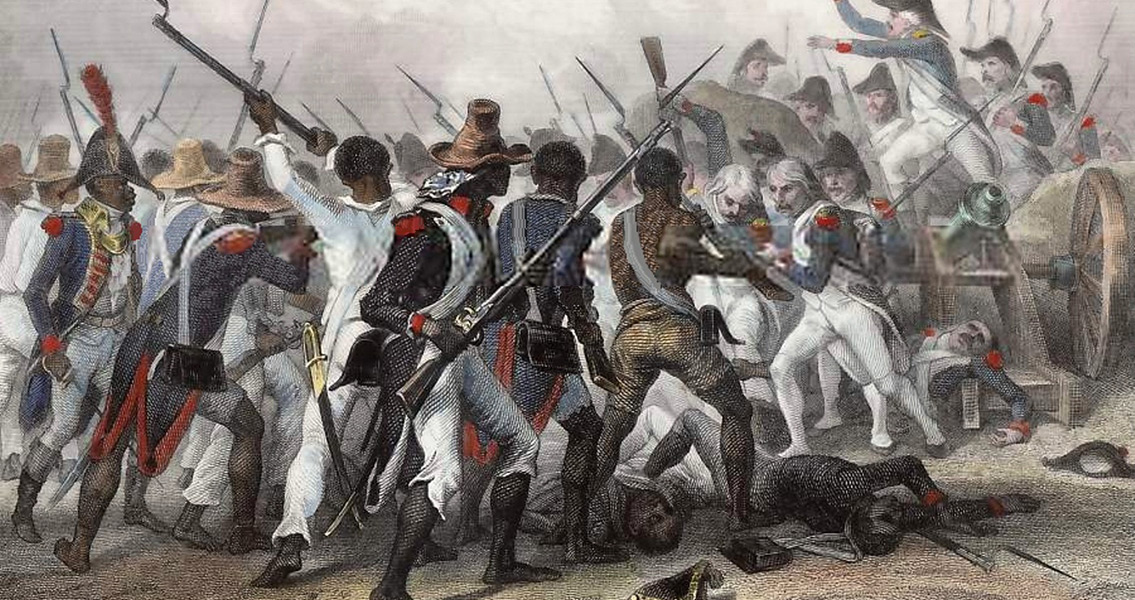
petit blancs, something akin to a white middle class comprised of artisans, teachers and shop keepers there to provide services for the rich white landowners. Among Saint Domingue’s black diaspora, slaves undoubtedly made up the majority. However, there were also a substantial amount of freed slaves, who often had wealth at a similar level to that of the petit blancs. Alongside them were an unusually large amount of escaped slaves who had successfully fled into the forests and mountains, highlighting that Saint-Domingue had a long history of defiance among its slave population. Bands of runaway slaves had long carried out a campaign of guerrilla warfare against the plantation owners, seeking vengence for their mistreatment and stealing supplies of weapons and vital provisions. One of the most infamous rebellions, led by the supposed voodoo sorcerer François Macandal, lasted for six years from 1751 to 1757 and left around 6,000 people dead. Changing ideas of liberty and the rights of man which had formed in the wake of the French Revolution started to influence opinion in Saint-Domingue, with the white population seeking to maximise their profits with freedom from France, and the black population inspired to win equality and freedom from slavery. Of particular concern were debates in France to abolish slavery at home and abroad, something the white planters were inevitably against. In this complicated mix of differing interests that Saint-Domingue had become, it was the massive slave population that was the first to act. At a gathering of 200 slave leaders at the Bois Caiman ceremony on 14th August, 1791, Boukman, an influential voodoo leader, declared that it was time for the slaves to rebel and seize their freedom. Eight days later the uprising, led by Toussaint l’Overture, started. A coordinated action in the north of Saint Domingue saw hundreds of slaves rebel against their owners and march through the island capturing and liberating other plantations. By 1792 the slave rebellion had gained control of a third of Saint Domingue. The white plantation owners were isolated, and even reinforcements sent from France were unable bring the rebellion under control. By 1798 the rebellion had survived both French attempts to quell it and a British attempt to colonise the island. Two years later the Haitian Revolution expanded into the neighboring colony of Santo Dominigo (what is today the Dominican Republic). Toussaint declared himself governor of all of Hispaniola, and abolished slavery across the island. Following a failed attempt by Napoleon’s armies to retake the former colony, Haiti was declared an independent republic in 1803. ]]>
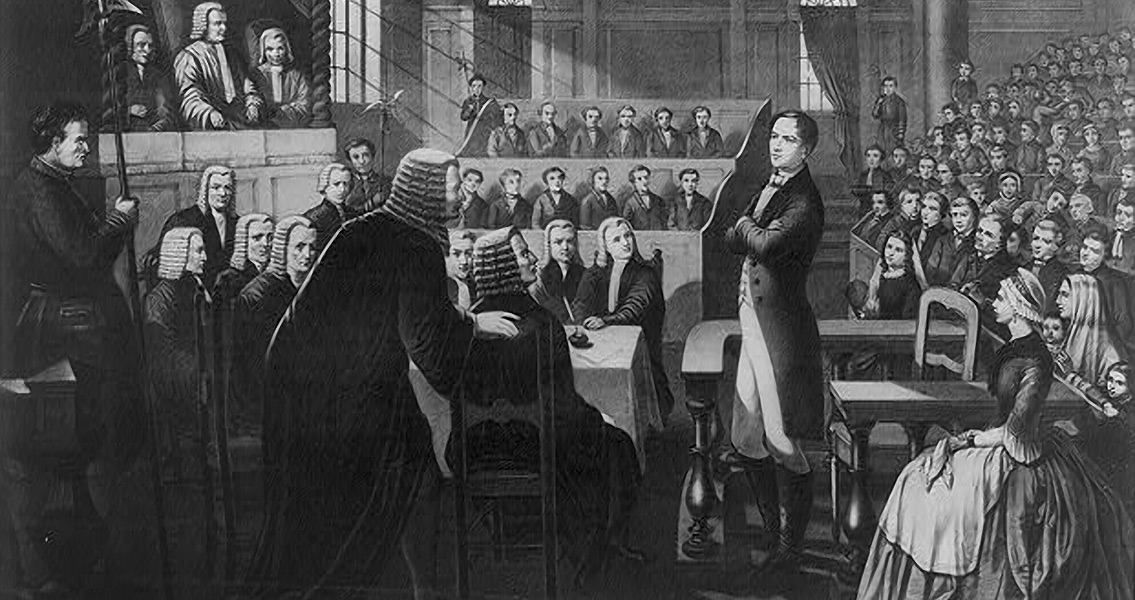

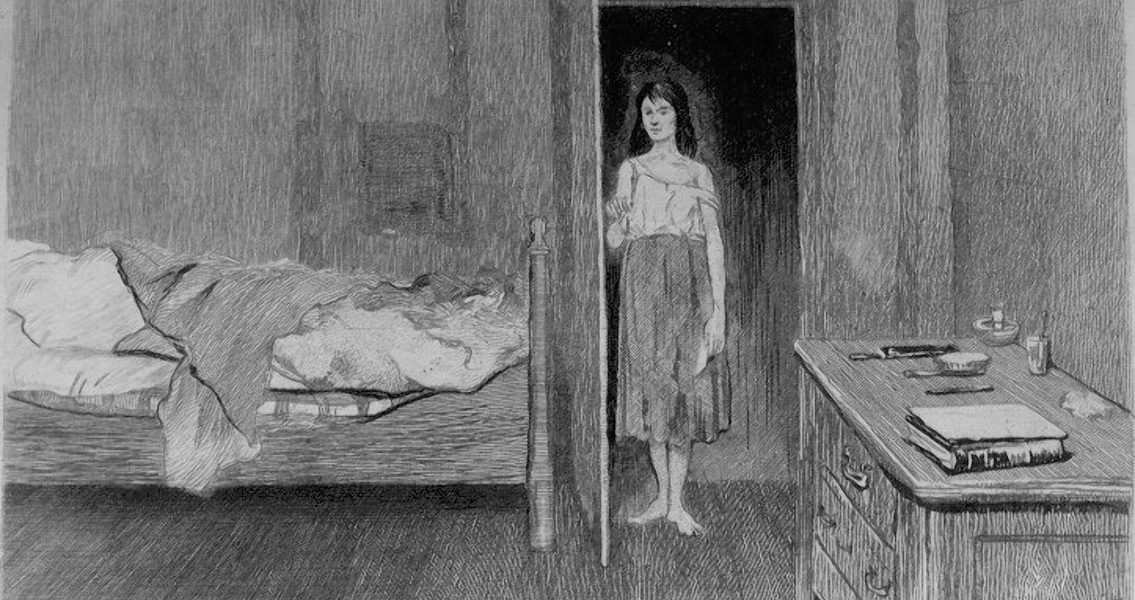
Les Miserables has evolved well beyond its nineteenth century origins into a modern cultural phenomenon. As the story has been retold and adjusted to fit new forms however, it is important to remember that the original novel was a vital piece of social commentary that strove to both reflect and affect the context in which it was created. Les Miserables is not a book about the French Revolution, its author was born over a decade after the events of 1789, and the story is set in the middle of the nineteenth century. However, its backdrop is a France still coming to terms with 1789, reflecting the experiences of an author who grew up and lived in the wake of that momentous event. As such, it captures the upheaval of nineteenth century France, a century which witnessed both the Napoleonic Wars and the Paris Commune, and conveys the sense of constant change and instability of the early nineteenth century through the troubled lives of its protagonists. Hugo was born 26th February, 1802, in Besançon, France. His father, Joseph-Léopold-Sigisbert Hugo, was a general in Napoleon’s armies. Joseph Hugo’s constant traveling for the French campaigns in Italy and Spain meant that the Napoleonic Wars had a very direct relevance to the younger Hugo’s early life. The tumultuous politics of the period became a feature of his upbringing. While his mother was a staunch royalist, Hugo’s father was loyal to each successive French government: the Convention, the Empire, the Restoration. Marital tensions meant Hugo’s childhood was spent switching from accompanying his father on his campaigns through Europe and returning home to Paris to see his mother. Although Les Miserables charts a broad chunk of French history in the aftermath of 1789, it reaches its climax in the June 1832 Rebellion in Paris, an event Hugo witnessed first hand. Already established as a writer, the events in June proved particularly inspirational. The 1830 Revolution had seen the ‘Citizen king’ Louis-Philippe take the throne. Initially popular, the widening gap between rich and poor during the first years of his reign saw resentment build among the poor in France. Amidst a major cholera epidemic, thousands of Parisians took to the streets to commemorate the death of General Jean Maximilien Lamarque, a man considered to have been a champion for the poor. The mob swelled as political agitators joined those attempting to witness the funeral procession. Some observers claim that around 100,000 protesters eventually joined and the mob eventually took over half of Paris. Barricades were erected throughout the city, as the insurgents looked for arms to defend the sections of Paris they had gained control of. Ultimately, a lack of broader support from the citizens of the city meant that the uprising was suppressed within twenty four hours of its start. In a century of revolutions throughout France and Europe, the rebellion of June 1832 had failed to achieve any lasting change, which explains why it is perhaps overlooked compared to other events in French history. As a first hand witness to the rebellion however, Hugo immortalised it in Les Miserables for what it was – an expression of the continued discontent of the poor in Parisian society. Les Miserables charts a period of constant revolution and change. It comments on the failings of successive administrations, and the effects these failings had on the French people. Its focus is the poor in society, and how time and again the French class system punished good, honest people with poverty. Each of the main characters represents a problem of their time that Hugo felt needed reform – education, women’s rights and the treatment of criminals. These personal tragedies are linked explicitly to problems with nineteenth century France as a whole, and towards the end of the book become manifested in the insurrection in Paris. Les Miserables is a fantastic story which has rightly been retold in different languages and different formats. On top of that, it is an analysis by one of France’s greatest writers about the condition of the society in which he lived. Image by Pierre Jeanniot

Les Miserables
A Novel
Vol. 1Vol. 1
by Victor Hugo

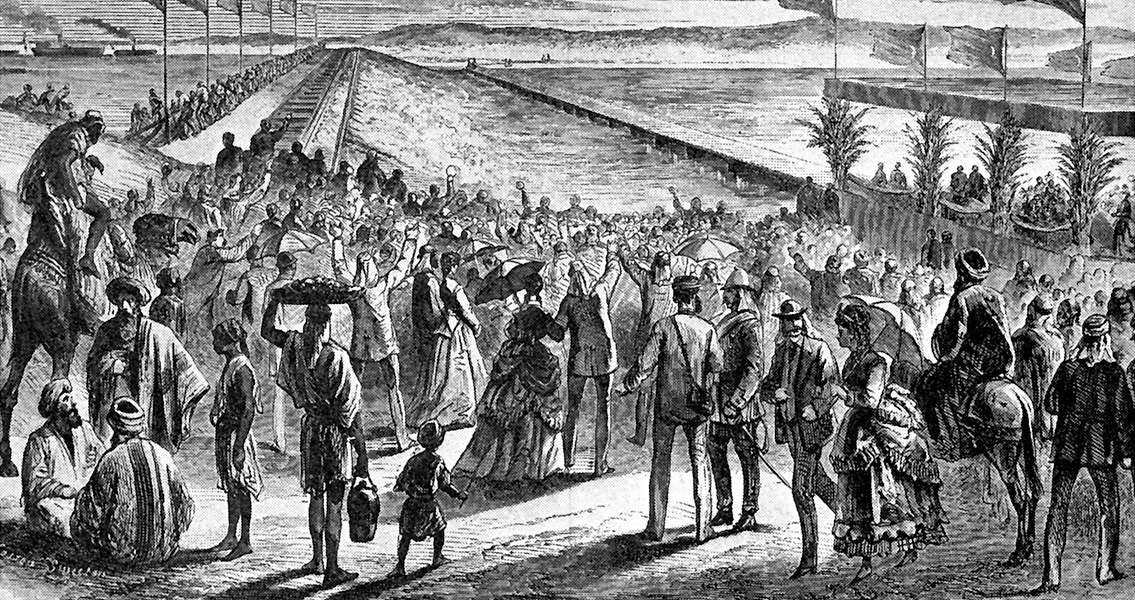
Suez Crisis of 1956. A remarkable feat of engineering, the Suez canal, whose construction started in 1859, is still responsible for 8% of the world’s shipping, with 50 ships passing through it daily. ]]>