Categories
Breaking News

15,000kg Dinosaur Fossil Identified after Being Ignored for Decades

Vouivria damparisensis. Dated to around 160 million years old, V. damparisensis is the earliest recorded fossil from the titanosauriform family, a group of dinosaurs which includes the likes of Brachiosaurus. Analysis of the fossil suggests the specimen died at a young age, weighed around 15,000 kilograms and measured over 15 metres in length. Its neck was spectacularly long and was likely held at a 45 degree angle. Much like other titanosauriforms, the creature also boasted a long tail and four legs of equal length. “Vouivria would have been a herbivore, eating all kinds of vegetation, such as ferns and conifers.” said Dr Philip Mannion, the lead author of the study from the Department of Earth Science and Engineering at Imperial College London, in a press release. “This creature lived in the Late Jurassic, around 160 million years ago, at a time when Europe was a series of islands. We don’t know what this creature died from, but millions of years later it is providing important evidence to help us understand in more detail the evolution of brachiosaurid sauropods and a much bigger group of dinosaurs that they belonged to, called titanosauriforms.” Titanosauriforms were the last surviving group of long necked dinosaurs, only coming to an end with the end-Cretaceous mass extinction event which wiped out the majority of life on earth. The gigantic, diverse group of sauropods originated in the Late Jurassic and included some of the largest creatures to have ever walked the planet. V. damparisensis‘ discovery looks set to greatly aid scientists in understanding the evolution and spread of titanosauriforms across the globe, a subject which has until now proven difficult to shed light on due to a limited fossil record for the earliest members of the family. By incorporating the new species into the fossil timeline, the team have shown that by the Early Cretaceous brachiosaurids were likely restricted to what is now Africa and the USA, and probably extinct in Europe. The discovery also throws into question the previously held belief that brachiosaurids spread as far as South America. Scientists have previously suggested that a sauropod dinosaur called Padillasaurus, whose remains have been found in South America, was a brachisosaurid. The discovery of V. damparisensis however, points to that not being the case. The genus name of the new creature is derived from the old French word for viper – vouivre. In the French-Comte region where the fossil was discovered, ‘la vouivre’ is a legendary winged reptile. The species name damparisensis meanwhile, refers to the village of Damparis where the fossil was first found in 1934. Image courtesy of Imperial College London/Chase Stone]]>

Categories
Breaking News

First Ever Study of a Garment from the Mediterranean Neolithic

IBTimes UK. “The presence of red deer canines is unique in the region, and the combination with columbella is unique too,” adding, “This burial is also important because there burial constructs containing grave goods are rare. But the materials worn by the dead here are obvious and ornaments are visible. The burial is exceptional.” The single, isolated grave was discovered and partly unearthed in the 1970s, with various artifacts from it exhibited and then stored at the Calvet Museum. The grave’s rediscovery in 2009 revealed that the deceased male had been buried in primary deposition with no preserved architectural features. Using calibrated AMS dates researchers were able to reliably date the garment to the early 5th millennium BCE, which reinforces existing evidence of long distance relationships between the Neolithic cultures in Europe. Avignon and the surrounding region have been inhabited since the Neolithic, evidenced by the discovery of a small anthropomorphic monument carved from Burdigalian sandstone in the shape of a tombstone. This stele is believed to represent the first Avignonnais and dates from the Copper Age to the Early Bronze Age, a period which is referred to as the southern Chalcolithic. The face of the stone is engraved with a stylized human figure that has no mouth, and eyes marked by small holes. At the bottom there’s a deep indentation that has eight radiating lines that form a representation of the sun, unique for this type of monument. Other findings from this time period include two polished axes made from greenstone, several Chalcolithic objects used for adornment and numerous shards of Hallstatt pottery. The study has been published in the Journal of Field Archaeology. Image courtesy of Aurélie Zemour ]]>

Categories
Breaking News

38,000 Year Old Pointillist Mammoth Engraving Discovered

Last month, White and colleagues announced the discovery of a 38,000 year old engraving of an aurochs – representing some of the earliest known graphic imagery found in Europe. Since then a further sixteen blocks have been found, including a pointillist image of a mammoth, in a nearby rock shelter known as Abri Cellier. Crucially, one of the limestone blocks was found still in place, allowing it to be carbon dated to 38,000 years old according to the article in Quaternary International detailing White and colleagues’ findings. Abri Cellier has long been a vital window into Aurignacian art. Excavations carried out there in 1927 led to fifteen engraved or otherwise altered stones being discovered. The 16 blocks discovered by White and his team had actually been left behind by the 1927 excavators, highlighting the problems with identifying art from the European Aurignacian. The engravings on the stones are incredibly rudimentary, and in 1927 would have been difficult to interpret. The new article by White and colleagues provides evidence that the 38,000 year old origin for the sixteen newly discovered engravings can also be applied to the fifteenth found in 1927 which now reside in the French National Prehistory Museum. White and colleagues’ discoveries in the Vézère Valley are adding weight to isolated discoveries made elsewhere pointing to a form of pointillism being employed by Europeans in the Aurignacian. A rhinoceros image found on a cave wall in Grotte Chauvet, France, for instance, was likely created by dozens of dots being painted on a hand before then being applied to the cave wall. For ten years the work of White and his team has been drastically improving the understanding of Upper Paleolithic graphic imagery in southwestern France. Indeed, the team’s work has increased the sample of Aurignacian graphic arts in the region by 40%. ]]>

Categories
Editorial

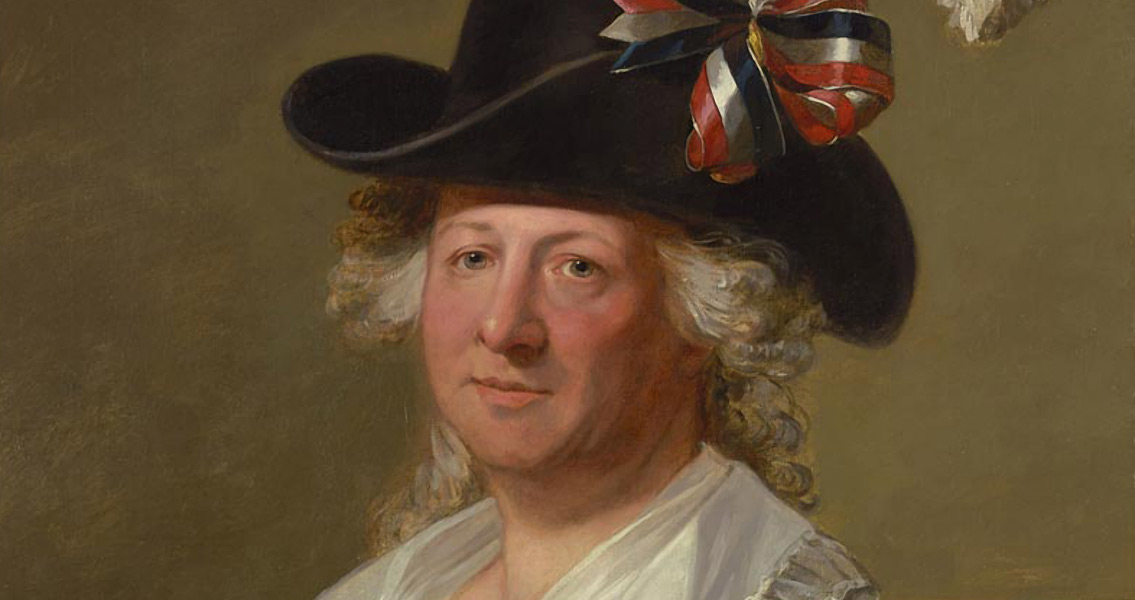
Chevalier d'Eon: Spy, Celebrity and Europe's First Transgender Person

le Secret du Roi, “the King’s Secret”, a clandestine network of spies created by Louis XV in the 1740s. The King’s Secret’s first mission was to have Louis’ cousin, Prince Conti, placed on the Polish throne – thereby making the country a useful French satellite and ally in Eastern Europe. D’Eon was tasked with winning the support of Russian Empress Elizabeth, as well as promoting French interests in Russia more generally. Some biographies claim that d’Eon’s time in Russia also saw his first encounters with cross dressing. Empress Elizabeth held regular ‘drag balls’ where all attendants were obliged to arrive in a dress, regardless of their gender. When the Seven Years War erupted in 1756, d’Eon returned to France to serve as a dragoon in the French army before being appointed as a secretary to the French ambassador in 1762 as peace was secured between the warring nations. It was a role which would embroil d’Eon in all manner of geopolitical intrigue, as the French King looked for ways to gain revenge for the colonies France lost in the final treaty. As a member of the civil service d’Eon was employed as an ambassador in the British court. As a member of the King’s Secret he was tasked with scouting the British coast in preparation for a French invasion. D’Eon’s relationship with the French government deteriorated to the extent he threatened to reveal secret documents to the British. Several attempts were launched by French authorities to extradite d’Eon back home, some through diplomatic channels, others via force (D’Eon evaded kidnapping several times and was forced to live under armed guard). In 1764, he gave his first warning to the French authorities, publishing a book which contained all of his personal correspondence with the French royal family – embarrassing revelations which served to isolate him from France but win popularity in England. At the same time, rumours started to appear concerning D’Eon’s gender and habits. Some claimed he dressed as a woman, regularly buying ladies’ corsets for himself. D’Eon likely started some of these rumours, although others could have been created by his enemies to discredit him. Another story surfaced that he had actually been born a woman – it was common in this period for women to pretend to be men to gain entry into the army. Eventually, a deal was agreed between d’Eon and the French king. D’Eon would receive a lucrative pension from France and in exchange he would hand over all documents which could incriminate the French government. D’Eon would remain in London, exiled from France but still delivering reports for the King’s Secret. One final condition was included. D’Eon would have to officially declare a gender. In a remarkable turn, she elected to be known as a woman for the rest of her life. In 1777 she returned to France, the official story being d’Eon had been born a woman but raised a man by a father desperate for a son. Mademoiselle la Chevaliere d’Eon even had a formal unveiling in the French court, wearing an elaborate dress and make-up. Her life in France however, was a miserable one. D’Eon suddenly found herself a victim of the patriarchal society of the day. Politically her voice had been silenced, while attempts to rejoin the army were repeatedly blocked. Quickly she was forced into retirement, returning to England in 1785. A celebrity to the British public, d’Eon was nevertheless brought to near poverty when the French Revolution resulted in the cancellation of her pension. To make ends meet she began staging and taking part in fencing competitions, mesmerising the public as a ferocious woman sword fighter. Well into her sixties she continued the displays, until a serious injury forced her to retire. For the final years of her life d’Eon lived in virtual obscurity, lodging with an elderly woman in London and increasingly vanishing from the public eye. It was only when she passed away in 1810 that a mortician discovered Mademoiselle la Chevaliere d’Eon was biologically male. ]]>

Categories
Breaking News

Amazing 38,000 Year Old Engraving of an Aurochs Found in France

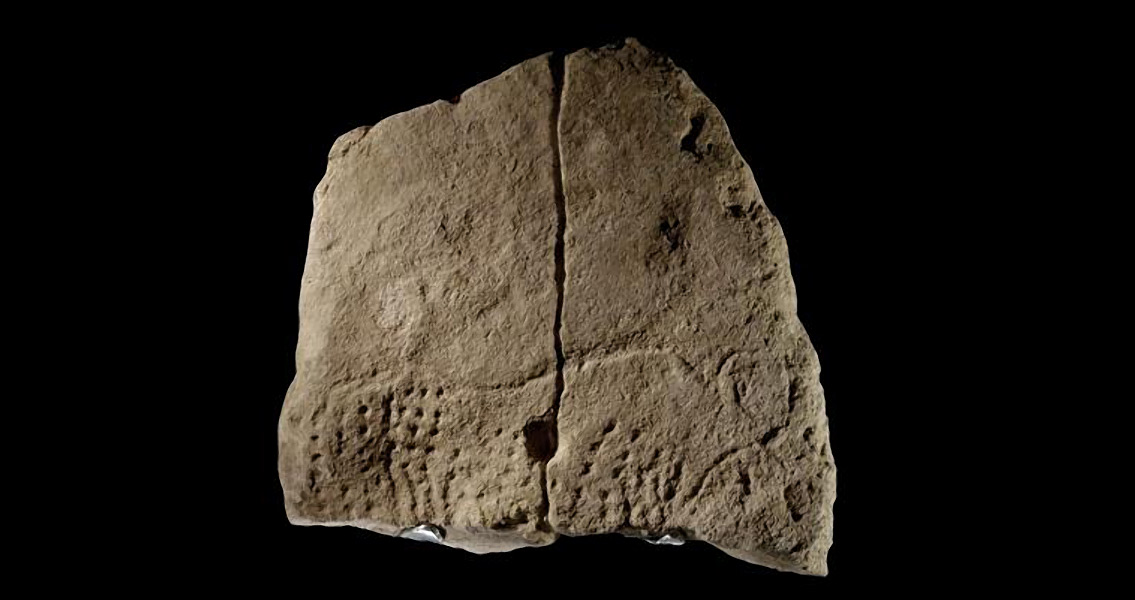
Quartenary International. “The discovery sheds new light on regional patterning of art and ornamentation across Europe at a time when the first modern humans to enter Europe dispersed westward and northward across the continent,” said White, in a press release from NYU. Depicting a complicated image involving an aurochs surrounded by a row of dots, the remarkable stone slab was excavated from Abri Blanchard. The site had undergone excavations in the early twentieth century, but starting in 2011 White and his team began a methodical exploration of the remaining deposits. Abri Blanchard is home to artefacts from the Aurignacian culture, a modern human tool making and artistic culture of Upper Paleolithic Europe. A massive diversification and specialisation in tools during the time of the Aurignacian culture (between 43,000 and 38,000 years ago) facilitated its distinctive artwork. In particular, the invention of an engraving tool known as the burin made remarkable rock engravings possible. Although anatomically modern humans first appeared around 100,000 years ago, the Aurignacian culture is widely considered to represent the first modern humans to settle in Europe. Also located in the Vézère Valley, not far from Abri Blanchard, are the Cave Paintings of Lascaux. One of the most famous archeological sites in the world, the Paleolithic cave paintings of Lascaux are remarkable for both their size and the quality of their preservation. Believed to date to sometime around 20,000 years ago, they are among the oldest known cave paintings in existence. White believes that Aurignacian art, such as the stone slab found at the Vézère Valley site, allows us to see into the lives and minds of its creators, and the societies they inhabited. “Following their arrival from Africa, groups of modern humans settled into western and Central Europe, showing a broad commonality in graphic expression against which more regionalized characteristics stand out,” he explained in the NYU press release. “This pattern fits well with social geography models that see art and personal ornamentation as markers of social identity at regional, group, and individual levels.” The oldest known engravings to have been created by a human ancestor date to around 500,000 years ago. A series of zig-zags found on a shell in Java, these markings likely made by Homo erectus constitute the oldest examples of decorative art yet discovered. Abri Blanchard has long been recognised as one of the oldest sites in Europe bearing artefacts of modern human art and symbolism. Since its discovery at the turn of the last century, hundreds of ancient items have been found there, including personal ornaments such as animal teeth, ivory and soapstone beads, pierced shells, paintings and engravings. Image courtesy of Musée national de Préhistoire collections – photo MNP – Ph. Jugie ]]>

Categories
Editorial

Why Are So Many Flags Red, White and Blue? (Part One)

Prior to the French Revolution, France’s state flag was based on the royal coat of arms – a blue shield with three golden fleur-de-lis, while different families and regions also boasted their own elaborate designs. After the Bourbon dynasty came to power, the blue shield started to be displayed against a background of the Bourbon dynastic colour: white. In the aftermath of the French Revolution the focus shifted towards much simpler flag designs. Blue and red, the traditional colours of Paris and popular among the revolutionaries, started to be added to flags alongside the traditional Bourbon white. Taking influence from the equally spaced horizontal stripes of the Dutch flag, the vertical tricolor of stripes ordered blue, white and red became the official French national flag in 1794. Although the flag has been temporarily changed at various points, for example during the Napoleonic period, the tricolor has been the official symbol of France since 1848. Seen to embody the French Revolution, the blue, red and white of the French flag have come to represent the ideals of liberty, equality, fraternity, democracy, secularism and modernization. Similarly, the colours used in the Dutch flag can be traced back to the history of the country’s sixteenth century struggle for independence. However, although the design of the French tricolor was influenced by the Dutch flag, and both have been taken to embody a crucial part of their respective nation’s identity; the presence of red, white and blue in the two flags in large part seems to be a coincidence – the consequence of unconnected regional events. Taking another notable red, white and blue flag from Western Europe, the Union Jack of the United Kingdom is a combination of the flags of England, Wales and Ireland. Each of the flags at the heart of the design is comprised of two colours (blue saltire on a white background for Scotland, red saltire on a white background for Ireland, and a red cross on a white background for England). The flags that make up the Union Jack each have their own stories explaining their colours. In Western Europe then, the repetition of red, white and blue designs in national flags would seem to owe a lot to specific local circumstances. Part two of this article will look at flags from further afield: to Eastern Europe, North and South America, and Asia. Click here for part two.]]>

Categories
News

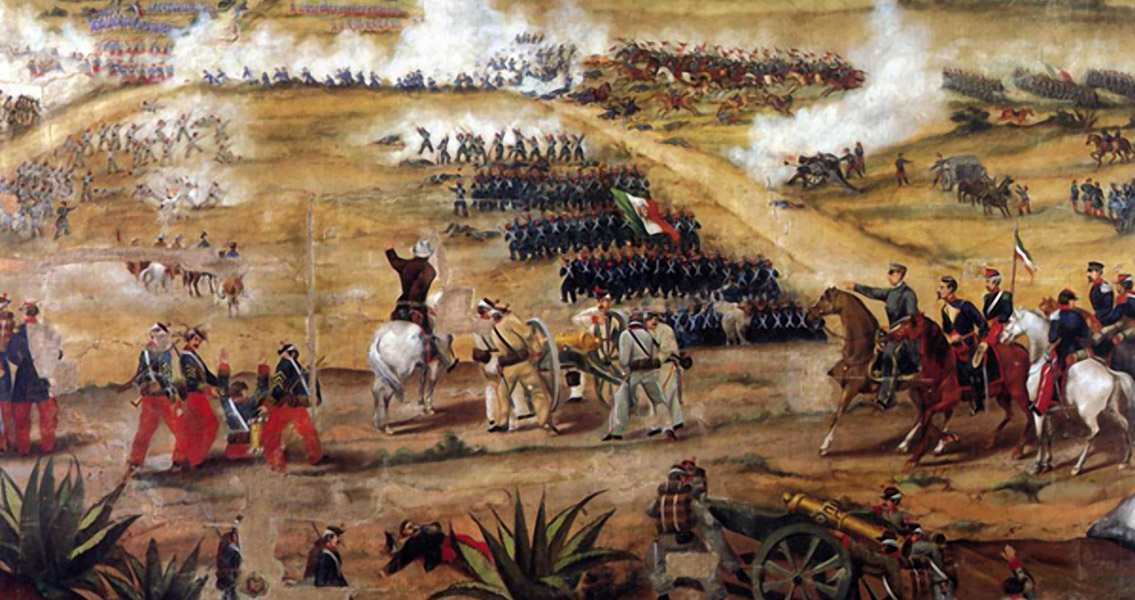
Cinco de Mayo – The Anniversary of the Battle of Puebla

Categories
Breaking News

A Ring Worn by Joan of Arc Returns to France

Le Parisien, “We suspected that the sale would beat all records. […] The Puy du Fou Hope Foundation could reach up to €80,000, but not beyond. Then we turned to potential donors and managed to collect the sum of €350,000.” By the end of frenzied bidding, Nicolas de Villiers had won out for the sum total of 376,833 euros ($415,063). Joan of Arc, known to some as the Maid of Orleans, is remembered for her role in the Hundred Years’ War during the fifteenth century, specifically the Siege of Orleans. Even though historians are still debating the extent of her actual participation in battle they do agree on one thing; the army was remarkably successful the short time she was with it. Born to peasant parents in northeast France in the village of Domrémy, Joan of Arc claimed to have experienced visions of Saint Margaret, the Archangel Michael, and Saint Catherine beginning when she was just thirteen. The visions instructed her to release France from English authority by supporting Charles VII. At just seventeen years old she gained distinction after several military engagements, most notably the Siege of Orleans. Shortly afterwards she was captured by the Burgundians and imprisoned at Beaurevoir Castle in May of 1490. She was later moved and tried in Rouen, England’s headquarters in France. Joan of Arc was found guilty of heresy and sentenced to death. She was burned at the stake on May 30, 1431. After her death, the charred body was exposed to avoid the claim that she had escaped, then they burned the body two more times (to protect against relics being claimed) and threw her remains into the Seine River. Joan of Arc is said to have worn the ring which was forged in brass, engraved with the initials JM and embellished with three crosses. Legend has it Joan would habitually stare down at the ring before going into combat. She was later exonerated and martyred in 1456, and canonized by Pope Benedict XV in 1920. The ring will be exhibited at the theme park Puy de Fou, which is owned by Philippe De Villiers. The park’s official website states that it “aims to contribute to the brilliance of France, its history, its wonders, and its achievements.” And that it was their “duty to end the exile of this symbol that belonged to the greatest heroine of the history of France.” ]]>

Categories
Breaking News

Neanderthals Capable of Chemically Assisted Fire Making

Categories
Breaking News

Evidence of Early Muslim Burials Unearthed in France

http://journals.plos.org/plosone/article?id=10.1371/journal.pone.0148583]]>