Categories
Breaking News

New Study Challenges Body Mass Increase Hypotheses

Homo erectus. In a press release by the university, as quoted by Science Daily, Grabowski explains that the research team found no evidence of any difference in body mass in the fossils of the earliest Homo samples and the fossils of australopiths, which are among the earliest known hominin species. This led the team to suggest that it wasn’t body size increase that drove the separation of Homo from the earlier hominins. Earlier hypotheses have tried to link this separation of the lineages with an increase in body mass resulting from the inclusion of meat in early hominins’ diets, comments Bernard Wood, Human Origins professor at George Washington University. According to him, these are simple assumptions that have not been tested and have now been refuted by Grabowski’s study. One other interesting finding made by Grabowski’s team is that sexual dimorphism, the size difference level between males and females within a species, was not that different between early hominins and H.erectus. It is true the dimorphism was more pronounced in pre-Homo species than in H.erectus, but the difference was not as great as in other primates, such as gorillas. What’s more, it narrowed down to the present-day level long after the Homo genus had separated from its ancestors. This finding has a direct bearing on evolutionary hypotheses that suggest the monogamous social structure of human communities evolved very early on. Instead, based on the fact that pronounced sexual dimorphism is characteristic of polygamous structures, it is possible to hypothesise that the monogamous, modern social structure was a relatively late occurrence. One reason for the persistent assumptions about body mass is that most anthropological studies in recent years have relied on research of early hominins’ done by Henry McHenry in 1992. Since 1992 however, an abundance of new fossils have been unearthed and scientists have learned more about the complexity of human evolution, the press release notes. What Grabowski’s study does is “build on and update McHenry’s result”, at the same time using new, innovative methods of examining samples of human fossils. The authors of the study hope that their results will become the new standard for body mass estimates for human fossils. Wood, for his part, says the study is one more step towards the debunking of a lot of misconceptions about human evolution. This belief is supported by several recent studies that have shed more light on evolution, including evidence that species hybridisation occurred between modern humans and Neanderthals, for instance, and that the first humans out of Africa were not H.erectus but Homo Habilis, a species which, incidentally, was smaller in size than H.erectus. For more information: “Body mass estimates of hominin fossils and the evolution of human body size” Image courtesy of Wikimedia Commons user: Commie cretan]]>

Categories
Breaking News

Radar Used to Rediscover Destroyed Synagogue in Lithuania

Categories
News

Bodies of Murdered Civil Rights Activists Found

Categories
Breaking News

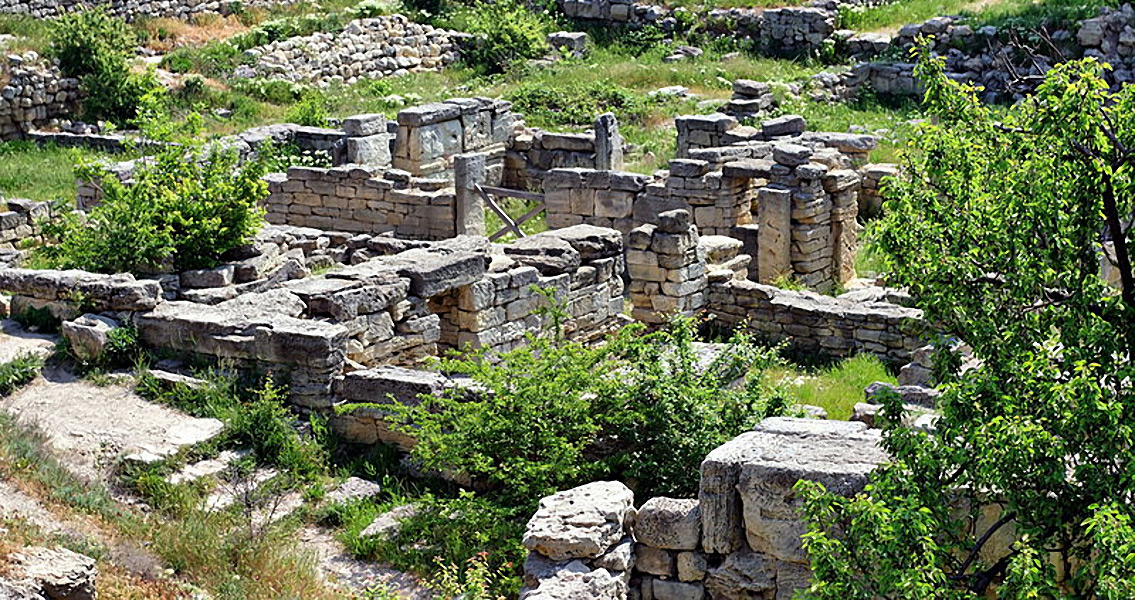
Kremlin Declares Chersonesus National Heritage Site

Categories
Breaking News

Human Remains Found at Colorado Construction Site

Categories
News

Columbus Departs From Spain

Nina, Pita and Santa Maria set off on the initial expedition from Spain. On 12th October, they made land on what are now known as the Bahamas. The expedition had not reached Asia as expected, but instead reached what came to be known as the New World. Columbus has been immortalised for the voyage he embarked upon on 3rd August, 1492, a journey whose consequences have made it a defining moment in history. Almost immediately Europeans began to exploit the resources of North and South America, fueling imperialism and conflict. For the indigenous people of the Americas, the arrival of Europeans signaled the start of centuries of horror, as forced cultural assimilation, the spread of foreign diseases and brutal oppression caused their populations to plummet. ]]>

Categories
Breaking News

Largest Feathered Dinosaur Found in China

Zhenyuanlong by the researchers who examined it, the dinosaur was a close relative of the Velociraptor and lived around 125 million years ago. The fossil was discovered accidentally by a farmer in northeastern China, just like another recent discovery, this time of a bat-like dinosaur, in the same part of the country. In a paper published in Nature, researchers Steve Brusatte from the University of Edinburgh and Junchang Lu from the Chinese Academy of Geological Sciences detail the find, explaining it belonged to the dromaeosaurids, a clave of very close bird relatives including the Velociraptor – a species that gained notoriety with the Jurassic Park film series. All the specimens belonging to that clave have been found in northeastern China, in Liaoning province. So far they have been classified into five species groups, some of them containing just one species. Most of the dromaeosaurids were very small, the authors say in the paper, close in size to a modern cat or a medium-sized dog, and they all had long arms. The only exclusion from these characteristics was a fossil of a species named Tianyuraptor, which was close to two metres long and whose arms were around half the length of its legs. However, no evidence of feathers was found on that fossil. The newly discovered fossil, slightly smaller than a Tianyuraptor, was covered in feathers. This was a stroke of luck for the researchers as they had previously believed these larger bird ancestors were not very good at flying, if they could fly at all. The Zhenyuanlong, on the other hand, almost certainly could and did fly. The dinosaur had large wings and on them, as well as on its tail, the researchers found pennaceous feathers, also called quill feathers, which are essential for flying and are present in all modern flying birds. This led the team to suggest that the non-flying and flying dinosaurs were contemporaries during the early Cretaceous. As regards the individual characteristics of the fossil, examination revealed it was a young specimen based on the extent of fusion between different bones, including the vertebrae. The last year and a half has been very productive for palaeontologists who focus on the evolution of birds. In addition to the many discoveries of feathered dinosaurs, last year a team of scientists also linked dinosaur bones with bird bones, something that had not previously been possible because of the hard line distinguishing developmental biology from palaeontology. That team, however, was interdisciplinary and looked both at dinosaur fossil bones from the wrist and the wrist bones of modern bird embryos, identifying at least one bone that was present both in dinosaurs and in birds. For more information: “A large, short-armed, winged dromaeosaurid (Dinosauria: Theropoda) from the Early Cretaceous of China and its implications for feather evolution” Image courtesy of Wikimedia Commons user: David W. E. Hone, Helmut Tischlinger, Xing Xu, Fucheng Zhang]]>

Categories
Breaking News

Researchers Re-bury Archaeological Site in Utah

Categories
News

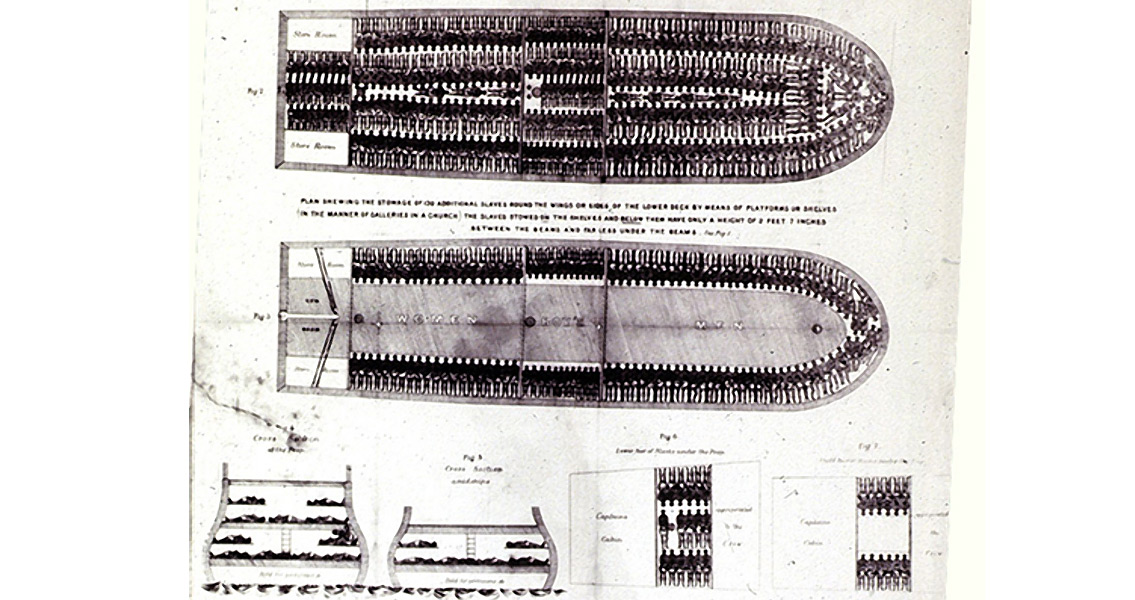
Slavery Abolition Act Comes into Force

Categories
Breaking News

Rare 18th Century Spanish Coin Found On Sunken Ship

Aarrr Booty, which has permits for the exploration of five vessels in the area. All of them belong to a fleet of twelve ships that set sail from Cuba, then a Spanish colony, to the Iberian Peninsula in late July 1715. The fleet transported gold that was much needed by Philip V at the time as he was at war with France. Unfortunately for him, all but one of the vessels were sunk by a hurricane close to the Floridian coast a week after they had set off from Cuba. Aarrr Booty’s owner Brent Brisben obtained a permit for exploring the site of the wreck five years ago and last month located one of the ships and managed to bring to the surface the abovementioned gold coins, which are estimated to be worth around $1 million, with the Tricentennial Royal alone valuated at $500,000. The find was by all means an exciting event for the crew of the Aarrr Booty, but it is only a very small part of the treasure carried by the eleven vessels. According to Brisben, whose salvaging company is aptly named ‘1715 Fleet Queen Jewels’, the total value of the gold that the vessels had been carrying to Spain was no less than $440 million. In addition to the gold, the fleet may have been transporting the queen jewels of Philip V’s second wife, Elisabeth Farnese, duchess of Parma. The location of the jewels on one of the eleven vessels is only speculated over because as a non-taxable commodity they were not entered into any official inventories of the cargo, Brisben told Live Science. Spanish colonial coins were in circulation in both South and North America between the beginning of the seventeenth century and the early nineteenth century, Coin Quest, a coin collection website explains. There were two methods used for making the majority of the coins, and both produced quite imperfect shapes. The first method, cob, involved cutting gold and silver bars into relatively equal chunks and then stamping on them a pattern with a hammer while the chunk was pressed between dies made from a harder metal. This technique produced irregular shapes and patterns but that was of no importance; only the weight of the coins mattered. This method was employed as a way of transporting gold and silver mined in the New World to Spain more easily. The second method, milling, consisted of making thin sheets of silver or gold and cutting out blank coins from them, which were then put in screw presses with the patterns to be stamped on the blanks. While this technique produced much more regular shapes it was still inferior to die-casting, which worked with molten metal. Die-Casting took more time and effort, which was probably why it was not so popular a method of minting until later. Image courtesy of Wikimedia Commons user: Arandar]]>