Categories
Breaking News

Major Viking Age Archaeological Find Discovered in Denmark

CPH Post Online, researchers have discovered several chamber graves in the Jutland Peninsula, the northern continental reaches of Denmark that splits the North and Baltic Seas. The new archaeological site was found in the hamlet of Hørning in eastern central Jutland, near Skanderborg. What makes this collection of grave sites stand out is that one of the chamber-graves discovered by archaeologists has been revealed to be a Viking Age treasure trove. Named the tomb of the Fregerslev Viking, the grave contains the remains of a high-status individual as well as several priceless grave goods. The quality of these items more than confirms the high standing of the individual who was interred alongside them. According to project manager Merethe Schifter Bagge, an archaeologist from the Museum of Skanderborg, the artifacts already recovered from the chamber-grave include ornate horse bridle fittings that were painstakingly gilded in gold. The researcher added that this particular type of bridle would not have been made available to just anyone; its presence indicates the Fregerslev Viking was an enormously important individual and that the bridle might have been a gift from the king after forging an important alliance. Researchers have dated the fittings to around 950 CE, which places the Fregerslev Viking during the reign of Gorm the Old, the Danish king who ruled from between circa 940 to 958. Harald, Gorm’s son and successor as king of the Danes, was known as Harald Bluetooth – for whom the modern wireless communication technology was named. The Viking interred in the chamber-grave could have been a trusted confidant of Gorm the Old, Schifter Bagge reasoned – or perhaps even a powerful rival. This new find is thought to be the most breathtaking one in the country since 1983. In fact, researchers are already comparing finding the Fregerslev Viking to that of the discoveries of Egtved Girl, the remains of a Bronze Age girl discovered in the 1920s, and Tollund Man, an incredibly well-preserved, naturally mummified corpse from the fourth century BCE discovered in the 1950s. Like the Fregerslev Viking, both these finds were discovered in Jutland as well. The chamber-graves in Hørning were initially discovered in 2012, but so far only a small area has been examined. Researchers plan to continue excavating starting in April of 2017, according to Ejvind Hertz, the Museum of Skanderborg’s director of archaeology. Hertz, who also serves as an inspector for the museum, has high hopes that the rest of the Viking’s grave goods will be discovered at that time. A selection of the discoveries made at the site will be on display at the museum for a month, starting April 7th. In the meantime, the museum will also be providing daily guided tours for local residents or tourists visiting the grave site. ]]>

Categories
Breaking News

Did Neanderthals and Leopards Exist Side-by-side in Italy?

LiveScience, an ancient bone found in 2014 by Renato Bandera, an amateur scientist, turned out to be the shinbone of a leopard. The find was made in northern Italy on the banks of the River Po, not far from the entrance to Cremona’s harbor. The fossilized bone, which Bandera donated to the Paleoanthropological Museum of Po in San Daniele Po, is not the first specimen to be found in the region. Indeed, many fossils discovered nearby have led researchers to suggest a number of species made their home there, from elk, rhinos and giant deer to woolly mammoths, steppe bison and straight-tusked elephants. However, finding the fossilized remains of carnivorous species is much rarer. Only a handful of fossils from foxes, hyenas, wolves, and bears have been discovered in the region; the newest discovery – that leopards were present as well – fills in a major gap in our knowledge of the ecology of the time period. Researchers say that the leopard was likely just shy of 100 pounds, was around 3.6 feet long and had a 2.8-foot tail, all according to the size of the shinbone. Davide Persico, the study’s co-author and a paleontologist from the University of Parma, said this suggests the creature was either a young male or a large female. While the exact age of the fossilized remains has yet to be pinpointed, fossils found nearby place the leopard remains in context. According to Persico, the leopard is likely to have lived up to 180,000 years ago. The presence of leopards in Europe isn’t unheard of, especially since previous research has discovered evidence of the large cat living on the continent during the Pleistocene. The oldest known example of leopards living in Ice Age Europe comes from Vallonet Cave, a site in France that yielded leopard remains dated to between 900,000 and 1 million years old. Researchers said that as the climate continued to shift colder, leopards would have migrated closer to the equator. As a result, the large felines would have moved down from the mountainous regions into the Po River plain – and would have lived there at the same time as Neanderthals. In fact, the only other leopard fossils in Italy were found in the Apennines and the Alps exclusively. The fossil discovery shows that this ancient leopard species was not limited to the mountains, remarked the paleontologist. Persico drew a connection between ancient leopards and modern ones, stating that both have demonstrated the ability to adapt to different climates. Modern leopards do indeed demonstrate a wide distribution, in fact the largest of any wild cat. The largest spotted cats in modern-day Asia and Africa, leopards range from mountainous regions to forests, grasslands, and even semi-arid deserts. The new research study, published in the journal Quaternary International, can be found here]]>

Categories
Breaking News

Humans May Have Turned The Sahara to Desert

Frontiers in Earth Science, can be found online at here]]>

Categories
Breaking News

Rare 400,000 Year Old Skull Discovered in Portuguese Cave

The Proceedings of the National Academy of Sciences, can be found here Image courtesy of Javier Trueba]]>

Categories
Breaking News

Crusader Shipwreck Discovered off Israel's Coast

Haaretz. Taking Acre was a major victory for the Mamluks, as Christian European forces had long used the site as a landing point for countless knights and soldiers. When Jerusalem fell out of Crusader hands after being recaptured by Saladin in 1187, Acre became the new Crusader capital in the Holy Land. Marine archaeologists from Haifa University Prof. Michal Artzy and Dr. Ehud Galili spearheaded the investigation of the Crusader shipwreck. The ship itself suffered damage while the modern harbor of Acre was being dredged during its construction; the surviving wreckage includes some ballast-covered wooden planks, the ship’s keep, and a few sections of its hull. Carbon dating has revealed the wood used to construct the hull dates to between 1062 CE and 1250 CE, firmly within the window for Crusader activity in the region. In addition to the associated golden coins found near the wreckage, marine archaeologists also discovered imported ceramic bowls and jugs from southern Italy, Syria, and Cyprus; corroded pieces of iron, mostly nails and anchors, were additional finds. The biggest find, however, is certainly thought to be the gold coins found with the wreck. A total of 30 florins were found, according to the Israel Antiquities Authority’s coin expert Robert Kool; minted in the Italian republic of Florence – where the coins get their name – the florins were minted from 1252. Speculation as to how the ship – and the florins – ended up on the bottom of Acre’s harbor is closely tied to the Siege of Acre, as historical eyewitness accounts from the event reported nobles and merchants fleeing from the besieged fortress by boat, often after bribing the owners of these boats with valuables. Many never made it out of the harbor, thought to have drowned there with their riches as the Christian defenders sought futilely to buy them some time to escape. The Crusader fortress fell on May 18th, 1291, after more than 100 years of Frankish rule. The final defenders, a contingent of Knights Templar, refused to abandon their holdfast. As a result, when Mamluk sappers undermined the walls of the Templar fortress, the entire edifice collapsed, killing the remaining defenders – and around a hundred of the Sultan’s own soldiers as well. The fall of Acre was the last gasp of the Christian crusades during the medieval era. Once the stronghold was taken by the Mamluks and summarily destroyed, the Catholic Church and the European nobles that supported it abandoned their quest to “liberate” the Holy Land. ]]>

Categories
Breaking News

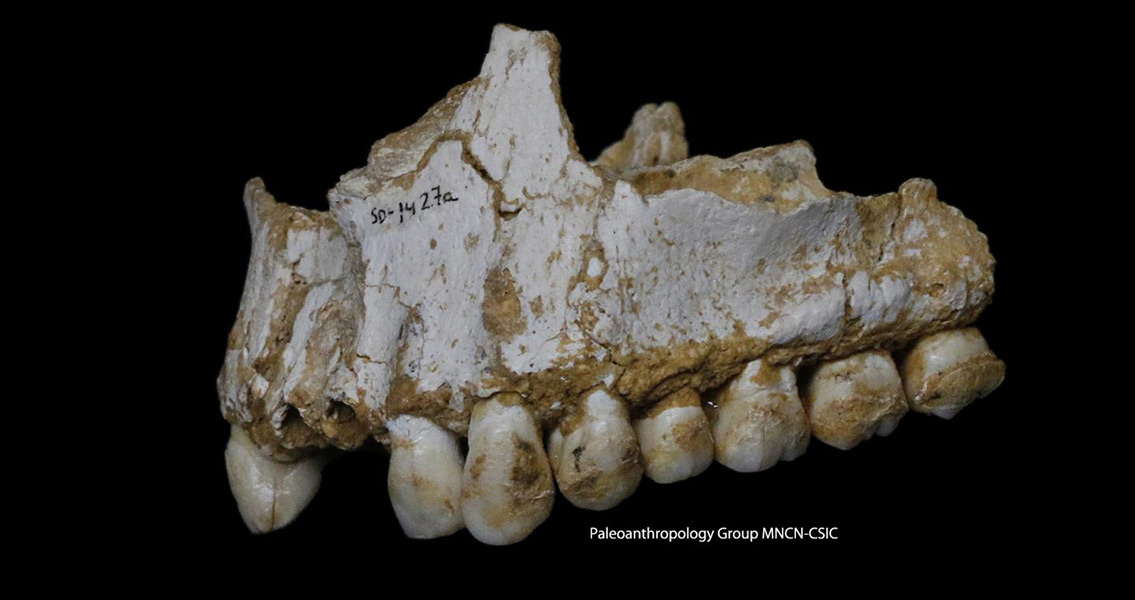
Neanderthals Used Plant-Based Medicine, Says New DNA Study

Nature, can be found here Image courtesy of Paleoanthropology Group MNCN-CSIC]]>

Categories
Breaking News

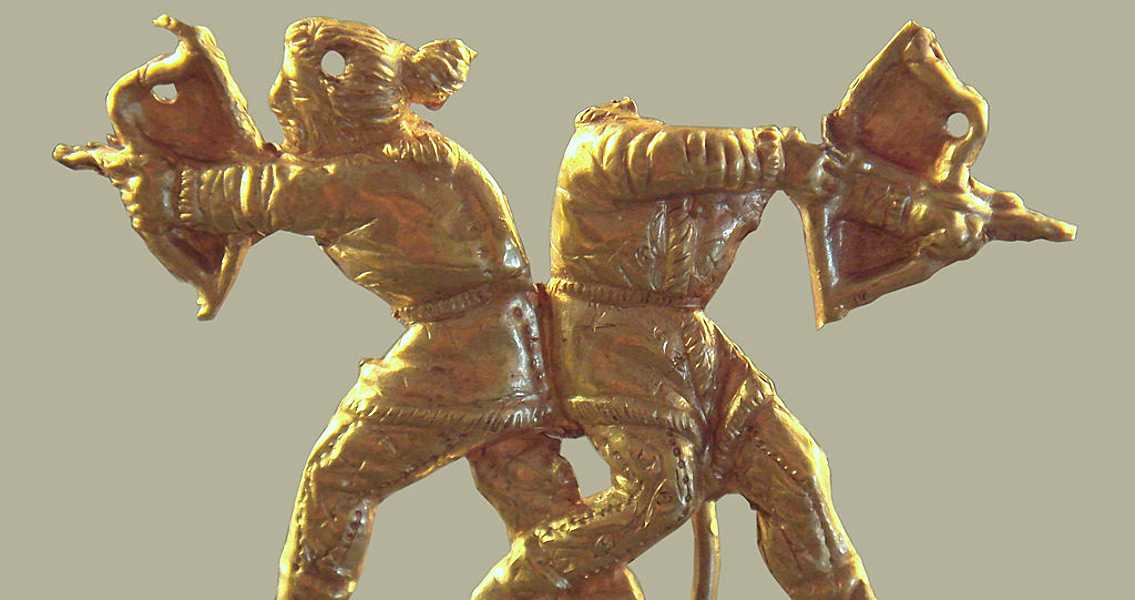
New Theory on Origin of Scythians Put Forward

According to a university press release, anthropologists conducted comparative analysis of non-metric cranial trait frequencies in the remains of Scythians found in the northern Black Sea region. These non-metric traits were then compared to those gathered from Central Asian and Eastern European remains dating to the Bronze Age to look for commonalities. These so-called “cranial series” are groups of skulls found from either one burial or several burials spaced closely together, and from either one archaeological culture or one ethnic group. Non-metric, varying cranial traits can reflect minor anatomical variations in the human skull. These variations take the form of irregular skull sutures and processes or additional and irregular holes, and are consistent among those with similar genetics. When compared to data gathered from molecular genetic markers, these non-metric cranial traits tell a similar tale in determining the genetic distances between populations. Many researchers have begun to use these cranial trait comparisons as an alternative to direct DNA research, which can be much more expensive and not necessarily always appropriate. There are two major hypotheses regarding the origin of the Scythians. One claims the Scythians came from Central Asia as invaders, resulting in local Indo-European populations being assimilated by them. The other claims that the ancient people were descended from the “Timber-Grave culture” of the Srubnaya people who lived between the Dneiper and Ural Mountains during the Late Bronze Age. According to lead author Alla Movesyan, the results of the study provide evidence for both of these theories. In other words, both hypotheses are partly correct: the Scythian gene pool was formed from descendants of the Srubnaya from the Late Bronze Age, but these descendants migrated from Central Asia and mingled with the Indo-Europeans living in the northern Black Sea region. This revelation could be a blow to Eurasian mythmakers who have enjoyed claiming the Scythians were predecessors of the Slavs. While there was undoubtedly some genetic intermingling thanks to geographic proximity, Movsesyan claims that the idea of Slavs being direct descendants of the Scythians is simply no longer supported by any scientific data. The new research study, published in The American Journal of Physical Anthropology, can be found here]]>

Categories
Breaking News

Wreck of WWI Hospital Ship Given War Grave Status

HMHS Anglia, a hospital ship sunk during the First World War, was recently given war grave status, recognizing the remains of the more than 160 soldiers and sailors who lost their lives aboard her. The ship sunk in November of 1915 off the coast of Chepway after hitting a German mine. Other sunken warships, including the MHS Hogue, HMS Cressy, and HMS Aboukir, all of which sunk in September of 1914 in a German U-boat attack, have been declared war graves as well with the stroke of the same pen. The new “war grave” designation provides legal protection to the wreck of the HMHS Anglia and the other Royal Navy ships, barring them from casual visits from divers or scavengers. Maritime historians spearheaded the campaign to get the ships listed and protected. According to an article on Kent Online, campaigner Christopher Conn said he was glad to see the Anglia given the protection she deserved. Conn hails from Folkestone, just a few miles from the final resting place for HMHS Anglia in Folkestone Harbour on the English Channel. The campaigner said he had been fearful that “spot divers” were visiting the ship to take souvenirs back up to the surface, and was keen to see legal protections put in place for the sunken hospital ship. There were nearly 400 injured aboard HMHS Anglia when it struck the mine that sealed its fate on November 17th. A team of medical staff were also onboard, tending to the wounds of the injured soldiers. While nearby ships did their best to rescue victims of the attack, it’s thought that around 167 people went down with the ship that day. Meanwhile, the sinking of the Aboukir, Cressy, and Hogue has long been recognized as one of the British Royal Navy’s darkest hours, even if their wrecks were not protected by law until recently. The incident that led to their destruction – and the deaths of 1,459 sailors serving aboard them – earned them the moniker of the “Livebait Squadron”, an epithet that expressed how severely demoralized the British people had become as a result of the massive loss of life. The three cruisers, left behind after their destroyer escort had turned around due to bad weather, fell prey to German submarine U9 on September 22nd, 1914. The older cruisers, sporting highly visible smokestacks from their steam engines, stood out starkly once the weather cleared, making them an easy target for the U-boat. The three ships were subjected to a salvo of eight torpedoes that crippled them, sending them to the deep. In total, there are 13 wartime vessels that have been added to the lists of protected military vessels this month, including HMHS Anglia, HMS Aboukir, HMS Cressy and HMS Hogue. This brings the grand total of ships and submarines protected as war graves to 79. The majority of these are ships dating from the First World War, though there are five German submarines and Second World War-era Allied cargo vessels on the list as well. ]]>

Categories
Breaking News

New Theory on Bipedal Development in Dinosaurs Unveiled

The Journal of Theoretical Biology, can be found here Image courtesy of Scott Persons]]>

Categories
Breaking News

Scientists Investigate Ancient Stone Staircase in Cambodia