Categories
Breaking News

Destruction of Ancient City By Isis Feared

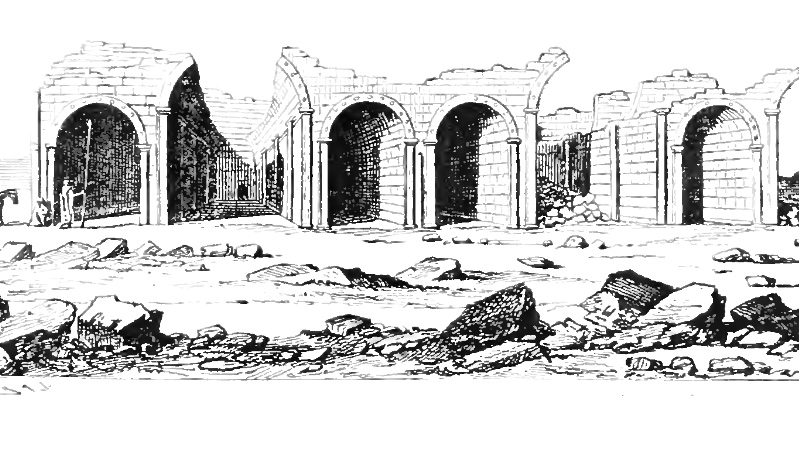
One official who oversaw the security of Hatra, Mohammed Abdallah Khozal, reported that the police officers guarding the city left when they heard that ISIS was coming their way. He says that there is no one protecting the temple and rebels have taken full control. He fears that gun fights and explosives may cause more damage to the area. UNESCO Director-General, Irina Bokova, voiced her concerns about the uprising taking place in Iraq and said that more of Iraq’s cultural heritage could be destroyed, as it was during the war. She calls on the rebels to avoid the destruction of cultural and religious sites, as their destruction is a war crime and a blow to the identity of the Iraqi people. One of the incidents that Bokova might have been referring to was the destruction of the al-Askari golden mosque in Samarra, north of Baghdad, by Islamist terrorists in 2006. These fears over the destruction of this heritage site by ISIS are certainly not unwarranted. Several landmarks have already been destroyed by terrorists. Earlier this month, the statue of the 19th century Iraqi composer and musician, Othman al-Mousuli, was destroyed when the city of Mosul was taken over by the militants. These rebels also destroyed the tomb of Arab poet Abu Tammam from the Abbasid era and the tomb of 12th century Arab philosopher Ibn al Athirl, who traveled with the army of sultan Salahuddin.]]>

Categories
News

Dinosaurs May Have Been Neither Cold or Warm Blooded

Science, the dinosaurs may have been neither cold-blooded nor warm-blooded – they were somewhere in-between. Some paleontologists call this scientific phenomenon and the fact that dinosaurs are related to birds as “the last big one”. The lead scientist in this study, John Grady, an ecologist at the University of New Mexico, states that dinosaurs may have been able to generate body heat, but they could not keep their body temperature constant. The term that describes this condition is called mesothermy. This allowed them to move fast and grow larger than any other animal in existence in those times. This adaptation enabled them to live longer than the slow-moving reptiles in existence in those times. In this study, 381 different species of animals were compared, with 21 being dinosaurs. The dinosaurs looked at included the Tyrannosaurus, Allosaurus, Apatosaurus, Tenontosaurus and the Troodon. The other species looked at included a range of mammals, birds, sharks, fish, snakes, lizards and crocodiles. All these animals are either warm-blooded or cold-blooded. The researchers looked at the metabolism of the dinosaurs by looking on the size of their bones, and deduced their body mass. By measuring the growth rings in their bones, the scientists could estimate the growth rate of the animals, which is a similar method arborists use to determine the age of a tree. After all the comparisons were completed, they found that dinosaurs did not grow in the same way warm-blooded animals did, neither did they grow in the same way cold-blooded animals did. They did not grow like any of the mammals, birds, reptiles and fish that were a part of the experiment. These dinosaurs had the best characteristics of both worlds that enabled them to grow and move the way they did. These characteristics include the fast firing or muscles and nerves in warm-blooded animals, and the ability to burn fuel more slowly and grow larger than mammals in cold-blooded animals. This makes sense as large dinosaurs such as the Tyrannosaurus and the Apatosaurus would need to eat 24/7 in order to fuel their large bodies if they were warm-blooded like a mammal. These dinosaurs may have had to hunt for days for their food, so they could not survive if they were warm-blooded. Grady says that the notion that animals today must be put into two groups, warm-blooded or cold-blooded, is too vague and simplistic. There are a few animals today that share the same in-between characteristic that the dinosaurs had. These animals include the echidna (a mammal that looks like an anteater but lays eggs), the leatherback turtle, the great white shark and the tuna.]]>

Categories
News

Great Archeological Discovery Made By Burrowing Rabbits

Categories
News

Journey on the Orient Express – a Date With History, Heritage and Luxury

The history of Orient Express is filled with mystery, intrigue, culinary excellence and luxury. Elegant and historic train, the Orient Express made its maiden journey from Paris to Vienna on June 5, 1883. The train left for Vienna from Strasbourg on its final journey on December 12, 2009, completing an illustrious 126 years connecting people with heritage. Orient Express has a long and interesting history of bringing people and heritage together. The train is steeped with copious amounts of intrigue and mystery and is peppered with luxury, adventure and timeless heritage. The two popular words in the history of international travel – ‘Orient Express’ – are commonly linked to Paris and Istanbul, the original destinations of this historical train. This passenger train service was launched by the Compagnie Internationale des Wagon-Lits. Its maiden journey from Paris to Vienna was on June 5, 1883. It was called Express d’Orient during the initial years and in 1891, it was officially renamed as Orient Express. Initially, in the year 1882, a train called the ‘Train Éclair de luxe’ was used by Georges Nagelmackers, son of a Belgian banker, as a test train. It left Paris on the 10th of October, 1882 and arrived in Vienna on the 11th of October, 1882. The Orient Express is not only known for its enchanting beauty and culinary excellence, but also famous for its constantly changing train route. One of the reasons why the name ‘Orient Express’ is steeped in romance is connected to the routes it travelled – three of Europe’s most popular and romantic destinations – Paris, Vienna and Istanbul. The Orient Express had 10 wood paneled compartments with either a single bed or double beds (one over the other). There were no baths or showers on board, only a washbasin was available. The compartments were used as sleeper compartments in the night and during the day; they were converted into sitting rooms. They were quickly converted into luxurious carpeted sitting rooms, complete with a sofa and table. The beauty and elegance of the Orient Express, perhaps, was in its peak during 1920s, just a few years before the World War I. The services of the train were suspended during the period of the War and resumed after the hostilities ended in 1918. However, soon after resuming the services, Orient Express regained its popularity and patronage by the rich and wealthy. The 1930’s can, perhaps, be considered the golden period in the history of this train. Three parallel services, namely, the Orient Express, the Arlberg Orient Express and the Simplon Orient Express were being operated. This was the period when Orient Express came to be known as one of the most luxurious and elegant vehicle on wheels. It started carrying a number of sleeping cars that offered permanent service, and restaurant cars where exotic food was prepared. A number of celebrities, diplomats, royalty, and business people – the rich and the famous – started frequenting the Orient Express. However, the services were disrupted during the Second World War as well and they did not resume until after 1945. The Orient Express stopped running in the year 1962 and it was replaced with a slow service train called the Direct Orient Express that ran from Paris to Belgrade every day and from Paris to Istanbul and Athens twice weekly. In fact, the Direct Orient Express services were completely withdrawn in the year 1977. Many considered this to be the end of the Orient Express, but a similar service of the same name ran from Paris to Bucharest until the year 2001. During the final years of the Orient-Express, the train ran as a EuroNight service from December 14, 2008 to December 2009. The popularity of the Orient Express reached its zenith when its glamour and history ensured that it made its way into popular culture. It became a part of literature featuring in books, films and documentaries. One of the most famous plots and murder mystery stories of all time, Murder on the Orient Express by Agatha Christie was based on the events happening onboard the train. Although the name suggests Orient Express, it actually takes place on the Simplon Orient Express. In the famous book Dracula by Bram Stoker, the Orient Express is mentioned. In fact, movies Orient Express (1934) and Orient Express (1954) are film adaptations of a book by Graham Greene called Stamboul Train and a plot involving passengers of the train respectively. Orient Express has left an indelible mark on the cultural and historical landscape of the world of travel. The rich history and intrigue surrounding this train is amazing; everyone remembers this train to be the one where Hercule Poirot solved the mystery of the murder, the same train which James Bond rode from Istanbul to London to save the world – yet another time, and the same train from where Alfred Hitchcock’s young lady disappeared from.  Everything about the train: from its constantly changing route map to its popularity with spies, to its exotic cuisine to its enchanting décor, continues to enthrall people world over.]]>
Categories
News

Implementing ‘Csi’ Method in Historical Study

Scientists were able to prove the existence of French buhrstone in Ohio by applying ‘forensic’ method in their study We have all seen how CSI forensic teams doing their things on television, analysing a little part of specimen in order to identify its origin. Believe it or not, similar approach is also regularly applied when investigating history. A team of scientists conducted a combination of palaeontology and archaeology study by applying ‘forensic’ method to substantiate the origin of millstones in Ohio used in the 18th and 19th century. Some millstones used in that period are believed to have originated from France. The sole purpose of the study was to safely differentiate local millstones in Ohio from millstones imported from France. Basically, all millstones are quite similar in composition. Millstones were composed from the super hard buhrstone, also known as chertz or flint. Over the course of human history, buhrstone had always been the material used to make stone tools. However, buhrstones from French quarry posses much more value compared to buhrs from any other part of the world, including Ohio. This is due to the fact that stones from France were considered much better in cutting grain. Detailed examination had revealed some important facts that eventually became the basic premise of the differentiation process. The first aspect was the physical feature of the millstones, which is the key feature required by millers. A stone had to possess some degree of porosity in order to be useful. In the year of 1795, Oliver Evans, a famous millwright and inventor, proclaimed that pores “larger in diameter than the length of a grain of wheat” were not really desirable by millers. The claim had provided a strong basis for the theory suggesting the impotance of imported stones from France’s quarry. “The story of the importation of this stone from France is not widely known,” said Dr. Joseph Hannibal, a curator of invertebrate paleontology at The Cleveland Museum of Natural History. Dr. Joseph Hannibal was the lead author on the study. “They are not always correctly identified as being from France. Based on the stones we have examined, it is clear that the French stone was more popular. Examples of millstones made of this stone are widespread in North America and throughout the world. So the use of fossils for their identification is a broadly applicable concept,” he added. Another fact emerged from the examination was that fossils were embedded in the stones. The pores on the stones were the place where those fossils left their marks. Buhrstones from France bear some traces of algae and snails’ fossils originated from a freshwater environment while local Ohio’s buhrs were occupied with invertebrate fossils known as brachiopods, pelmatazoans and fusulinids. These vital facts had made it possible for scientists to analyse those millstones using the ‘forensic’ method without ever having to break them. “Many millstones have been identified as being made of French stone or Ohio stone,” said Dr. Hannibal. “But since the stones used are generally similar in color and other properties, I questioned how these stones had been identified as originating from France or Ohio. When visiting the remains of an old mill in Trumbull County, Ohio, we first noticed that there were charophytes in some millstones. Our study progressed from there.” The study took almost five years before its conclusion. There were 16 fossils-containing millstones studied by the research team, which included high school and college students. Four college students were working as co-authors of the study. The result of the study was documented in a paper published in journal PALAIOS of the Society for Sedimentary Geology (SEPM).]]>

Categories
Breaking News

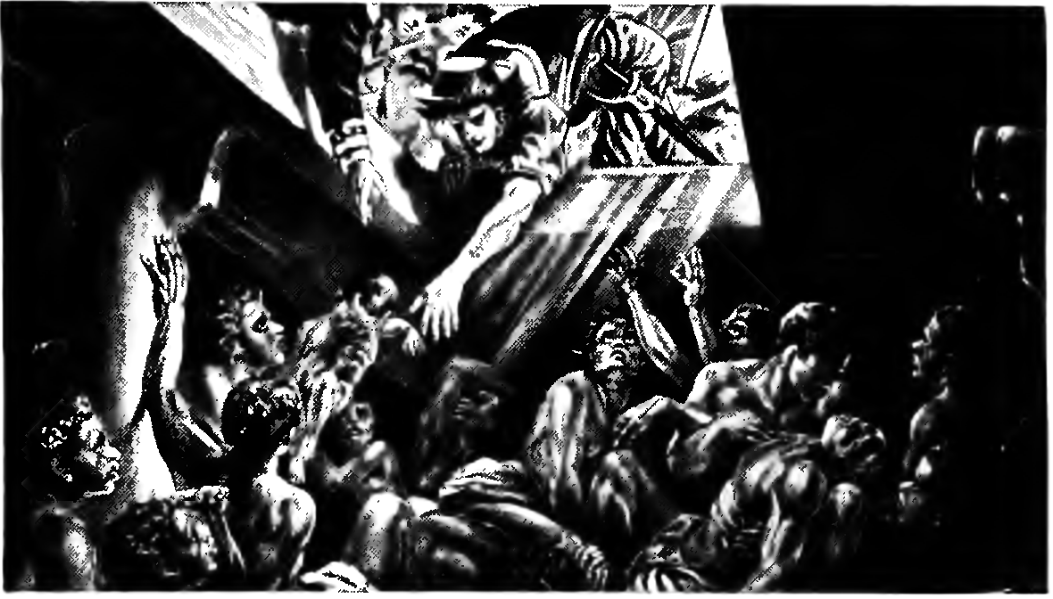
Logbooks Show Proof of Death and Misery Onboard Connecticut Ships

th century ship that ended up linking New London ships to the West African slave trade. According to this logbook, men from Connecticut travelled to Sierra Leone, where they bought slaves to be shipped as slaves to the West Indies. Contrary to popular belief, the keeper of this logbook wasn’t Sam Gould, but an aristocrat named Dudley Saltonstall. Ever since this discovery was made about 10 years ago, researchers have continued their studies on the slave trade and the involvement of North London families in the slave trade. A number of details have emerged since the first revelations and more and more ships have been linked with the slave trade. In fact, some of the leading families of the colonies were also said to be involved with slave trade. The suffering of captives during the Middle Passage from Africa to the Caribbean has been well documented. However, the logbooks and ongoing research highlight the lethal nature of the trade – both for the officers as well as the seamen. According to records, traders from Connecticut had died of fevers, killed in uprisings or been mutilated at the hands of black traders.  One particular captain had his head bashed in by his chief mate, a crime to which the chief mate later confessed. Saltonstall was just about 18 when he first began to maintain a logbook in the voyage of 1757. His father, Gurdon Saltonstall, was the deputy mayor of New London and an extremely successful merchant as well. According to reports, Gurdon owned two of the three ships for which young Dudley kept records and logbooks. It also appears that Gurdon placed Dudley on the ship so that he could monitor the distributions that were being distributed to the seamen and act as his father’s eyes and ears on board the ships. According to Saltonstall’s log, the ships were in Sierra Leone on April 8, 1757 so that the seamen could buy rice to feed the slaves. The logbook also recorded that the ships were at Bence Island to take in slaves, wood and water five days later. Further proof was found when a record dated April 27, 1757 stated that 169 slaves had been boarded onto the ships. However, numerous slaves on board Dudley Saltonstall’s ship became infected with amoebic dysentery and began to fall ill during the first week itself. The logbook states that one slave fell dangerously ill and another slave died on May 4, 1757. Yet another post for the very next date mentioned that 3 more small slaves had died from the flux within a period of 24 hours. Another entry dated May 14 stated that a total of 9 slaves had died, leaving a total of 160 slaves on board. Dudley Saltonstall might have been court martialled for the loss of 100 ships and the rout of the Colonials in Maine’s Penobscot Bay, but he still managed to always land on his feet. He was disliked by his officers and was known to be extremely snobbish and arrogant. Later on in the war, Saltonstall brought the greatest prize ship of the war – the vessel that belonged to the British General Sir Henry Clinton. However, this achievement did not erase the massive costs that were spent in the Penobscot Expedition, a Pearl Harbor equivalent during the Revolutionary War. It is believed that Saltonstall remained in the business till almost 1784, traces of which were found in letters written to his wife where he mentioned that he longed to buy 300 slaves in order to sell them off in Charleston, S.C. ]]>

Categories
Breaking News

Napoleon Bonaparte's Weapons Found in Alexandria, Egypt

Categories
Breaking News

New Documentary Estimates Hitler's Net Worth in the Billions

Hitler was not only a war-machine, but also a money-making machine as well. He had numerous financial schemes that made him money, including copyrighting his image, which earned him royalties for every stamp that was sold with his face on it. Most of these money-making schemes were running in the country unbeknownst to Germany’s tax authorities. Copies of Mein Kampf, which were given to newlyweds on their wedding day, are thought to have earned him the equivalent of at least $1 million a year in royalties. The makers of the documentary surmise that Hitler owed the German tax authority over $3 million in tax in today’s money. Shortly after his death his will was found by a German Jew, Herman Rothman, working in British Intelligence, and questions were raised about his fortune. Mr. Rothman, now in his 90s, told the makers of the documentary that the Counter Intelligence Unit that he was working with spotted a man dressed in civilian clothing whom they believed was a Nazi. They captured him and took his jacket, which contained a seven-page document detailing Hitler’s last will. In this will, Hitler blamed the Jews for starting the conflict, and from the second page onwards, it is seen how much of a shrewd investor he was. Earning money from different appearances, speeches, and royalty claims, he built himself a personal $6 billion empire. It is even said that his family members living today could claim a portion of those missing billions from his image rights alone, although it is yet to be seen if anyone will come forward. “The Hunt For Hitler’s Missing Millions” aired on Britain’s Channel 5.]]>

Categories
Breaking News

19th Century 'Elixir of Long Life' Found

Categories
Breaking News

Roman Goblet Shows Ancient Knowledge of Nanotechnology