

Scientific Reports, the new study argues that in fact humans made their way to Arabia soon after the last Ice Age had receded. The researchers at the University of Huddersfield, who specialise in the analysis of human DNA, have based their conclusion on the study of a rare mitochondrial DNA lineage known as R0a. The haplogroup appears most frequently in Arabia and the Horn of Africa, but can also be found elsewhere. Genetic material from the parts of a cell responsible for converting food into usable energy, mitochondrial DNA is passed on maternally. It can provide vital insights into human migration thousands of years ago. Dr Francesca Gandini, the lead author, and her co-researchers from the University of Huddersfield have come to the conclusion that the R0a lineage is actually significantly more ancient than previously thought, with a deep presence in Arabia. Indeed, they believe it can be traced all the way back to the Pleistocene. These surprising results, according to Gandini and colleagues’ article, could be explained by the existence of an oasis or refuge in the region which allowed people to shelter from the inhospitable conditions of the Ice Age. 20,000 years ago much of the Earth was completely uninhabitable to humans as a result of plummeting temperatures in a period known as the Last Glacial Maximum. The only way they survived were in refugia where groups could cluster together and pool resources. The University of Huddersfield research argues that one such refuge could have existed somewhere in Southern Arabia, possibly close to what are now the Red Sea Plains. Earlier studies suggest the R0a haplogroup migrated to Southern Arabia from the Near East following the Ice Age, but Gandini et al’s work adds to a growing body of evidence that this was not the case. “…multiple lines of evidence suggest that the major R0a subclades had entered Arabia and begun diversifying before the Last Glacial Maximum.” they write in the study. “This is in accord with evidence from rock art in Northern Arabia that the Neolithic pastoral economy was adopted by hunter–gatherers, rather than introduced by dispersing agriculturalists from the Near East.” Significantly, there is little archaeological evidence for a human population surviving in Southern Arabia through the Lower Glacial Maximum. This, the team hypothesize, points to an as yet an unknown refuge somewhere in Arabia. Using the same mitochondrial data, the authors of the article also describe the dispersal during the post-glacial period around 11,000 years ago, of humans from Southern Arabia into East Africa. Moreover, as well as suggesting the potential migration of the R0a haplogroup through the Middle East and into Europe, the study raises the possibility that a prehistoric trading network could have existed in the region that covers modern day Pakistan, India and Iran. For more information: www.nature.com]]>

The Herald Scotland, archaeologists now feel that this Viking parliamentary site was likely the seat of power for Ketill Flatnose, a powerful Viking ruler whose bloodline would go on to settle Iceland. The key to the theory of the site being a Norse “thing” was a new study of the island’s place-names. The etymology of the names suggested many archaic designations for locations around the island could have indeed incorporated the word “thing”. Follow-up field investigations in the form of excavations have yielded preserved surface samples that have been radio-carbon dated back to when Norse raiders and settlers were active in and near the Argyll coast. The analysis involved pieces of charcoal, according to archaeologist Paul Duffy, the head of Brandanii Archaeology and Heritage Consultancy. In an interview in the newspaper, Duffy recounted how the charcoal had been dated to the latter days of the kingdom of Dalriada – and the inception of Norse settlement on Bute. Eventually the date for the site was narrowed down to between the late seventh century and the late ninth century CE, which is within the window of certainty as to when Vikings were active in the region. Duffy pointed out that in the past Bute has been suggested as the possible primary site for the Gall-Gaidheil, or “Foreign Gaels.” These people, of mixed Norse and Gaelic descent, were dominant in the region of the Irish Sea and western Scotland for a portion of the Medieval Era. Many also point to possible evidence of these Gall-Gaidheil offering military support to various Irish Kings on the battlefield. Primary evidence for Bute being the possible Gall-Gaidheil headquarters appears in Martyrology of Tallaght, an Irish religious text dating to around 900 CE. The document refers to Bute being Gall-Gaidheil territory when talking about the bishop St. Blane of Kingarth. This provides hard evidence that Bute was at the very least within the territory, Duffy remarked, adding that it’s “another brick in the evidential wall” suggesting that Bute was the site of a Norse “thing.” The archaeologist also says that there’s a strong possibility that Ketill Flatnose, the leader of the Gall-Gaidheil during that era, could have had links to the site. Such a major parliamentary site would have needed someone to be in charge of meetings, making laws, dispensing justice, and so on, Duffy stated, and it is likely that a leader of power and influence headed such proceedings. The only documentary evidence concerning powerful leaders during this time points to Ketill Flatnose, the researcher added, making it highly likely that he would have been involved. ]]>
Science. Image courtesy of Ni Xijun]]>
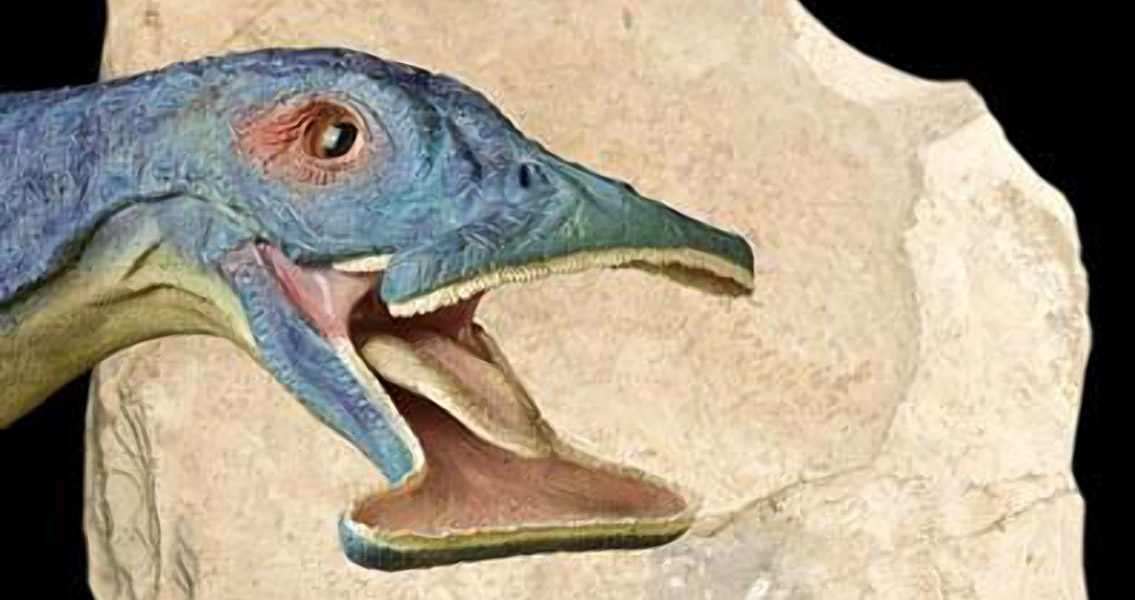
Atopodentatus unicus, a sea-dwelling reptile that was around the size of a crocodile, was originally discovered in 2014. The fossil was nearly intact except for its head, which seemed to indicate that the creature had a beak similar to a modern flamingo. However, new research into A. unicus conducted by Dr. Li Chun from the Chinese Academy of Sciences has revealed the true story of the creature’s curious so-called beak, unveiling evidence gathered from two additional specimens that A. unicus had a spade-like mouth adapted for feeding on plants on the seafloor. The two new A. unicus specimens, also discovered in southwestern China, plainly indicate that the upper and lower jaws of the creature formed a horizontal “hammerhead” shape. The marine reptile’s mouth was lined with peg-like teeth on the edge, followed with more needle-like teeth further within. According to Olivier Rieppel, co-author of the study, from the Field Museum of Natural History; the arrangement is less than ideal for catching and chewing live prey, indicating that instead A. unicus would have used its front teeth to tear algae or other underwater plants free from rocks and then filtered the contents of its mouth by forcing water through its side teeth – much in the same way baleen-whales filter feed today. Based on these findings, A. unicus is the oldest known plant-eating marine reptile. In fact, the next earliest filter-feeding marine animal that ate plants doesn’t show up in the fossil record for an additional eight million years, according to the research team. The bizarre creature with the unique feeding adaptation first appeared during the early Triassic Period, just 10 million years or so after the largest mass extinction in the history of the Earth. A. unicus’ appearance so relatively quickly after this extinction event implies that life not just returned but diversified much more swiftly than currently understood. However, the time after the extinction event around 252 million years in the past is certainly characterized by strange creatures in the sea, such as the 17-foot long reptile known as Dinocephalosaurus – which had a neck fully half the length of its body, according to fossil remains. A. unicus is such an unusual specimen that its position on the reptile family tree is hard to place, according to co-corresponding study author Dr. Nicholas Fraser of National Museums Scotland. The fossil record for the creature is largely complete, Dr. Fraser added, pointing out that this will necessitate that scientists find the fossilized remains of close relatives of A. unicus that have yet to be discovered, in order to determine these evolutionary connections. For now, the researcher said he would classify A. unicus as at least tangentially related to the plesiosaur, a marine reptile that had a similarly long neck but is believed to have been an oceanic apex predator during the era of the dinosaurs. The research study, which was recently published in the journal Science Advances, can be found online here Image courtesy of Institute of Vertebrate Paleontology and Paleoanthropology (IVPP) of the Chinese Academy of Sciences]]>



Australian Archaeology. Dating of the piece of polished axe suggests it was created shortly after the first humans arrived in Australia. No bigger than a thumbnail, the Stone Age axe fragment was found in the remote Kimberley region of Western Australia. Dated to between 45,000 and 49,000 years ago, the axe is at least ten millenia older than previous discoveries of ground-edge axes. “This is the earliest evidence of hafted axes in the world. Nowhere else in the world do you get axes at this date,” said Professor Sue O’Connor, an archaeologist from the Australian National University who worked on the project. Hafted axes are those axes which have a handle attached. “In Japan such axes appear about 35,000 years ago. But in most countries in the world they arrive with agriculture after 10,000 years ago.” O’Connor explained, in a ANU press release. The remarkable discovery points to the innovation of Australia’s earliest human inhabitants, showing they were capable of a greater technological sophistication than is often believed. Professor Peter Hiscock from the University of Sydney was responsible for analysing the fragments unearthed in Western Australia. “Since there are no known axes in Southeast Asia during the Ice Age, this discovery shows us that when humans arrived in Australia they began to experiment with new technologies, inventing ways to exploit the resources they encountered in the new Australian landscape,” Hiscock explained, in a press release from the University of Sydney. Analyses of the fragment have revealed it came from a hafted axe made from basalt; the fine grained rock shaped and polished by grinding it against a softer rock such as sandstone. The axe could have been useful for any number of tasks, from chopping down trees to stripping the bark off wood, even as a tool for shaping wood into spears. The fragment was initially excavated by O’Connor in the 1990s, among a host of other artefacts from Carpenter’s Gap, a large rock shelter known to be one of the first sites occupied by modern humans. In 2014, further study was carried out on the objects, including food scraps, tools and artwork, that had been extracted two decades earlier. It was then that Hiscock noticed the fragment of polished axe. Surprisingly, it seems that the axes developed in the region surrounding Carpenter’s Gap did not migrate with humans through the rest of Australia. “Axes were only made in the tropical north. These differences between northern Australia, where axes were always used, and southern Australia, where they were not, originated around the time of colonisation and persisted until the last few thousand years when axes began to be made in most southern parts of mainland Australia,” Prof. Hiscock explained. The dating of the axe fragment has shed fascinating new light on the development of Stone Age hunter-gatherer societies, and the chronology and geography of the development of certain tools. “Polished stone axes were crucial tools in hunter-gatherer societies and were once the defining characteristic of the Neolithic phase of human life. But when were axes invented? This question has been pursued for decades, since archaeologists discovered that in Australia axes were older than in many other places. Now we have a discovery that appears to answer the question,” said Hiscock. Image courtesy of ANU ]]>
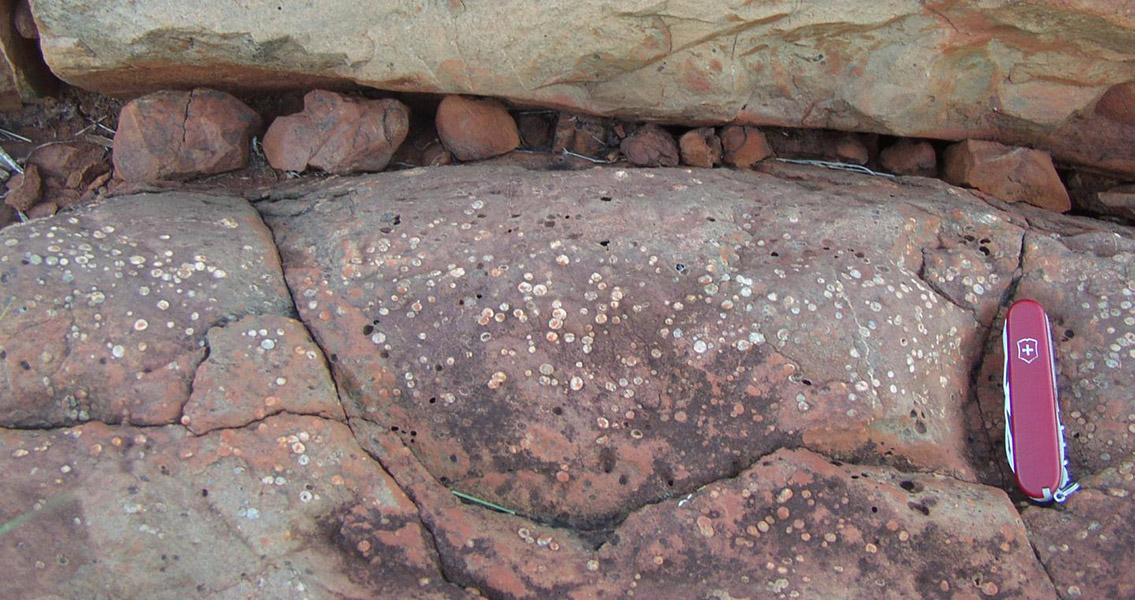
Geosciences. “It’s going to take us a while to digest all the possible consequences.” A lighter atmosphere could have affected the Earth in a number of ways, changing climatic conditions, wind levels, even the boiling points of liquids. Other geological evidence has shown that water was present on earth at this time, so the atmosphere must have contained heat trapping greenhouse gases, such as carbon dioxide and methane. Scientists have used air bubbles before, as a means to measure the elevation of lavas millions of years old – the trapped air providing insights into the height at which the lava solidified. The team behind the latest study, led by Sanjoy Som, a post doctoral student from the University of Washington, flipped this process; taking a site where lava had indisputably formed at sea level and using it to determine the air pressure billions of years ago. “For the longest time, people have been thinking the atmospheric pressure might have been higher back then, because the sun was fainter,” said Som, in a press release from the University of Washington, “Our result is the opposite of what we were expecting.” The key to the researchers’ study is the fact that streams of molten rock quickly cool from the top and bottom. Bubbles trapped at the bottom are therefore smaller than those at the top, the difference in size reflecting the air pressure pressing down on the lava as it cooled. Study co-author Tim Blake from the University of Western Australia discovered the site used in the research: basalt lava exposed by the Beasley River, in Australia. By drilling into the overlying lava flows, the team were able to examine the size of the bubbles. Rough estimates taken at the time suggested the atmosphere 2.7 billion years ago was lighter than expected, and subsequent, thorough x-ray examinations of several different lava flows confirmed that the atmospheric pressure was less than half of what it is today. The next step for the researchers is to search for other rocks that confirm their findings, hopefully allowing them to gain a better understanding of how atmospheric pressure might have changed through time. For more information: www.nature.com Image courtesy of Sanjoy Som/University of Washington]]>
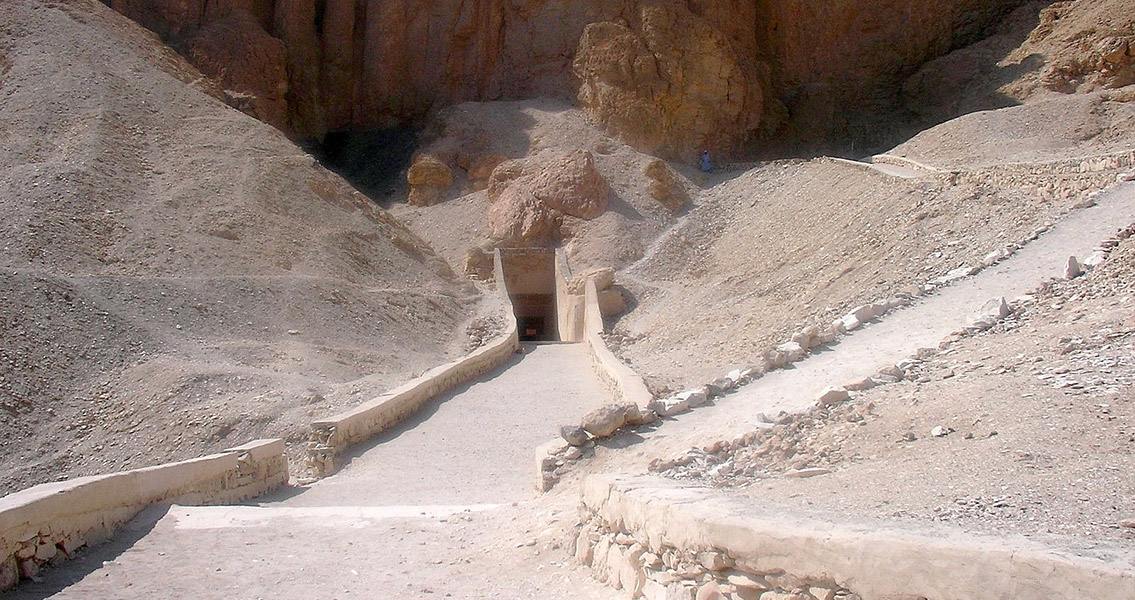
Nature, Austin recounted how she had found the tattoos on the mummy while examining sets of remains for the French Institute of Oriental Archaeology. The Institute researches finds in Deir el-Medina in Egypt, a village that once housed ancient stonecutters and masons that were responsible for excavating tombs in the Valley of the Kings, which is located nearby. Austin first noticed markings on the neck of one set of remains – an armless, headless torso discovered in Deir el-Medina that had died sometime between 1300 BCE and 1070 BCE; first believing the marks were body paint, she soon came to realize that they were in fact permanent tattoos. The scientist was familiar with how infrared imaging had been used to reveal tattoos on other mummies and decided to subject her mummy to the same techniques. As a result, Austin documented more than 30 tattoos on the body, some in areas dyed so dark by the mummification process that they would have otherwise been invisible to the naked eye. After digitally stretching the tattoo images to counter the distortion caused by the mummy’s shrunken, desiccated skin, the images became clear. The sheer number of tattoos the woman had, their location – many in places that would have been impossible to reach herself – and the fact that some tattoos had faded more than others, all seem to indicate that the woman went under the needle routinely throughout her life. Whether she was a member of a priestly class or simply someone who wanted to showcase her unflagging devotion to the gods is of course pure speculation, but the idea that these tattoos were just adornment seems to be highly unlikely. With many of the tattoos having direct religious significance – such as those of cows, which are thought to be associated with Hathor, a major ancient Egyptian deity – it seems all but certain that the woman was quite pious in life. ]]>