

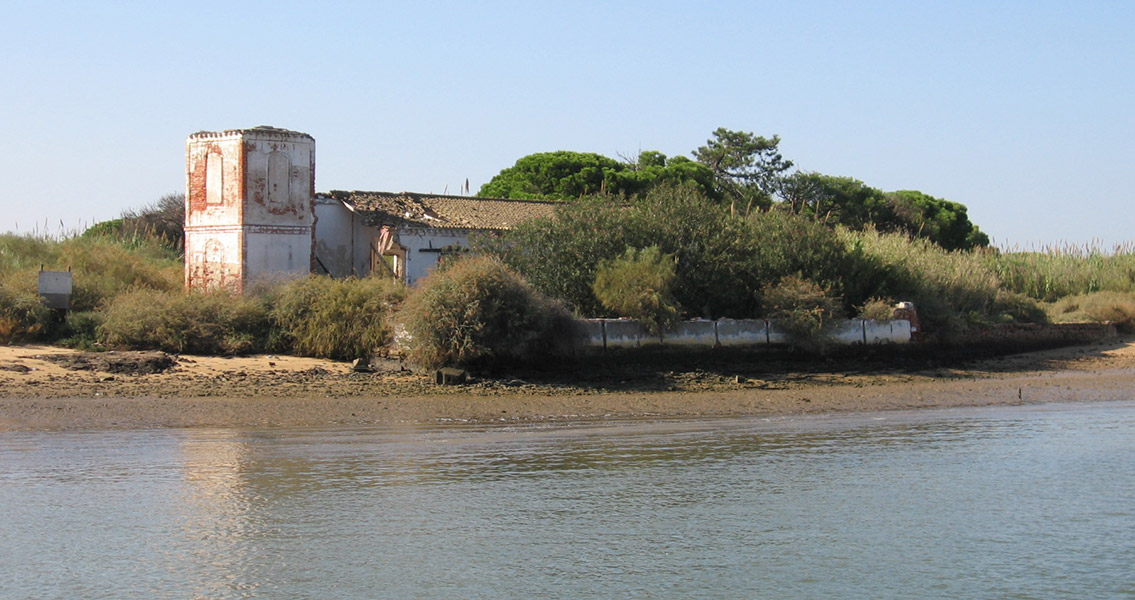
Lepeichnus Giberti. The organism that created the burrows is unknown but believed to have been a type of swimming crustacean. Dr. Zain Belaústegui from the University of Barcelona and the article’s main author explained to Heritage Daily that what makes L. Giberti exceptional is that all stages of the fossil, from its origin to its final phase, have been recovered – a total of 9 separate and consecutive ichnogenetic phases within the fossil. A modern comparison would be if you took a series of pictures of an animal burrowing, but instead of seeing the burrowing process in a series of pictures, the stages were kept as fossils. Ichnofossils are valuable for several reasons; since they are typically preserved in situ, they provide environmental information for the time in which they were formed, they’re a record of an animal’s behavior, and often times they’re the only record of certain (soft-body) organisms which have no fossilization characteristics. The preserved state of the L. Giberti is exceptional in large part because of the sandy silt which filled the burrows after they were abandoned by their organisms and helped preserve even the most delicate details. The sandy silt also helped aid in the collection process. Approximately 90 samples have been collected, and the fact that the samples vary in size, from 1cm to 10cm wide, indicates to researchers that the animal or organism had the same burrowing behavior whether young or old. A bay, likely affected by tides, was present 6 million years ago in the area where the fossils were found. Relatively shallow and protected from storms and waves, it would have been an ideal location for large communities of organisms of this nature to gather. Other organisms, such as anemones, other crustaceans, and possibly cetaceans would have also lived in the area. At this time, scientists know of no other organism, ancient or modern, that digs a burrow with the characteristics of L. Giberti’s. Several similar traits are found in today’s upogebiid (a crustacean) which burrows on the sea floor. It’s possible the burrowing habits of the new organism are an extinct behavior of the upogebiid. The degree of fossilization and preservation of the various evolutionary stages of L. Giberti has experts proposing a new term in the field of Ichnology; ichnogeny. Ichnogeny describes the evolution and origin of a fossil or modern print, burrow or trace, found in both soft and hard substrates. The name of the new fossil – Lepeichnus Giberti – pays tribute to the town of Lepe and the memory of Dr. Jordi Maria de Gibert Atienza, a distinguished leader in Spain’s ichnology research. Image courtesy of Wikimedia Commons user: Daniel Toscano Díaz]]>

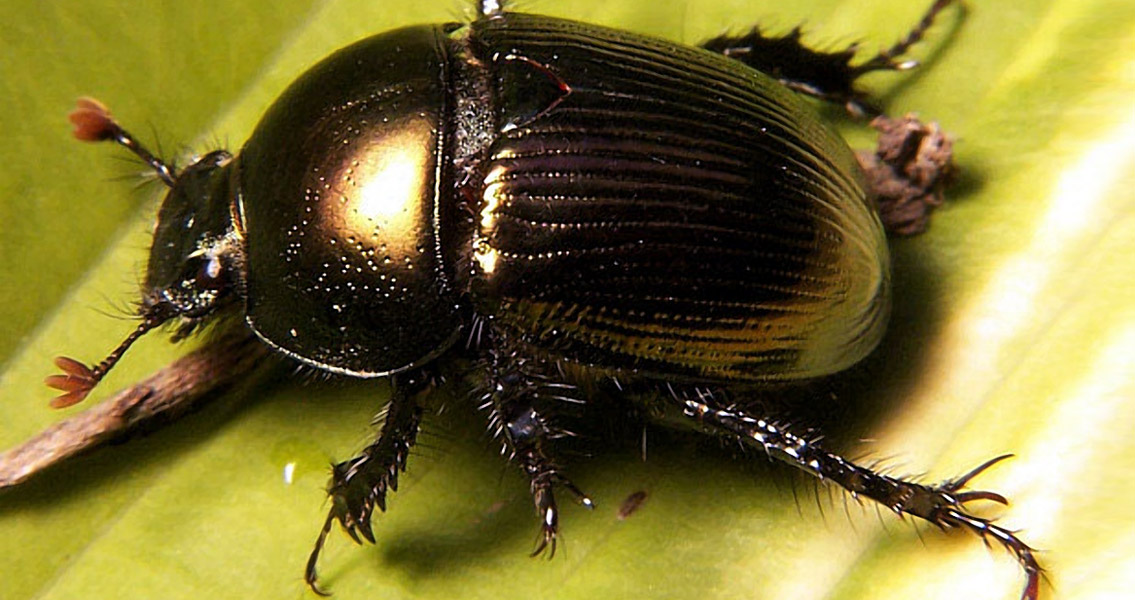
PLOS ONE, co-author Dr. Stephen Cameron with the Queensland University of Technology in Australia explained that fossilized dinosaur feces (70 and 80 million years old) supports the hypothesis the study outlines because it shows signs of tunneling that has been attributed to dung beetle feeding. The study is the first to show how the specialization of one group was related to using dinosaurs, the dominant species for 135 million years, as a resource. Of course, the flip side of this connection is that the mass extinction of dinosaurs during the Cretaceous-Paleogene period would have also impacted the dung beetle. Fortunately for the beetle, the impact of the dinosaur extinction occurred during the beetle diversification and they survived the event. The study concludes that the modern dung beetle is descended from a species which either fed on the dung of dinosaurs and other early mammals, or from a species which had already adapted to eating the dung of the Cretaceous mammals. Although the findings may challenge prior research associating mammals and the origin of dung feeding, the study also shows that the greatest rate of diversification the beetle experienced was during the Paleogene period, which is in line with the timing of major diversification of most mammals. Additional research will be needed to untangle the cause of the latest diversification and provide more detail on the dung beetle’s survival through the Cretaceous-Paleogene mass extinction. This story of flowering plants, beetles, and dinosaurs, demonstrates the relationships and complex interactions between evolving ecosystems, and the possibility of discovering what drives diversification – even for insects like the dung beetle for which very limited fossil records exist. The study was published this week, in the open-access journal PLOS ONE.]]>
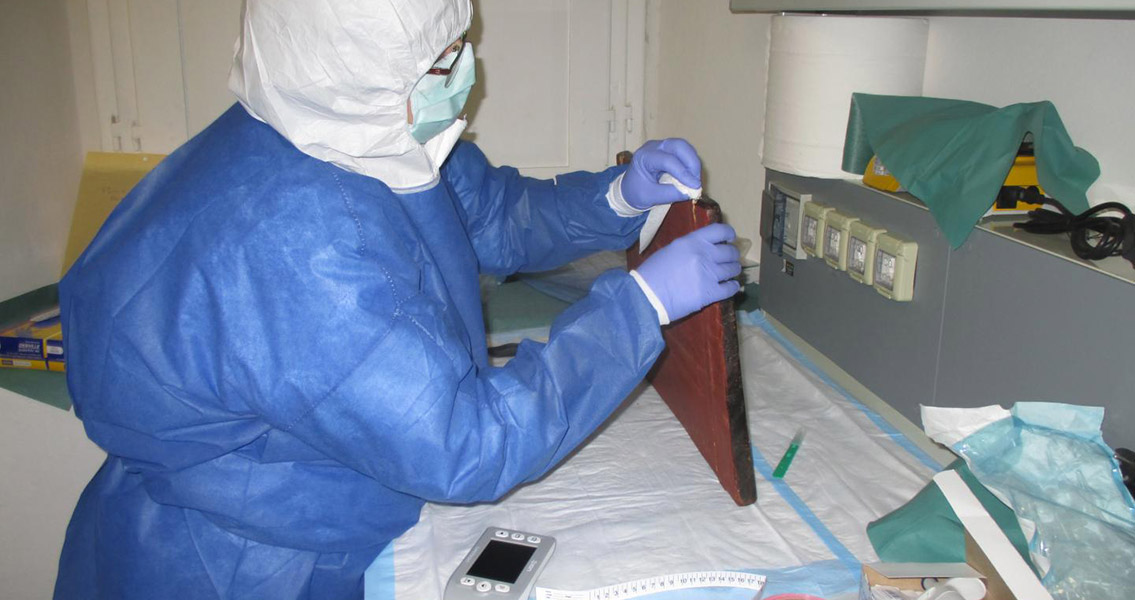
Journal of Human Evolution. The Project’s team comprises anthropologists, art historians, genealogists and microbiologists from a host of leading Universities in Europe and North America, as well as specialists from the J. Craig Venter Institute of California, the institution responsible for mapping the human genome. A comprehensive image of Da Vinci’s life could be produced by the time the study is completed. In particular, analysis of the remains could allow insights into his lifestyle; his state of health, diet, personal habits and even the places he lived and stayed in. Brunetto Chiarelli of the International Institute for Humankind Studies and editor of the Journal of Human Evolution, underlined just how revelatory the team’s research could be. “Matching Leonardo’s DNA to that of his family presents puzzles that are minutely specific to their history and circumstances, but the tools the investigators use are generic and broadly applicable.” Chiarelli said, in a press release from the journal. “We stand to gain not only greater historical knowledge of Leonardo but possibly a reconstruction of his genetic profile, which could provide insights into other individuals with remarkable qualities.” For the art world in general, the techniques being explored and developed by the team could have a revolutionary impact, capable of detecting multi-million dollar forgeries. One of their aims is to see if Da Vinci’s DNA can be extracted from his artworks. For instance, members of the team are in discussion with the Florentine laboratory currently restoring Da Vinci’s ‘Adoration of the Magi’ about the possibility of removing dust from the painting and studying it for signs of Da Vinci’s DNA. If it turns out an artist’s DNA can be extracted from artwork, it would prove a game changer in verifying a piece’s authenticity. The researchers aim to finish their ambitious project by 2019, to coincide with the 500th anniversary of Da Vinci’s death. Recent multi-disciplinary anthropological studies have provided remarkable insights into the lives of Richard III and the Spanish author Cervantes. The new study has the potential to do the same for Leonardo Da Vinci. For more information: The Leonardo Project: Special Issue]]>