
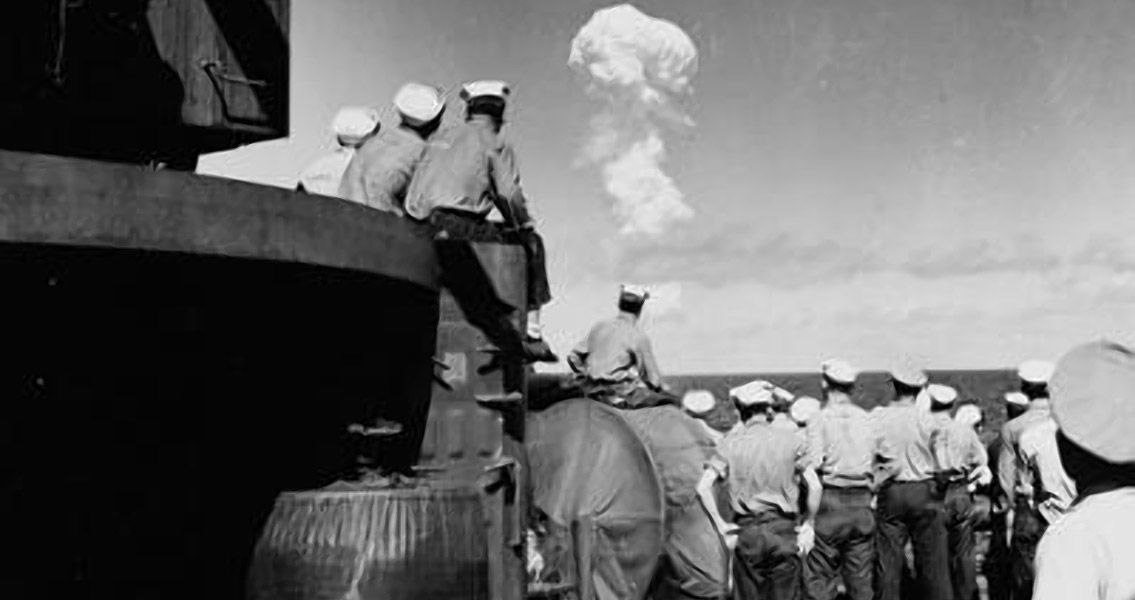
Independence, a US Navy vessel deliberately sacrificed in 1946 at the Bikini Atoll nuclear weapons tests at the very inception of the Cold War. The Independence, which was used by the Navy as a nuclear test platform for five years, eventually met its end when it was purposefully scuttled around 30 miles off the coast of central California. The location, long kept secret to prevent the Soviet Union from gleaning any information that would aid in their own endeavors to develop bigger and more devastating nuclear weapons, was pinpointed in 2015 through a joint effort between aeronautics giant Boeing, and the Offices of National Marine Sanctuaries and Ocean Exploration from the US National Oceanic and Atmospheric Administration (NOAA). NOAA and Boeing used a combination of high-resolution sonar imaging and an unmanned submersible known as “Echo Ranger” to locate and safely survey the still-irradiated wreck of the Independence. The resultant case study, plus newly declassified files on the Navy ship straight from the US National Archives, concerning its time as a nuclear weapons testbed, have been published in the Journal of Maritime Archaeology (JNA). In a press release from journal publisher Springer, one of JMA’s editors-in-chief, Annalies Corbin, remarked that the journal was honored to be presenting such historically significant information on Cold War archaeological efforts. Corbin hopes the newly-published material will launch new conversations on the management of maritime underwater cultural heritage sites such as the final resting place of the USS Independence. The lead scientist of the Independence mission and NOAA’s Director of Maritime Heritage for its Office of National Marine Sanctuaries, James Delgado, was also quoted by the press release, stating that merging documentary evidence with a study of the physical remains of a maritime archaeological site is a goal that can and should be pursued. Delgado not only co-authored the main report appearing in the newest issue of JNA, but also penned an article on the many different vessels that survived the initial weapons test at Bikini Atoll but were not sunk there. Corbin, who edited the issue, also ensured that additional essays and articles from experts in the field of marine archaeology and Cold War archaeology were included. Other authors include Robert E. Neyland, head of the Underwater Archaeology Branch of the US Navy, and Todd Hanseon, the Los Alamos National Laboratory’s Chief Historian and Archaeologist. The infamous tests at Bikini Atoll, The Bikini tests, conceived and undertaken just one year after dropping not one but two nuclear weapons on Japan, at Hiroshima and Nagasaki, to end the Second World War, was one of the most visible and noteworthy events to signal a fundamental shift in postwar history. In one of the newly-declassified reports dating from the era, it was suggested that the awesome power of nuclear weaponry represented a new era where the utter destruction of man had become possible, scouring the Earth of nothing but vestigial traces of humanity. The newest issue of JMA is available at www.springer.com Image courtesy of Naval History and Heritage Command]]>
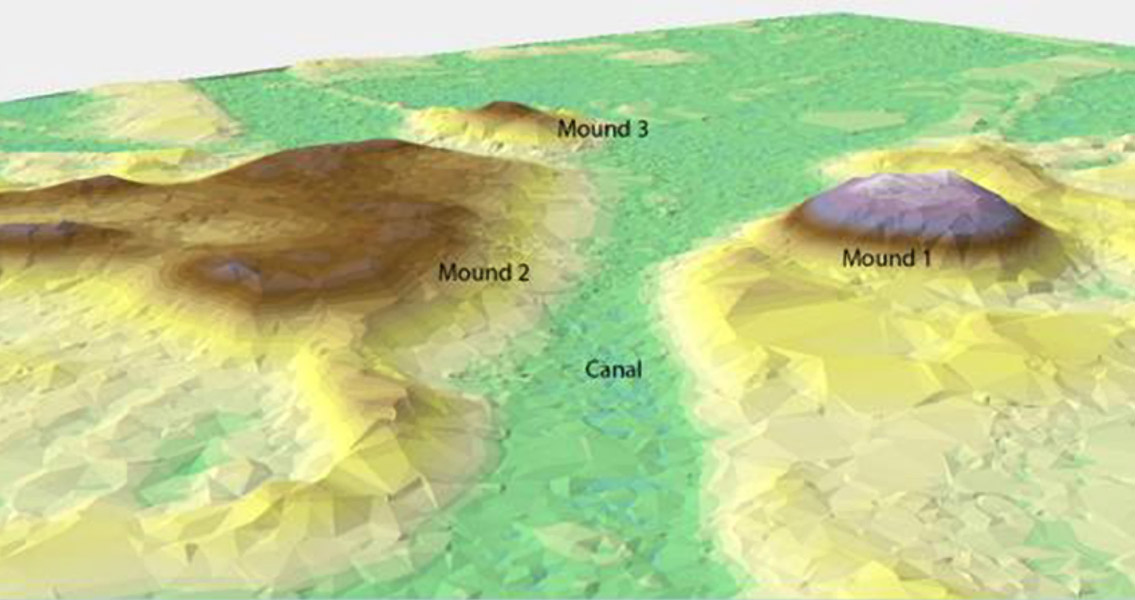
PLOS ONE. A pre-Hispanic polity with a population as high as 50,000 at its peak, the Calusa Kingdom controlled much of what is now South Florida prior to the arrival of Christopher Columbus. Revealing the sophistication of pre-Columbian societies in the Americas, the Calusa were building their own water bound settlements centuries before such practices were adopted in the form of artificial islands in China and Dubai. These islands were created from shells piled into massive heaps, sometimes as high as nine metres above sea level. One of the largest and most well known of these sea borne settlements is Mound Key, situated in what is now Estero Bay, close to Fort Myers Beach in Florida. When Columbus reached the New World in the fifteenth century, Mound Key was serving as the capital of the Calusa kingdom. Thompson’s team used a combination of systematic coring of the shell deposits, excavations, and intensive radiocarbon dating to study the development of the anthropogenic island. Their findings have afforded unprecedented insight into the island’s creation, inhabitation and development. “This study shows peoples’ adaptation to the coastal waters of Florida, that they were able to do it in such a way that supported a large population,” said Thompson, in an interview with the University of Georgia. “The Calusa were an incredibly complex group of fisher-gatherer-hunters who had an ability to engineer landscapes. Basically, they were terraforming.” Heaps of shells, bones and other discarded objects, known as midden, were used in the construction of the island. One of the most remarkable discoveries by Thomspon’s team is that this midden wasn’t in fact uniform from top to bottom. One would assume that the midden would be piled up with the oldest material buried at the base, and the newest closest to the top, but radiocarbon dating proved this was not the case. In many instances older shells and charcoal fragments were found above younger ones. Thompson and his team believe this shows that the midden was being reworked and reshaped, moved around to create new landforms for a variety of different purposes. “You’re talking hundreds of millions of shells. … Once they’ve amassed a significant amount of deposits, then they rework them. They reshape them.” The authors hypothesise in the study that this unexpected distribution of the midden can be explained by the island’s abandonment and then reoccupation. During periods of cooler temperatures, when fish were scarce, it seems the Calusa abandoned the island, only returning when the climate warmed and fishing became productive once again. This second period of occupation saw a host of large scale labour projects initiated, giving the island the shape it has today. A major conclusion from Thompson et al.’s study is that Calusa culture was far more complicated than traditionally believed, and in need of further study and reassessment. In particular, the team have gained insight into just how creative this society which the Spanish characterised as ‘war like’ really was. The Calusa had sophisticated methods to deal with environmental changes and fishing surpluses, to sustain their civilisation. “Our research there over more than 25 years has provided an understanding of how the Calusa responded to environmental changes such as sea-level rises.” Thompson said in the interview. “They lived on top of high midden-mounds, engineered canals and water storage facilities, and traded widely while developing a complex and artistic society. It takes a team of scientists with different skills working together to discover how all this worked.” The team have only scratched the surface of this fascinating culture, and are returning to the site in May to undertake even more research at Mound Key. “There’s a whole story that goes along with this site. It’s a laboratory that allows us to explore many different things, some of which are important to the present and the future and some of which are important to understanding the past.” said Thompson. For more information: www.plos.org Image courtesy of Victor Thompson/University of Georgia]]>


Sarmientosaurus Musacchioi. Based on a partial neck fossil and a complete skull discovered in Patagonia, it’s been determined to be a new Titanosaurian dinosaur – a kind of sauropod which ranged in size from that of a cow to the size of a large sperm whale. They were plant-eaters which had long tails and necks and might have been the most common of the large herbivores that roamed the landmasses of the Southern Hemisphere in the Cretaceous period. Despite their numbers, the skulls of these dinosaurs are exceedingly rare and critical to determining specific facts related to their biology. Only four semi-complete complete skulls out of the more than 60 known Titanosaurs have been found. Researchers associated with the latest discovery utilized computerized (CT) imaging to closely examine the anatomically primitive, well-preserved neck and skull fossils from Sarmientosaurus. Researchers discovered the Sarmientosaurus brain was small compared to its huge body, a typical trait of sauropods. But they also discovered evidence of higher sensory capabilities than almost all of the other sauropods. This suggests that Sarmientosaurus had bigger eyeballs and better vision, in addition to an inner ear which might have been better tuned for hearing airborne sounds at a low-frequency compared to other Titanosaurs. Additionally, the organ in the inner ear which affects balance suggests this dinosaur might have routinely held its head in such a manner that the snout faced downward. “Discoveries like Sarmientosaurus happen once in a lifetime,” study leader Rubén Martínez told PLOS One, “That’s why we studied the fossils so thoroughly, to learn as much about this amazing animal as we could.” There have been numerous dinosaur discoveries in Argentinian Patagonia, a few of the most outstanding have been: * Giganotosaurus Carolinii, discovered in 1993 and considered to be the world’s largest carnivore (13.5 m in length, 4.6 m tall at its hip, and 9,500 kg in weight. * Argentinosaurus Huinculensisis, the biggest herbivore found to date. (larger even than Carolinii). * Andesaurus Delgadoi was found in 1987, under several meters of water in Lake Exequiel Ramos Mejía. The discovery happened when the lake fell to its lowest recorded level due to a drought. Delgadoi was named after its discoverer, Alejandro Delgado. * Rebbachisaurus Tessonei is the most complete dinosaur specimen discovered in South America, and was found in 1988. Also a sauropod, this herbivorous dinosaur weighed around 10,000 kilos and measured 17 meters long. * Gasparinisaura Cincosaltensis, a herbivorous dinosaur which stands out for its small size, 1.50 meters, as well as it’s supposed graceful quick movement. Sarmientosaurus Musacchioi was named for the town of Sarmiento which is located in Chubut Province, close to the discovery site. The study has been published in PLOS ONE, an open-access scientific journal. Rubén Martínez, with UNPSJB, is the author of the study. Image courtesy of Mark A. Klingler, Carnegie Museum of Natural History and WitmerLab, Ohio University]]>
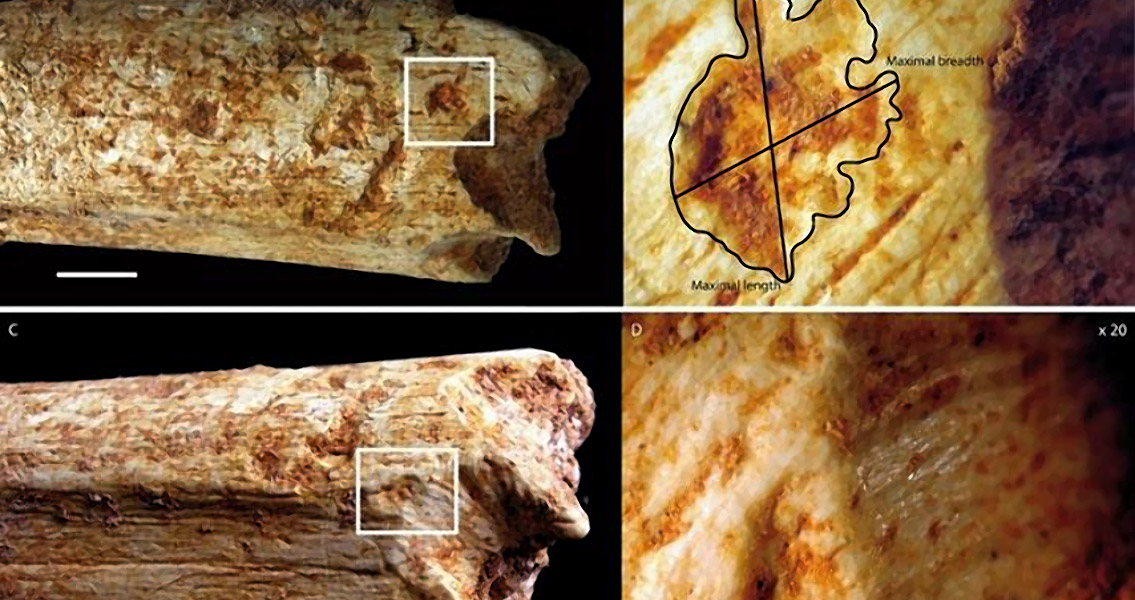
PLOS ONE Image courtesy of C. Daujeard PLOS ONE e0152284]]>


PLOS ONE, offers fresh insight into the fate of the Neanderthals, suggesting their adaptable subsistence strategies actually put them at a disadvantage compared to humans during the Last Glacial Maximum. The Neanderthal lineage existed successfully throughout Europe and Asia, surviving the harsh and shifting environments of glacial/interglacial cycles from the Pleistocene onward. However, as the climate commenced the deterioration which would result in the Last Glacial Maximum, just after the first humans had entered Eurasia, the Neanderthals disappeared. What happened to them is unclear, but the outcome is not, Western Eurasia was subsequently populated by just one homo species: modern humans. Led by Sireen El Zaatari from the Paleoanthropology department at the Eberhard Karls Universität Tübingen, Germany, the authors of the study analysed the fossilized molars of 52 Neanderthals and Upper Paleolithic Homo sapiens (modern humans). Their aim was to glean insights into the possible influence of dietary strategy, in particular by analysing the degree of microwear on the teeth. This information could be used to draw conclusions about diet type, which was then linked to prevalent climatic conditions. Surprisingly, the team found that dental microwear among Neanderthals varied significantly depending on ecological conditions. “Analyses of the data show that within the Neandertal lineage, dental microwear signatures are significantly associated with paleoecological conditions.” they wrote in the new study, published this week. Neanderthals that lived in wooded or mixed habitats possessed more complicated dental microwear than those from open habitats. The conclusion to be drawn from this is that Neanderthals adapted their diets to the resources available as climates and habitats changed. In cold, barren, open steppe environments, the Neanderthals had a diet made up mostly of meat. In forested landscapes they supplemented their diet with more plants, seeds and nuts. For modern humans, the situation was completely different. “For the Upper Paleolithic humans, unlike the case for the Neandertals, no significant correlation is detected through the paleoecological ranks.” Crucially, the modern humans’ adhered to the same dietary strategy despite environmental changes, retaining a large proportion of plant based foods. This could have fostered technical innovations which gave humans a distinct advantage. “To be able to do this, they may have developed tools to extract dietary resources from their environment” said El Zaatari, in a press release. Neanderthals had an opportunistic approach which allowed them to flourish throughout much of their history, eating whatever was available in the habitat they called home. Modern humans however, strove to access the same food resources despite the changing conditions, eventually pushing them to develop tools. According to the study, as humans’ technical complexity increased their diet started to change dramatically, as they were able to exploit their landscape much more effectively. When Neanderthals and modern humans came into contact and started to compete for resources, this technical superiority would have undoubtedly given the humans a significant advantage. El Zaatari and colleagues’ study offers a new take on the mystery surrounding the demise of the Neanderthals, suggesting their opportunism could have ultimately been a disadvantage. For more information: www.plos.org Image courtesy of Sireen El Zaatari PLOS ONE e0153277]]>