

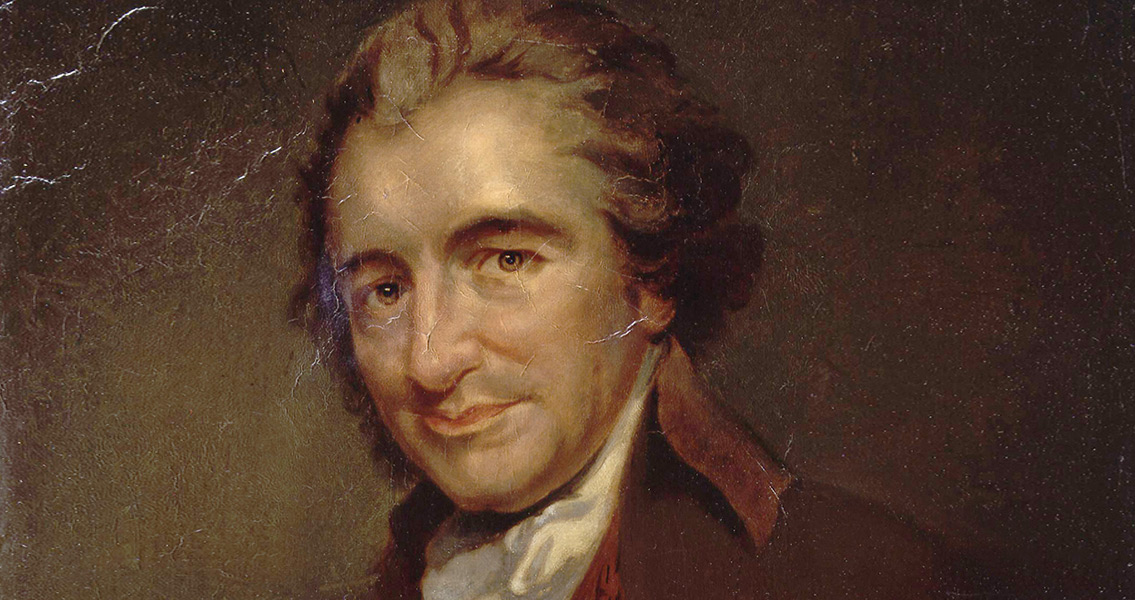
Common Sense was first published as a pamphlet in 1776. The hugely influential seventy-seven page work was one of the first to argue in clear, direct fashion that the future of the American colonies should be one independent from Great Britain. Along with general discussions on the nature of politics and society, Paine’s pamphlet also engages with what he perceived as fundamental flaws in the British political system and the defining injustice of monarchy. All of these factors are combined to form a justification for US independence. Paine was born in Thetford, England, in 1737. He finished his formal education at the age of thirteen and started to work for his father. Throughout his teens and twenties he took in a variety of jobs, ranging from corset maker to school teacher to tax collector. At the same time he used his spare time to pursue the education he hadn’t completed in his youth. He lost the tax collecting job in 1772, after he’d published an article arguing that an increase in tax collectors pay would lead to a reduction in corruption. In 1774, shortly before the American Revolution started, Paine left England for North America. He quickly became involved in American political life, editing the Pennsylvania Magazine and writing a host of articles. At this point relations between the North American colonists and the British were in a precarious state. Several protests against excessive British taxation of the colonies, most notably the Boston Tea Party of December 1773, had already taken place. As more British troops were sent to the colonies, a growing campaign formed among the colonists to break Britain’s interfering presence. Crucially, at this point most colonists viewed themselves as still holding some connection to Britain, and as such campaigned to break the aggressive British taxation rather than win complete independence. Commons Sense played a key role in changing the focus of the campaigns by making a clear argument for independence. At a time when the stirrings of the Revolutionary War had already started with a battle at Lexington and Concord in 1775, Commons Sense convinced many colonists that the only solution was to completely cut all connections to the British government. Pivotal was Paine’s highlighting of the fact that many of the colonists were not just from England, but had actually fled to North America from across Europe in search of liberty. “This new world hath been the asylum for the persecuted lovers of civil and religious liberty from every part of Europe. Hither they have fled, not from the tender embraces of the mother, but from the cruelty of the monster.” By framing the history of migration to the colonies as one from persecution to liberty, Common Sense provided a political justification to the campaign for freedom, and established a clear distinction between the colonists looking for liberty and the conservative politics of the Old World. At the same time, painting Britain as a monster ruled by a tyrannical monarchy and dominated by inequality made explicit the sense of a fundamental divide between the values of the colonists and their rulers across the Atlantic. The pamphlet also argues that when America won its freedom from Britain, its people would stop being rebels and instead become respected internationally. This in turn would allow the new country to make important alliances to further strengthen its position and gain support in its campaign for liberty and freedom. Paine’s Common Sense is a crucial work in understanding American history. Undoubtedly the movement towards the Revolutionary War was already well underway before he had even reached North America. However, the seventy-seven page pamphlet is vital for helping to develop an understanding of the ideological arguments used in the build up to the Declaration of Independence.

Common Sense
by Thomas Paine
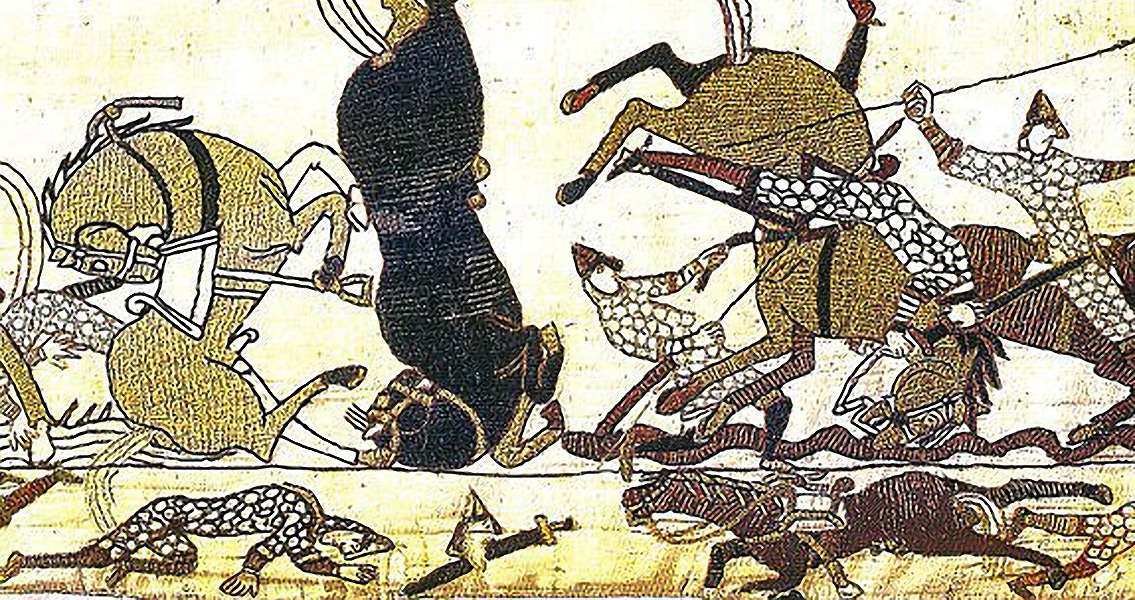
Geography providing the basis of much our knowledge. The Roman Conquest, starting from 43 CE, led to a significant increase in diversity. Traders from across the Roman Empire were drawn to the Roman colonies in England, and soldiers from as far away as Africa were deployed there. Following the Roman withdrawal many of these people left Britain, but there is little doubt that the years of Roman occupation led to a diversification of the inhabitants of the British Isles. After the Romans abandoned their colonies in Britain, several centuries of colonisation by Germanic Tribes followed. These groups, the Angles, Jutes and Saxons, settled in the south of England, and slowly became the ‘English’. This was followed by Viking influences, starting from the eighth century. Initially raiders who attacked and pillaged Anglo-Saxon communities, Norse armies began to settle in the north of England from the ninth century. Again, the Vikings ultimately left the British Isles, but they undoubtedly left a mark on the population. The final major invasion of the British Isles in the early medieval period came in 1066, with the Norman Conquest. The story of William the Conqueror is well known, but it is important to acknowledge the long term impact the Normans had on English culture. French influence permanently altered the largely Germanic language, and can still be heard in modern English. Norman traditions also filtered through into British politics and law, with traces that can still be seen to this day. The Norman, Viking and Roman immigration to Britain was largely facilitated though invasion and military expansion. In the centuries since, immigration has remained a central part of British history, one far too complex to discuss here. As politicians debate ideas of immigration and British identity, it is important to remember just intertwined foreign influence is with the country’s past.]]>

www.sciencedirect.com Image courtesy of Wikimedia Commons user: Nachosan]]>

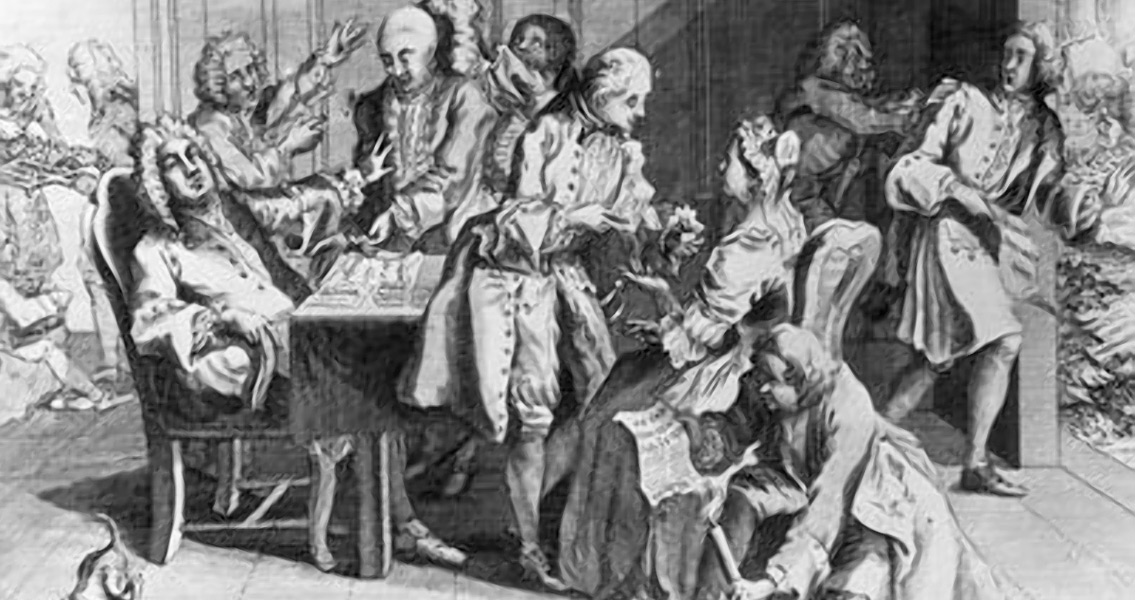
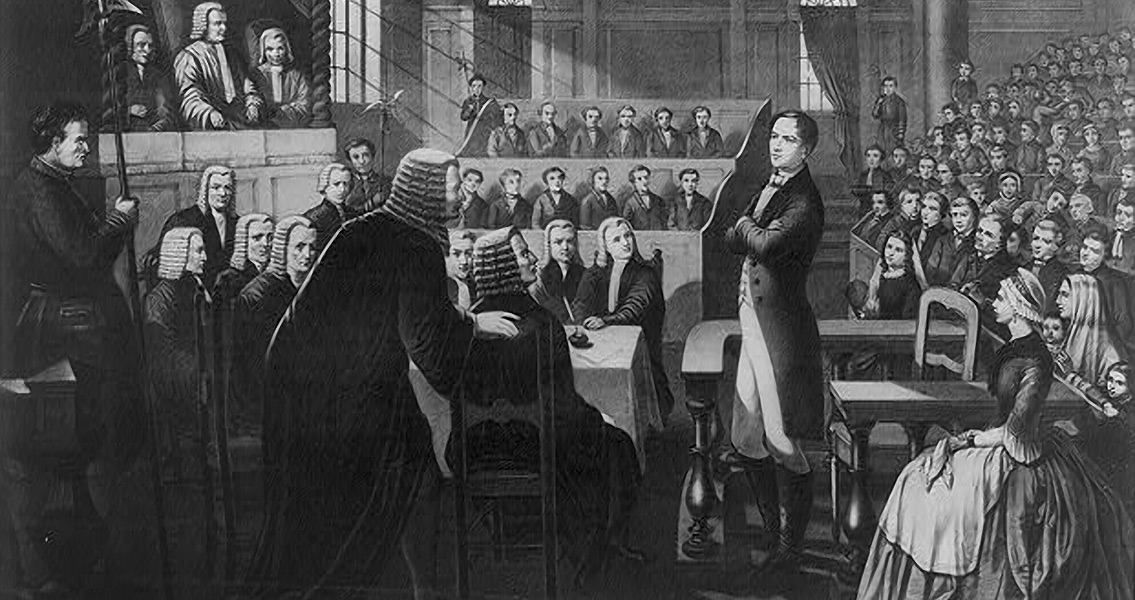
Rebecca was apparently stopped and boarded by a crew of Spanish coast guards led by Captain Juan de Leon Fandino. The coast guards pillaged the ship, attacked the crew, and ultimately set it adrift. Most shockingly, Jenkins claimed that the Spanish crew had tied him up and cut off his ear. At the time tensions were high between Britain and Spain as they competed for influence and control over the New World. Britain sought to expand its trade in the Americas, and its sailors carried out illicit trade in Spanish territories. Both Spanish and British crews frequently launched raids on the other’s ships, making trade in the Caribbean increasingly expensive and risky. As well as competing over the high seas however, Britain and Spain also found themselves in dispute over claims to land on the North American continent. In the preceding century the two countries had found themselves at war with each other on a number of occasions, as they competed to assert their imperial dominance. Jenkins survived the ordeal and set sail for England with the severed, pickled ear. News of the attack enraged the British public, and Jenkins was supposedly called before the House of Commons (with the severed ear) in 1738, to testify about his ordeal. When asked how he had responded to the assault, Jenkins famously claimed “I commended my soul to God and my cause to my country.” Jenkins’ ear became a symbol for the outrage the British public increasingly felt towards what it perceived as Spanish belligerence on the high seas. Holding Spain accountable became a matter of national pride, and the demand for war grew. Just as significantly, British Prime Minister Sir. Robert Walpole found himself increasingly under pressure from his opposition in Parliament, who used the actions of Spanish ships to paint a picture of a weak, powerless British government. In October 1739, the war started with a series of skirmishes between British and Spanish forces in the Caribbean. Ultimately, it was something of a stalemate, with neither side making significant gains. The real importance of the War of Jenkins’ Ear can be seen with hindsight, for the events it came to foreshadow. French support of Spain ultimately saw the conflict merge into the War of Austrian Succession, the eight year fight over the fate of the Hapsburg Empire following the death of the Holy Roman Emperor, Charles VI. France sought to cripple Austria, as a means to secure its position as the dominant power in mainland Europe. Britain wanted to prevent France becoming too powerful, as a means to secure its own economic well being, and thus came to the aid of Austria. Spain’s alliance with France means that the War of Jenkins’ Ear can be seen as part of a brewing conflict between groups of European powers over influence in both the Old World and the New. The war also symbolised a drastic change in the causes of conflict, at least for Britain. In 1909, Harold W. V. Temperley, a British historian, argued that the War of Jenkins’ Ear had been the first war Britain had fought in “which the trade interest absolutely predominated, in which the war was waged solely for balance of trade rather than for balance of power”. Starting a war over one man’s severed ear might seem feudalistic, if not fantastical, but in reality it symbolised the very modern concerns of securing access to trade and resources. Hysteria surrounding Jenkins’ Ear gave the war its name, but in reality the conflict was a manifestation of a series of defining themes from this period of history. ]]>