Categories
Breaking News

High Energy X-Ray of Little Dinosaur Produces Big Results

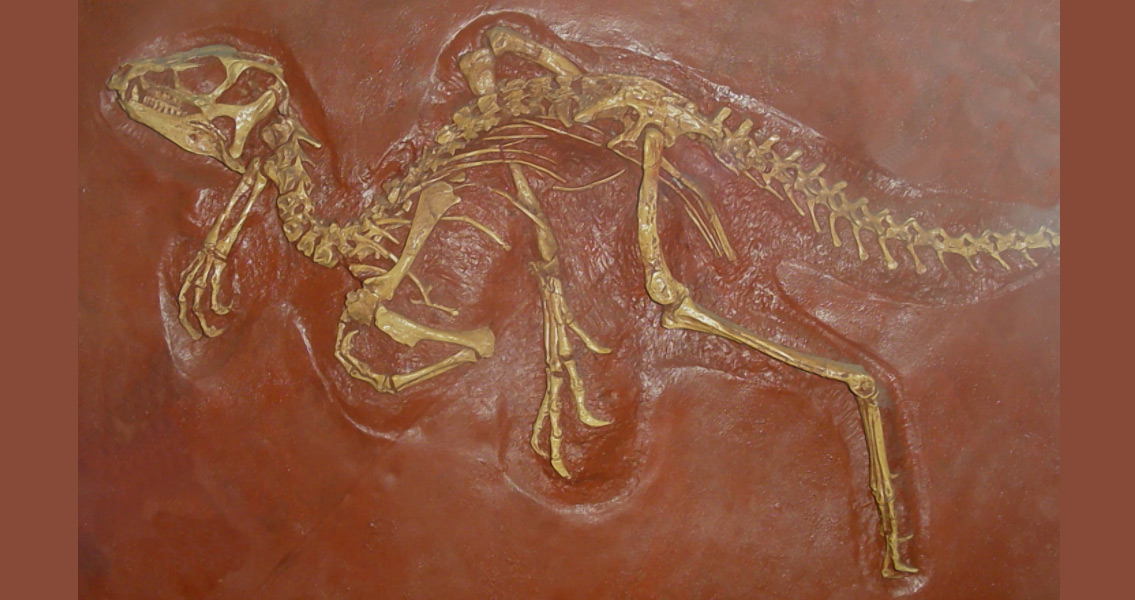
Heterodontosaurus tucki, a small herbivorous dinosaur that roamed Earth 200 million years ago, paid a visit recently to the European Synchrotron Radiation Facility (ESRF), or at least its fossilized skeleton did. The purpose was to study the dinosaur’s anatomy, through the collaborative efforts of scientists from the Evolutionary Studies Institute at the University of the Witwatersrand, South Africa, and paleontologists at ESRF. Synchrotron-generated light produces X-rays that are brighter than hospital X-rays by a factor of 100 billion. Simply put, the x-rays are produced at the ESRF by high energy electrons that sprint around a circular tunnel (a storage ring) that measures 844 meters around. ESRF has been designing these non-invasive techniques used specifically for paleontological studies since 2000, using their own team of paleontology experts and several beamlines dedicated solely to X-ray imaging. These beamlines provide the unique combination of high brilliance, high-energy, and the wider X-ray beams which are necessary to scan large dinosaur fossils. The beam’s high coherence is a key factor for this research because fossilized bones and the rock which typically surrounds them have almost identical densities, with ESRF’s high level of coherence there is a distinct contrast between the two materials. This is critical for “virtually” excavating a fossil. The dinosaur specimen was discovered in the Eastern Cape province of South Africa. Because the small skeleton was embedded in hard rock, any attempt to extract the bones would have caused irreparable damage, so to study Heterodontosaurus’s anatomy, the X-rays provided by the ESRF were used to reconstruct the skeleton, non-invasively and in incredible detail. Heterodontosaurus was a plant eating animal, with big canines in the front of the jaw and grinding teeth in the back. In order to understand how the dinosaur moved, ate and breathed, the scientists scanned the specimen over a five-day period, and then examined the X-rays created by the ESRF. What they got was a three dimensional reconstruction of the skull from which they were able to determine that the specimen was most likely a juvenile (based on the weak bond of the skull bones), and gained insight into how it held its head, based on the reconstructed balance organs, and how the dinosaur interacted with his environment – all examples of data that a two dimensional image wouldn’t have revealed. The dinosaur skeleton was discovered within a stream bed, on a farm in the Eastern Cape province. With assistance from the Albany Museum in Grahamstown and Rhodes University Geology Department, the fossil was excavated and enough rock was painstakingly removed from the bones to be able to identify the specimen. Any additional preparation work, however, was close to impossible considering the size and fragility of the skeleton and how hard the rocks around it were, meaning the scientists couldn’t fully study the skeleton’s anatomy. Using synchrotron technology scientists are able to reconstruct skeletons with amazing detail, and no damage. ]]>
Categories
Breaking News

Dinosaur Extinction Tied to Prehistoric Oil Spill

Scientific Reports. ]]>

Categories
Breaking News

Useful or Not, T. Rex-Like Limbs May Have Evolved Numerous Times

T. rex and G. shinyae had such disproportionate forearms remains a mystery. The function of such seemingly useless forelimbs has perplexed experts and amateurs alike. An initial theory was that T. rex used its arms to hold a mate, others have suggested the arms were used to hold prey in place, (an earlier study hypothesized the arms were capable of maneuvering more than 400 pounds) or to help itself stand up – assuming the dinosaur ever sat. The current theory is that these short forelimbs were, in actuality, totally useless. Researchers are hopeful that learning how these shortened forelimbs evolved may help solve the puzzle. The study has been published in the journal PLOS ONE. ]]>

Categories
Breaking News

With the Dinosaurs Gone the Speed of Human Evolution Tripled

Phys Org as saying, “Our findings refute those of other studies which overlooked the fossils of placental mammals present around the last mass extinction. Using rigorous methods, we’ve successfully tracked the evolution of early placental mammals and reconstructed how it changed over time. While the rate differed between species, we see a clear and massive spike in the rates of evolution straight after the dinosaurs become extinct, suggesting our ancestors greatly benefitted from the demise of the dinosaurs. The huge impact of the dinosaur extinction on the evolution of our ancestors really shows how important this event was in shaping the modern world.” The study was funded by the Natural Environment Research Council and published in Proceedings of the Royal Society. ]]>

Categories
Breaking News

Decade Old Discovery Leads to New Dinosaur Species

Spiclypeus shipporum. This discovery brings the total known dinosaur species found in the Judith River Formation in Montana to nine. This new dinosaur was identified by bones that had been preserved in a silty slope which had once been part of an ancient floodplain, including the skull, backbone, hips and part of the legs from a single animal. What makes Spiclypeus shipporum unique among horned dinosaurs is the manner in which the bones over its eyes were oriented sideways out from the skull, and the unusual way bony spikes emanated from the edge of the frill, with some projected outward as others curled forward. “This is a spectacular new addition to the family of horned dinosaurs that roamed western North America between 85 and 66 million years ago,” Jordan Mallon, the author of the study, explained in a press release from the museum. “It provides new evidence of dinosaur diversity during the Late Cretaceous period from an area that is likely to yield even more discoveries.” After the first bone fragments were found simply lying on the ground, a team from the museum spent another two years excavating and recovering the remaining fossils. An examination of the bones suggests a life of pain for the dinosaur, with the upper section of the arm bone showing obvious signs of bone infection and arthritis. Despite this condition, further analysis involving the growth rings found inside of the bones indicates the dinosaur lived long enough to reach maturity, and was around 10 years old at the time of death. Ceratopsids were megaherbivores which arose within the Late Cretaceous period and quickly diversified in North America and Asia, becoming one of the most expansive dinosaur groups at the time. Their horned craniums and ornamental frills make them easy to recognize. The study, which was published in PLOS ONE, notes that none of the nine species found at the Judith River Formation has been unearthed in states lying to the south of Montana, which suggests the dinosaur fauna found in western North America 76 million years ago were highly localized. Some of Mallon’s earlier research shows that communities of herbivores that are considered as being species-rich may have been possible because of dietary specializations, a phenomenon referred to as niche partitioning. Recognized as historically important, the Judith River Formation (included within the Judith River Group) is a geologic, fossil-bearing formation located in Montana. It dates back to the Cretaceous period, 80 to 75 million years ago, and corresponds to the “Judithian” age of land vertebrates. The dinosaur’s name, Spiclypeus, is derived from the Latin word which means “spiked shield”, and shipporum is to honor the Shipp family. For more information, the full article is available here Image courtesy of Mike Skrepnick (c) Mike Skrepnick]]>

Categories
Breaking News

Dinosaurs Were an Important Resource for Dung Beetles

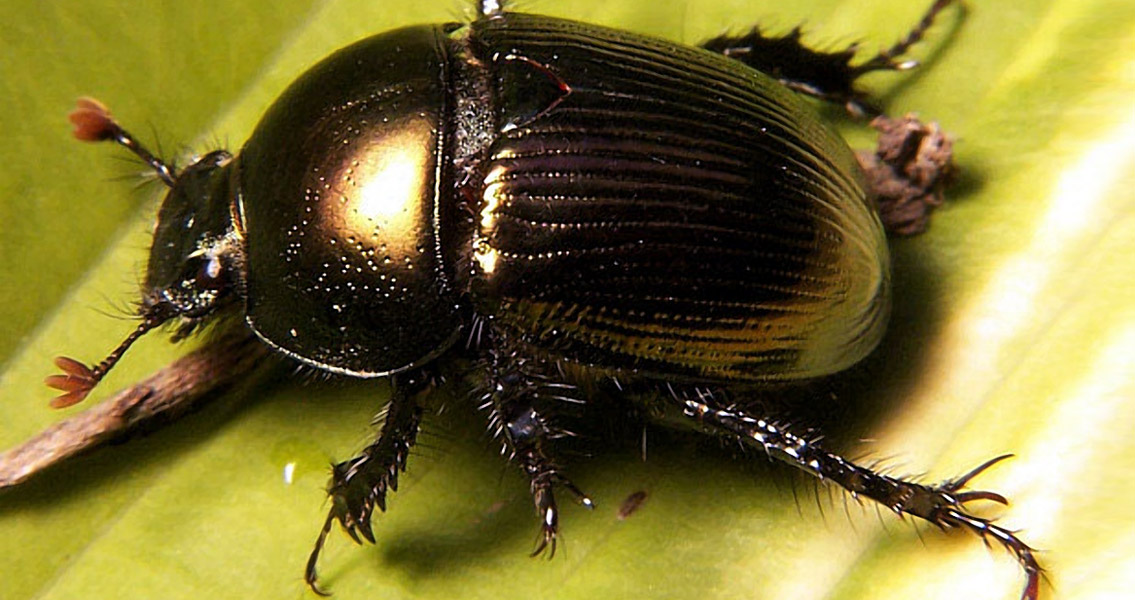
PLOS ONE, co-author Dr. Stephen Cameron with the Queensland University of Technology in Australia explained that fossilized dinosaur feces (70 and 80 million years old) supports the hypothesis the study outlines because it shows signs of tunneling that has been attributed to dung beetle feeding. The study is the first to show how the specialization of one group was related to using dinosaurs, the dominant species for 135 million years, as a resource. Of course, the flip side of this connection is that the mass extinction of dinosaurs during the Cretaceous-Paleogene period would have also impacted the dung beetle. Fortunately for the beetle, the impact of the dinosaur extinction occurred during the beetle diversification and they survived the event. The study concludes that the modern dung beetle is descended from a species which either fed on the dung of dinosaurs and other early mammals, or from a species which had already adapted to eating the dung of the Cretaceous mammals. Although the findings may challenge prior research associating mammals and the origin of dung feeding, the study also shows that the greatest rate of diversification the beetle experienced was during the Paleogene period, which is in line with the timing of major diversification of most mammals. Additional research will be needed to untangle the cause of the latest diversification and provide more detail on the dung beetle’s survival through the Cretaceous-Paleogene mass extinction. This story of flowering plants, beetles, and dinosaurs, demonstrates the relationships and complex interactions between evolving ecosystems, and the possibility of discovering what drives diversification – even for insects like the dung beetle for which very limited fossil records exist. The study was published this week, in the open-access journal PLOS ONE.]]>

Categories
Breaking News

New Titanosaurian Dinosaur Discovered in Patagonia

Sarmientosaurus Musacchioi. Based on a partial neck fossil and a complete skull discovered in Patagonia, it’s been determined to be a new Titanosaurian dinosaur – a kind of sauropod which ranged in size from that of a cow to the size of a large sperm whale. They were plant-eaters which had long tails and necks and might have been the most common of the large herbivores that roamed the landmasses of the Southern Hemisphere in the Cretaceous period. Despite their numbers, the skulls of these dinosaurs are exceedingly rare and critical to determining specific facts related to their biology. Only four semi-complete complete skulls out of the more than 60 known Titanosaurs have been found. Researchers associated with the latest discovery utilized computerized (CT) imaging to closely examine the anatomically primitive, well-preserved neck and skull fossils from Sarmientosaurus. Researchers discovered the Sarmientosaurus brain was small compared to its huge body, a typical trait of sauropods. But they also discovered evidence of higher sensory capabilities than almost all of the other sauropods. This suggests that Sarmientosaurus had bigger eyeballs and better vision, in addition to an inner ear which might have been better tuned for hearing airborne sounds at a low-frequency compared to other Titanosaurs. Additionally, the organ in the inner ear which affects balance suggests this dinosaur might have routinely held its head in such a manner that the snout faced downward. “Discoveries like Sarmientosaurus happen once in a lifetime,” study leader Rubén Martínez told PLOS One, “That’s why we studied the fossils so thoroughly, to learn as much about this amazing animal as we could.” There have been numerous dinosaur discoveries in Argentinian Patagonia, a few of the most outstanding have been: * Giganotosaurus Carolinii, discovered in 1993 and considered to be the world’s largest carnivore (13.5 m in length, 4.6 m tall at its hip, and 9,500 kg in weight. * Argentinosaurus Huinculensisis, the biggest herbivore found to date. (larger even than Carolinii). * Andesaurus Delgadoi was found in 1987, under several meters of water in Lake Exequiel Ramos Mejía. The discovery happened when the lake fell to its lowest recorded level due to a drought. Delgadoi was named after its discoverer, Alejandro Delgado. * Rebbachisaurus Tessonei is the most complete dinosaur specimen discovered in South America, and was found in 1988. Also a sauropod, this herbivorous dinosaur weighed around 10,000 kilos and measured 17 meters long. * Gasparinisaura Cincosaltensis, a herbivorous dinosaur which stands out for its small size, 1.50 meters, as well as it’s supposed graceful quick movement. Sarmientosaurus Musacchioi was named for the town of Sarmiento which is located in Chubut Province, close to the discovery site. The study has been published in PLOS ONE, an open-access scientific journal. Rubén Martínez, with UNPSJB, is the author of the study. Image courtesy of Mark A. Klingler, Carnegie Museum of Natural History and WitmerLab, Ohio University]]>

Categories
Breaking News

Discovery of Dinosaur Bone Leads to Realm of Possibilities

Categories
Breaking News

New Species of Duck-Billed Dinosaur Discovered

Eotrachodon orientalis, which means “dawn rough tooth from the east”, the name is also a tribute to the first duck-billed dinosaur ever discovered: the Trachodon. The details of the team’s research have just been published in the Journal of Vertebrate Paleontology. Erickson and colleagues say the Eotrachodon orientalis specimen measured between 20 and 30 feet long (between 6 and 9 metres) in life. It likely walked on its hind legs, occasionally coming down on to all four to graze on plants. The team are currently unable to say for sure how old the specimen was when it died, but according to Erickson, the highly vascularised bones suggest it had been growing rapidly before its death. This could suggest it was in adolescence, and would have grown even longer had it reached adulthood. The discovery has revealed a great deal about the development of Hadrosaurids. The family of dinosaurs lived during the Cretaceous Period which lasted for roughly 79 million years, from 145.5 million to 65.5 million years ago. One of the most common families of dinosaurs from the period, Hadrosaurid remains have been found in North America, Europe and Asia. The discovery in Montgomery County shows that the duck-billed dinosaurs originated in what is now the eastern United States. “This is a really important animal in telling us how they came to be and how they spread all over the world”, said Erickson, in a press release. During the Cretaceous Period the North American continent was divided into two landmasses: Laramidia to the west and Appalachia to the east, by a 1,000 mile ocean connecting the Arctic Ocean to the Gulf of Mexico. “For roughly 100 million years, the dinosaurs were not able to cross this barrier”, said Jun Ebersole, director of collections at McWane Science Center. “The discovery of Eotrachodon suggests that duck-billed dinosaurs originated in Appalachia and dispersed to other parts of the world at some point after the seaway lowered, opening a land corridor to western North America.” For more information: www.tandfonline.com Image courtesy of Jun Ebersole, McWane Science Center]]>

Categories
Breaking News

New Species of Jurassic Dinosaur Discovered in Wales

Plos One believe the creature had died on a nearby prehistoric island before being washed out to sea. Ending up on the Welsh coast, the theropod was buried in sediments over millions of years until eventually it was completely encased in what is today the cliff face at Lavernock Point. Following careful analysis at Portsmouth University, it was confirmed that the creature was indeed a totally new species of dinosaur. Scientists have named the theropod: Dracoraptor hanigani – the first part of the name means ‘dragon robber’, and is a reference to the national symbol of Wales, and the fact the creature belongs to the Raptor family. The second part is a tribute to the people who first discovered the fossilised remains: Nick and Rob Hanigan. According to the study, written by David Martill from the University of Portsmouth and his colleagues from the National Museum Wales and the University of Manchester, the creature could be the oldest Jurassic dinosaur ever discovered in the UK, possibly even in the world. Steven Vidovic, a paleontologist at Portsmouth University who worked on the remains and co-authored the study, told the Guradian: “It’s the best dinosaur fossil Wales has ever had.” 40% of Dracoraptor hanigani‘s skeleton has been recovered, including bones from all over its body. Piecing together the sections of snout, teeth, neck, arm, hand, pelvis, leg, foot and tail the paleontologists have started to make conclusions about this prehistoric creature. In life the specimen would have measured 70 cm tall and two metres long, with a long tail likely used to help its balance. Dracoraptor hanigani had sharp front teeth combined with smaller, serrated ones, leading the team to conclude the dinosaur was a meat eater. Many of its bones were not yet fully formed or fused, suggesting the specimen may be of a juvenile dinosaur. The discovery of the creature has the potential to fill some significant gaps in knowledge concerning a crucial period in the evolution and development of dinosaurs. Stratigraphic analysis of the cliffs where the remains were found indicate the creature lived in the Lower Jurassic period, a time when Theropod dinosaurs were likely to have been diversifying rapidly but from when very few remains are available. For Europe especially, all Theropod fossils tend to be isolated, fragmented bones. Mr. Vidovic explained Dracoraptor hanigani‘s significance in a press release: “The Triassic-Jurassic extinction event is often credited for the later success of dinosaurs through the Jurassic and Cretaceous, but previously we knew very little about dinosaurs at the start of this diversification and rise to dominance. Now we have Dracoraptor, a relatively complete two meter long juvenile theropod from the very earliest days of the Jurassic in Wales.” For more information: Plos One Image courtesy of Bob Nicholls]]>