Categories
Breaking News

Mysterious Stone Spheroids Were Hunting Weapons

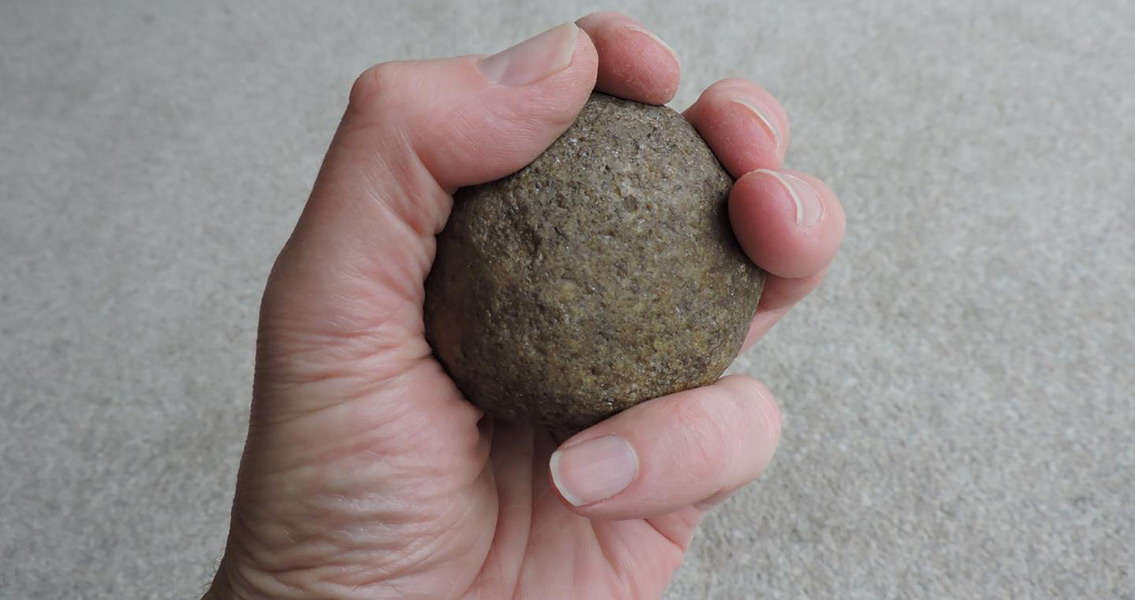
Science Reports. The team combined knowledge about how modern humans perceive an object’s ‘throwing affordance’ with mathematical analysis of the objects’ effectiveness as projectiles, to reach their conclusion. “Our study suggests that the throwing of stones played a key role in the evolution of hunting,” said Indianna University Bloomington professor Geoffrey Bingham, an author of the study, in a press release. “We don’t think that throwing is the sole, or even primary, function of these spheroids, but these results show that this function is an option that warrants reconsidering as a potential use for this long-lived, multipurpose tool.” A theoretical framework and computational tools developed at the Perception/Action lab at IU were the basis for the team’s conclusions. Bingham, the lab’s director, investigates human coordinated action and perceptual abilities. Part of this involves looking at throwing affordance: selecting the best object in terms of size, weight and shape for throwing at the greatest speed and distance, and causing the most damage. 55 ball shaped objects from the South African site were analysed in the lab. The team found that 81 percent of the stone balls were the optimal size, weight and shape to hit a target 25 metres away. Each of the stones is about the size of a tennis ball, but significantly heavier. In addition, the team simulated the motion the objects would undergo if thrown by an expert and the probability of causing damage to medium sized prey, such as an impala. Previous research on biomechanics and perception has shown that a human’s shoulder joint and visual perception are uniquely specialised for throwing objects at targets around 30 metres away. “Humans are the only animals — the only primates even — with that talent,” Bingham explained. “We can throw something to hit something else — like a quarterback throwing to the running back all the way down the field. That’s how in large measure we survived the ice ages. The available food was largely on hoof, or it was ‘mega-fauna,’ such as a mammoth. You don’t want to get close to them.” According to the team’s paper, most of the objects studied had weights that produce optimal levels of damage when thrown at prey. This puts serious doubt on the idea that they had been fashioned solely as simple percussive tools, which tend to be made to be as heavy as possible. “Imagine a human, searching for an object to throw so as to cause the most damage possible to potential prey or a competitor,” said Andrew Wilson of Beckett Leeds University in England, the study’s lead author. “This is a perceptual task: the person needs to perceive throwing-relevant properties of objects and be able to discriminate between objects that vary in those properties.” Bingham, along with former students and other colleagues, has been studying the complex mechanics of throwing for decades. He is in little doubt as to how significant it has been to human evolution. “The ability to throw great distances was not a small thing. It was how we got lunch.” For more information: www.nature.com Image courtesy of Judy Maguire]]>
Categories
Breaking News

Ancient Trees Record “Radiation Bursts” in Their Rings

Proceedings of the Royal Society A, is available online here Image courtesy of Selbymay]]>

Categories
Breaking News

Remains of Massive Structure Found Next to Stonehenge

The Independent, it seems as if those who had been responsible for shifting the local populace’s religious beliefs were attempting in some quite literal way to bury the past. Researchers are now gearing up to see if these religious revolutionaries were seeking to conceal their own history or if it was an attempt to erase the influence of another cultural group instead. The significance of this discovery is also high as this sudden change in religious worship is thought to have occurred nearly simultaneously with the transformation of the nearby Stonehenge site into its current configuration: a relatively small-diameter circle of giant stones, from its older, larger diameter configuration created by a multitude of medium-sized stones. The repurposing of Durrington Walls, the reconfiguration of Stonehenge and other, similar events occurring around Britain during this period of prehistory are thought to be part of the process of the Neolithic giving way to the Bronze Age. While it may not be possible to ever discern the political and religious conflicts and rivalries of this time, these new discoveries at Durrington provide some limited context for what may have been happening. ]]>

Categories
Breaking News

Story of Jewish Great Revolt to be Rewritten by New Finds?

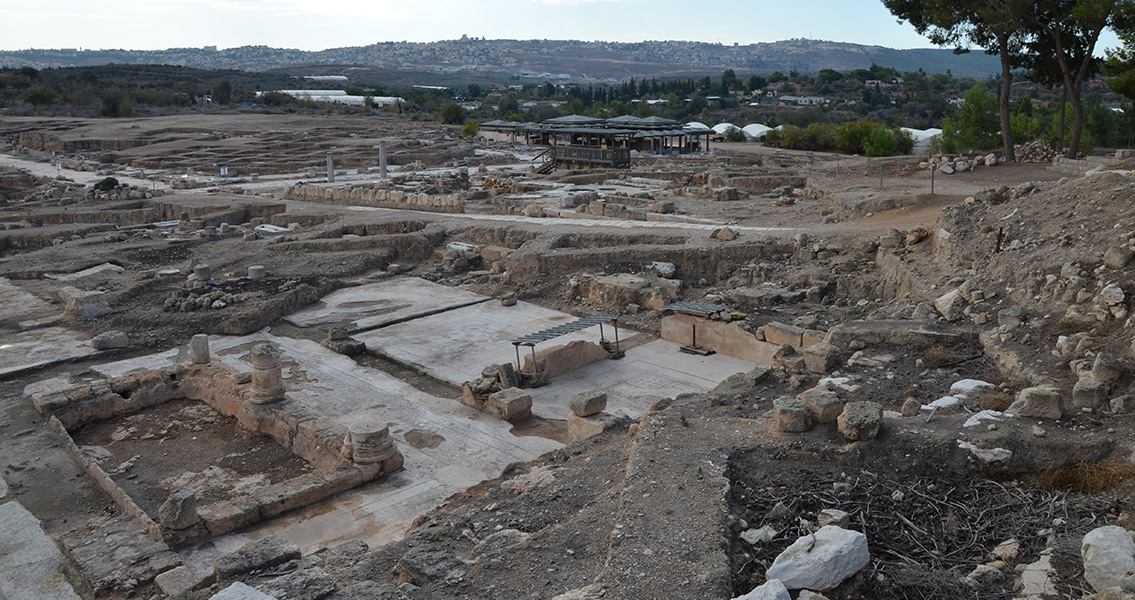
Haaretz, both a dig conducted by researchers from the Hebrew University of Jerusalem at Zippori and one conducted there by archaeologists from Kinneret College have found indications that regions in the Galilee – one of the biggest hotbeds of radicalized Judeans during the Great Revolt – may have been subjected to fewer reprisals at the hands of the Romans than previously thought. Frescoes found in Zippori dating to around 1,800 years in the past and a synagogue found in Nahal Tabor that predates the destruction of Jerusalem’s Second Temple have had researchers questioning what they know of the period. Zippori made a very public and controversial decision in 67 CE, during the early days of the Revolt. Town leaders declined to join in the rebellion, endearing it to Rome and sparing the city. While Jerusalem was sacked and reduced to rubble, Zippori became a major metropolitan center in the region with a mixed pagan and Jewish population, growing to house cyclopean structures and column-lined streets. One of the most impressive of these structures dating to Zippori’s heyday was found this summer, with Hebrew University’s Professor Zeev Weiss spearheading the endeavor. A multitude of colored fresco fragments were found within the structure’s ruins, including partial images of a leopard, a bird, some sort of horned animal that was likely a bull, and the head of a lion. The images are doubly noteworthy as the only other site in ancient Judea that has been found to have similar decorative touches is in Herodium, at Herod’s palace. These depictions are thought to have been a rare deviation from the Torah’s injunction against graven images. Weiss, who has been overseeing the uncovering of Zippori’s ancient ruins for decades, remarked that it’s a strong indication that the Jewish population was not displaced after the Great Revolt, though he was quick to say that there’s no evidence one way or another that Jews built it. However, with stone vessels and ritual baths existing from the time period as well, there are strong indications that pagan and Jewish communities were living side-by-side. Meanwhile, the Kinneret College dig has discovered the newest synagogue dating from the Second Temple period, bringing the grand total to eight found in Israel. The first to be discovered outside of an urban setting, the place of worship certainly predates the Great Revolt, as the historical record has shown that synagogues built after the failed revolution were prohibited from having regular prayer services or to house a Torah in an ark. According to Dr. Mordechai Aviam, the director of the excavation, the rural community survived the Great Revolt intact, much as Zippori did. “We now know that if there is a Jewish settlement that is identified by stone vessels and an absence of pig bones and we find a building with benches along the walls, that is a synagogue.” Having discovered a complex of buildings from the Roman period in the area, Dr, Aviam believes it was home to a large community who used the synagogue.]]>

Categories
Breaking News

City of Lincoln Council’s Charter from 1301 Authenticated

Phys.org as saying, “We are very proud of our historic charters in Lincoln, so it is incredible to find one that dates back this far. A find like this shows just how important a part Lincoln played in the country’s history, especially when you consider the other major charters that have links with the city such as the Charter of The Forest and Magna Carta.” ]]>

Categories
News

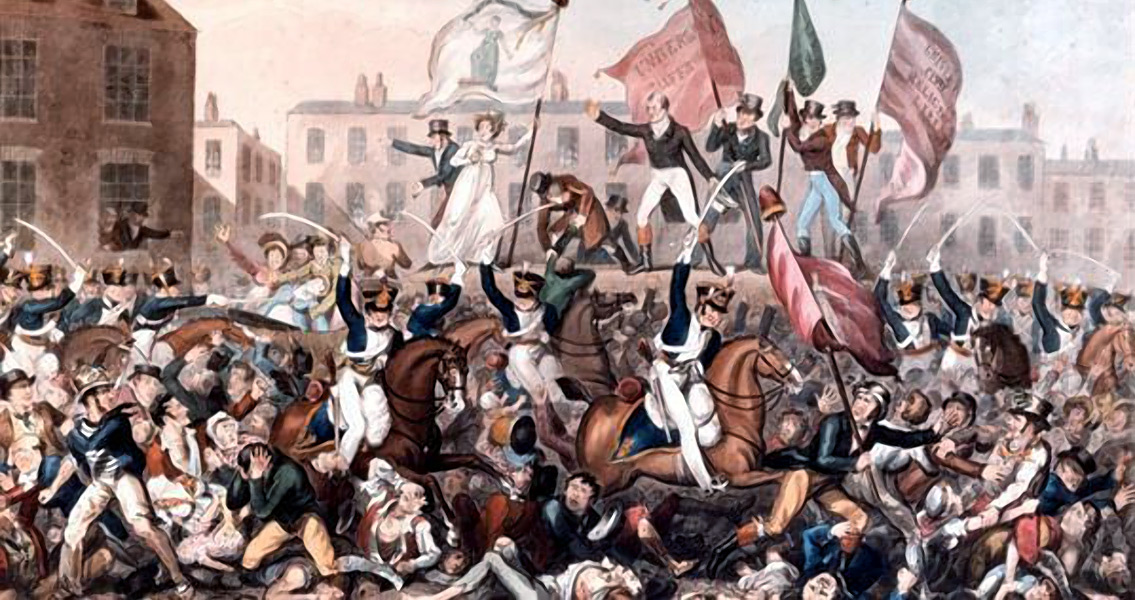
Soldiers Massacre Peaceful Protesters at Peterloo

Categories
Breaking News

Now You See Them, Now You Don’t. Petroglyphs Revealed on Beach

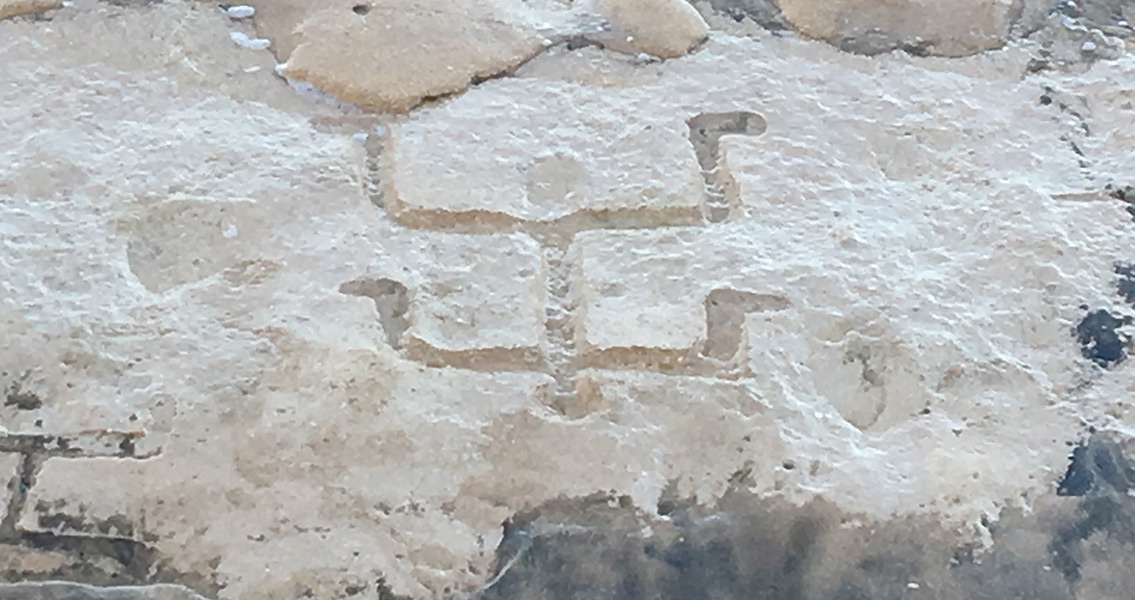
Atlantic: “We consider these Waianae petroglyphs to be consistent with traditional pre-Cook Hawaiian petroglyphs. The ones we’ve seen appear to be those with a linear torso—commonly and regrettably referred to as ‘stick figure.’” Pre-Cook refers to the British explorer James Cook, who arrived in the Hawaiian Islands for the first time in 1778. Petroglyphs have been found at various historic sites all across the Hawaiian Islands, it’s uncommon however, to find them in such close proximity to the water according to a statement released by the state Department of Land and Natural Resources (DLNR). Archaeologist Alton Exzabe, with the U.S. Army (which is responsible for the management of numerous Hawaiian archeological sites), said in the statement that the petroglyphs stand out for their size – one carving is almost 5 feet tall (1.7 meters) while the typical size of other petroglyphs is around one foot. Fingers and hands are also depicted, something else which is not typical. What the petroglyphs represent is a subject of debate among scholars. Several appear to be spiritual or sacred in nature, while others have been interpreted as simply markers of someone’s presence at the location, an ancient sort of “____ was here.” The Stasacks explained in the Atlantic that the meaning and symbolism can vary from location to location. Because of the relative isolation of Hawaii, it’s possible the petroglyphs are uniquely revealing in regards to Hawaiian culture. Dating the petroglyphs will also be challenging due to their exposure to seawater, and at this point is only speculative. Archaeologists have estimated the recently discovered engravings to be approximately 400 years old. In the statement from DLNR it’s said that the carvings may have been seen in the past by locals, but they’ve never been scientifically recorded. The sands have already covered them again. Glen Kila, who is a descendant of one of the first aboriginal families on the Waianae coast, told Seeker that the petroglyphs “record our genealogy and religion, it’s very important to know about the lineal descendants of the area and their understanding of these petroglyphs.” The Department of Land and Natural Resources is currently collaborating with the State Historic Preservation Division and the U.S. Army on a preservation plan for the petroglyphs, which are so fragile that even brushing the sand away from them can cause damage. Image courtesy of Hawaii Department of Land and Natural Resources. Additional images of the petroglyphs can be found here]]>

Categories
Breaking News

Scientists May Have Finally Answered Why We Have Such Big Brains

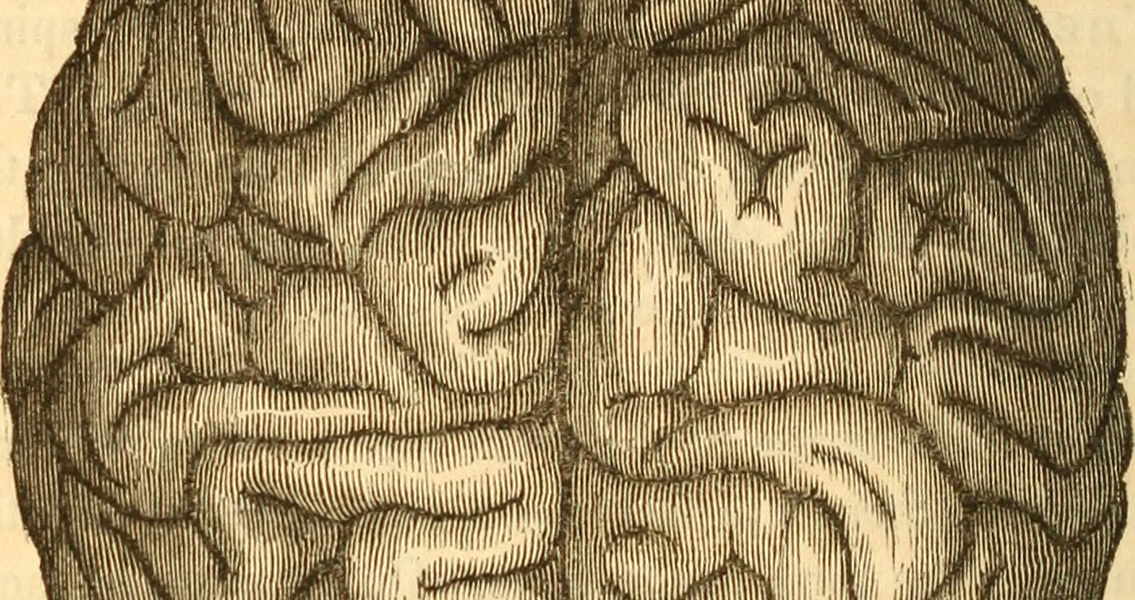
Scientific Reports, the newly released study suggests that the incredible development of the brain is connected to the formation of large, cooperative social groups. As humans started having to judge a person’s relative standing and making decisions about who to cooperate with, their brains’ were challenged like never before. The team of computer scientists from Cambridge believe it was this which promoted the rapid expansion of brain size over the last two million years. The authors also claim that their results show that evolution favours those who are willing to help and cooperate with others who are at least as successful as themselves. “Our results suggest that the evolution of cooperation, which is key to a prosperous society, is intrinsically linked to the idea of social comparison – constantly sizing each up and making decisions as to whether we want to help them or not.” explained lead author Roger Whitaker, from Cardiff University’s School of Computer Science and Informatics. “We’ve shown that over time, evolution favours strategies to help those who are at least as successful as themselves.” In comparison to almost every other animal, human brains are larger as a percentage of body weight. More remarkably, since the emergence of the first species of the Homo genus some two million years ago, the human brain has more than doubled in size. Compared to more distant ancestors such as the australopithecines, which lived between two and four million year ago, human brains have more than tripled in size. What accounted for this remarkable increase has long puzzled scientists. The Cardiff University team used computer modelling to run hundreds of thousands of simulations, or ‘donation games’, as a means to understand decision making strategies in simplified humans. From these simulations they attempted to understand why certain types of behaviour strengthened over time. For each round of the donation game, two simulated players were randomly selected from the population. The first player then made a decision on whether or not to donate to the second, based on a judgement of the second player’s reputation. If the player elected to donate, the first suffered a cost while the second received a benefit. Their reputation was then updated in light of their decision, before the next game was initiated. According to the team, the results suggest making relative judgments to help others has been important for human survival. They also claim that the complexity involved in having to regularly assess and reassess individuals has been difficult enough to promote the expansion of the human brain through the generations. Professor Robin Dunbar, an evolutionary psychologist from Oxford University who was involved in the study, previously proposed the social brain hypothesis. “According to the social brain hypothesis, the disproportionately large brain size in humans exists as a consequence of humans evolving in large and complex social groups.” he explained. “Our new research reinforces this hypothesis and offers an insight into the way cooperation and reward may have been instrumental in driving brain evolution, suggesting that the challenge of assessing others could have contributed to the large brain size in humans.” The implications of the study are not just limited to understanding our most ancient history, however. The authors suggest it could also be applied to engineering and in particular to the development of autonomous machines. “The models we use can be executed as short algorithms called heuristics, allowing devices to make quick decisions about their cooperative behaviour,” Professor Whitaker said. “New autonomous technologies, such as distributed wireless networks or driverless cars, will need to self-manage their behaviour but at the same time cooperate with others in their environment.” ]]>

Categories
Editorial

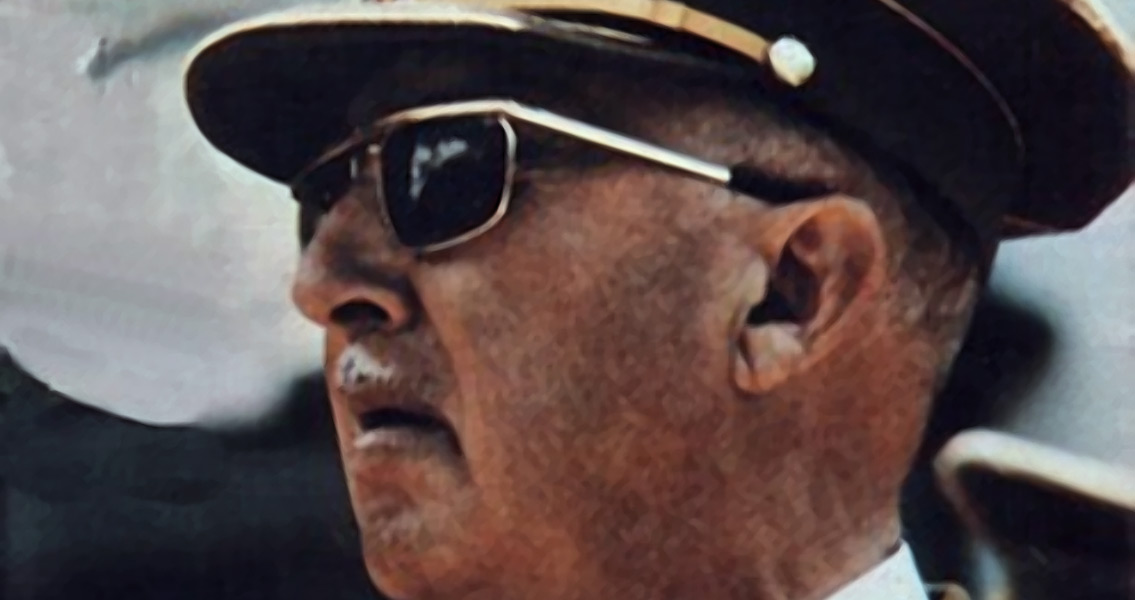
The Teenage Anarchist from Scotland and the Plot to Kill Franco

Guardian in 2004, as soon as he arrived at the office he was suspicious his cover had been blown. “It was siesta time and the streets were quiet. Turning the corner to enter the American Express office, I was immediately aware of three smartly dressed and tight-lipped men in heavy-rimmed sunglasses standing by the entrance muttering among themselves.” His fears were confirmed when the clerk went to get the letter. He noticed a pink slip had been attached to the envelope. Before the clerk could hand it over, a supervisor stopped her, telling her to hand the pink slip to two smartly dressed men sitting at an alcove in the office. Only then did the supervisor hand the letter to Christie. “What was in the letter? How much did they know? Would I be arrested there or would they wait until I had met my contact? But if they knew about the Amex pick-up, they probably knew the details of my rendezvous as well.” Christie told the Guardian. He made his way out of the American Express office, clutching the letter. “I turned to see the two men from the alcove quickly walking out. I made a mental note to shaft American Express at every conceivable opportunity, if I were ever again offered an opportunity.” On the street, the men he had earlier noticed outside also began to follow him. Before he could escape into the crowd, Christie was apprehended at gunpoint. The Spanish authorities had infiltrated Defensa Interior long before, allowing them to set the trap. Christie and his Spanish contact: Carballo Blanco, were taken into custody. The teenager was made to watch his accomplice get tortured, although avoided the same fate himself. He signed a confession after four days in detention, and was promptly jailed. Previously, those found guilty of ‘political crimes’ in Spain faced execution by garroting. Blanco and Christie both avoided this fate but were hit with jail terms: thirty years for the former and twenty for the later. Protests erupted around the world at the treatment of the two would-be assassins, providing a poignant reminder of the authoritarian nature of the Franco regime and its treatment of political prisoners. Growing international pressure meant Christie was released after three years. Blanco was not so fortunate, serving his entire sentence and becoming the last political prisoner of the Franco regime. ]]>

Categories
Breaking News

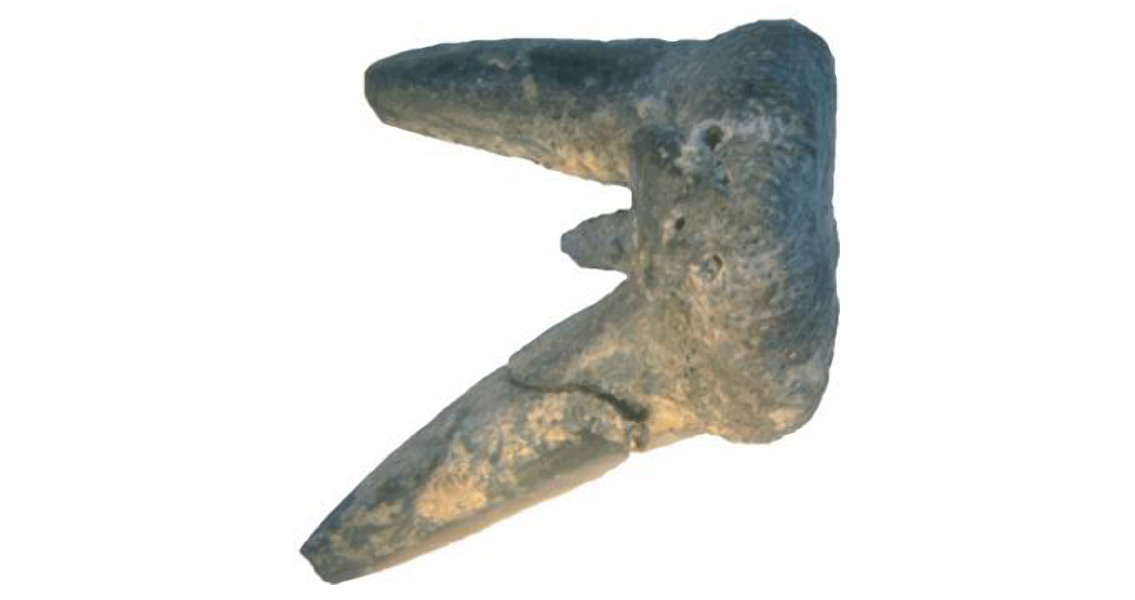
Terrifying 300 Million-Year-Old Sharks Were Filial Cannibals

Paleontology. Image courtesy of Aodhán Ó Gogáin (Trinity College Dublin)]]>