

Herald Scotland newspaper: “These stones have been linked to Randolph’s skirmish, though I thought they were more likely to be prehistoric and possibly incorporated into the battle. This year I received funding and I have now obtained a radiocarbon date in association with the foundation of the stone. The date that came up is contemporary with the battle. It raises the very real possibility that the stones were constructed to mark the site of Randolph’s victory on the first day.” It was a highly significant battle in that it prevented the English from reaching Stirling Castle, as well as setting up the Scots for their historic victory over the much larger army of King Edward II on the following day. Like a modern day commemorative plaque, the stones, believed to have come from Castle Rock, would have been placed there as a memorial. Police Scotland, who permitted the investigation, have stated that after this new discovery the stones may be made more visible and accessible to the public. Stirling’s Local Area Commander, Chief Inspector Lynn Ratcliff, told The Herald: “These stones are literally in our front yard. We’ve been aware of them, but we did not know their history or background.” The Battle of Bannockburn, during the First War of Scottish Independence, is considered a milestone in Scottish history. The Scots fortress, Stirling Castle, was occupied at the time by the English, and was under siege by the Scottish forces. The English king put together a formidable army to end the siege and keep the castle. His attempt was a failure and his troops were defeated by the much smaller army led by Robert the Bruce, the King of Scots, in a fierce battle. The Wars of Scottish Independence, fought between Scotland and England, started in 1296 with the English initially successful, having won a series of important victories such as the Battle of Dunbar (1296) as well as the Capture of Berwick (1296). However, when Robert the Bruce took the Scottish throne in 1306, the war was restarted. The Bannockburn battlefield is part of the Historic Battlefields in Scotland and is protected by Historic Scotland under the Historic Environment Act. ]]>


The Guardian has revealed a new archaeological initiative to plumb the depths of the Mediterranean to search out the secrets of cities like Atlit-Yam. The program, called Archaeosub, will be spearheaded by Italian researchers. One of these researchers is Benedetto Allotta, head of industrial engineering at the University of Florence, who claims that there are any number of human settlements to be found not far from the Mediterranean coast – with the possibility of several more Atlit-Yams just waiting to be explored. The Archaeosub initiative is focusing on the construction of advanced underwater vehicles (AUVs) that can be operated remotely – partly in an effort to make it more affordable to access the technology. Many academic research organizations have found it difficult to use expensive technologies developed by the offshore oil industry or the military, which has inspired Archaeosub to create lighter, cheaper robotic submersibles that can be easily deployed without having to rely on large research vessels. The project is an ambitious one, and not just for making marine archaeology more accessible. Plans to create underwater Wi-Fi networks through the use of a number of cheap, small Archaeosub AUVs are in the works as well, making it easier for these unmanned robotic vehicles to communicate with one another and the surface. So far Archaeosub has shown promise. A 2016 trial saw Archaeosub test three of its AUVs off the Sicilian coast to survey a well-known shipwreck at Marzamemi. The so-called “church wreck”, a Roman ship that sunk in the sixth century CE hauling marble parts for an early Christian church, was studied by the AUVs, which passed through the site on a lookout for new clues. The vehicles gathered enough data to do a reconstruction of the area, Allotta reported. The researcher and his team hope to perfect wireless communication beneath the surface in order to create an “internet of underwater things” that can send and receive data to boats above or at the shore. This could be challenging, as traditional Wi-Fi works poorly underwater, calling for new technologies relying on GPS data and embracing acoustic wave or even light beam transmission instead. Relay systems that make use of one AUV sending data to another underwater and then that second robot surfacing to create a satellite uplink to send and receive data are also being considered as a possible solution. Allotta says one of the newest sites the team has on its radar is the Gulf of Baratti, off the Tuscan coast, at the site of a 2000-year-old shipwreck that was originally discovered in 1974. The ship is remarkable because of the plethora of medical supplies it was found to have been carrying; Archaeosub hopes to explore the site of the medical supply ship to further refine its methods. ]]>

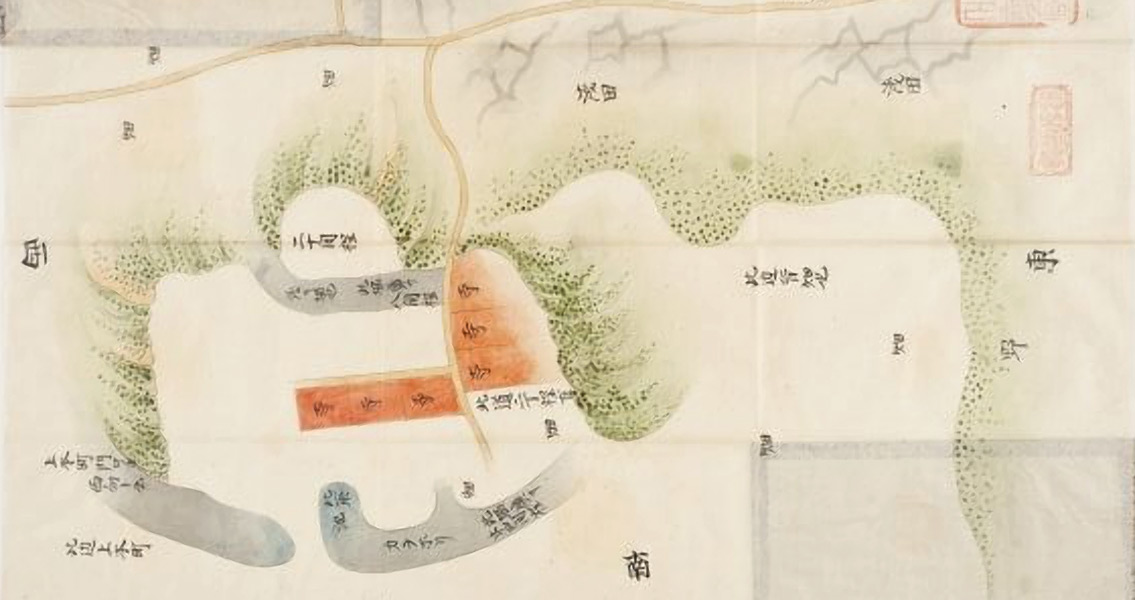
Asahi Shimbun, the Sanada Maru Excavation Promotion Council has announced the discovery in the Tennoji Ward of Osaka’s Esahi-machi district. The private organization recounted how they had found a layer of artificially filled soil at the site, lending weight to their hypothesis that the rectilinear fortress would have been larger than was previously thought. Sanada Maru was a branch of Osaka Castle that would have projected from the south side of the castle’s general frame moat, or Sogamae. The moat would have otherwise defined the furthest border of the castle, built and maintained by the Toyotomi clan. Sanada Nobushige, who also went by the name Sanada Yukimura, was an ally of the Toyotomi during the winter campaign of 1614 at the Siege of Osaka, defending the fortress from the forces of Shogun Tokugawa through 1615 until a peace accord was reached. For many years, the shape of the fortress was thought to have been a semicircle, based on historical drawings. However, Nara University archaeology professor Yohihiro Senda, the leader of the research group, says that he and his colleagues have determined that Sanada Maru could have been square. Senda remarked that the impetus behind this new theory is from not just other drawings but also historical topographic charts as well as aerial photos and additional evidence. The layer of artificial fill was discovered during an excavation across 70 square meters of area near the northern end of the plot, close to what resembled the remains of a moat on an ancient map. A moat-like depression also remains on the southern area, providing indications that there may have been earthworks surrounding the ancient fortress – and researchers feel that the filled-in layer may be evidence of these earthworks. The terrain surrounding Sanada Maru was likely not changed significantly during its demolition, Senda remarked, pointing out that the fill layer was found above natural ground. The professor added that this makes it possible to make estimations as to the size and shape of the fortress by drawing from present-day topographical features. While the site in large part comprises the grounds of the Osaka Meisei Gakuen secondary school, there’s enough leftover evidence to reconstruct Sanada Maru in a rectangular shape, Senda commented. The walls would have run around 300 meters east-to-west and 350 meters from north-to-south, which would have included the breadth of the moat, according to the professor. Senda and his team plan on presenting the entirety of their findings by either February or March of 2017 in a session that will be open to the public. The findings are timely, as the NHK’s annual televised historical drama for 2016 was based on the Siege of Osaka and was in fact called Sanada Maru. Nobushige is of course a central character in the series, portrayed by Japanese television and film actor Masato Sakai. ]]>
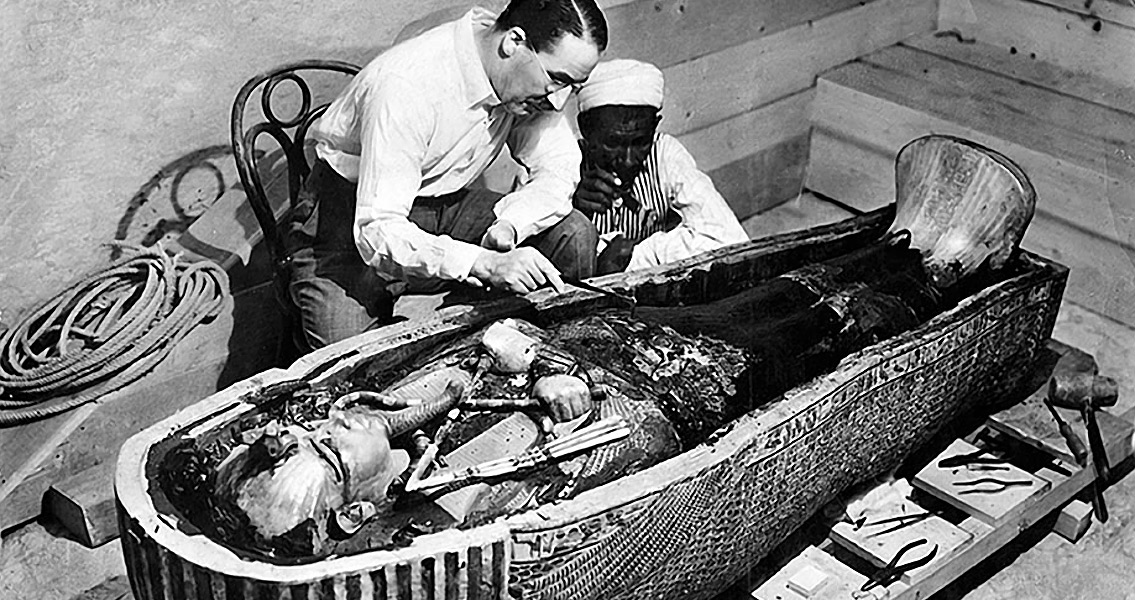
here. Controversy Surrounding King Tut’s Tomb One of the most bizarre stories of the year took place over a few months of the spring, and concerned the constantly fascinating tomb of Tutankhamun. In March, Egypt’s Antiquities Minister, Mamdouh Eldamaty, announced at a press conference that cutting edge radar scans had revealed the presence of hidden chambers in King Tutankhamun’s burial chamber. It was a revelation which sparked intrigue across the globe, as anyone with even the slightest interest in Egyptology began to speculate about what could still be hidden in the tomb of Ancient Egypt’s most famous Pharaoh. A few weeks later, doubts started to appear about the Egyptian Antiquities Ministry’s claims. Radar experts unconnected to the project started to question the findings, while others called for more evidence to be released to back up the claims and allow peer review. In May, the results of another series of scans were released, commissioned by National Geographic to verify the possibility of the existence of a hidden chamber. Announced at the Second Annual Tutankhamun Grand Egyptian Museum Conference in Cairo, the results of the second investigation suggested there was in fact no hidden chamber, directly contradicting the earlier study. The Egyptian Antiquities Authority is now carrying out additional scans in the hope of finding out once and for all if there are any more secrets to King Tut’s tomb. Just How Smart Were the Neanderthals? It’s a question that has been asked many times: just how similar are we to our closest extinct evolutionary cousins, the Neanderthals? For a long time the Neanderthals were considered to be primitive and unintelligent when compared to modern humans. Findings from 2016 however, brought that idea into question like never before. A study published in September added new fire to the long running debate over whether the Neanderthals were capable of creating jewellery. Almost since the moment they were discovered in central France half a century ago, a collection of prehistoric tiny, centimeter-long necklaces created from ivory, shells and animal teeth have been a source of contention among scientists who debate if the Neanderthals could have made the items. Using new research methods relying upon ancient proteins to date and identify bone fragments found at the site, researchers concluded that Neanderthals had lived there, supporting the idea they created the jewellery. Another study published in September carried out an in depth comparison between Neanderthal and modern human ears. The results of the pioneering research challenged the idea that Neanderthals would have only spoken in primitive grunts and groans, suggesting the possibility that Neanderthals had been capable of speech like modern humans. In December, a study from the University of Southampton revealed that Neanderthals had kept returning to the same coastal site on Jersey for a period of over 140,000 years. Through analysing stone tools, the study authors concluded that Neanderthals had kept making regular journeys back to the site for generations. The study raises interesting questions, firstly about what motivated the Neanderthals to keep returning to the site, but also about the extent to which they understood the geography around them – perhaps even some early form of mapping – to keep finding their way back there. What We Know, and What We Don’t About the History of Disease 2016 witnessed a series of shocking revelations and radical theories about the history of disease. In April, a startling study suggested that humans could have played a part in the extinction of Neanderthals by passing on a host of diseases, such as tapeworm, tuberculosis, stomach ulcers and types of herpes. The authors of the study argue that as humans left Africa, they exposed the Neanderthals to new diseases which their immune systems had not built any resistance to. Weakening the hunter-gatherer species, it would have made it harder for them to collect food, in turn causing communities to collapse. A study published in December made the shocking claim that smallpox is nowhere ear as ancient as often thought. Previously, it was believed that smallpox could be traced at least as far back as Ancient Egypt. However, a team of geneticists reconstructed the smallpox genome, based on DNA taken from the remains of victims in a crypt in Lithuania. They found that all strains of the disease had an ancestor from no further back than 1580. If true, the findings would cause a dramatic rewriting of history. Smallpox has been used by historians to explain millions of deaths and tragedies through the centuries, yet if it’s not as ancient as typically thought, such ideas will have to be rethought. Most significantly, the date of 1580 precludes the idea that the European colonisation of the Americas in the fifteenth century saw the devastating introduction of smallpox to the continent; resulting in millions of deaths for the indigenous populations. It was only in 2013 that scientists unequivocally proved that the bacteria Y.pestis played a role in both plague pandemics of the Middle Ages – the Plague of Justinian between the sixth and eighth centuries, and the second pandemic between the fourteenth and seventeenth centuries that peaked with the Black Death. A study published in January 2016 revealed that a single genotype of Y.pestis had persisted in Europe from the fourteenth to the seventeenth centuries. The findings suggest that the plague survived in Europe for three hundred years in as yet unidentified reservoir. In September, a new study reconstructed the bacterial genome responsible for the Plague of Justinian. The study found that the strain of Y.pestis responsible was far more diverse than previously thought, and also infected people far beyond the region historically documented. With plague reemerging in certain parts of the world, such studies have relevance beyond history. The greater our understanding of historical plague outbreaks, the better chance we have of combating it in the present. ]]>
Science Advances. ]]>

Where History Met Legend The Arthurian legend has long captured imaginations, and one of the biggest stories of 2016 involved the discovery of the remains of a royal palace at the fabled birthplace of King Arthur. Tintagel, a thirteenth century castle in Cornwall, has long been associated with the legend of King Arthur, the site purpotedly the place of his birth. Ongoing digs at the site by the Cornwall Archaeological Unit uncovered a series of one metre thick walls dating to the sixth century. The team behind the discovery believes these walls were part of a palace that was once part of Dumnonia, an ancient kingdom in the south-west of England. In excess of 150 glass and pottery fragments were also discovered at the site, suggesting its inhabitants were rather wealthy. If the findings are indeed evidence of a sixth century royal palace, it could fundamentally change our understanding of Tintagel – one of the most important archaeological sites in Europe. New Roman Revelations 2016 unearthed a host of new information about the history of the Romans, a wealth of archeological finds and new studies challenging existing ideas about life in the Roman Empire. In July, the discovery of a Roman settlement in the village of Ipplepen in the UK expanded the western boundaries of the Roman Empire by 20 miles. Archaeologists working on the Ipplepen Archaeological Project unearthed large amounts of pottery at the site, that had been made across the Roman Empire and imported to Britain, highlighting the extensive trade networks that connected the far corners of the empire. http://www.newhistorian.com/discovery-devon-expands-boundary-roman-rule-britain/6732/ In September, the callous image of the Roman family was challenged. For years, the discovery of the bones of tiny children at Roman cemeteries around Britain has been considered evidence of the widespread practice of infanticide among the ancient Romans. Using innovative new methods however, researchers from the Natural History Museum, Museum of London and Durham University were able to show that in fact many of these remains were those of stillborn children. Although not completely ruling out the practice of infanticide, the findings suggest it may not have been as widespread as previously believed. At the start of the year, a study published in the open access journal PLOS ONE provided the first hard proof that migrants from across the empire had made their way to settle in Rome itself. Janet Montgomery from the UK’s Durham University and Kristina Kilgrove from the US-based University of West Florida carried out isotope analysis on over a hundred sets of remains dating to the first through third centuries and excavated from Roman cemeteries. They found that many of the individuals studied had migrated to the Imperial capital from the Alps and North Africa. Fresh Insights Into a Mysterious Culture The Etruscans are one of the most fascinating yet mysterious ancient civilisations. The pre-Roman Italian culture had its origins around 700 BCE, and lasted until its eventual absorption into the Roman Empire in the fourth century BCE. Clearly a powerful, sophisticated people, little is known about the Etruscans, but in 2016 some tantalising clues into their lives were revealed. In March, archaeologists announced the discovery of a new religious text inscribed on an ancient piece of sandstone. Dated to the sixth century BCE, it is an incredible rarity due to the fact that most Etruscan texts found to date tend to focus on funerary practices. As the 500 pound slab is analysed, archaeologists hope to glean new information about Etruscan religion and expand their knowledge of the language of the ancient civilisation. Preliminary translations of the stone slab have already revealed the name of a pivotal Etruscan fertility deity – Uni. The discovery of an Etruscan gravesite in November pointed to a darker side to the early civilisation. It was found that the man interred in the 2,500 year old grave site had been shackled around the neck and ankles. It is believed that the man, aged between twenty and thirty, had died while wearing the chains. Often viewed as something of a benign, peaceful civilisation, the unusual burial adds to a growing body of evidence bringing that view into question. ]]>