



Australopithecus remains have announced that one of the fossils had skin on. The six fossils discovered so far have been dated to 2 million years ago and belong to the species Australopithecus sediba, which combined features of both the original Australopithecus, the first erect hominin species, and of modern Homo species. The find is all the more fascinating because, in addition to this being possibly the oldest hominin skin ever discovered, the fossils contain traces of organic matter from the food these ancient human ancestors ate. The initial discovery was made by chance: the lead researcher’s son stumbled across a human fossil in the Malapa Reserve near Johannesburg, in 2008. Until then, science did not even know this species had existed. Since then, excavation works have expanded significantly, and the team has even built an on-site laboratory where they can examine their finds in a secure environment. So far, the site has yielded bones belonging to six individuals, including an almost complete skull. Based on the evidence, the researchers have established that representatives of the Australopithecus species were much shorter than modern humans, standing at some 1.30 metres, and with a correspondingly smaller frame. While they walked on two legs, they also had more curved fingers than later hominins, suggesting they were also skilled climbers. Yet the most striking feature, according to Lee Berger, the leader of the research team, is the Australopithecus seiba’s head, which was disproportionately small, with the brain about the size of a modern man’s fist. The skin remains found on the fossils could tell the scientists a lot about those hominins’ lifestyle, while the organic substances between the teeth of some of the fossils could reveal something about their diet. This would be possible due to the kind of rock in which the fossils were found, which, unlike other sorts of rock, is capable of preserving organic substances. Two million years ago the site used to be a cave in the ground, Berger told the Naked Scientists podcast. It later collapsed in on itself, creating conditions he compared to a pool filled with liquid concrete, in which the bones were then thrown and preserved. The team has no way of knowing how these proto-humans got into the cave but suggest it may have been a trap they didn’t notice or contained something that lured them in. The team expects to unearth more human remains from the ancient cave and in order to protect them from environmental factors, has actually built a whole laboratory on the site. This will most likely turn the place into a tourist attraction and already the scientists are allowing visitors to look at the excavation site. The endeavour was challenging because the place is part of a nature reserve but, says Berger, the team came up with a structure that organically fits in its surroundings. This has made this site a unique one, where tourists will be able to witness the ongoing work of the researchers as they further their insight into the nature of this species and possibly establish where exactly they stand in relation to modern humans. Image courtesy of Wikimedia Commons user: Lee Berger]]>

silver ring with an inscription in Arabic in a Viking grave, confirming accounts by Arab travelers from the Middle Ages about their peaceful encounters with the Scandinavians. Image courtesy of Wikimedia Commons user: http://upload.wikimedia.org/wikipedia/commons/thumb/9/96/Comb1.jpg/591px-Comb1.jpg ]]>
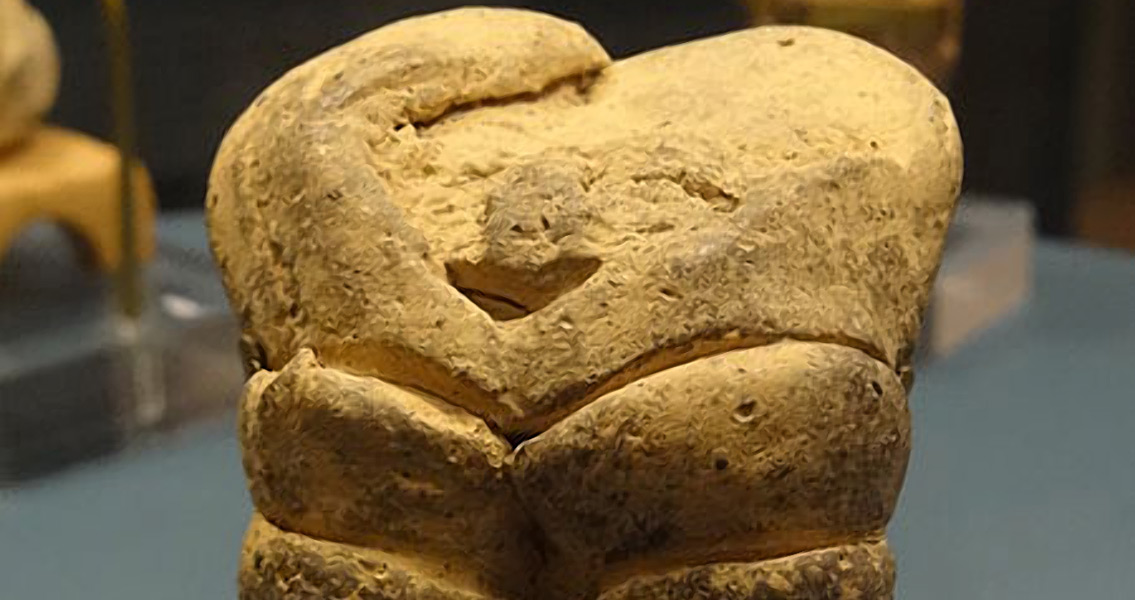
Haaretz reports, citing the archaeologists who took part in the dig. It is likely that the artefact was made by another neolithic culture, Jericho 9, which was initially thought to have emerged after the decline of the Yarmukians. Now, it is possible that the two cultures co-existed and shared a lot of their religious beliefs, even though they lived in different parts of the Levant. So far Neolithic figurines have been found at nine locations in Israel, most of them in the region of Sha’ar Hagolan, in the north of the country. The region is the main source of Yarmukian artefacts, including white clay pottery, of which many of the figurines were made. The height of the Yarmukian civilisation is believed to have been 7,500 years ago, and it is considered the first civilisation to have started baking clay in the Middle East. The most abundant source of information about this people, however, are the figurines, made both from clay and limestone, of which more than 150 have been found so far. They are characterised by a refined artistic style, something unique at the time, and are considered a major artistic achievement of Neolithic people. Although the bulk of Yarmukian figurines have been found in northern Israel, this latest find, a red-clay figurine, was made in Revadim, a kibbutz in south-central Israel, an area associated with the supposedly later Jericho 9 civilisation. According to Edwin van den Brink, the lead researcher at the dig, these two, the Yarmukians and Jericho 9, were in fact one single culture, apparently capable of different styles in pottery. They had one system of beliefs, in which the image of a fertility goddess seems to have played a central role, given the abundance of such figurines. Still, the question of whether the two types of figurines were made by one culture or two different ones remains because, as suggested by the other lead archaeologist at the site, Yitzhak Marmelstein, the red-clay one may well have been made in the north and then brought to the south of the country. Chemical tests to be performed on the new find are expected to determine whether this was the case. The ancient inhabitants of Sha’ar Hagolan were initially believed to have lived in pits dug in the ground, but later archaeological work unearthed dwellings built from stones and mudbricks, and covered with straw or mud set on wooden frames, according to information from the Israeli Ministry of Foreign Affairs. In addition to clay pottery, the Yarmukians also extensively used stone vessels and tools. Image courtesy of Wikimedia Commons user: Hanay]]>

Archaeornithura meemannae. The remains have been dated to 130.7 million years ago, around 30 million years after the first birdlike dinosaurs appeared on the scene and set off bird evolution. To compare, what was believed to be the oldest representative of the bird family lived 125 million years ago. Both belong to the Ornithuromorpha clade (a group encompassing all representatives of a life form, from the first one to all their descendants), which also includes all modern birds. The fossils were unearthed in 2013, but only now have analyses been completed that date them and classify them as being from a new species. An artist’s recreation of the ancient bird’s appearance shows that it was remarkably similar to many modern birds. In fact, the only feature out of place was the pair of small claws at the central joints of its wings. Otherwise it was covered in feathers, apart from the legs, which suggests it was a wading bird, and had a beautiful purple plumage on its head, while the rest of it was mostly gray. The bird was a small one, just 15 cm, and it is unclear whether it had teeth – a common feature of early Cretaceous birds – or not. Among the suggestions the researchers were able to make based on the fossil evidence, is that it was probably a herbivore and that it used gastroliths (stomach stones) to help digestion, study co-author Wang Min from the Chinese Academy of Sciences said. This discovery adds to a growing, though still scarce, body of evidence about the early stages of birds’ evolution. Just recently, again in China, scientists discovered an ancestor of the avian class with bat-like, skin-covered wings. This pigeon-sized dinosaur represents a stage in bird evolution before the Archaeopteryx, so far considered the earliest known example of a creature between a dinosaur and a bird. The Archaeopteryx was a feathered dinosaur that had bird-like characteristics, such as skeletal structure and possibly the ability to fly. The bat-winged dinosaur, on the other hand, most probably comes from an earlier time, before some reptiles started growing feathers and became warm-blooded, effectively ceasing to be reptiles. Early birds, however, were not the only masters of the air during the Mesozoic era, which spanned a huge period, from 252 to 66 million years ago. This other group of flying animals were called Enantiornithes. Although these apparently looked very similar to birds, they had teeth and claws, like dinosaurs. More than 50 separate species have been identified, with some only represented by a single bone, but they all died out during the latest mass extinction on the planet, around 66 million years ago, at the boundary between the Cretaceous and the Paleogenic eras. Enantiornithes are believed to have left no currently surviving descendants. Image courtesy of Wikimedia Commons user: Acabashi]]>