

The Guardian has revealed a new archaeological initiative to plumb the depths of the Mediterranean to search out the secrets of cities like Atlit-Yam. The program, called Archaeosub, will be spearheaded by Italian researchers. One of these researchers is Benedetto Allotta, head of industrial engineering at the University of Florence, who claims that there are any number of human settlements to be found not far from the Mediterranean coast – with the possibility of several more Atlit-Yams just waiting to be explored. The Archaeosub initiative is focusing on the construction of advanced underwater vehicles (AUVs) that can be operated remotely – partly in an effort to make it more affordable to access the technology. Many academic research organizations have found it difficult to use expensive technologies developed by the offshore oil industry or the military, which has inspired Archaeosub to create lighter, cheaper robotic submersibles that can be easily deployed without having to rely on large research vessels. The project is an ambitious one, and not just for making marine archaeology more accessible. Plans to create underwater Wi-Fi networks through the use of a number of cheap, small Archaeosub AUVs are in the works as well, making it easier for these unmanned robotic vehicles to communicate with one another and the surface. So far Archaeosub has shown promise. A 2016 trial saw Archaeosub test three of its AUVs off the Sicilian coast to survey a well-known shipwreck at Marzamemi. The so-called “church wreck”, a Roman ship that sunk in the sixth century CE hauling marble parts for an early Christian church, was studied by the AUVs, which passed through the site on a lookout for new clues. The vehicles gathered enough data to do a reconstruction of the area, Allotta reported. The researcher and his team hope to perfect wireless communication beneath the surface in order to create an “internet of underwater things” that can send and receive data to boats above or at the shore. This could be challenging, as traditional Wi-Fi works poorly underwater, calling for new technologies relying on GPS data and embracing acoustic wave or even light beam transmission instead. Relay systems that make use of one AUV sending data to another underwater and then that second robot surfacing to create a satellite uplink to send and receive data are also being considered as a possible solution. Allotta says one of the newest sites the team has on its radar is the Gulf of Baratti, off the Tuscan coast, at the site of a 2000-year-old shipwreck that was originally discovered in 1974. The ship is remarkable because of the plethora of medical supplies it was found to have been carrying; Archaeosub hopes to explore the site of the medical supply ship to further refine its methods. ]]>

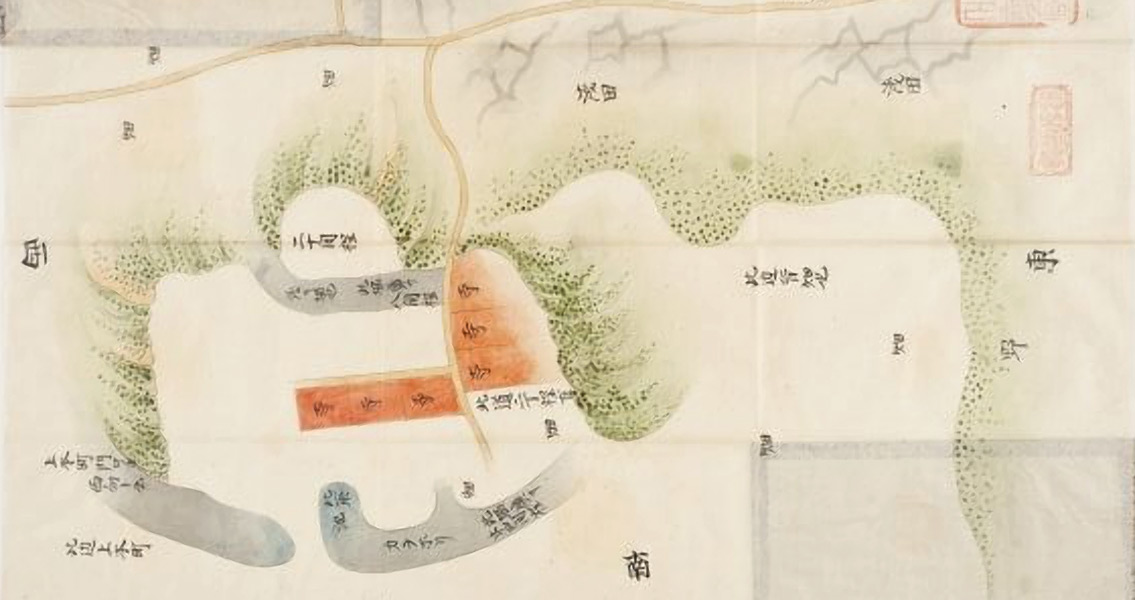
Asahi Shimbun, the Sanada Maru Excavation Promotion Council has announced the discovery in the Tennoji Ward of Osaka’s Esahi-machi district. The private organization recounted how they had found a layer of artificially filled soil at the site, lending weight to their hypothesis that the rectilinear fortress would have been larger than was previously thought. Sanada Maru was a branch of Osaka Castle that would have projected from the south side of the castle’s general frame moat, or Sogamae. The moat would have otherwise defined the furthest border of the castle, built and maintained by the Toyotomi clan. Sanada Nobushige, who also went by the name Sanada Yukimura, was an ally of the Toyotomi during the winter campaign of 1614 at the Siege of Osaka, defending the fortress from the forces of Shogun Tokugawa through 1615 until a peace accord was reached. For many years, the shape of the fortress was thought to have been a semicircle, based on historical drawings. However, Nara University archaeology professor Yohihiro Senda, the leader of the research group, says that he and his colleagues have determined that Sanada Maru could have been square. Senda remarked that the impetus behind this new theory is from not just other drawings but also historical topographic charts as well as aerial photos and additional evidence. The layer of artificial fill was discovered during an excavation across 70 square meters of area near the northern end of the plot, close to what resembled the remains of a moat on an ancient map. A moat-like depression also remains on the southern area, providing indications that there may have been earthworks surrounding the ancient fortress – and researchers feel that the filled-in layer may be evidence of these earthworks. The terrain surrounding Sanada Maru was likely not changed significantly during its demolition, Senda remarked, pointing out that the fill layer was found above natural ground. The professor added that this makes it possible to make estimations as to the size and shape of the fortress by drawing from present-day topographical features. While the site in large part comprises the grounds of the Osaka Meisei Gakuen secondary school, there’s enough leftover evidence to reconstruct Sanada Maru in a rectangular shape, Senda commented. The walls would have run around 300 meters east-to-west and 350 meters from north-to-south, which would have included the breadth of the moat, according to the professor. Senda and his team plan on presenting the entirety of their findings by either February or March of 2017 in a session that will be open to the public. The findings are timely, as the NHK’s annual televised historical drama for 2016 was based on the Siege of Osaka and was in fact called Sanada Maru. Nobushige is of course a central character in the series, portrayed by Japanese television and film actor Masato Sakai. ]]>
Science Advances. ]]>


Egypt Independent that the stone wall was dated using the pottery fragments that were embedded in the mortar used to build the wall. Among the fragments were pieces of carinated bowls, fashioned in a style that was typical of the Sixth Dynasty (2278-2184 BCE) reign of King Pepi II. The Old Kingdom is generally regarded as the time period between the Third Dynasty and Sixth Dynasty (2686–2181 BCE) in the third millennium BCE, when Egypt achieved its first ongoing peak of civilization. The three ostensible “Kingdom” periods: the Old, the Middle, and the New Kingdoms, indicate the peaks of civilization within the lower Nile Valley. The Old Kingdom is notable for being a dynamic time for Egyptian art. During this period, sculptors created the earliest known individual portraits as well as the first life-size statues in copper, wood, and stone. Masons and architects mastered the building techniques that were necessary in the construction of monumental stone structures. Additionally, the art of carving precisely detailed reliefs was perfected. Egypt’s Middle Kingdom (also referred to as The Period of Reunification) is the time period between 2050 BCE and 1800 BCE, covering the twelfth and thirteenth dynasties. The New Kingdom, also known as the Egyptian Empire, between the sixteenth century BCE and the eleventh century BCE, covers the eighteenth, nineteenth, and twentieth dynasties. Qubbet el-Hawa is the site of a cemetery containing Rock-cut tombs, located on the west bank of the Nile river, across from the Egyptian city of Aswan. The elite tombs discovered there date primarily to the Old Kingdom and include the well-known tomb of Harkhuf. A member of the research team, Carl Graves is quoted by the Egypt Independent as saying: “The findings are dramatically altering our understanding of the funerary landscape in this area during the Old Kingdom and First Intermediate Period in 2278-2184BC. I don’t think anyone yet knows who the tombs might have belonged to.” The discovery was made as part of the project’s first field season. ]]>

here]]>
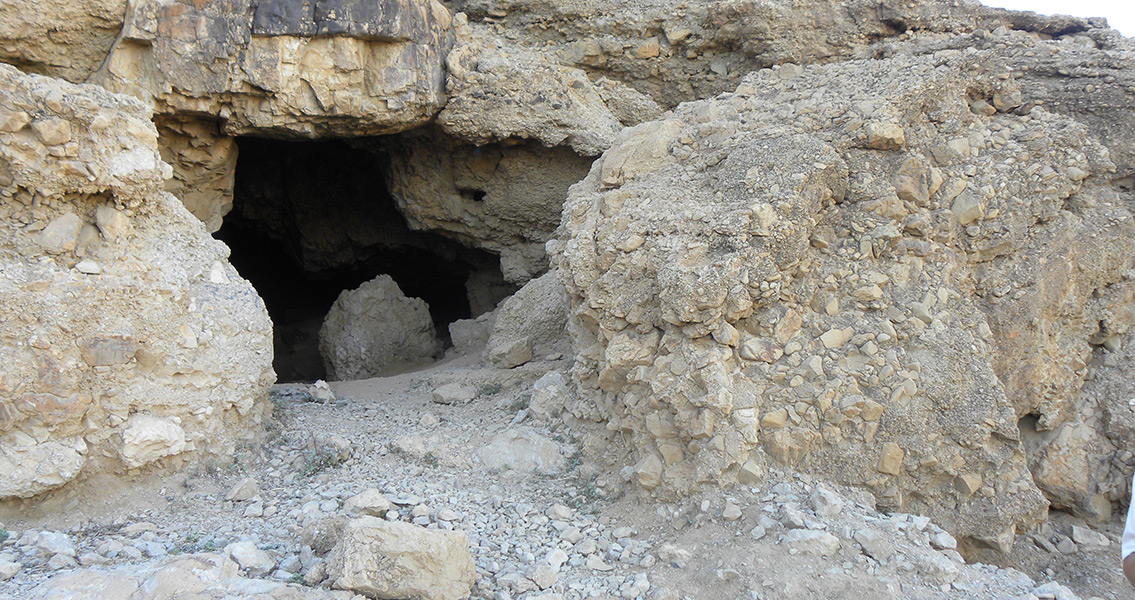
Haaretz. In 1947, a shepherd tossed a stone into a cave in Israel’s West Bank and heard the sound of earthenware cracking, leading to the the twentieth century’s biggest archaeological discovery: the Dead Sea Scrolls. Named for the seven human skulls along with other skeletal remains found there, The Cave of the Skulls was discovered in 1960 by Professor Yohanan Aharoni. Part of a series of naturally formed spaces on top of a steep cliff known as the Large Cave Complex, the Cave of Skulls is located in one of the starkest regions of the Judean Desert. The complex is also home to the Cave of the Arrows, where the extremely arid conditions helped preserve a dozen reed arrow shafts (30 inches long) for around 1,800 years. The latest discovery, two papyrus fragments each measuring approximately two centimeters squared, along with several pieces with no discernible writing, was made during a joint salvage excavation conducted by the Hebrew University of Jerusalem and the Israel Antiquities Authority. Along with the papyri artifacts, dozens of stone vessels, pottery fragments and flint items were discovered within the cave. Several different metal objects were also found, including needles, cosmetic tools, and hobnails with hollow heads which were used to make sandals. Another interesting find was a bundle, a textile wrapping around a collection of beads, which was found inside a natural crevice in the west wing of the cave. This bundle has not yet been opened, but its contents have been identified through X-rays. It joins two other bundles previously discovered by Aharoni, making up the largest bead collection ever found from the time period known as the Chalcolithic, an ancient period that predates the Copper Age. What these caves were used for in early Chalcolithic times is unknown. Suggestions vary from seasonal habitats for traders or herders, to hiding places during times of social tensions within the settlements located on that side of the Judean Desert. “These caves are very difficult to access, and they were used in their natural forms without changes or modifications that would make them more convenient for prolonged occupation,” Davidovich said in the Haaretz article. “This does not make sense when you think of ephemeral stays by shepherds or the like, but is much more plausible when you consider that they served as temporary refuge places.” ]]>

New York Post, University of Cambridge professor Mary Beard discovered the tapestry at the Persian Gallery in the midst of her research into images of Julius Caesar. The composition of the tapestry, which features images of the Roman Emperor, matches those that would have been commissioned by the Tudor king during the later years of his reign in the 1500s. Henry VIII commissioned a set of ten of these tapestries, each nine feet tall and depicting the life of the ancient Roman ruler, ostensibly to connect his reign to that of Caesar’s – though seemingly without spending much time thinking of how the emperor came to such a grisly and violent end. Beard says that at the time they were made the tapestries were of immense value to the royal household and would have been its most prized possessions. In fact, in the wake of the execution of Charles I, the tapestries were listed as the second most valuable objects in the entire royal collection during an inventory of the beheaded royal’s property. The original tapestries have long vanished – and the one found in the Manhattan gallery is not one of these originals, the professor remarked. However, the designs used to create the originals were used to reconstruct these tapestries in the late sixteenth century. Many of these tapestries, like the one found in the Persian Gallery, are valued at $50,000 or more based on their age, their condition, and the royal design from which they are copied. If one of the original ten royal tapestries were ever recovered, its value would likely be even more immense, if not incalculable. Beard commented that the designs of these tapestries are intriguing. Pulled from Suetonius’ “Life of Caesar”, the images showcase both the rise and fall of the ruler, up to and including his death at the hands of his assassins in the Senate. The university professor remarked that the idea that the walls of the Tudor king’s palace were adorned with one of the most obvious critiques of autocratic power during the classical period might be high irony indeed, considering the rule of Henry VIII was rife with behavior such as splitting with the Roman Catholic Church in order to create his own, all to facilitate his constant marriages and annulments in search of a bride who would provide him a male heir. The particular tapestry spotted by Beard is 14-foot by 15-foot, created from wool and inlaid with silk, depicting Caesar crossing the Rubicon River, the famous act that marked the point of no return in his successful attempt to seize control from his rivals Pompey and Crassus, the other members of the First Triumvirate. The term “crossing the Rubicon” has since passed into modern parlance, indicating when someone has taken an irrevocable step forward in a serious matter. More information about the discovery, as well as images of the tapestry, can be found on Prof. Beard’s blog: A Don’s Life]]>