Proceedings of the National Academy of Sciences. ]]>

Proceedings of the National Academy of Sciences. ]]>
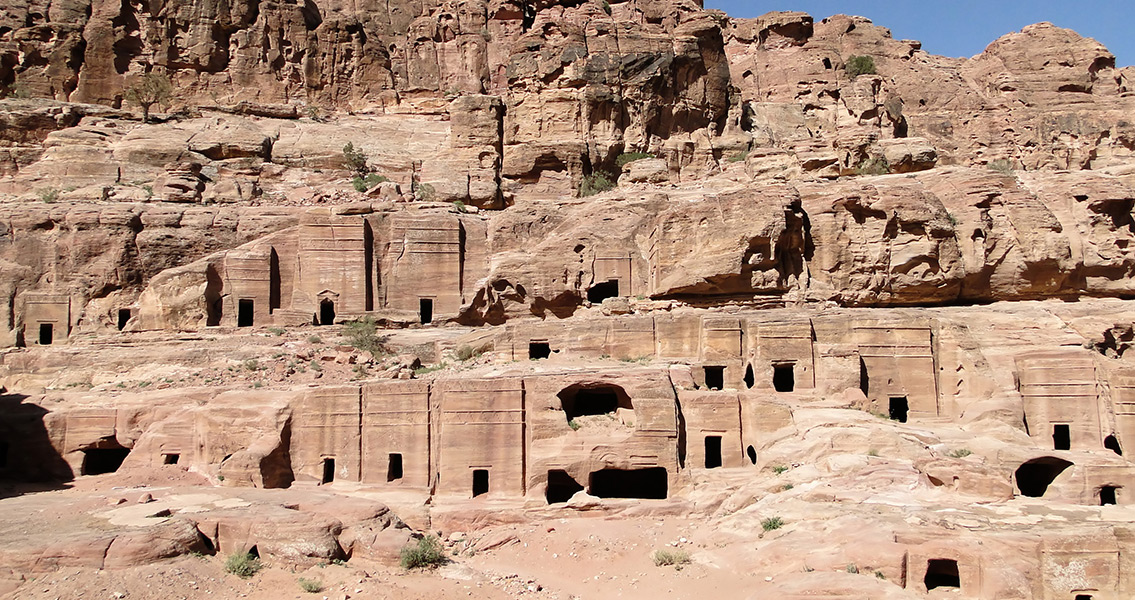
Dawn. Archaeologists throughout the years have been aware that something was there, but most assumed the structure was part of the city’s terrace walls. Tuttle collaborated with Sarah Parcak on the research. Parcak, who is with the University of Alabama at Birmingham, uses satellites to survey a variety of sites. The research team took subsequent excursions to examine and measure the site on the ground. It was during this trip that they unearthed the scattered pottery, which indicates the site could date back to the time Petra was founded. Petra was constructed by the Nabateans in around 150 BCE, when the civilization was accumulating great wealth through trading with the Greeks and Persians. Eventually, the city was absorbed by the Ottoman, Byzantine and Roman empires but its ruins remain famous for the work completed by the city founders, including spectacularly carved facades in the canyons and on the cliffs. It was abandoned sometime around the seventh century, and rediscovered in 1812 by Johann Burckhardt, a Swiss explorer. In addition to the Nabatean pottery, the researchers found fragments of pottery which had been imported from the Hellenistic groups who often traded with Petra, as well as pottery from the Byzantine and Roman eras. In the mountains, canyons and valleys that surround Petra, there are numerous small cultic shrines and various platforms, but nothing matching the scale of the recently discovered platform. It’s believed these sites, along with a big, open plateau called the Monastery, were used for political activities or cultural displays and this newly found platform may have served the same purpose. The giant staircase doesn’t face the city center, meaning it doesn’t have any apparent relationship to Petra, unlike the others, which the researchers see as peculiar. Because the builders didn’t leave any written records it’s difficult to fully understand the purpose of the platforms. Similar to other Semitic cultures at the time, the Nabateans often used an iconic style which indirectly represented their divinities, such as stelae, niches and carved blocks. Sometimes even an empty niche can represent a god. Due to the ongoing trade with other Mediterranean cultures however, the Nabateans also adopted figures as representations as well, with gods that aligned with Zeus and Aphrodite. The work has been published in the Bulletin of the American Schools of Oriental Research, and although there are no current excavations plans at the site, they’re hopeful they will be able to continue their work in the future. ]]>
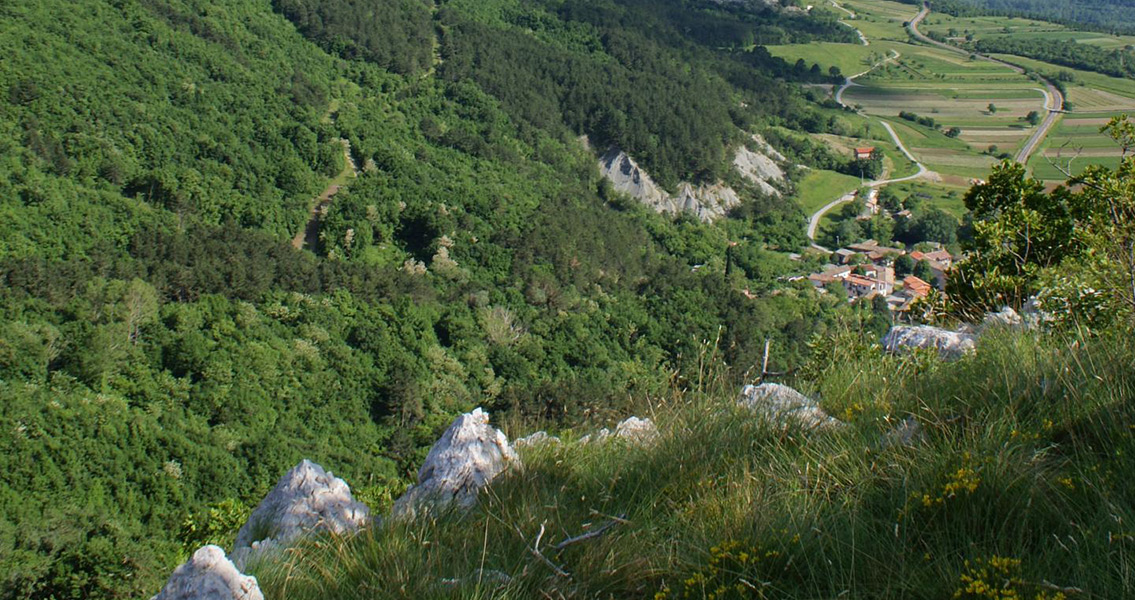
here Image courtesy of Suzanne Pilaar Birch]]>


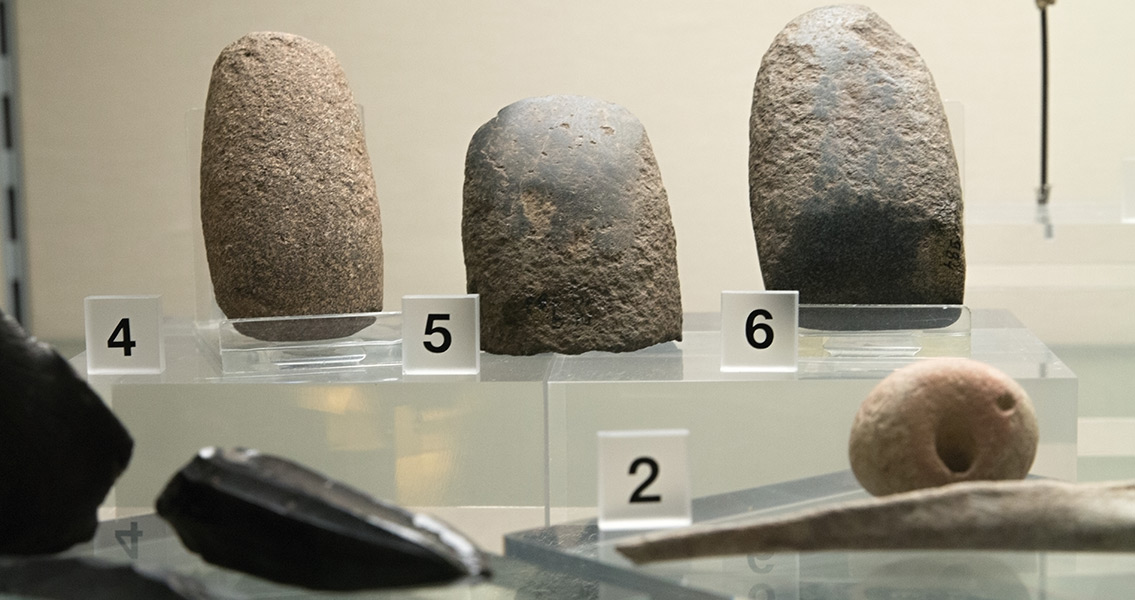
Proceedings of the National Academy of Sciences. Image courtesy of Wikimedia Commons user: Zde ]]>
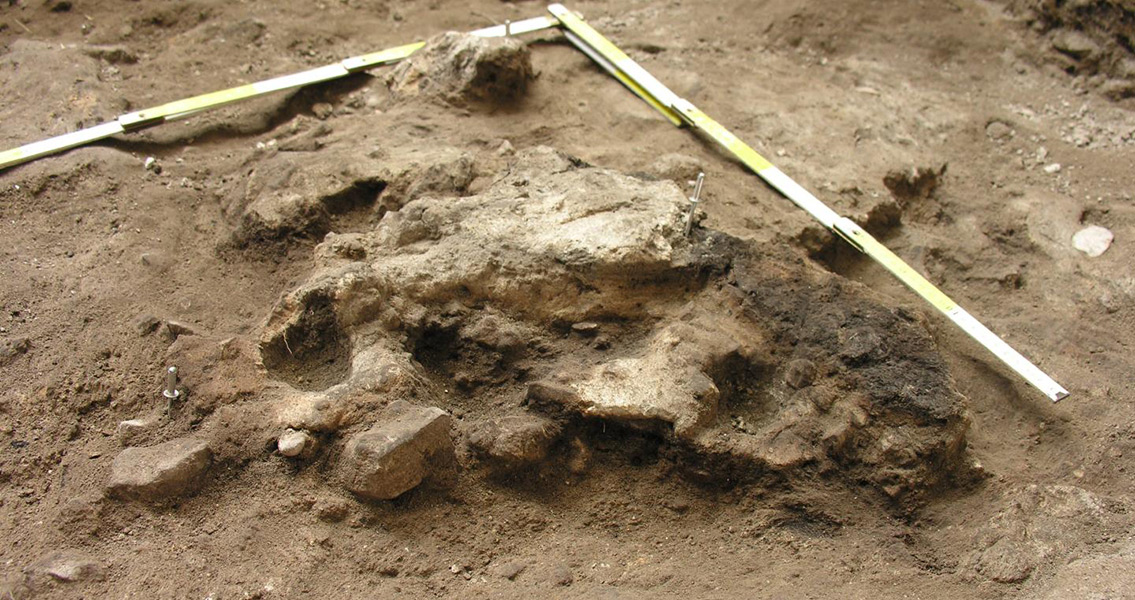
here Image courtesy of UPV/EHU]]>
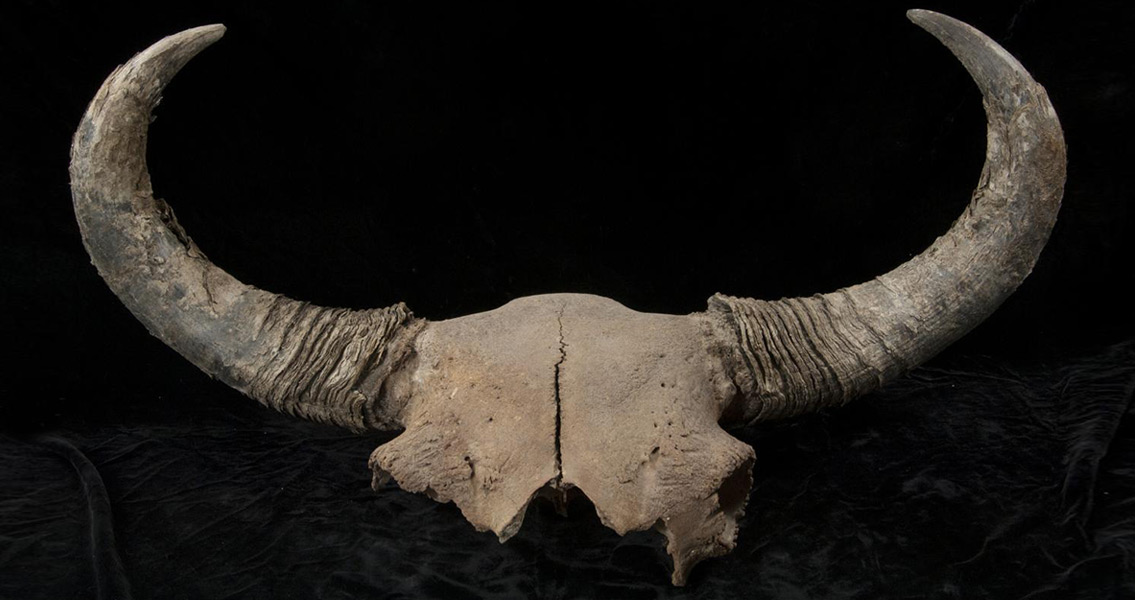
Proceedings of the National Academy of Sciences, their study argues that the corridor was fully open by around 13,000 years ago. The results suggest that although the corridor could account for the later movement of humans and animals, both northward and southward, it couldn’t explain the initial dispersal of humans from Alaska into the rest of North America. Around 15,000 years ago the first humans migrated southwards from the furthest reaches of North America, colonising the rest of the continent. In the 1970s, geological evidence was taken as proof that this initial movement was facilitated by the ice free corridor through the Rocky Mountains. More recent research suggested that the Cordilleran and Laurentide ice sheets merged together at the peak of the last Ice Age, closing the corridor before humans made their initial migration. It was a revelation which pointed to a Pacific coast route for humans into southern North America, yet the Rocky Mountain corridor has long remained a source of interest. “The opening of the corridor provided new opportunities for migration and the exchange of ideas between people living north and south of the ice sheets,” said Peter Heintzman, a postdoctoral researcher at UC Santa Cruz and lead author of the study. Previous work by one of the co-authors of the study, Ben Shapiro, had shown that the bison populations north and south of the ice sheets were distinct by the time the corridor opened. This meant that through genetic analysis it was possible for scientists to track the movement of both northern and southern bison through the corridor. “The radiocarbon dates told us how old the fossils were, but the key thing was the genetic analysis, because that told us when bison from the northern and southern populations were able to meet within the corridor,” explained Heintzman. From the genetic analysis, it became clear that the southern bison started moving northward around 13,400 years ago, suggesting the southern part of the corridor had opened first. The corridor became fully open by around 13,000 years ago, allowing the northern bison to migrate southward and shown in the first signs of population overlap within the corridor. As for human migration through the corridor, Shapiro suggests it was mostly from south to north. Sites from the Clovis culture were abundant south of the corridor by around 13,000 years ago, but declined from south to north in the corridor region. “When the corridor opened, people were already living south of there. And because those people were bison hunters, we can assume they would have followed the bison as they moved north into the corridor,” Shapiro said. Image courtesy of Government of Yukon]]>

Homo floresiensis, a mysterious, pygmy like human species, were first found on the island of Flores, Indonesia, in 2003. The unusual creatures have been nicknamed hobbits, in reference to their similarities to the characters from J.R.R Tolkien’s popular fantasy books. The first specimen, discovered in the Liang Bua cave on Flores, was surrounded by stone tools and animal remains. Thirty years old at the time of death, the female H.floresiensis would have been about 3.5 foot (1.06 metres) tall. Subsequent discoveries of jaw and skeletal remains from eight similarly diminuitive individuals led scientists to conclude in a 2009 study that the initial discovery had not been an anomaly. Exactly when H.floresiensis actually lived is far from clear, but a 2005 paper in Nature suggested they could have been around as far back as 95,000 years ago until as recently as 12,000 years ago. Now, remains of hominins that were roughly the same size as H.floresiensis but ten times older, have been excavated from Mata Menge, a site in open grasslands 70 km east of Liang Bua, Indonesia. Several isolated hominin teeth, as well as a fragment of lower jaw, were found in a layer of sandstone which had been deposited around 700,000 years ago next to a lakeside stream. The findings are reported in the journal Nature. “We have unearthed fossils from at least three individuals, including two children, along with stone tools that are almost identical to those made by the much younger Homo floresiensis,” said Dr. Adam Brumm from Griffiths University, who was involved in the excavations. Along with colleagues from the Geology Museum and Geological Survey Institute in Bandung, Indonesia, Dr. Brumm has been carrying out excavation work at Mata Menge since 2004. “There is a striking similarity in size and form between the Mata Menge hominins and the Liang Bua hobbit, which is surprising given the former are at least several hundred millennia older.” Dr. Brumm explained in a press release from Griffiths University. “This suggests the Mata Menge individuals belonged to a population of ancient hobbit-like hominins that gave rise to Homo floresiensis. They may even have been a very early form of hobbits, which would mean this species existed for far longer than anyone had anticipated.” Since the initial discovery in 2003, scientists have struggled to explain where H.floresiensis fit into the human family tree. Although broadly agreed that the ‘hobbits’ evolved from an archaic branch of hominins that existed prior to the emergence of our own species in Africa some 200,000 years ago, exactly which hominin group spawned them has divided opinion. One hypothesis is that H.floresiensis descended from Asian Homo erectus, also known as Java man, an early hominin that reached the island of Java 1.5 million years ago. The hypothesis suggests that a group of these ‘Java men’, which were similar in size to a modern human, somehow became stranded on Flores and gradually reduced in body size. The other hypothesis is that H.floresiensis came from an even more ancient ancestor, such as Homo habilis, or perhaps even an ape like hominin forerunner. The Mata Menge discoveries seem to add considerable support to the first theory. “While only a handful of fossils has been found at Mata Menge so far, characteristic features of the teeth strongly imply an ancestral relationship with Homo erectus,” Dr. Brumm said. “This lends weight to the theory that the hobbit was a dwarfed version of the famous Java Man, which somehow got marooned on the island. The fact that they were found with fossils of extinct pygmy elephants (Stegodon) and giant rats also supports the idea of an isolated group of Homo erectus undergoing a dramatic evolutionary change owing to the Island Rule.” These conclusions are far from conclusive of course. Brumm and colleagues are hopeful however, that more skeletal remains will be excavated from Mata Menge, which could provide further insights into H.floresiensis‘ history. “Mata Menge is a goldmine,” said Dr Brumm. “I expect that further excavations at this site will eventually yield a hominin skull, which will finally allow us to put a face and a name to the hobbit’s ancestor. Then we will know how this experiment in human evolution got started”.]]>