
Quarternary International, the new study questions this idea. Although not proving either way whether Neanderthals actually made it as far as Southern Scandinavia, it shows that climate constraints wouldn’t have been enough to stop them. Two main hypotheses exist regarding Neanderthal inhabitation of Southern Scandinavia. The first, and by far the most widely held, is that climate constraints and dispersal barriers made it an impossibility. The second hypothesis claims that they did migrate north of 55°N, but they have for some reason remained invisible to the archaeological record. Led by Trine Kellberg Nielsen from Aarhus University, the authors of the study constructed climate models of where Neanderthals are known to have lived, and where they could have lived. Palaeoenvironmental reconstruction techniques were used to model the environment of Northern Germany and Southern Scandinavia during the Last Interglacial Complex. “Our results are inconsistent with the claim that climatic constraint and/or a lack of suitable habitats can fully explain the absence of Neanderthals in Southern Scandinavia during the Eemian Interglacial and Early Weichselian Glaciation”, they write in the abstract to the study. For years a cast of roe deer bones held in Denmark’s National Museum were considered evidence that Neanderthals had reached Southern Scandinavia. Archaeologists argued that the bones, discovered in 1955, showed signs of having been manipulated by Neanderthals. In 2013 this evidence was debunked by a team specialising in genetic engineering, from Aarhus University. Other evidence for a Neanderthal presence in Denmark comes in the form of Coups de poing, Lower Paleolithic hand axes. Around fifteen such axes which could have been used by Neanderthals have been found in Denmark. This evidence is far from conclusive however, human stone age hunters also used the primitive stone axes, and the examples found in Denmark were all unearthed from mixed soil, making it impossible to definitively date them. The timing and extent of Neanderthal migration throughout Europe is under constant revision and revaluation. Late last winter a study argued that Neanderthals had reached Italy 100,000 years earlier than previously thought. Significantly, Nielsen and colleagues’ study does find evidence that a geographic barrier may have impeded northerly migrations during the Eemian Interglacial Period between 130,000 and 115,000 years ago. The higher temperatures of the Interglacial Period inevitably led to higher sea levels, and there is a strong indication that the Baltic and North Seas were connected over southern Denmark. As such, even if the climate was warm enough for Neanderthals to have lived in Southern Scandinavia, a sea could have prevented them from walking there. Neanderthals lived across Eurasia between 200,000 and roughly 30,000 years ago, although these dates are far from agreed upon. Their duration, and the breadth of the area they inhabited: from the Middle East to the British Isles, shows the Neanderthals’ flexibility and endurance, especially when one considers the period they lived in included the last Ice Age. Nielsen et al’s study shows just how much there is still to learn about our closest extinct relatives. For more information: www.sciencedirect.com]]>

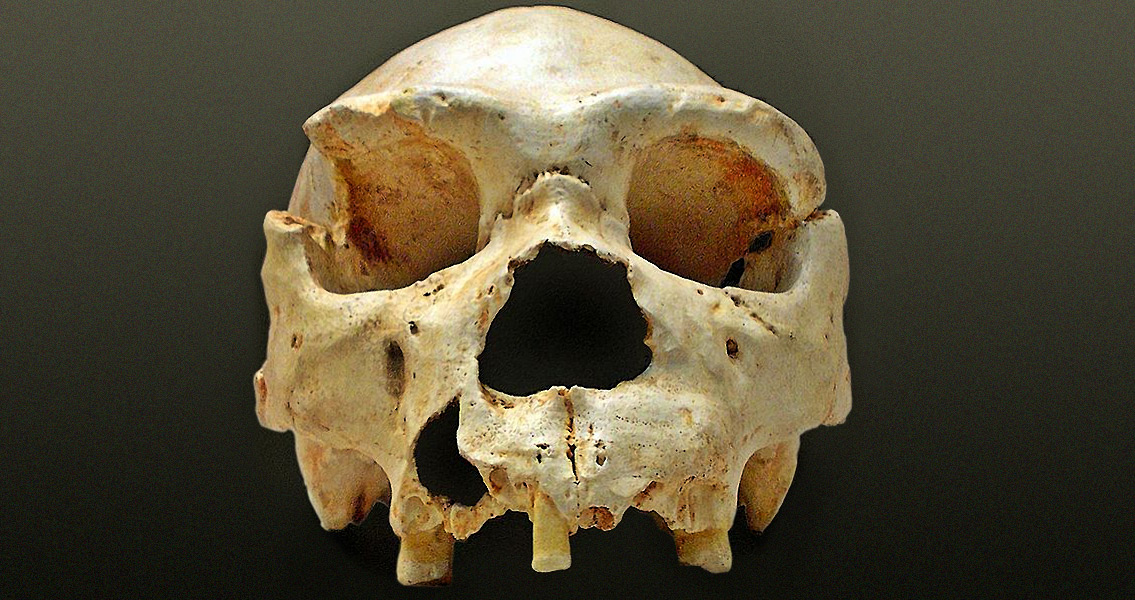
Plos One Image courtesy of Héctor Arcusa Magallón.]]>
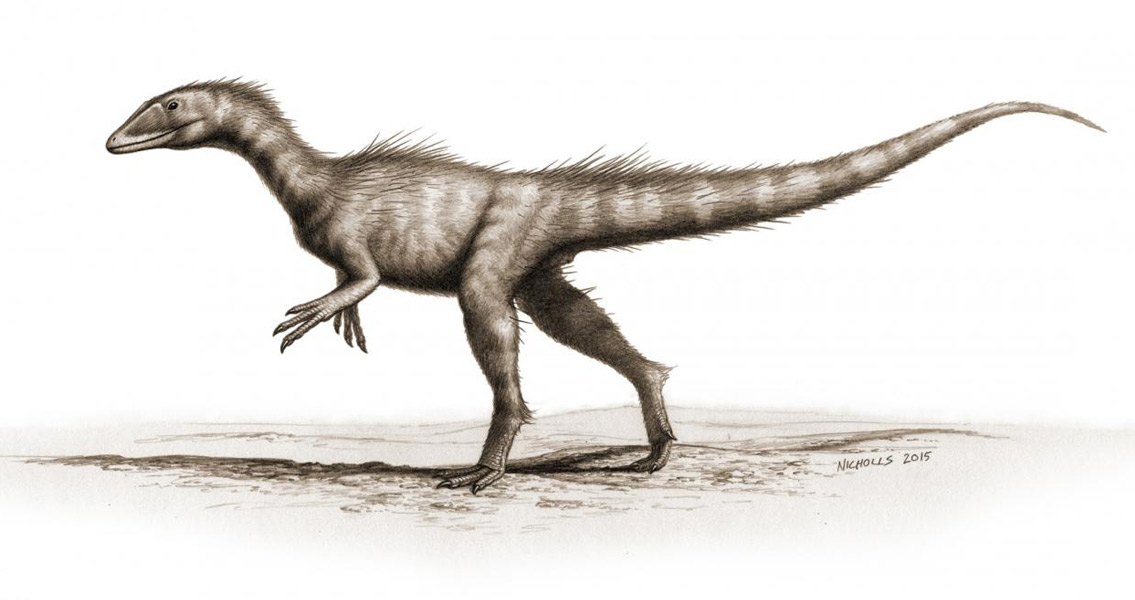
Plos One believe the creature had died on a nearby prehistoric island before being washed out to sea. Ending up on the Welsh coast, the theropod was buried in sediments over millions of years until eventually it was completely encased in what is today the cliff face at Lavernock Point. Following careful analysis at Portsmouth University, it was confirmed that the creature was indeed a totally new species of dinosaur. Scientists have named the theropod: Dracoraptor hanigani – the first part of the name means ‘dragon robber’, and is a reference to the national symbol of Wales, and the fact the creature belongs to the Raptor family. The second part is a tribute to the people who first discovered the fossilised remains: Nick and Rob Hanigan. According to the study, written by David Martill from the University of Portsmouth and his colleagues from the National Museum Wales and the University of Manchester, the creature could be the oldest Jurassic dinosaur ever discovered in the UK, possibly even in the world. Steven Vidovic, a paleontologist at Portsmouth University who worked on the remains and co-authored the study, told the Guradian: “It’s the best dinosaur fossil Wales has ever had.” 40% of Dracoraptor hanigani‘s skeleton has been recovered, including bones from all over its body. Piecing together the sections of snout, teeth, neck, arm, hand, pelvis, leg, foot and tail the paleontologists have started to make conclusions about this prehistoric creature. In life the specimen would have measured 70 cm tall and two metres long, with a long tail likely used to help its balance. Dracoraptor hanigani had sharp front teeth combined with smaller, serrated ones, leading the team to conclude the dinosaur was a meat eater. Many of its bones were not yet fully formed or fused, suggesting the specimen may be of a juvenile dinosaur. The discovery of the creature has the potential to fill some significant gaps in knowledge concerning a crucial period in the evolution and development of dinosaurs. Stratigraphic analysis of the cliffs where the remains were found indicate the creature lived in the Lower Jurassic period, a time when Theropod dinosaurs were likely to have been diversifying rapidly but from when very few remains are available. For Europe especially, all Theropod fossils tend to be isolated, fragmented bones. Mr. Vidovic explained Dracoraptor hanigani‘s significance in a press release: “The Triassic-Jurassic extinction event is often credited for the later success of dinosaurs through the Jurassic and Cretaceous, but previously we knew very little about dinosaurs at the start of this diversification and rise to dominance. Now we have Dracoraptor, a relatively complete two meter long juvenile theropod from the very earliest days of the Jurassic in Wales.” For more information: Plos One Image courtesy of Bob Nicholls]]>
here Image courtesy of Wikimedia Commons user: nevil zaveri]]>