Categories
Breaking News

His Left Foot Was Wood and Iron

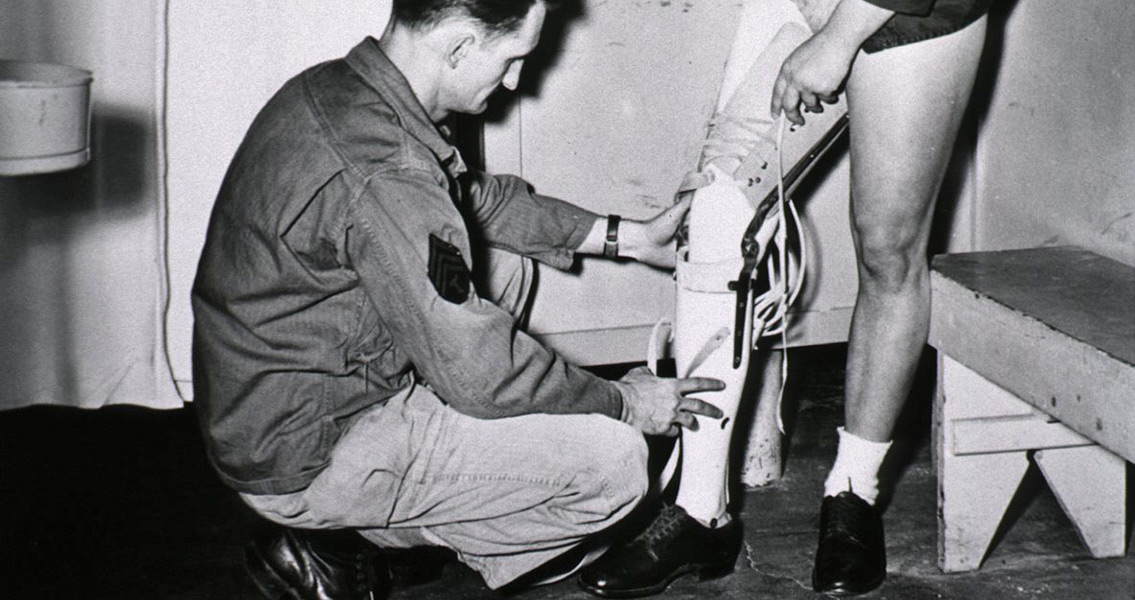
International Journal of Paleopathology. How the middle-aged man found with the prosthetic lost his left foot is unknown. Researchers used radiography and CT-scanning but were only able to determine the man had had a lesion which healed over. Further investigation revealed the man appeared to have recovered from his injury and walked with the use of the prosthetic implant for at least two years Regardless of how this sixth century man lost his foot, he more than likely belonged to a high social class, given he was buried close to a church and also with a sword. During this time period losing a foot, especially when the loss was through the bone as opposed to a joint, as this man’s was, would have resulted in excessive blood loss from the lacerated arteries and would have also been prone to infection – the combination of which would have resulted in death for most people. Finding an injury of this sort which had healed and then finding that person used a prosthetic limb successfully is practically unheard of. The field of human paleopathology (the study of diseases and related skeletal conditions) is generally considered to have started between the mid-nineteenth century and World War I, when a number of anthropologists and physicians pioneered and defined the medical nature and pathologies of ancient skeletons. A review of human paleopathology was published in 1929 by H.U. Williams. Between the World Wars when methods such as radiology, serology and histology began to be applied more frequently, thereby improving diagnosis and accuracy, was when palaeopathology began to truly be considered a scientific discipline. Following World War II, paleopathology started to be viewed as a valuable tool for the understanding of past societies, thus the discipline started its connection to epidemiology and demography. Additionally, new techniques in the field of molecular biology began to add new information to the data already known concerning ancient disease, especially with the introduction of DNA which could be retrieved from centuries old samples. Archaeologists have increasingly used palaeopathology as an important tool for understanding the lives of ancient peoples. For example, in the ancient Maya population where there is evidence of trepanation, which is the practice of drilling holes in the cranium, either once or several times in an individual, paleopathology has determined that patients very often survived the procedure. According to researchers, the latest prostheses discovery is a long way from holding the title of the oldest known use of a prosthetic device. The commonly held belief is that prosthetic limbs were used in the Greco-Roman world as well as in ancient Egypt, although the archaeological proof of this practice before the 2nd millennium CE is rare.]]>

Categories
Breaking News

Search for MH370 Yields 19th Century Shipwreck

Categories
Breaking News

Was Shackleton Killed By 'A Hole in the Heart'?

Categories
Breaking News

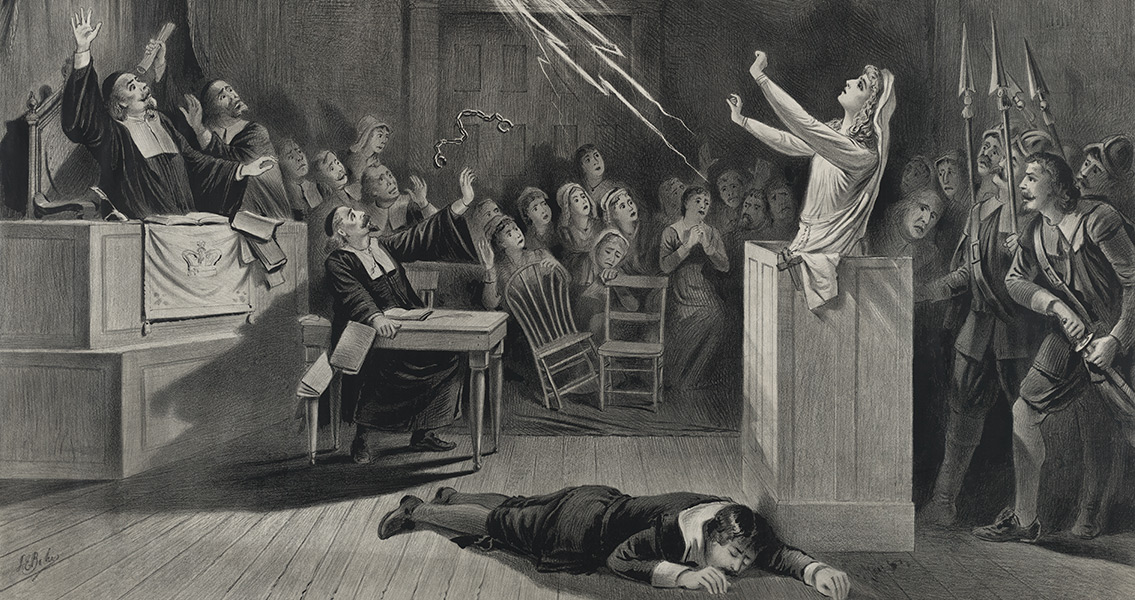
An Inauspicious Execution Location for Witch Trial Victims

Categories
Book Reviews

Edgar Allan Poe's Birthday: Stories of Horror and Life

The Works of Edgar Allan Poe, Vol. 1). “And so faintly you came tapping, tapping at my chamber door, That I scarce was sure I heard you”—here I opened wide the door;— Darkness there and nothing more.” The narrative poem, which is often paid homage to or parodied, depicts a man’s gradual slip into insanity, tortured by a raven who repeatedly answers ‘Nevermore’ to the narrator’s insistent questions. The constant rhyming of the poem and the short, sharp pace of the text adds to the unsettling feeling it conjures. Throughout, the detailed description of the setting further builds a sense of uneasy suspense. Hugely influential, in poetry for the unique form of the work, and to the horror genre in general for its minimalist version of psychological torment, The Raven has also fostered a stereotypical image of Poe’s work which perhaps obscures the diversity of his output. Along with his other horror works such as ‘The Fall of the House of Usher’ and ‘The Black Cat’, Poe wrote short mystery stories such as the ‘The Murders in the Rue Morgue’, or bizarre, fantastical tales such as ‘The Masque of the Red Death’. All of them deal with dark, but widely varied themes. ‘The Masque of the Red Death’ (available in The Works of Edgar Allan Poe, Vol. 7) highlights just how diverse and complex Poe’s works are. It tells the story of a fictional country plagued by a disease known as the Red Death. Prospero, the prince of the country, locks the walls of his palace to hold out the plague, and continues to live a normal life despite the tragedy which is killing his people. Such is his lack of concern for the country’s plight that he even organises a lavish masquerade ball inside the palace. At midnight an ominous figure, dressed like a victim of the Red Death, joins the party. Shocked by the visitor’s ghoulish attire, Prospero confronts it and is immediately killed. Others in the party attempt to confront the strange apparition, and all suffer a similar fate until the Red Death has killed everyone at the party. Although dabbling in themes of the supernatural, the short story is deeply allegorical. Prospero’s fate and the onset of the Red Death at the masquerade symbolise the inevitability of death and decay. Specifically it shows the impossibility, even for the wealthy, of evading these inevitable fates. Prospero meanwhile, represents the vulgar excesses of wealth and power. His insensitivity to his countrymen’s plight sees him build walls with his wealth rather than use it to help them. Beyond mere cowardly self preservation, his revelry at the party shows an unwillingness to compromise his own luxurious life, even if doing so could save others. Poe’s life was a tumultuous one from his youth until his death, one filled with controversy and mystery. This is reflected in the sombre tone of many of his works. His parents, two prominent actors, were both dead by the time of Poe’s third birthday. Poe was fostered by his godparents, John and Frances Allan, who raised him in Richmond, Virginia. John Allan, a wealthy tobacco merchant, afforded his foster son a good education, sending him to the finest boarding schools and eventually to the University of Virginia. That is, until a bitter dispute surrounding Allan’s refusal to pay Poe’s gambling debts ended in his foster son’s dismissal from the university. His life already showing signs of the turmoil which would come to define it, Poe joined the US army. While serving in the military he published his first two poetry collections: ‘Tamerlane and Other Poems’ in 1827, and ‘Al Aaraaf, Tamerlane, and Minor Poems’ in 1829. Both collections were released into relative critical and public obscurity. Following his military service Poe moved into the house of his aunt, Maria Clemm and her daughter, Virginia, in Baltimore, Maryland. He became the editor of Southern Literary Messenger in Richmond and embarked on one of the biggest controversies of his life when he married Virginia in 1836. She was just fourteen years old. Poe’s career as a writer gradually developed in the 1840s, and he moved to New York with his wife. Shortly after his most successful work, The Raven, had been published, Virginia died in 1847. The tragedy pushed Poe into a self destructive spiral of alcohol and drug abuse. In 1849 he got engaged once again, but died in mysterious circumstances in October of that year, just a few days before his planned wedding. The Works of Edgar Allen Poe are perhaps befitting of the author’s controversial, sometimes tragic and often unhinged life. By taking a look at his poetry and short stories, it is possible to gain an insight into the bleak universe he created. Stretching beyond mere horror however, his works explore the diverse facets of the human condition.

Related Books


The Works of Edgar Allan Poe book

The Works of Edgar Allan Poe
Vol. 3 of 5Vol. 3 of 5
by Edgar Allan Poe

[gap height=”20″]]]>

Categories
Breaking News

Arctic Mammoth Killed By Humans 45,000 Years Ago

here ]]>

Categories
News

Has Evidence of Another 'Hobbit' Species Been Found?

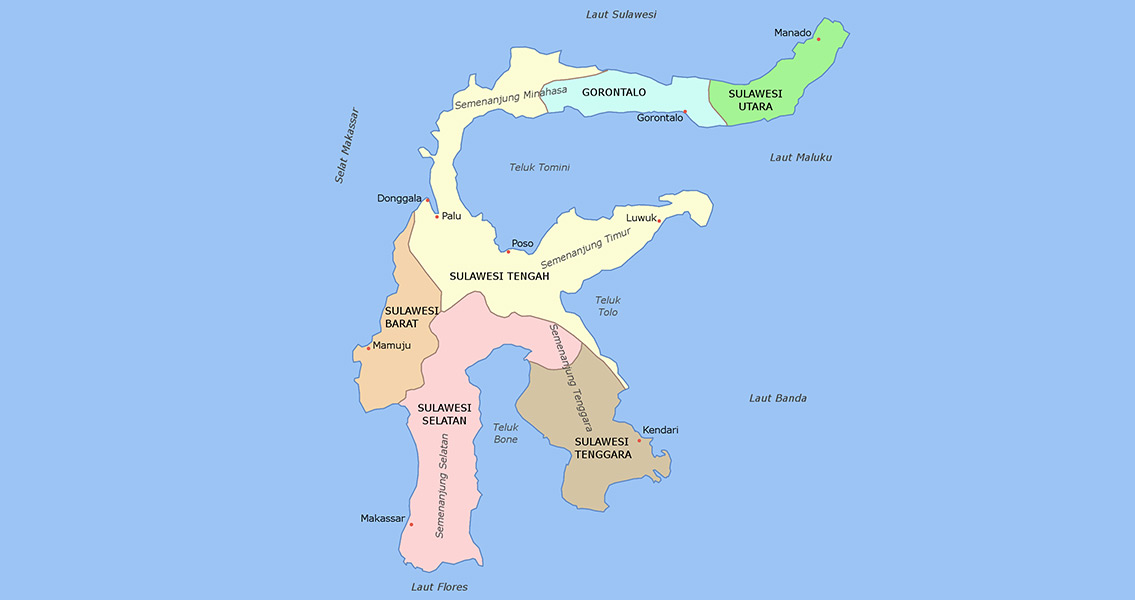
Homo floresiensis from Flores, which is just south of Sulawesi. Similar to the island of Flores where the Homo floresiensis (sometimes called ‘Hobbit’) fossils were first found over a decade ago, Sulawesi may have been a natural lab for human evolution in an isolated condition. Initially, the age of the artifacts was unknown and the early attempts to date them failed to give researchers a definitive answer. At the CAS, colleagues of Dr van den Bergh used the latest technique of luminescence dating for feldspars minerals. Feldspar is a group of minerals distinguishable by the silica and alumina present in their chemistry, the most abundant group of minerals on the planet. Known as multiple elevated temperature post-infrared stimulated luminescence (MET-pIRIR) the technique analyzed the sediment layer the artifacts were discovered in. The research is part of a collaboration between the late professor Mike Morwood who led the team responsible for the ‘Hobbit’ find on Flores, and the Geological Agency of Indonesia. Dr van den Bergh was part of Professor Morwood’s research team at the time of H.floresiensis‘ discovery. The research is being supported by ARC grants and funds from the Geological Agency of Indonesia. Image courtesy of Wikimedia Commons user: Olaf Studt ]]>

Categories
Breaking News

The Iceman Is Still Delivering New and Valuable Information

Categories
Breaking News

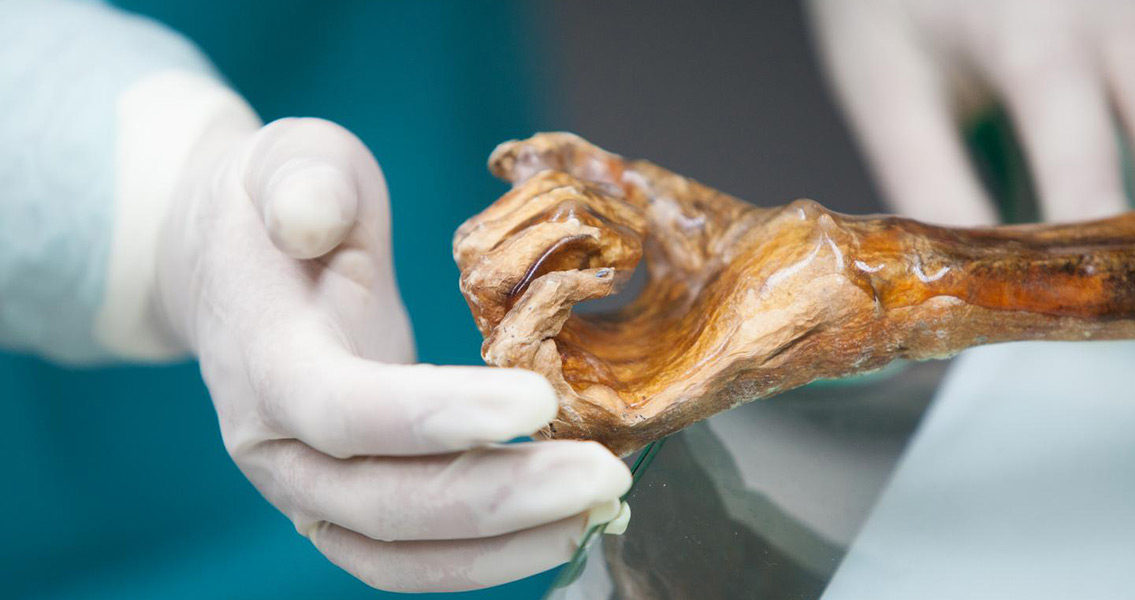
Modern Forensic Techniques Applied to Ancient Remains

here Image courtesy of Wikimedia Commons user: Preus museum]]>

Categories
Breaking News

Cave Art Shows France Ravaged By Prehistoric Volcano

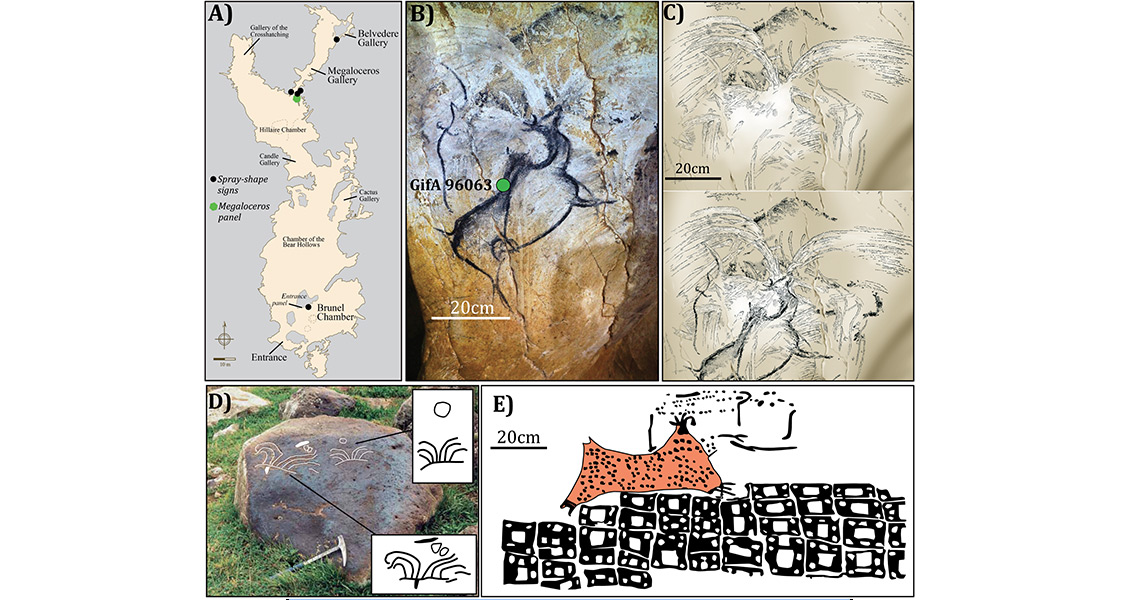
discovered in Northern Spain, but these images were dated to 13,000 years ago. In 2012 Nomade visited the Bas-Vivarais region with the aim of dating volcanic eruptions which would have coincided with the initial Homo sapien habitation of southern France. Through measuring the levels of certain isotopes of radioactive argon gas, he determined that the region had been struck by a series of spectacular eruptions between 19,000 and 43,000 years ago. Once it was clear that those living in the Chauvet-Pont d’Arc cave could have witnessed volcanic eruptions just a short distance away, Nomade and his team set about determining that the mysterious, as yet unidentified images in the cave were of volcanoes. The fact that the designs are unprecedented from the time period and region is a key part of the team’s reasoning: “The distinctive design of spray-shape signs specific to Chauvet-Pont d’Arc cave is reminiscent of typical lava fountains associated with strombolian eruptions. Such symbols have no close equivalent within the considered time period (i.e Aurignacian), or even among the more than 340 known ornate caves in France and Spain”, they write in the study. In addition, the iconography of the designs in France bares a resemblance to the petroglyohs depicting the Porak volcano in Armenia. The authors of the study point out that many of the images in the cave tend to be symbolic rather than naturalistic depictions of dangerous animals such as cave lions and bears. As mentioned above, there is no evidence of the inhabitants of the cave depicting scenery. However, the image of the volcano could be interpreted as reflecting a broader fascination with things seen as powerful or threatening. “We must add that as there is no other example in prehistoric rock art of natural scenery it is here perhaps the strength of the eruption image that might have inspired the Aurignacian artists”, the authors write in the study. For more information: www.plosone.org Image courtesy of Plos One ]]>