

Haaretz; Israel’s daily paper. Haaretz is arguing that the theory is not, in fact, supported by ancient linguistics, going so far as to say that Zevit’s theory is more unlikely than the original biblical story. According to a journalist with Haaretz, Elon Gilad, references to life generated from ribs can be found in stories which predate the Hebrew Bible, the Sumerian myth of Enki and Nihursag for example, and the word has cognates which mean rib in other Semitic languages as well. Additionally, the word tsela is still used in post-biblical Hebrew to mean rib, which indicates to some that the word meant rib thousands of years prior to when the proto-Semitic language divided into the dissimilar Semitic language. Image courtesy of Wikimedia Commons user: Peter van der Sluijs]]>


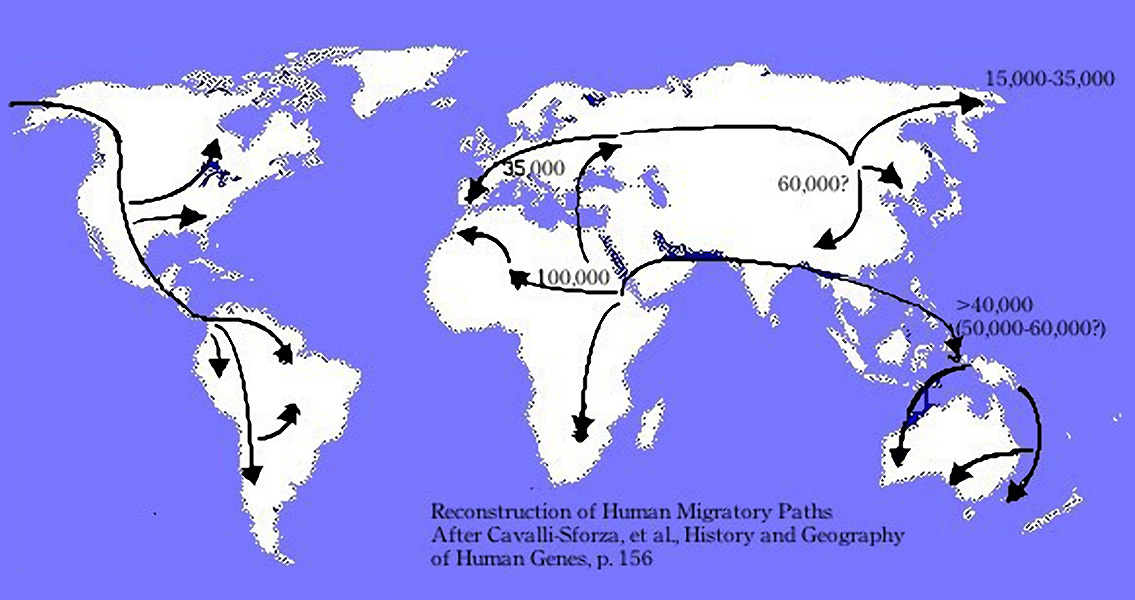
study by Nick and Isabelle Winder suggested that compassion and a willingness to accommodate ‘defective’ members of a community played a key role in our evolution and development. The study stands in stark contrast to readings of evolution which focus on competition and ‘survival of the fittest’. The Winders’ “Vulnerable Ape hypothesis” argues that small, isolated hominin communities provided few opportunities to enrich the gene pool. Rather than choosing not to mate, early hominins would often pick a close genetic relative, heightening the risk of offspring with ‘faulty’ genes which would put them at a disadvantage. The hypothesis argues that parents had to learn to work together as a community to cope with these disadvantages and ensure the survival of their genes. As Isabelle Winder summarised: “Genetic vulnerability was the trigger that set our ancestors on the path to symbolic language, innovation and pro-social co-operation.” Another study, carried out by the University of Utah’s Professor David Carrier, has added weight to a very different reading of human development. The “Primal Pugilism” theory suggests that aggressive behaviour, and particularly the ability to throw punches, had an important role to play in the development of the human hand. Carrier and his team took the arms of eight different cadavers, and carried out a variety of tests on them to prove that hands clenched in a fist were capable of hitting with more than double the force of an open hand. This was taken as support of the theory that aggression was an evolutionary advantage to early primates. Carrier and colleagues have done previous research along similar lines, including a study arguing that early hominins evolved to have skulls and faces more resistant to violence. The Primal Pugilism or Aggressive Ape theory is a controversial one, placing aggression and violence as drivers of early hominin evolution. In 2014 an article was published in National Geographic accusing the theory of being too simplistic, referring to it as “bro-science”. Whatever one’s opinions on Carrier’s ideas, the strong reactions the theory can trigger surely provide an insight into modern sensitivity and concerns. In November, Dr. Penny Spilkins conducted a new study on human dispersal in the Late Pleistocene around 100,000 years ago. Dr. Spilkins argues that a dramatic shift in the rate and pattern of human dispersal during the period can not be explained by population growth or environmental factors. Instead, Dr. Spilkins argues in the study that humans’ movement out of Africa and to the furthest corners of the globe can be explained in terms of social developments. As human relationships became more complex, laying the foundations for the bonds needed for early societies, so did the potential causes of conflict. The dark side of stronger social bonds was that the level of repulsion one felt at a betrayal, and the desire for revenge became stronger. This, Dr. Spilkins argues, could push humans into living further apart: outcasts forming groups and moving away from the community at large, eventually crossing oceans in search of isolation. The above studies show how a myriad of new techniques and information can be applied to our study of history. All of them are theories, models which attempt to explain the complexities of our development, and are not necessarily mutually exclusive to each other or other theories. The fact that the conclusions they’ve reached can at times seem so controversial, shows just how much value is placed on the past, and just how much there is still to learn. ]]>

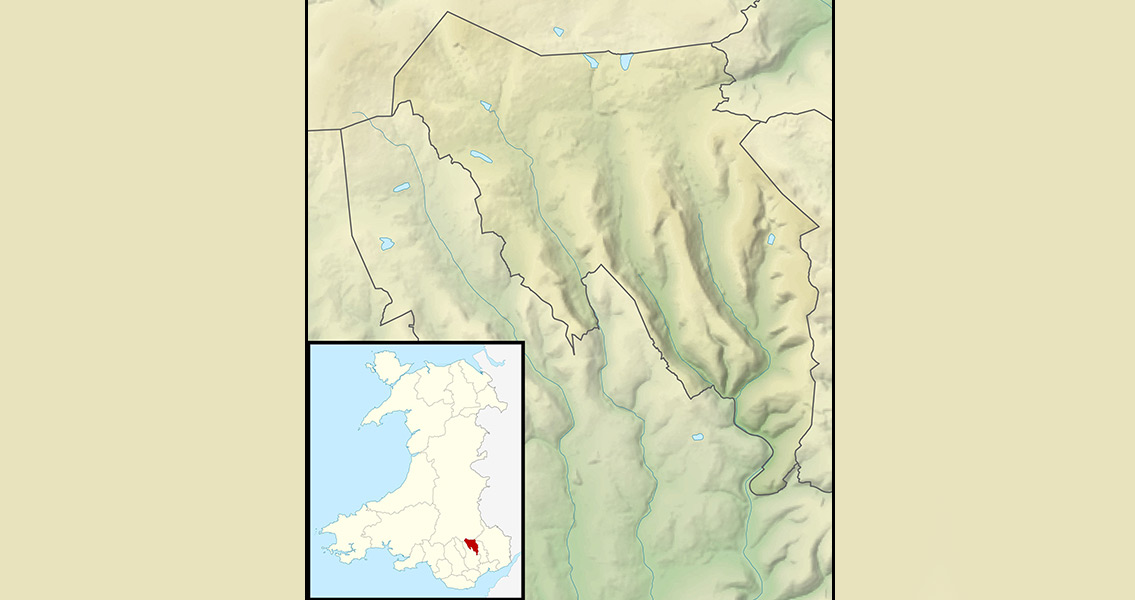
Homo naledi In September 2015, it was reported that fossils of a new species of hominin, designated Homo naledi, had been discovered in South Africa. In many ways it was one of the biggest stories of the year, sparking new research and remaining a major theme in the mainstream media. The remains unearthed at the Rising Star Cave constituted close to a complete skeleton, a rarity when it comes to ancient hominins. Exactly where H.naledi fits into the timeline of evolution is still being studied, but it could be one of the oldest members of the Homo genus. Met with controversy in some areas, particularly in South Africa, researchers have already started to reach some conclusions about H.naledi. studies of the anatomy of the creature’s hands and feet revealed areas of similarities with humans, but also marked differences. It seems that the creature was just as adept at climbing trees as it was at walking, or even running, on the ground. Meanwhile, a comparative analysis of H.naledi‘s skull alongside that of other members of the Homo genus, suggested that H.naledi lived around 2 million years ago. Although exactly where H.naledi fits into the homo evolutionary tree remains unclear, the discovery of the new species has the potential to greatly improve our understanding of human evolution. Shipwrecks Old and New 2015 saw a host of significant shipwrecks discovered, and new exploration of some which have been known about for a lot longer. In July, a shipwreck found off the coast of Japan in 2014 was confirmed to be part of a massive fleet which had attempted to invade the Japanese mainland in the thirteenth century. The remains, measuring twelve metres long and three metres across, were part of one of the Kublai Khan led attempted Mongolian invasions of Japan. The campaigns have since entered Japanese folklore, having been stopped by massive typhoons referred to as the ‘Kamikaze’. The dating is based on twenty examples of Chinese ceramic wares unearthed from the shipwreck. In August, marine archaeologists recovered a figurehead that stood on the ship of a Danish king, from the Baltic sea. Exactly what the unusual figurehead is meant to depict remains unclear, but the bizarre, dragon-like creature has a person in its mouth. Coming from the Gribshunden, the flagship of the fifteenth century Danish king Hans, the object has the potential to add to the understanding of medieval ship construction. An underwater survey of the seafloor near the Greek archipelago of Fourni unearthed 22 previously undocumented shipwrecks in the space of just 13 days. The ships discovered range in origin from 700 BCE to the sixteenth century CE. The survey has so far only covered 5% of the Fourni coastline, meaning countless other ships could be hidden there. Further studies are expected this year, to unearth what could prove to be a treasure trove of information. Finally, in June, Greece’s Central Archaeological Council approved plans for five years of new excavations at the site of the Antikythera shipwreck. The site of the discovery of the mysterious Antikythera Mechanism, the wreck and surrounding areas will now be analysed with new ‘exosuit’ technology, hopefully answering questions about one of the most significant archaeological sites in the world. Stonehenge One of the most famous sites in England, Stonehenge, was shrouded in controversy and intrigue for much of 2015. A study of pottery and animal bones found close to the site of the Neolithic monument allowed one group of researchers to conclude that the builders of Stonehenge subsisted on a diet of meat, milk and other dairy produce. The work gives a greater insight into the lives of the people of pre-historic England. In March, art critic Julian Spalding had a book published arguing that most interpretations of the monument have failed to understand its use, as they view it from the wrong perspective. He argues that the stones were once the foundations of a large wooden platform, or raised altar, made to accommodate hundreds of people as they prayed to their gods. Spalding’s theory has received heavy criticism in some circles of the archaeological community, while others have argued that all theories about the monument’s use have to be considered. In December, a team of Welsh scientists argued that the smaller bluestones used in the construction of Stonehenge were transported to the site in Wiltshire by glacial action rather than pagan ancestors. As is so often the case when discussing Stonehenge, the study has caused a great deal of controversy.]]>
PLOS ONE. ]]>


www.pnas.org Image courtesy of Wikimedia Commons user: Natale Carioni]]>