Categories
News

Important Questions Answered about Evolution of Hominin Diet

Theropithecus oswaldi, during the early Pliocene. Most plant groups are placed into one of three categories, C3, C4 and CAM (Crassulacean acid metabolism). The main difference between the plants concerns the photosynthesis process: C4 plants process atmospheric carbon into a compound with four carbon atoms, whereas C3 convert it into a compound with just one. CAM plants on the other hand, are capable of using either pathway for photosynthesis. The crucial consequence of this difference is that C4 plants are much more suited to growing in a hot, dry climate – they photosynthesize at a faster rate and in a way which involves significantly less water loss. Examples of C4 plants include maize, millet, papyrus and sugarcane, while C3 plants include rice, wheat, spinach, potatoes and yams. By expanding their diet to include C4 plants, hominins may have been able to increase the variety of environments in which they could survive, or increase their chances of survival in more changeable environments. 152 fossil teeth from the Woranso-Mille site in Ethiopia were subjected to analysis as part of the study. The distinct carbon isotope signatures of C3 and C4 plants mean that the composition of an animal’s diet can easily be determined through their tooth enamel. This method allowed the scientists involved to fill in gaps about the chronology of the evolution of early hominin diets. “Fossil teeth from the Woranso-Mille paleontological study area are well-suited to fill the temporal gap in the isotopic record of hominin diet because they are part of a record of Pliocene mammalian fossils that spans 3.76–3.2 Ma”. The Pliocene is one of the most important periods in the evolution of humans, when early hominins left the trees and increasingly walked on two legs, and their diets diversified massively to include a much wider range of food sources than their ancestors. Consuming C4 foods was a crucial part of this transition. As the study explains, “The incorporation of C4 resources into hominin diet signifies increased dietary breadth within hominins and divergence from the dietary patterns of other great apes.” The analysis showed that both hominins and Theropithecus included substantial amounts of C4 foods in their diet as far back as 3.76 million years ago. In comparison, other primates and mammals showed evidence of widespread C4 consumption much earlier, as far back as the late Miocene period (11.6 to 5.3 million years ago). Although occurring at a similar time, the diversification into a C4 diet had different consequences for Theropithecus and hominins. For Theropithecus, it marked the beginnings of a dietary specialisation which culminated in them assuming the role of a grazer among the mammal species of Africa. For hominins on the other hand, the transition came in the wake of significant dentognathic changes which were part of a general broadening of their diets. As the study concludes, these changes played a significant role in the development and spread of hominins, and were subsequently vital to human evolution. “The unequivocal incorporation of C4 resources by hominins and cercopithecids as early as 3.76 Ma demonstrates that primates were expanding the types of food resources and potentially the environments that they were able to exploit.” For more information: www.pnas.org Image courtesy of Wikimedia Commons user: Thamizhpparithi Maari]]>

Categories
Breaking News

Legendary Giants Found in Ecuador

Categories
Breaking News

Reclaiming Piece of Cold War History Proves Difficult

Categories
News

H-Bomb Designer Wins Nobel Peace Prize

Categories
Breaking News

DNA Sequencing Confirms Ancient Migration Back to Africa

“Ancient Ethiopian genome reveals extensive Eurasian admixture throughout the African continent” Image courtesy of Wikimedia Commons user: Thomas Splettstoesser]]>

Categories
Breaking News

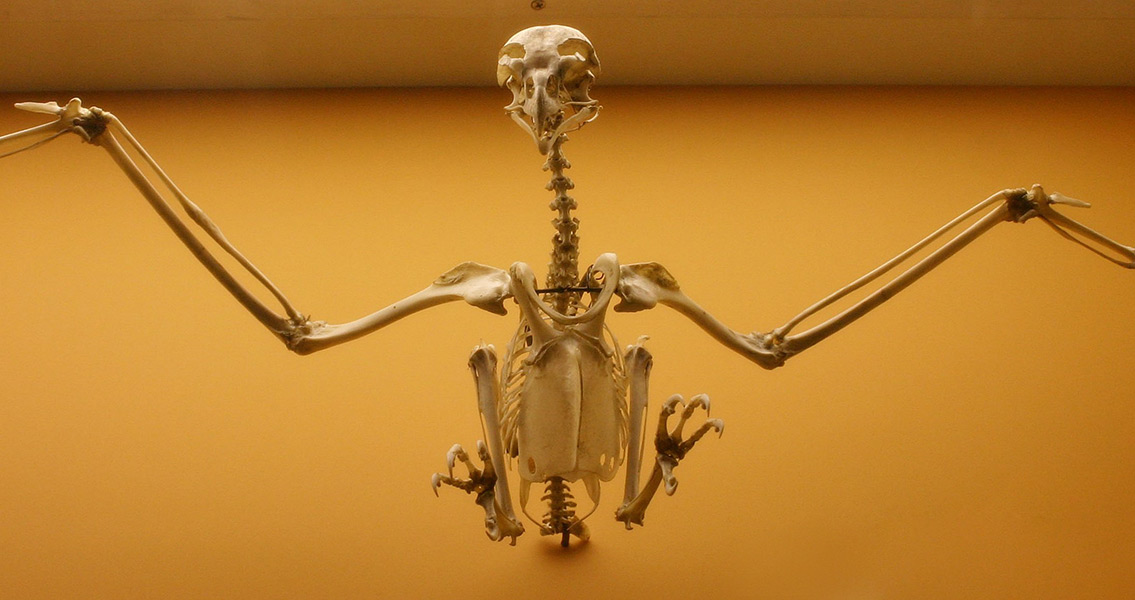
Newly Discovered Bird Fossil Points to Ancient Flight

www.nature.com ]]>

Categories
Breaking News

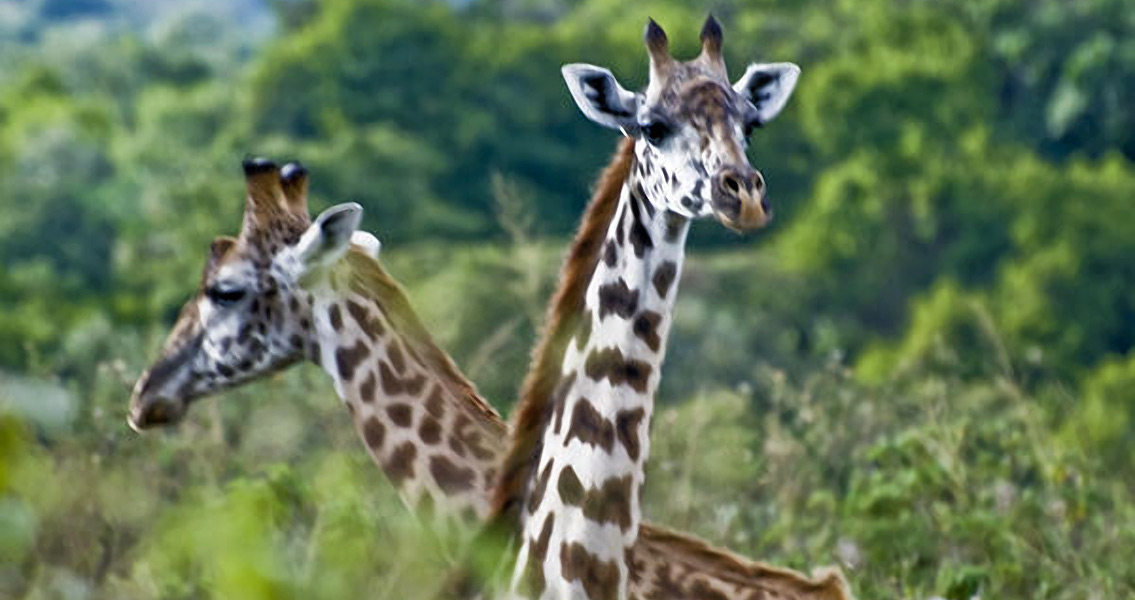
Study Finds How Giraffes Evolved Long Necks

Samotherium. Six million years later, the second stage of elongation took place, in the back part of the third cervical vertebra. Modern giraffes are the only species still surviving to this day that underwent both stages of the elongation, to get where they are now, with their third cervical vertebra similar in length to the upper arm bone of an adult human. Meanwhile, the okapi only experienced the first stage of elongation and over the following millions of years its neck underwent a kind of reverse evolution, with the animal ending up with a shorter neck than it had started with. The giraffes, National Geographic author Brian Switek notes, are not the only animals in history with superlong necks. The rest, however, were all dinosaurs, whose neck evolution involved the emergence of additional vertebra. Giraffes only have seven cervical vertebrae, like humans. Apparently, Switek writes, the giraffes were constrained by their mammalian anatomy, so they evolved long necks in other ways. The team responsible for the research verified its findings using a mathematical model that showed how the cervical vertebrae would develop over these millions of years, Live Science reports. According to the model, after the initial lengthening that Samotherium underwent, its third cervical vertebra would need a second phase of elongation, which confirmed what the researchers found from the fossils they had studied. Regarding the purpose of the long necks, Melinda Danowitz said that both possible reasons – reaching food and gaining a fighting advantage (for the males) in order to improve mating chances – remain valid possibilities. The debate as to which one was the driver of this unique neck evolution will probably continue but at least there will be more clarity as to the mechanism behind it. For more information: “Fossil evidence and stages of elongation of the Giraffa camelopardalis neck ” Image courtesy of Wikimedia Commons user: Fiona Bischof]]>

Categories
Breaking News

Smuggled Clay Tablet Goes on Display at Museum

Categories
Breaking News

Homo naledi: Walker and Handyman

Homo naledi, has shown that the hominin was probably equally good at climbing trees as walking, even running, on the ground. What’s more, Homo naledi seems to have been handy with tools, media report. This new examination focuses exclusively on the anatomy of the hands and feet of the hominin and has found that the shape of the bones is very similar in many ways and distinctly different in others from our own. Among the similarities are the shape of the foot, specifically the ankle joint area, as well as the absence of a “grasping big toe”, the researchers say in their new paper, Still, the toes were more curved than ours, which suggests Homo naledi felt comfortable in the trees. Commenting on the paper, Jeremy Da Silva, an anthropologist from Dartmouth College, told Reuters that the foot and leg anatomy of Homo naledi revealed the species was well adapted for long-distance walking and running, with elongated bones, and ankles and knees like modern humans’. At the same time, however, Homo naledi had a lower arch than modern humans, and the toes were curved. Another commenter, William Harcourt-Smith from the American Museum of Natural History, told the BBC that the hominin’s lifestyle probably involved long periods of being on the ground, and going up in the trees to escape predators or to feed. All in all, however, Harcourt-Smith said the species was “much more bi-pedal than not, but not 100%.” The hand bone fossils found in the Rising Star cave in South Africa offered even more fascinating insight into this ancient ancestor of ours. The shape of the hand suggested that although the fingers were more curved than are ours, Homo naledi could manipulate tools. This suggestion could fuel a hypothesis that tool use is not as directly related to cognitive capacity as traditionally believed. Homo naledi’s brain was just a third of the size of ours, something that would usually make scientists think the species was unable to make and use tools, but apparently the case is the opposite. One palaeoanthropologist commenting on the paper, Tracy Kivell from the University of Kent, told Reuters that this discovery “causes us to perhaps rethink the cognitive requirements for tool use.” The Homo naledi fossils were found in August and the discovery was made public in September. Starting with one nearly complete skeleton, so far researchers working at the site have unearthed partial remains from around 15 individuals. Hand fossils alone number almost 150, with one almost complete specimen of the right hand of an adult, while foot bones total 107 so far, with one completely preserved right foot, again of an adult. Luckily for science, the bodies in the cave were not disturbed after they were put there or died there and they did not suffer the effects of the elements, such as floods, which would have dissolved some of the smallest bones, Tracy Kivell told the BBC. For more information: “The hand of Homo naledi”]]>

Categories
News

The Controversial Capture and Death of Che Guevara