www.nature.com Image courtesy of Wikimedia Commons user: Ikiwaner]]>

www.nature.com Image courtesy of Wikimedia Commons user: Ikiwaner]]>

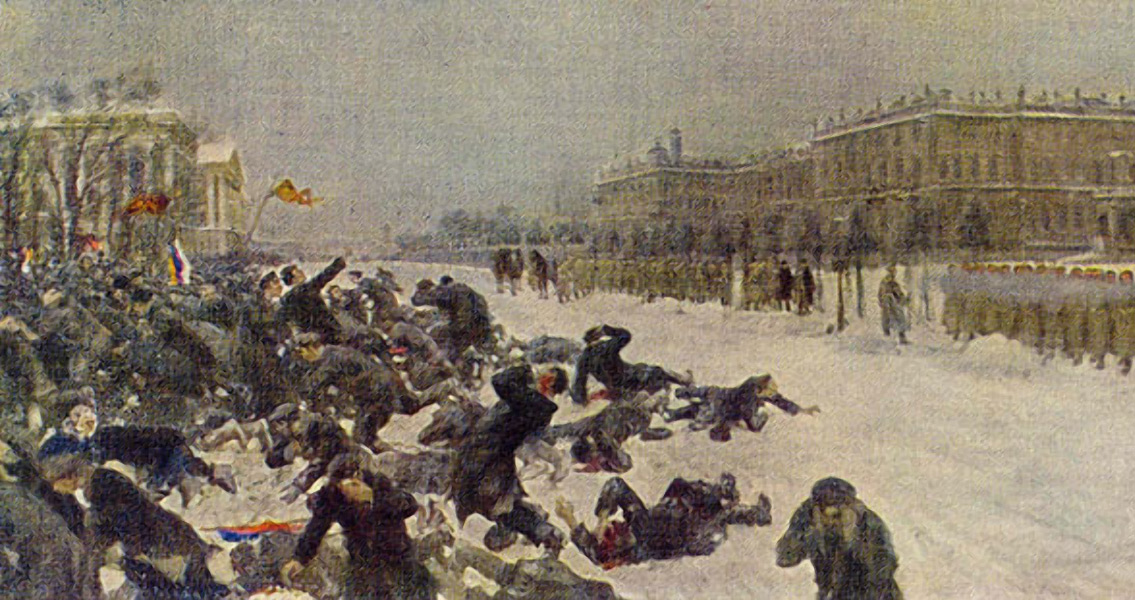
Jewish History. In the aftermath of the Revolution, new secular Jewish spaces began to emerge after the liberalisation policies of Tsar Nicholas II had slackened restrictions on the press and public gatherings. This new Jewish public sphere – comprised of the Yiddish press, coffeehouses and theatres – created an ‘ethno-linguistic’ community amongst Warsaw’s Jews, providing new collective bonds for the community. This new Jewish community provided a sense of order for new migrants to Warsaw, a place which could be very worrying. “The disorder, confusion, and possible dangers of urban life—from unfamiliar streetscapes to charlatans who preyed on those who were vulnerable—disoriented newcomers and other city residents, particularly women and children,” Auerbach notes. It is clear that scholarship has taken a clear shift in how Warsaw’s Jewish community is examined. The modern Jewish politics which arose in early-twentieth-century Warsaw was a reaction to a crisis of modernity and urbanisation. Jewish politics did not grow out of internal Jewish developments; they were a response to outside factors. “By shifting the focus away from ideologues, elite decision makers, and cultural figures and toward the broader public,” Auerbach notes, “[new research] complements and challenges the foundational historiography of modern Jewish politics in eastern Europe.” New cultural institutions expanded the Jewish public sphere and were instrumental in bringing Jews into political modernity. Coffeeshops, the press and theatres provided secular arenas where ideas could be shared and debated and Jews could form new bonds. “These spaces curbed the sense of isolation experienced by newcomers,” Auerbach concludes. For more information: www.link.springer.com Image courtesy of Wikimedia Commons user: Alex Bakharev ]]>

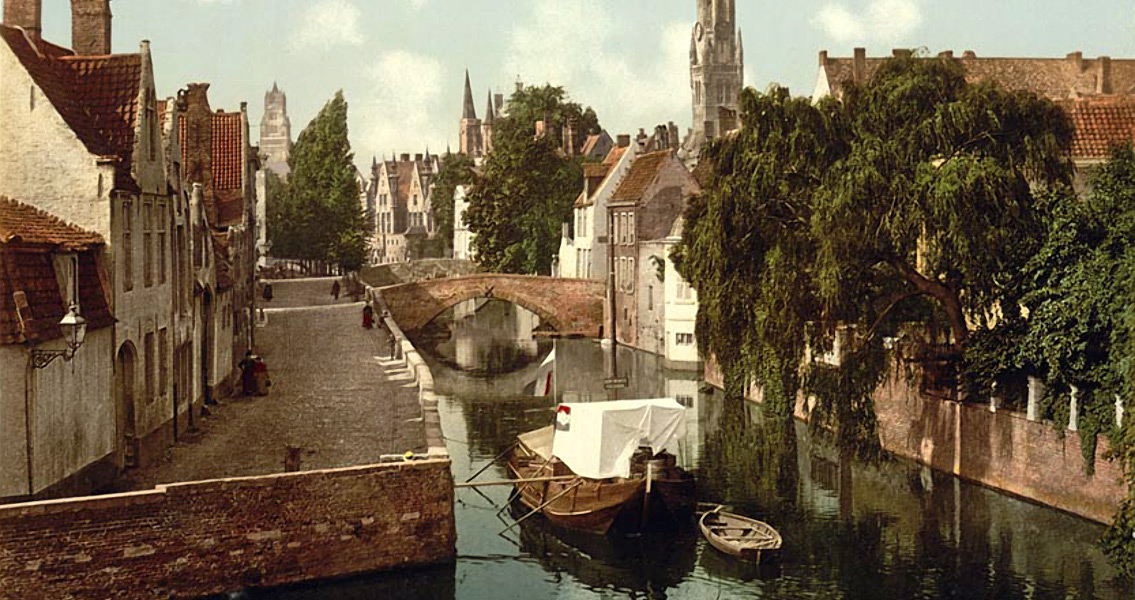
Past and Present, one of the most prestigious historical journals in the English-speaking world. “Indeed, the elites of Ghent, Bruges and Ypres, the three leading cities of the county [of Flanders], had begun to acquire rural estates as early as the second half of the thirteenth century, and members of the urban middle classes soon followed their example.” Since the early twentieth century, historians have assumed that urban elites who bought rural properties gave up their previous lifestyle. In what is called the ‘betrayal of the bourgeoisie,’ leading merchant families abandoned commerce entirely, preferring to pursue noble status rather than profit. Buylaert, however, suggests that this is a fundamentally flawed assumption. Acquiring rural estates, Buylaert argues, did not mean a withdrawal from the urban economy, or from commercial activities in general. Urban merchants “used their rural properties as pledges for contracts to buy or sell industrial goods that were made in or marketed through cities,” Buylaert explained. “Land was also a hedge against market fluctuations, a way of diversifying the investment portfolio.” Far from abandoning their lucrative commercial ways, therefore, these urban merchants used their rural holdings to further their mercantile aims. But what about the nobles seen in the streets of Bruges? Buylaert states that the ennoblement of city-dwellers must be seen in a context of a reciprocal urbanisation. For a long time before the first city elites were accepted into their ranks, Flemish nobles were striving to adapt to the increasing dominance of large cities; this urban growth through the medieval period held particular risks in Flanders, one of the heartlands of European feudalism. By the late thirteenth century, Ghent, Bruges and Ypres had become the economic, demographic and military powerhouses in the county of Flanders. The cities had gained so much power, in fact, that they started to dominate the political decision-making processes. “In response to the power of these cities,” Buylaert argues, “Flemish nobles… invested in urban life and the urban economy, thereby assuring the preservation of their social and political position. It was this investment that, in turn, allowed city elites to enter their ranks as seigniorial lords.” Buylaert has revealed a remarkable piece of social history by examining a rather curious incident in the history of Bruges. By exploring why a group of Flemish nobles were seen in an urban environment – somewhere they supposedly should not have been – Buylaert has re-evaluated how we should look at the medieval nobility. It appears that the elite of society were not apart from the rest of the population and their membership was, at least to an extent, porous. For more information: www.past.oxfordjournals.org Image courtesy of Wikimedia Commons user: Dzlinker]]>

Australopithecus remains have announced that one of the fossils had skin on. The six fossils discovered so far have been dated to 2 million years ago and belong to the species Australopithecus sediba, which combined features of both the original Australopithecus, the first erect hominin species, and of modern Homo species. The find is all the more fascinating because, in addition to this being possibly the oldest hominin skin ever discovered, the fossils contain traces of organic matter from the food these ancient human ancestors ate. The initial discovery was made by chance: the lead researcher’s son stumbled across a human fossil in the Malapa Reserve near Johannesburg, in 2008. Until then, science did not even know this species had existed. Since then, excavation works have expanded significantly, and the team has even built an on-site laboratory where they can examine their finds in a secure environment. So far, the site has yielded bones belonging to six individuals, including an almost complete skull. Based on the evidence, the researchers have established that representatives of the Australopithecus species were much shorter than modern humans, standing at some 1.30 metres, and with a correspondingly smaller frame. While they walked on two legs, they also had more curved fingers than later hominins, suggesting they were also skilled climbers. Yet the most striking feature, according to Lee Berger, the leader of the research team, is the Australopithecus seiba’s head, which was disproportionately small, with the brain about the size of a modern man’s fist. The skin remains found on the fossils could tell the scientists a lot about those hominins’ lifestyle, while the organic substances between the teeth of some of the fossils could reveal something about their diet. This would be possible due to the kind of rock in which the fossils were found, which, unlike other sorts of rock, is capable of preserving organic substances. Two million years ago the site used to be a cave in the ground, Berger told the Naked Scientists podcast. It later collapsed in on itself, creating conditions he compared to a pool filled with liquid concrete, in which the bones were then thrown and preserved. The team has no way of knowing how these proto-humans got into the cave but suggest it may have been a trap they didn’t notice or contained something that lured them in. The team expects to unearth more human remains from the ancient cave and in order to protect them from environmental factors, has actually built a whole laboratory on the site. This will most likely turn the place into a tourist attraction and already the scientists are allowing visitors to look at the excavation site. The endeavour was challenging because the place is part of a nature reserve but, says Berger, the team came up with a structure that organically fits in its surroundings. This has made this site a unique one, where tourists will be able to witness the ongoing work of the researchers as they further their insight into the nature of this species and possibly establish where exactly they stand in relation to modern humans. Image courtesy of Wikimedia Commons user: Lee Berger]]>
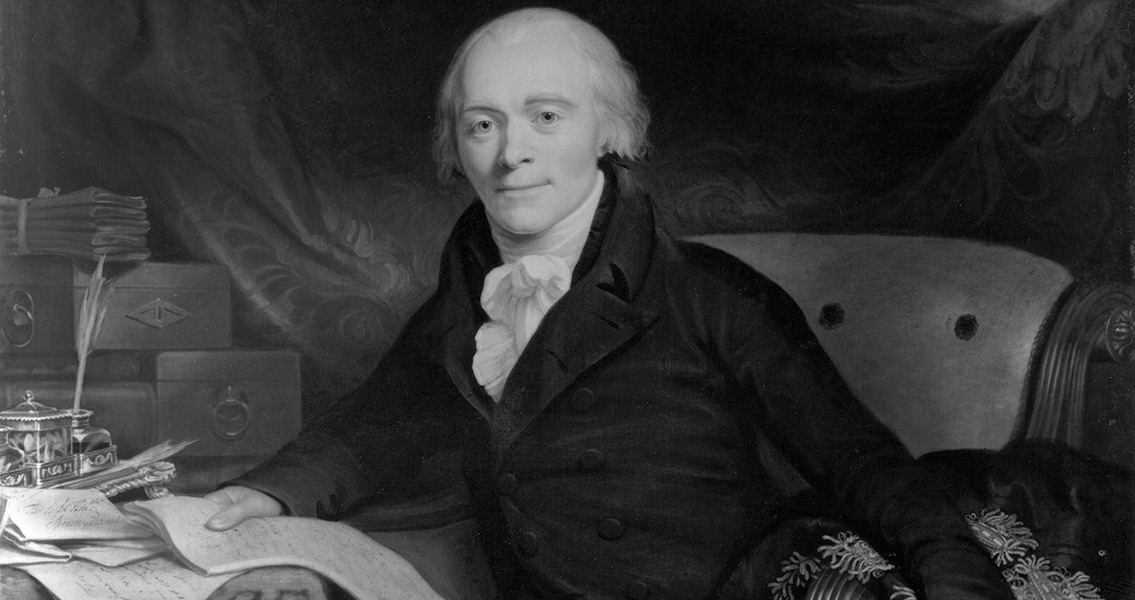
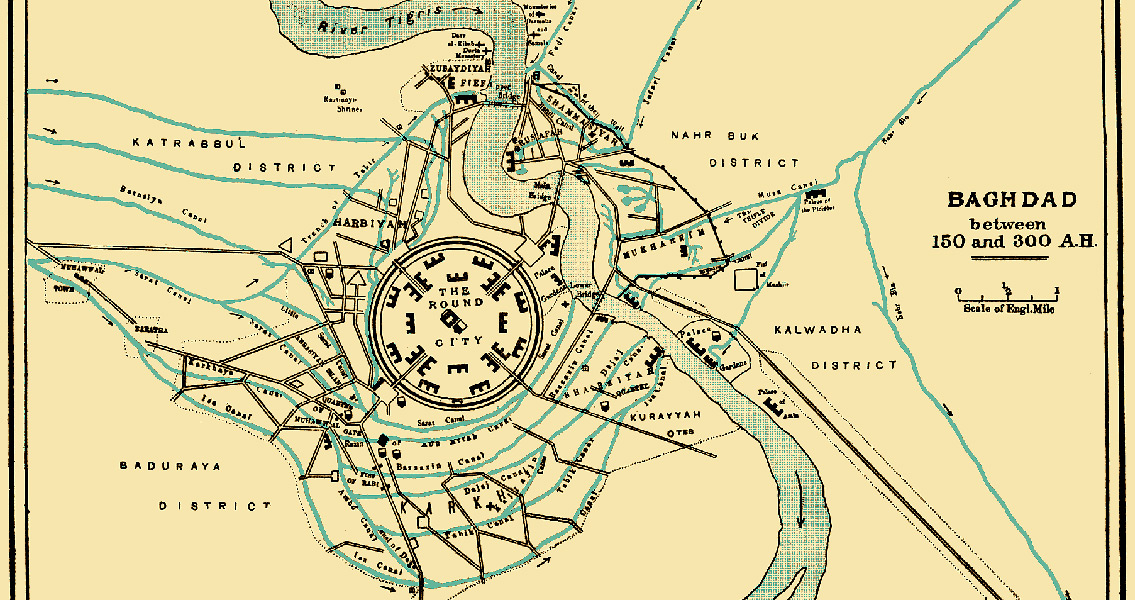
Jewish History. “Yet these narratives can often be dismantled when the primary sources that support the narrative are revisited.” Interestingly, Ackerman-Lieberman argues that the supposed move away from an agricultural economy towards a more urbanised, artisan way of life was merely a coincidence. Migration to the cities, he argues, simply coincided with the fact that agriculture was no longer the main source of income for Jews in the Middle East in the eighth and ninth centuries. Ackerman-Lieberman suggests that urbanisation was not the only process occurring in this period. Not only were urban centres growing, but rural areas were also. “Burgeoning irrigational infrastructure and the expansion of river transport led to intensified rural settlement akin to that seen in the urban areas,” he argued. It appears that there would have been little economic incentive for rural Jews to head towards urban centres, as agriculture was still a profitable business along the Tigris and Euphrates. Importantly, for the vast majority of Jewish farmers, it was not especially profitable for them to up sticks and change their means of generating an income. The impoverished majority of Jewish tenant farmers, Ackerman-Lieberman argues, simply lacked the financial capital to become merchants, while wealthier Jews could expand their rural holdings by engulfing smaller farms. One of the central tenets surrounding the supposed Jewish urbanisation is that there are very few mentions of Jews in historical records. Ackerman-Lieberman, however, views this silence in a different way. He argues that the record of Jewish agricultural pursuits is poor not because Jews were not involved in agriculture, but because what survives tends to be legal and mercantile letters, not agricultural correspondence. Also, much agricultural and commercial law had been settled before the Abbasids came to power. As a result, what legal records there are do not refer to numerous Jewish farmers in the law reports. “Without clearer evidence that the bulk of the Jewish population moved to the garrison cities in the eighth century,” Ackerman-Lieberman concluded, “the very reasonable explanation that Jews continued in their agricultural pursuits should be maintained.” It is important to note that Ackerman-Lieberman does not provide a clear explanation of what did happen to the Jewish population under the Abbasid caliphate. What he does do, however, is critically engage with an established narrative in Jewish history and effectively call into question many long-held assumptions. For more information: www.link.springer.com Image courtesy of Wikimedia Commons user: Andres rojas22]]>