Categories
Breaking News

Early Vikings Were Traders, Not Looters

silver ring with an inscription in Arabic in a Viking grave, confirming accounts by Arab travelers from the Middle Ages about their peaceful encounters with the Scandinavians. Image courtesy of Wikimedia Commons user: http://upload.wikimedia.org/wikipedia/commons/thumb/9/96/Comb1.jpg/591px-Comb1.jpg ]]>

Categories
Breaking News

New Research on Highland Identity

Historical Research. Initially focused on the history of the Celtic people, philology and culture, the magazine became devoted to securing a solution to the Highland land question. In the late nineteenth century, Britain was becoming an industrial behemoth on the back of the spoils of empire. Most imperial profits ended up in the hands of lords and businessmen who used their wealth to buy large estates. Stewart notes that James Matheson, a Scottish trader with Mackintosh & Co., bought the entire Isle of Lewis when he returned from China in 1844. On Lewis, he built Lews castle, near Stornoway. In contrast, however, the majority of Highlanders had a very different experience of the period. Recurrent famine and land clearances inflicted mass suffering on the population and led to widespread emigration from the Highlands. Importantly, the Celtic Magazine was concerned with the plight of Highlanders. Implicit in the magazine’s conception of an idealised Celtic Highland past pre 1745, Stewart argues that the magazine internalised the racial stereotypes of Highlanders made by Lowlanders and the English. By promoting Celticism as an ideal, rather than having negative connotations, the Celtic Magazine gave a voice to the Highlanders by setting them apart from the others. It must be noted that the idea of a ‘Celt’ is very problematic. What it means, precisely, is hotly debated. Often, the Celts are understood to have been a European tribe that swept into Britain before the Roman conquests. Subsequently, the Celts were pushed to the fringes of the British isles by invasions from the continent. Stewart does not address this complicated history of precisely what a ‘Celt’ was. Rather, he is examining what a Celtic identity came to mean for the Highland population, expressed through a popular magazine. Celtic identity was a means of giving voice to a large group of Scottish people who were distinct from the wealthier and more vociferous Lowlanders. For more information: www.onlinelibrary.wiley.com Image courtesy of Wikimedia Commons user: Flickr upload bot]]>

Categories
Breaking News

Ancient Figurine Raises Questions About Neolithic Cultures

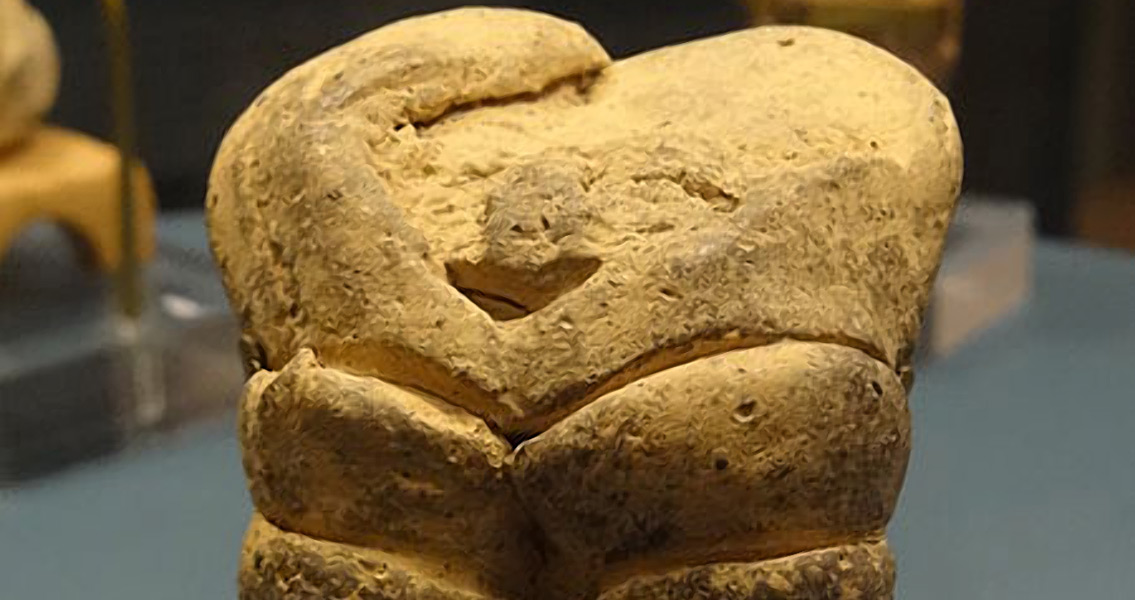
Haaretz reports, citing the archaeologists who took part in the dig. It is likely that the artefact was made by another neolithic culture, Jericho 9, which was initially thought to have emerged after the decline of the Yarmukians. Now, it is possible that the two cultures co-existed and shared a lot of their religious beliefs, even though they lived in different parts of the Levant. So far Neolithic figurines have been found at nine locations in Israel, most of them in the region of Sha’ar Hagolan, in the north of the country. The region is the main source of Yarmukian artefacts, including white clay pottery, of which many of the figurines were made. The height of the Yarmukian civilisation is believed to have been 7,500 years ago, and it is considered the first civilisation to have started baking clay in the Middle East. The most abundant source of information about this people, however, are the figurines, made both from clay and limestone, of which more than 150 have been found so far. They are characterised by a refined artistic style, something unique at the time, and are considered a major artistic achievement of Neolithic people. Although the bulk of Yarmukian figurines have been found in northern Israel, this latest find, a red-clay figurine, was made in Revadim, a kibbutz in south-central Israel, an area associated with the supposedly later Jericho 9 civilisation. According to Edwin van den Brink, the lead researcher at the dig, these two, the Yarmukians and Jericho 9, were in fact one single culture, apparently capable of different styles in pottery. They had one system of beliefs, in which the image of a fertility goddess seems to have played a central role, given the abundance of such figurines. Still, the question of whether the two types of figurines were made by one culture or two different ones remains because, as suggested by the other lead archaeologist at the site, Yitzhak Marmelstein, the red-clay one may well have been made in the north and then brought to the south of the country. Chemical tests to be performed on the new find are expected to determine whether this was the case. The ancient inhabitants of Sha’ar Hagolan were initially believed to have lived in pits dug in the ground, but later archaeological work unearthed dwellings built from stones and mudbricks, and covered with straw or mud set on wooden frames, according to information from the Israeli Ministry of Foreign Affairs. In addition to clay pottery, the Yarmukians also extensively used stone vessels and tools. Image courtesy of Wikimedia Commons user: Hanay]]>

Categories
News

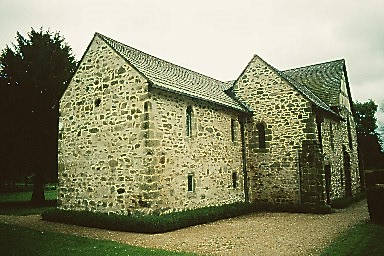
Hero or villain? Robert de Herle of Donington le Heath

Categories
News

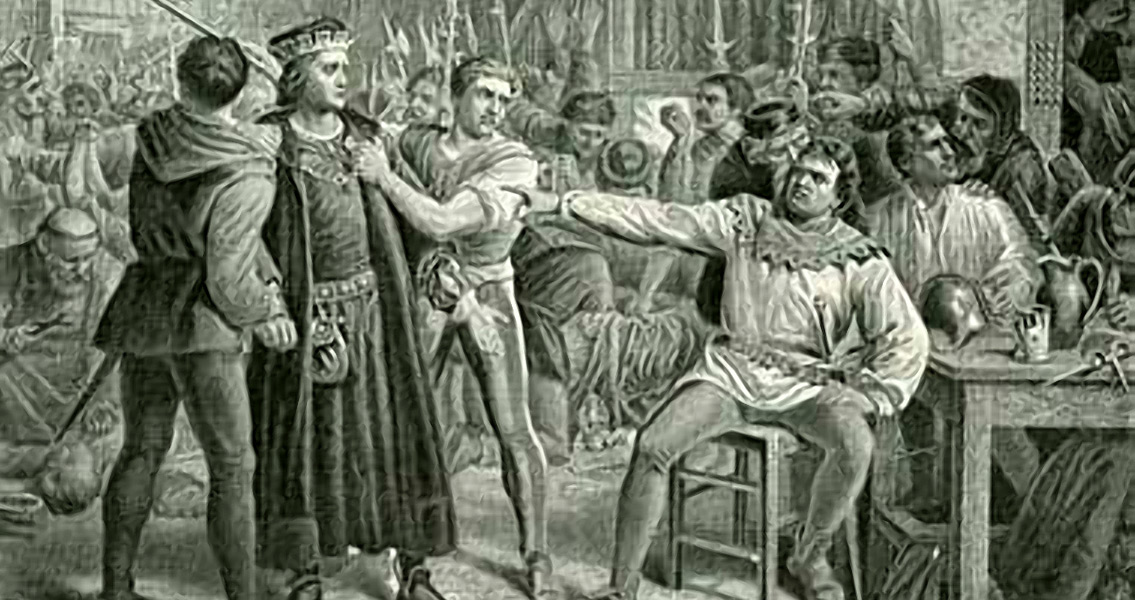
The Start of the Cade Rebellion

Categories
Breaking News

The History of the Secret Ballot

Historical Research. Media coverage of elections the world over is replete with images of electors queuing up to vote and papers spilling from ballot boxes, ready to be counted. No one ever speaks of an open voting system any more, the secret ballot paper is seen as an essential hallmark of a free election system. Remarkably, given the iconic status of the ballot paper, Crook and Crook note, questions surrounding the history of the ballot paper have not been adequately explored. In the eighteenth century, Crook and Crook wrote, “the dominant method of electing borough personnel involved those assembled indicating their preference either orally – by casting their ‘voice’ – or by raising a hand, normally in order of social rank.” Importantly, this earlier electoral system was in a very different voting culture. Early modern elections proceeded relatively consensually and the nomination process in early modern Britain was often uncontested, meaning that polling was often unnecessary. As the number of enfranchised individuals grew however, oral voting or a show of hands became a troublesome system. As elections became more hotly contested, with several candidates vying for votes, another system was required; this is where the invention of the paper ballot had its inception. “Put simply, [the paper ballot] was a means of managing elections that had proved, or might prove, unduly fractious and where the hostility of competing factions was such as to render open voting neither practical nor decisive”, Crook and Crook explain. In the early nineteenth century, elections became more competitive. The growth of party-political groups in competition was slowly institutionalised. This process placed a premium on numerical precision, something which hands or voices did not have. In this context, ballot papers – particularly printed ones – had an advantage. As elections became more complicated, so the propensity for corruption increased. “Corruption crept in at each and every point,” the pair explain. Registration fraud, repeated voting, rejection of papers, or simple maladministration (such as ‘misplacing’ boxes of ballots) took place. Secret ballots, properly administered, was one solution to these issues. Secrecy promised quicker, quieter elections which were less corrupt. This principle of the secret ballot survives to this very day. As people in the United Kingdom head to the polls on 7th May, they will indicate their preference on a secret paper ballot. It is important to remember that this simple piece of paper, which many of us take for granted, has a long and complicated history. For more information: www.onlinelibrary.wiley.com Image courtesy of Wikimedia Commons user: Russavia]]>

Categories
Breaking News

Modern Birds 6 Million Years Older than Thought

Archaeornithura meemannae. The remains have been dated to 130.7 million years ago, around 30 million years after the first birdlike dinosaurs appeared on the scene and set off bird evolution. To compare, what was believed to be the oldest representative of the bird family lived 125 million years ago. Both belong to the Ornithuromorpha clade (a group encompassing all representatives of a life form, from the first one to all their descendants), which also includes all modern birds. The fossils were unearthed in 2013, but only now have analyses been completed that date them and classify them as being from a new species. An artist’s recreation of the ancient bird’s appearance shows that it was remarkably similar to many modern birds. In fact, the only feature out of place was the pair of small claws at the central joints of its wings. Otherwise it was covered in feathers, apart from the legs, which suggests it was a wading bird, and had a beautiful purple plumage on its head, while the rest of it was mostly gray. The bird was a small one, just 15 cm, and it is unclear whether it had teeth – a common feature of early Cretaceous birds – or not. Among the suggestions the researchers were able to make based on the fossil evidence, is that it was probably a herbivore and that it used gastroliths (stomach stones) to help digestion, study co-author Wang Min from the Chinese Academy of Sciences said. This discovery adds to a growing, though still scarce, body of evidence about the early stages of birds’ evolution. Just recently, again in China, scientists discovered an ancestor of the avian class with bat-like, skin-covered wings. This pigeon-sized dinosaur represents a stage in bird evolution before the Archaeopteryx, so far considered the earliest known example of a creature between a dinosaur and a bird. The Archaeopteryx was a feathered dinosaur that had bird-like characteristics, such as skeletal structure and possibly the ability to fly. The bat-winged dinosaur, on the other hand, most probably comes from an earlier time, before some reptiles started growing feathers and became warm-blooded, effectively ceasing to be reptiles. Early birds, however, were not the only masters of the air during the Mesozoic era, which spanned a huge period, from 252 to 66 million years ago. This other group of flying animals were called Enantiornithes. Although these apparently looked very similar to birds, they had teeth and claws, like dinosaurs. More than 50 separate species have been identified, with some only represented by a single bone, but they all died out during the latest mass extinction on the planet, around 66 million years ago, at the boundary between the Cretaceous and the Paleogenic eras. Enantiornithes are believed to have left no currently surviving descendants. Image courtesy of Wikimedia Commons user: Acabashi]]>

Categories
Editorial

History of Democracy in the UK (Part 2)

history focused on the relationship between monarchy and parliament, and the key events in restricting the powers of the monarch as Parliament became increasingly significant. The second part looks at the expanding of the franchise, and the various campaigns to make democracy more inclusive. The Glorious Revolution The Glorious Revolution of 1688 came at a time when the dislocation and chaos of the English Civil War was still fresh in the memory. The revolution, which ended King James II’s reign, was a response to the King’s obvious desire to have Catholicism returned as England’s religion. James’ reign was characterised by unrest and conflict with Parliament, a situation the revolution hoped to bring to an end. Both Tory and Whig politicians in the United Kingdom took it upon themselves to send an invitation to William of Orange, the protestant Prince of Holland, to take the throne of the United Kingdom and rule alongside his wife Mary, the daughter of James II. In November 1688, William’s forces landed in the United Kingdom, and James fled to France the following month. In January 1689, legislation was passed to enshrine the revolution, and William became King of England. Although a controversial event: one which led to bloody conflicts in Scotland and Ireland (both predominantly Catholic), can be interpreted as a legalised invasion of the UK, and restricted Catholic freedoms, the Glorious Revolution was crucially important in British constitutional history. Before being offered the crown, William and Mary were made to agree to a document which was eventually passed into law as the Bill Of Rights. It laid out a number of key constituional principles, such as the need for regular parliaments, the illegality of creating new taxes without parliamentary approval, and the prohibition of dispensing powers through royal prerogative. As was often the case, it took time for these new laws to be adopted in practice, but the Glorious Revolution laid the frame work for the modern, constituional monarchy. The Great Reform Act The nineteenth century was a period of drastic change in the United Kingdom, influenced by events both at home and abroad. The French Revolution of 1789 had proved an inspiration for the drive to achieve social change across Europe, leading to the nineteenth century being dominated by political and social upheaval. The French Revolution was also a warning to governments of the need to respond to the voice of the people to prevent revolution. At the same time, the Industrial Revolution had swiftly altered British society, leading to mass urbanisation and a swift redistribution of wealth. Both of these factors put pressure on the establishment to create a political system that reflected reality. Allowing men who rented property to vote as well as property owners, the 1832 Reform Act increased the franchise to over a million people, or about one in six of the population. The act also redrew the barriers of constituencies, meaning fairer political representation was given to the densely populated cities that had sprung up after the industrial revolution. A second Reform Act, passed in 1867, expanded the enfranchise to include all male householders, regardless of the property’s value. The act doubled the franchise yet again, incorporating a large swathe of the urban working class. The Twentieth Century Into the twentieth century, reforms still needed to take place to reach the democratic representation present in the United Kingdom today. Throughout the late nineteenth and the early twentieth century the movement for female suffrage had grown increasingly vocal and difficult to ignore. Different female suffrage groups deployed methods of various extremes in an attempt to expand the franchise, most notably in 1913, when Emily Davison was killed at the Epsom Derby after she ran out in front of a horse, holding the banner of the Women’s Social and Political Union. Finally, at the end of the First World War, the ‘Representation of the People Act’ was passed, significantly expanding the franchise once again. All property restrictions were removed for male voters, allowing many soldiers who had fought in the war the chance to vote for the first time. Women over the age of thirty were also allowed to vote for the first time and stand for election, although some property conditions were included. These restrictions were lifted ten years later, allowing any woman over the age of twenty one the right to vote. Image courtesy of Wikimedia Commons user: Maurice]]>

Categories
Breaking News

Cahokia Brought Down By Floods

Proceedings of the National Academy of Sciences, presents new ideas to explore. “We are not arguing against the role of drought in Cahokia’s decline but this presents another piece of information,” says Samuel Munoz, currently writing his Ph.D. in geography and the study’s lead author. The research also provides new information about the history of the Mississippi River, a waterway known to flood regularly, which may be useful now. “By understanding the river better, we can hopefully offer new information to those concerned about the exposure of current populations to floods”, explains Williams, a professor of geography. By using radiocarbon dating techniques of plant remains and charcoal within the core samples, Munoz and Williams have established ‘fingerprints’ of major flood events from the last 2,000 years. Following a 300-year-period of numerous floods, the centuries after 600 CE witnessed an increasingly arid climate. Archaeological evidence from this period reveals that human activity increased in the floodplain as people moved into the area and farmed more intensively. Around 1200, however, population began to decline. “There are shifts in craft production, house size and shape, and other signals in material production that indicate political, social and economic changes that may be associated with social unrest,” explained Sissel Schroeder, a UW-Madison professor of anthropology who aided Munoz and Williams. Cahokia fractured and the population began to migrate away from the floodplain. By 1400, the site was deserted. Many factors obviously contributed to Cahokia’s rise and eventual decline. A period of gradual aridification followed by increased flood activity provides a means of understanding how past societies, as well as modern ones, are dependent on the climate. Sudden shifts in environmental conditions can prove disastrous for communities, as happened at Cahokia. For more information: www.pnas.org Image courtesy of Wikimedia Commons user: Innotata]]>

Categories
Breaking News

Nazca Lines Marked Pilgrimage Routes