Categories
Argentina Invades the Falklands
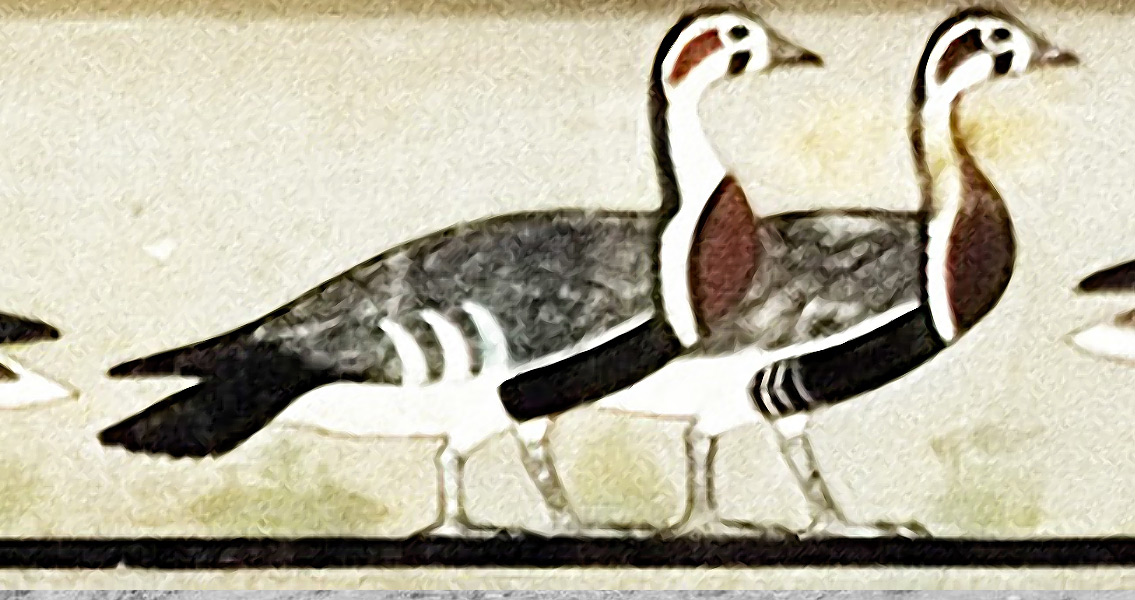
Live Science. Tiradritti’s suspicions were first aroused by the birds depicted on the Meidum Geese. Two of which were unlikely to have inhabited ancient Egypt. “The painting depicts three different couple[s] of geese, three turned to the left and three to the right,” Tiradritti wrote. Two of the geese were identified as white-fronted geese (Anser albifrons), the pair looking to the left were understood to be bean geese (Anser fabalis) and the pair facing the right were red-breasted geese (Branta ruficolis).” Bean geese breed in tundra and taiga climates, wintering as far south as northern Spain, Greece and Turkey. Red-breasted geese also breed in tundra, but rarely make it as far south as Egypt. Whilst this information regarding the species does not in itself prove the Meidum Geese to be a fake – ancient Egyptians could have known about animals which were not native to Egypt – it made Tiradritti analyse the work further. “After that, it was like to see a castle of cards collapsing,” he said. “One of the major problems with the Meidum Geese is the colours. Some of the hues (especially beige and marc) are unique in the Egyptian art. Even the shades of more common colours, like orange and red, are not even comparable with the same colors used in other fragments of painting coming from Atet’s (Nefermaat’s wife, in whose chapel the painting was supposedly discovered), chapel,” Tiradritti said. Two of the geese are leaning over, in order to make the size of all the geese balanced. This is unusual in ancient Egyptian artwork. Size often denoted importance and as such, Egyptian artists tended to deliberately draw animals or people in different sizes. Balancing size in a composition is a common feature of modern art, however. Tiradritti is due to publish his findings in the 5th April edition of Giornale dell’Arte and The Art Newspaper, in Italian and English respectively. His findings will cause the artistic world to think critically about ancient art, especially given the high prices these works can attract. For more information: www.livescience.com Image courtesy of Wikimedia Commons user: MGA73bot2 ]]>


www.hournals.cambridge.org Image courtesy of Wikimedia Commons user: Adam Cuerden]]>

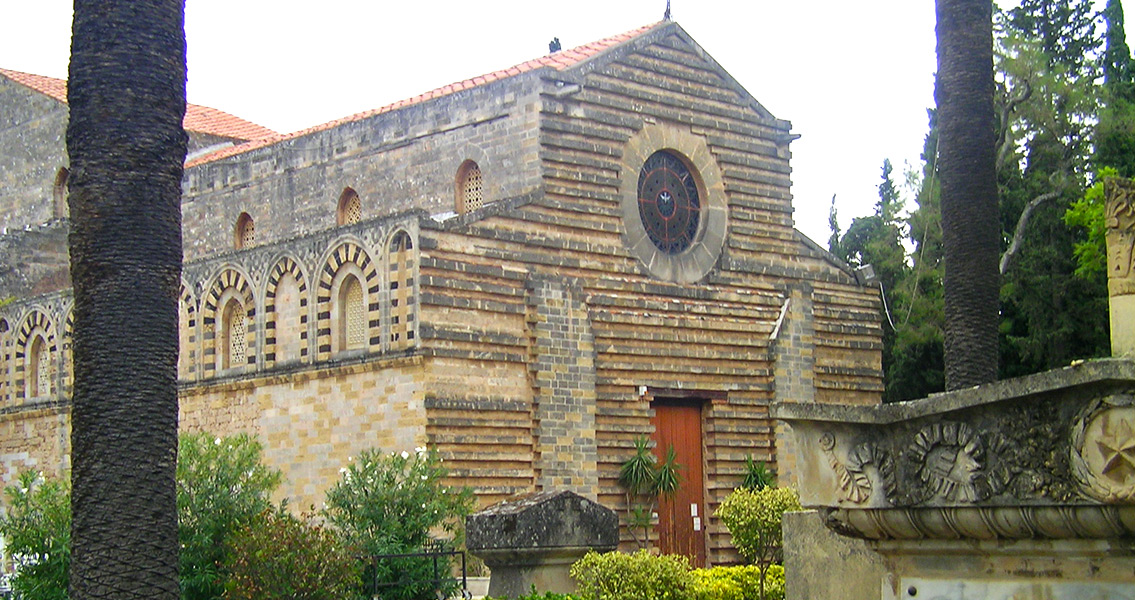
Sicilian Vespers came to an end. The night of rioting and massacre which had started on Easter Monday proved crucial in the history of Sicily and also had a significant impact on the broader history of the Mediterranean in this period. The revolt, which gets it name from the Hour of Vespers ceremony where it supposedly began, started on the 30th March and is believed to have been triggered by an Angevin soldier stopping a Palermitan woman outside the church of Santo Spirito di Palermo, to search her for weapons. Although details of the event of course vary depending on the source, it seems the soldier somehow offended the woman, triggering a riot against the Angevin-French among the local community. Reflecting the deeply ingrained tensions in Sicily’s multicultural society, the rioting spread through Palermo and then the whole of the island. The local Sicilian population attacked and killed Angevin people wherever they could be found, going as far as murdering monks and nuns. The rioters supposedly used a simple test to determine the Sicilian population from Angevin. Anyone believed to have originated from Anjou was asked to say the word “ciciri”, something native French speakers could not do in a convincingly Sicilian accent. In the annals of Medieval history, the revolt was a unique event. A spontaneous, popular uprising which affected political change. Following the night of the 30th to the 31st March the Angevin-French fled Sicily, and the people of the island eventually secured the support of the King of Aragon who sent troops there in August 1282. Although the revolt seemed to have occurred without any pre-planning, it is important to acknowledge that the uprising against the Angevin-French rulers was not completely without premeditation. Since 1266 Charles of Anjou, with the support of the papacy, had ruled Sicily from Naples. Deeply unpopular in Sicily, Charles’ strict rule incurred the wrath of normal Sicilians, but his unpopularity in a broader context was just as significant. A group of Italian nobles, known as the Ghibellines, supported the authority of the Holy Roman Emperor rather than that of Charles and the papacy. Peter III of Aragon, a rival of Charles for the Neapolitan throne and one of the main beneficiaries of the uprising, also had a clear interest in altering the status quo on Sicily. The Night of the Sicilian Vespers may have been a demonstration of popular dissatisfaction at Charles’ tyranny, but there were a diverse range of groups with an interest in ending the Angevin presence on Sicily. The revolt was followed by series of sea skirmishes and land battles between Angevin and Aragonese forces, sometimes referred to as the War of the Vespers. The fighting finally came to a close in 1302, with the Peace of Caltabellotta. The treaty saw Charles II, the son of Charles of Anjou, concede Sicily to King Frederick, a relative of Peter of Aragon. Sicily was now firmly under the sphere of Spanish influence, a situation which would persist for another five centuries. Historians have since argued that the Sicilian Vespers, and the subsequent war, proved crucial in the failure of the crusades in the Eastern Mediterranean. Charles of Anjou and the Vatican had been planning to send troops to take Constantinople when the uprising started. The need to divert resources to Sicily put this campaign on hold. Although one of many factors which ultimately led to the failure of the crusades, it is not a coincidence that the fall of Acre in 1291, a pivotal defeat for Christians in the Middle East, took place during the War of the Vespers. Indeed, the significance of events in Sicily in the broader context of Mediterranean history in this period can be seen in the theory that the Aragonese and Sicilian forces received financial support from Byzantine. Although the scope and nature of this support cannot be confirmed, it hints at the complex political workings of the period. The Sicilian Vespers revolt was an expression of popular dissatisfaction at the harsh rule of Charles of Anjou over Sicily. This moment of rebellion by Sicilians however, can only be truly understood in the broader context of Medieval history. Image courtesy of Wikimedia Commons user: Enzian44]]>
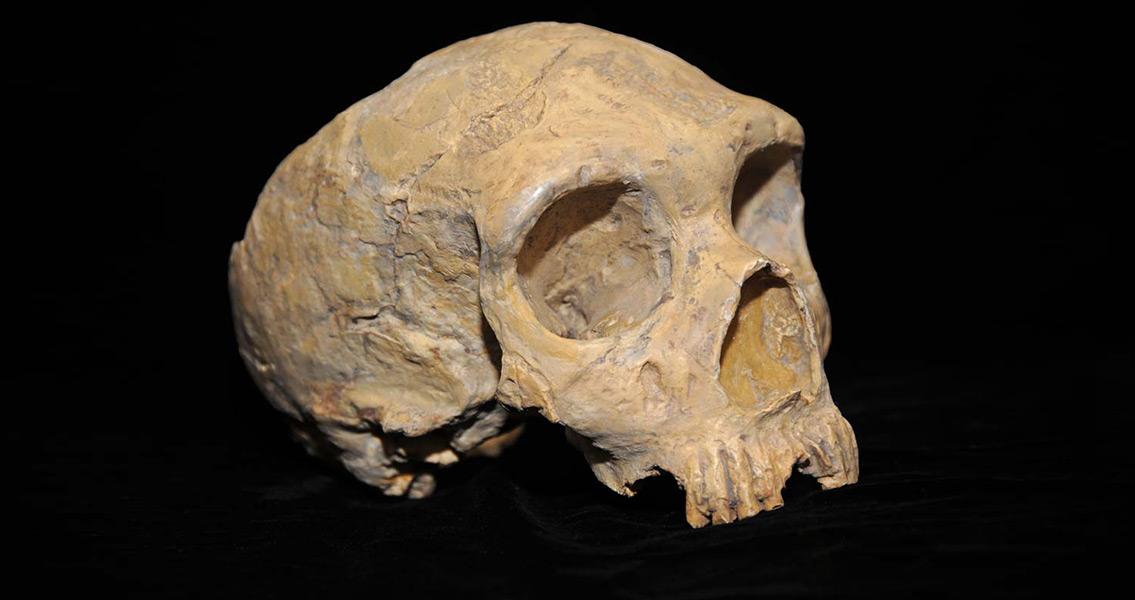
Journal of Human Evolution. “Neanderthals [however] might not have had such extreme sex-related specialization, at least in terms of the provisioning of food, with both males and females participating in the hunting of big game.” No previous work has explored what happened after Neanderthals had sufficient food, however. The Neanderthal teeth which Estalrrich and Rosas examined were taken from three different sites: El Sidron Cave in Spain, l’Hortus in France, and Spy in Belgium. All the Neanderthal teeth showed signs of significant wear. Interestingly, this wear was different to the damage usually caused by chewing food. Neanderthals are known to have had extensive anterior dental wear and their teeth often show scratches and chips. This is due to Neanderthals having used their front teeth as a tool for tasks such as food preparation, tool production and preparing skins. It is thought that Neanderthals used their mouths as a third hand, for activities other than the provisioning of food. “The fundamental observation is that all of the individuals present instrumental striations and dental chipping, regardless of provenance, age, and sex,” the team wrote. “Thus, similar behaviors could be expected among them, with all members of the groups performing tasks involving their teeth as tools, and leaving similar type of marks.” The division of labour amongst Neanderthal communities, therefore, was flexible. All Neanderthals, regardless of sex or age, used their teeth as tools. Subtle differences, however, were found between male and female Neanderthals. Teeth from female Neanderthals have more striations (linear marks or blemishes revealing wear on tooth enamel) than males, and the striations are longer. Extrapolating from these striations, Estalrrich and Rosas inferred possible behavioural situations. They believe that females were cutting different material to males and doing it more often. “That could mean a separation between sexes, or a sexual division of labor in activities other than foraging,” they wrote. Estalrrich and Rosas have decisively proved that Neanderthals used their mouths as tools. They have shown that teeth were not just for food preparation, but were useful in making tools and fashioning animal skins. Moreover, different striation patterns hint at social divisions amongst Neanderthal communities. “The results presented here illustrate how Neanderthals used their mouth as a third hand, and may indicate some subtle differences suggesting individual roles within the groups,” the report concludes. Image courtesy of Wikimedia Commons user: AquilaGib www.sciencedirect.com ]]>