Categories
Breaking News

Dinosaurs May Have All Had Feathers
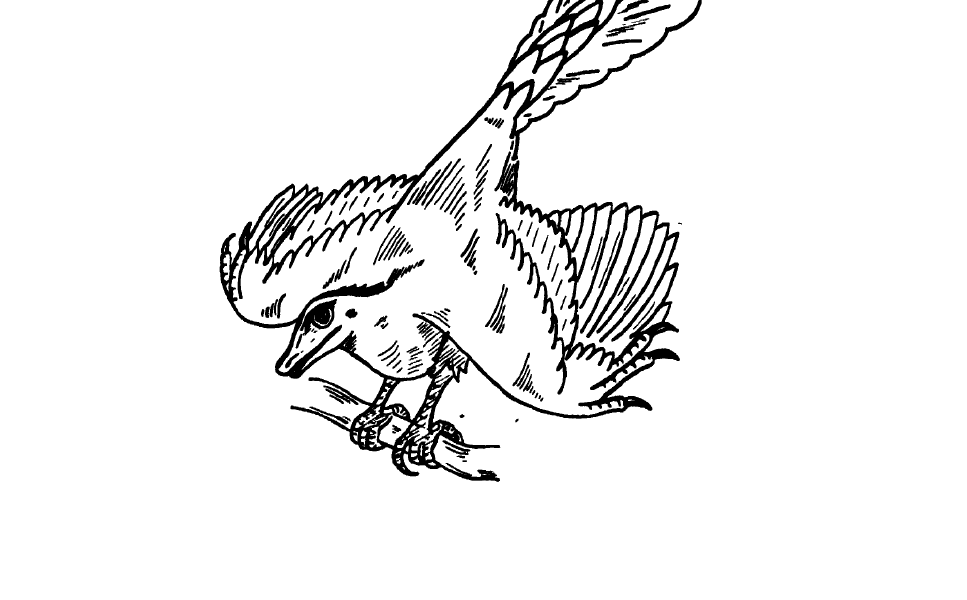
Kulindadromeus zabaikalicus, which had feathers. For nearly two centuries it has been taught that dinosaurs were large reptiles that had tough scales and a lizard-shaped head. The recent discovery may prove years of schoolwork wrong. The dinosaur found was 4.5 feet (1.5m) long, beaked, with large legs, short arms, a long tail and is thought to have been bipedal. This is actually not the first feathered dinosaur of its kind to be found. Way back in the 1990s, scientists have found at least five species of dinosaurs in China that had feathers. These dinosaurs were theropods (a type of dinosaur) and  carnivores. The infamous Tyrannosaurus rex is a part of this group. However, the dinosaur that was recently found was a herbivore and from a different dinosaur family, which meant that it could not have been related to the older feathered species found. The Kulindadromeus must have evolved differently than the rest of these dinosaurs, and hence many other dinosaurs may be the same way. Because of this, scientists are rethinking what dinosaurs may have looked like. The Kulindadromeus genus of dinosaur lived in Siberia, near the Kulinda River. Its legs and elbows were feathered, and there were streamlined feathers on its back. At least six skulls of this dinosaur was found in a fossil bed at the bottom of a lake, and they were all juveniles, which has scientists believe that they did not die in a catastrophe, but rather separate events. The skulls were buried under volcanic ash, preserving much of the feather imprints on the fossil bones. “Kulindadromeus” means “Kulinda River running dinosaur”, while “zabaikalicus” relates to the region of Siberia where it was discovered, Zabaikalsky Krai. The skin of the dinosaur resembled the skin of some birds, which provides even more evidence that today’s birds have evolved from the dinosaurs, according to the study. Lead author on the paper, Pascal Godefroit, is a paleontologist from the Royal Belgian Institute of Natural Science in Brussels. He and his colleagues state that while this find is significant, more studies should be done on this subject. There is a lack of evidence that feathers developed in all dinosaurs, since fossil records with feathers are in the minority. Before this, birds were thought to have come from the line of the archaeopteryx and other winged creatures. These feathers may have served as a method for insulation, such as in the case of Kulindadromeus, which lived in colder climates. Larger dinosaurs also may have had fewer feathers than smaller dinosaurs, as they would conserve heat more easily. We’re still a long way off from confirming whether or not all dinosaurs had feathers, but what it does mean is that feathers did not start off with birds, instead they evolved very early in history with the dinosaurs.]]>

Categories
Breaking News

Bolivian Mass Grave Discovered

Related Books ]]>

Categories
Book Reviews

The Novel That Started a War

Related Books


Uncle Tom's Cabin book Uncle Tom’s Cabin Or Life Among the Lowly Vol. 2Vol. 2 by Harriet Beecher Stowe [gap height=”20″]]]>

Categories
Breaking News

Divers Investigate Destruction of the London

Categories
Breaking News

Ancient Egyptian Carving Unearthed in Sudan

Categories
News

Tudor Wedding Present Rediscovered

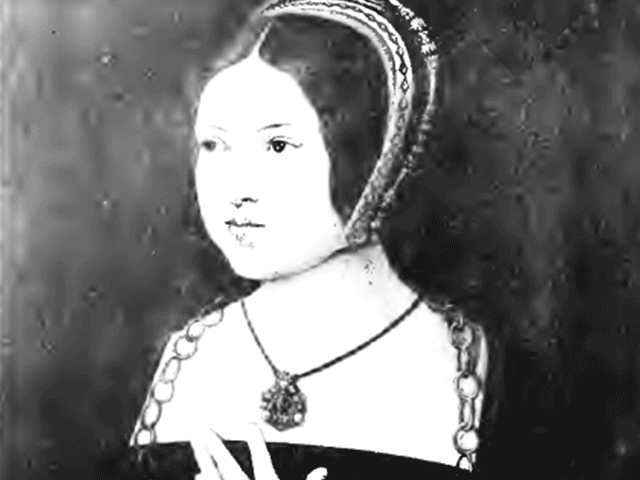
BBC History Extra magazine: “The similaritiesbetween the carvings on the chest and the illuminations in the Book of Hours are striking. Three illuminated documents relating to the royal wedding all show the IM monogram (James and Margaret) tied together with a similar love knot, just as it is carved on the chest.” Indeed, the distinctive artwork became something of a trademark for the wedding. Alongside the couple’s initials is a knot made of thistles – the symbol of the Stewart family. This was a symbol of James’ loyalty to the Scottish throne, and a reminder for Margaret. The design was replicated beyond wedding just paraphernalia. It also decorated the floor tiles of Linlithgow Palace, the residence of Scottish royalty during the fifteenth and sixteenth centuries, and James’ gift to Margaret. James and Margaret’s marriage was one that would go on to be hugely significant in the history of the United Kingdom and represents something of a turning point in the relationship between England and Scotland. The marriage was agreed on the day of the signing of the Treaty of Perpetual Peace in 1502. The treaty was intended to stop the intermittent skirmishes between the two kingdoms. It laid out rules for the administration of the country’s borders, and put in place systems to resolve conflicts before they escalated. A century later the true significance of the marriage would become apparent. Until the seventeenth century, Margaret’s line in the Tudor succession had been excluded. However this began to change, as Elizabeth I’s reign came to an end it became increasingly difficult to find an acceptable successor. James VI, Margaret and James’ IV grandson, was ultimately selected as the most appropriate heir. This ‘Union of the Crowns’ marked the first time England, Scotland and Ireland were ruled by a single monarch. It also marked the end of the Tudor line, as Elizabeth proved to be the dynasty’s last monarch. In 1707, the transition to a single United Kingdom was complete, as the Act of the Union united the three countries under a single monarch The marriage that the oak chest commemorates came to symbolise the start of great changes in the United Kingdom. It was central to the unification of Scotland and England into the Kingdom of Great Britain, and facilitated the eventual closing of the Tudor Dynasty. Its discovery is particularly poignant as Scotland prepares to vote on whether it should be an independent country. As the future of the union is about to be decided, this oak chest is a reminder of the marriage that helped create the Union in the first place.]]>

Categories
Breaking News

Ancient Peruvian Astronomy Lab

Categories
News

History of Shawnee County, Kansas

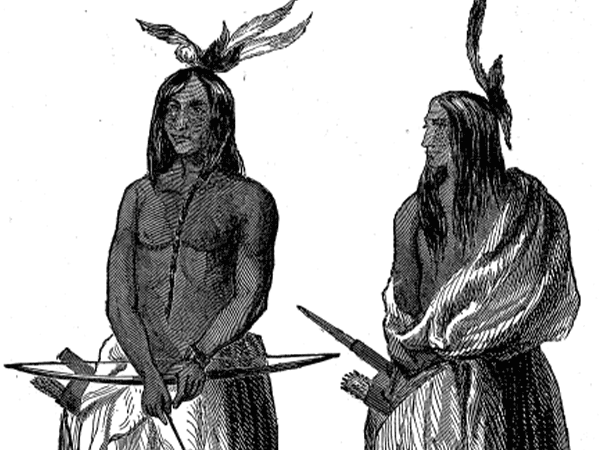
Someone would expect that a small town in Illinois of 7,970 people would not have much history. But recently, a group of archaeologists have found evidence of a nearly 1,000 year old Native American village in Murphysboro, which is near the Southern Illinois Airport. This village would have pre-dated any European contact. This find was actually by accident. The group of archaeologists that found the historic land were from the Illinois Archaeological Survey, and their purpose was to survey land in order for the state of Illinois to build. Instead of finding good land for a modern road to be built on, they found something even more valuable.  It is not known for certain the tribe or culture that the archaeologists dug up, but they found material such as clay that was used to make pots, which gave them a few ideas. There are about four known Native American tribes that currently live or have lived in Illinois: Kaskaskia, Moingwena, Peoria and the Moingona. They were part of the Shawnee people that came from the American Midwest. The history of the Shawnee people began in the late Pleistocene age, where at that time they were known as the Paleo-Indians. They hunted large animals such as bison, mastodons, caribou and mammoths. Some of these Paleo-Indians moved to the Ohio region, and settled there. At around 1000 AD, they started to flourish and took up a culture known as the Fort Ancient culture. They were known as the mound builders, as they constructed massive earthen mounds for homes, burials and also for ceremonial purposes. They grew mostly maize and had year-round nuclear families that lived in settlements of about 40 to 50 individuals. These settlements would be scatted along terraces that overlooked rivers and also on flood plains. Some groups had habits of moving to different locations. Now, there are only 1.03% Native Americans in the small town of Murphysboro, and an even meager 0.3% in the whole state of Illinois. 

Patrick Durst, the Senior Researcher of the Illinois State Archaeological Survey, stated that the find has opened up a new area of study for him and his team. They will conduct further research to find out if the groups that lived in this location formed any of the tribes that are known today, or if they stayed in the area and became something else. The tribes today actually came after the remnants of what were found at the site. 

Charcoal was found in the soil, which caused Durst and his team to believe that several homes were burnt down. The excavation also brought up old clay pots, tools and stones. They also found mussel shells and deer and fish bones on the site, which correlates to the way of the Fort Ancient culture of hunting and settling around the local rivers. The artifacts will be further analyzed to better identify the people the artifacts belonged to and their way of life.

]]>

Categories
Breaking News

Enmax Workers Save Ancient Railway Artifacts

th century or the early 20th century and they belong to the time period when construction work began on the rail tracks that previously used to exist here. According to Michelle Wickham, a senior project archaeologist and a partner at the Bison Historical Services Ltd., items that have great historical value can be found in almost all old areas in the major cities of Canada. However, in most cases these items are not recovered or handled the way they should be. This leads to a significant damage to these historical artifiacts. She states that there have been cases when these historical articles have been completely lost altogether. Michelle was quick to commend the Enmax workers for handling their find in the way they did and playing their part in preserving the history of Calgary. Sources state that these tools were most likely related to the day to day activities of the rail yard and were most probably used to replace or lay out rail and railway ties. Some of the main items that have been uncovered include rail spikes and pick axe heads. A number of miscellaneous items have been recovered as well. One item that deserves special mention is a single piece of hand pressed brick that has the word “Calgary” stamped into the frog. Further reports state that pieces of window glass and clinker (waste materials that are separated from metals during the smelting process) have  also been recovered. According to Kaufmann Woodcock, a representative of Enmax, even though the workers and officials were not completely aware of the importance of this discovery, they had the foresight to bring in an archaeologist service on the site to check them out while the construction work continued. Woodcock stated that they were aware that the nature of the materials uncovered made it important for them to report the discovery without disturbing the items. Kaufmann also believes that most of the significant ancient railway artifacts to be found on the site have been uncovered. However, Enmax still plans to have a professional archaeologist on site for the duration of the project, lest they uncover something else. The early and prompt actions on part of the Enmax employees have allowed the nation to recover a small, but important piece of its history. Hopefully, others should learn from this example and not disturb historical artifacts that are unearthed in different areas of the country without determining their historical importance.]]>

Categories
Breaking News

Evidence of Christianity Unearthed in Roman Britain

rd century, a shockingly early era for Christian objects in Britain because they predate Constantine’s accession in York in the year AD306. However, unique features such as a bread oven painted on a part of the wall that is believed to have been decorated with colorful designs in the past, as well as the silver ring cannot be ignored either. In one of the trenches, a beautifully preserved plunge bath has also been found. According to Petts, the bath showcases evidence of some magnificent forms of plumbing, including drains at the base which were lined with culverts that were found in the nearby  floors as well as gaps in the wall. Researchers believe that this indicates some sort of ancient mechanism for channelling water into the plunge bath.   The first of the two trenches is also considered to hold immense archaeological importance because of the fact that it once used to contain Roman cavalry barracks for the stables and the troops. On the other hand, the second trench has been beautifully preserved. Researchers also believe that these findings are a part of a small Roman town that was once known to be the center of activity in the area. Pett has concluded that the excavations have uncovered certain parts of one of the most beautifully preserved Roman buildings in Britain. The building itself and the vast array of wonders that have been recovered from Binchester allow researchers with a unique chance of understanding northern frontier life during the Roman era. The fact that an 1800 year old head of a Roman God was also found on this very  site about one year ago is also worth mentioning. Dr. David Mason, another expert connected to the project, stated that the findings are extremely significant because of the fact that they offer a unique graphic illustration of life in the Roman Empire and are virtually intact despite the ravages of time. Local experts also suggest that the discovery of artifacts that date back 1800 years should also have a major impact on the tourism in the area. Tourists are invited to check out the site from time to time and the entry fee is about £5 for adults and £3 for children.]]>