Categories
Editorial

In the Land of the Giants: Folklore’s Biggest Villains. Literally

Even though Jack commits violent acts, such as ripping a giant’s belly open in one of the stories, more often that not, it is his clever trickery and quick thinking that helps him out of tough situations. He knows he cannot match the strength and the size of Cormoran, Galigantus, or any other giant, so he exploits their weaknesses. Right from the beginning, it’s an unfair right, but Jack is not the one to be discouraged. At the heart of these stories is the battle of good vs. evil, but the giants are used as villains for a reason. They aren’t fully fleshed-out characters with unique qualities that to them apart from one another, but their lowest common denominator is their size, power, brutality, but also their lack of skill and intelligence, as they are always portrayed as blood-thirsty monsters, often clumsy and dim-witted. As such, they serve to provide the perfect foil for our tiny hero, as Jack’s qualities can shine when juxtaposed with characteristics of the giants. These stories give us the message that is that no matter how small you are, you always have a fighting chance to emerge victorious if you use your smarts, wit and bravery against a brute, mindless, destructive force.]]>

Categories
Editorial

Bad Vs. Good: Two Sides of the Same Coin

The villains play an ungrateful role, and ironically, sometimes their only purpose is to make the hero more appealing. The battle of good vs. evil, light vs. dark, hero vs. villain is as old as time itself. There are many examples of that in folklore, mythology, religion and literature of all cultures. There are numerous references in the Bible, Torah, and Quran which address that subject. Interestingly enough, even though there were and there still are many civilizations, cultures, countries and languages, that particular battle seems to be rather universal. The only thing that changes are the names, locations and the circumstances, but the core of it remains the same. If we were to perform a more thorough research on a single example, we would find that it probably has a similar counterpart in a different culture, under a different name. Of course, this can also be due to the fact that when a new culture suppresses the old one, it inherits some of its characteristics as well. For example, there are many examples of pagan beliefs that were carried over into Christianity. One of the oldest legends which depicts the age-old battle of good vs. evil is the story of Beowulf. Beowulf is an Old English epic poem about the eponymous hero, set in Scandinavia, and is considered one of the most important works of Anglo-Saxon literature. Beowulf, the hero of the Geats, comes to the aid of Hrothgar, the king of the Danes, whose great hall, Heoroth, is being terrorized by a vicious monster named Grendel. In addition to Grendel, Beowulf also has to battle Grendel’s mother and a dragon. Each of these is used to develop the characterization of our hero further, each one presenting a unique set of challenges he has to overcome, displaying his best qualities. Beowulf is a classic example where establishing a dichotomy between a hero and a villain is used to infuse life in both the hero and the villain, making them more complex and real, as opposed to just treating them as polar opposites, with a clear line of division between them. Depicted simply as an evil monster, Grendel isn’t exactly a fully fleshed-out character, but then again, he doesn’t need to be, as his purpose is to make the reader root for the hero, in this case, Beowulf. Very early in the story, we see a dichotomy being created: Grendel, who is sinister and bloodthirsty, spreading evil and fear among the people, and Beowulf, who fights for the people and wants to protect them. We aren’t familiar with what drives Grendel to commit such despicable acts, nor do we know his motives, as he is simply described as creature of darkness, and that serves as a stark contrast to Beowulf’s motives and actions, which are selfless, to an extent, as he does desire glory. The point is the villain, in this case Grendel, is used merely as a tool to make the hero more approachable and likable, and therefore an emotional connection is forged between the reader and the hero. By making the villain as heinous as possible, the hero is glorified and his actions, even those who might be considered questionable, or even flat out wrong, are justified and made acceptable. The hero and villain often share some of the qualities, such as strength, wisdom and intelligence, which makes their rivalry all the more interesting and realistic, but, there is a key difference in their goals and desires. The hero fights to protect others, even if that means putting himself in harm’s way, which might cost him his life, and the villain feeds off his evil acts and his ultimate goal is his self-satisfaction. But, perhaps there is another reason why we always root for the hero. We all like to think of ourselves as good people, with good character traits, and we tend to see the hero as a perfected image of ourselves, and that’s what makes him so relatable]]>

Categories
News

The 1812 War; The Birth of the Star Spangled Banner

American President James Madison Declares War on Britain On June 1, 1812, the fourth American President, James Madison declared war on Britain. His decision was spurred by what he and other congressmen believed to be ongoing issues with the British government. They seemed to have scant regard for American citizens, as the British government would force men to join the Royal Navy without warning, there were trade restrictions imposed as a result of the ongoing war between Britain and France, along with many other complaints. President Madison had surmised that Britain would have been distracted by the current war and Canada (a territory they hoped to capture) would give in easily.  The fact that the American soldiers were low in numbers, and lacking in confidence and discipline, was not seen as an important factor. Due to this poor judgment the war was expected to be quick and easy, it would not be. The United States at that time was in opposition to the ongoing war between France and Britain.  Britain on the other hand saw America as a threat not only because of their stance on the Napoleonic wars but also because their naval empire was growing, leaving Britain feeling vulnerable on the seas. There was also rivalry regarding Britain’s recruitment of what America recognized as naturalized American citizens. The Royal Navy would, without warning, go after British born sailors who had deserted their fleet. While this angered Americans, Britain ignored it and continued. Britain apparently did not take into account that America was uncomfortable with the fact that they did not recognize naturalized American citizens and Britain continued to round them up, leading America to believe that Britain did not think they were not good enough to naturalize former British citizens. After days of deliberations voting was finally complete, and on June 18, more than two weeks after it was declared by the president, the Americans officially began war with Britain by launching their attack at the Canadian borders, seizing parts of what was known then as British North America. Ironically, a peace message was sent by Lord Liverpool on June 23, less than a month after he came into power. Following the assassination of Spencer Percival, the previous Prime Minister, Lord Liverpool’s ascent to the post of Prime Minister came with a need for a change in the relationship between the United States and Britain. Though the peace message was sent, because of the lengthy trip across the continents, President Madison never received it in time. Similar to the lengthy time it took for the message of peace to reach American soil, such was the fate of the declaration of war that was sent by the president. Both Armies Ill-Prepared Though the US army was sparse (with less than 12000 soldiers), an effort was made to expand the army when it became evident that the fighting would go on longer than was anticipated. This proved difficult for the Americans as there were no real motivation for men to willingly want to become a part of the fighting. When up against the British forces they were near powerless as the raw recruits were no match for the highly experienced British soldiers, who had cut their teeth fighting the armies of Napoleon. Another blow to the US army was the lack of funding; the pay was low and was a turn off to potential recruits. Service men involved in the fighting were mostly volunteering and there was a lack of discipline. In fact, more time was spent evading the British army than was spent defending the country. On the other hand for much of the war the British forces were largely engaged in fighting on the European mainland. The US army led by General William Hull, on June 12, 1812, invaded the Canadian town of Sandwich. A month later in Detroit, they surrendered to a smaller group of British soldiers, who were under the command of Major General Isaac Brock. The Americans were adamant in their quest to take over Canada and launched another attack in the Niagara Peninsular some months later. This again proved futile as even though Major General Brock was killed, the British were able to once again defeat them.  This constant defeat prolonged the war longer than The US had hoped. The US army would later reorganize their troops but they were never able to conquer Canada. By 1814, Napoleon had abdicated, giving the British Army more elbow room to focus on the War in America. This placed the war in a different light as Britain could now allow for more troops to be deployed to the US. They sent veteran soldiers to fight led by Major General Robert Ross and Rear Admiral George Cockburn, who were two major players in the Burning of Washington.  An attack was launched on New York, however the American Army was finally getting its composure and had gained requisite experience to be recognized as worthy foes. Britain was not about to acquiesce however, as another attack was launched, this time at Chesapeake Bay. For the British army, the Chesapeake Bay attack was a definite success. The Attack on Washington The attack on Washington was led by Major General Robert Ross and would go down in history as possibly the most brazen attack on the US capital. Such was its severity that there were talks to relocate the capital to another state. British soldiers marched through the streets of Washington and set fire to many public buildings. Word reached the White House that the British soldiers were on their way, before the army had reached the White House, it was abandoned. First lady Dolley Madison stayed behind and, with the help of a few slaves, she was able to secure the valuables before the soldiers arrived. When they did, they did not hesitate to partake of the feast that was prepared for the president’s dinner and then proceeded to destroy the building. Fuel was added to the fire to prolong the burning straight into the night, luckily the walls remained intact and were later restored during a cleanup exercise. The burning of the White House was condemned by many European leaders and Britain was frowned upon for behaving lewdly on international soil. In return Britain lashed out by saying the American had started the war initially, they believed their actions were justified based on the US invasion of Canada. Nonetheless, it had placed Britain in a bad light. Following the burnings, there was an effort to relocate the capital to another state but with quick funding from Washington businessmen, the buildings were hastily restored in time for the inauguration of James Monroe, who succeeded Madison in 1817. Victory for the US and Birth of the Star Spangled Banner Following the attack on Washington, America struggled to secure their dignity and was able to secure one small victory with the battle of Fort McHenry. The British thought it was the perfect place to launch an attack because of the close proximity to the capital, but they were firing from too far out which proved futile. Plans to go ashore for a more intimate attack were abandoned. On the morning after the bombardment, the American flag remained standing proud, signaling victory for the US. The flag flying amidst the darkness of dawn was an observation made by attorney Francis Scott Key which led him to write a poem that eventually became “The Star Spangled Banner”. The song itself was originally written as a poem entitled “Defense of Fort M’Henry”. On September 3, 1814, Scott Key was on a mission to negotiate the release of a popular doctor who had been captured by the British soldiers. Key was selected by the American President to be a prisoner-of- war exchange officer. On the said morning, he and fellow lawyer John Stuart Skinner went aboard Major General Robert Ross’s ship, the HMS Tonnant, to present their case. They bore letters signed by president Maddison and by soldiers vouching for the doctor’s kind-heartedness. They were able to witness first hand planning of the attack by Ross and his fellow soldiers. They were themselves kept prisoner until those plans were executed as they were seen as a threat. They were however able to witness the attack from their own boat and seeing the American Flag waving to signal victory, he was inspired to write the lyrics to “The Star Spangled Banner”. Though Key was the writer, it was on the initiative of Skinner, who Keys showed his work, that the poem was eventually published. The poem was set to a key of an already popular British song known as the “Anacreontic Song”. It was adopted into song and became the US national anthem in 1931 under the guidance of President Herbert Hoover. The Treaty of Gent In 1814, in Belgium at a town called Ghent, both parties agreed to meet and began peace talks. Both the US and Britain had concluded that they had achieved what they intended. Border restrictions were removed and territories that were captured during the war were given back to the party that was the original owner. Many of the issues were resolved, but ironically the issues that had initially led to the war were not mentioned in the treaty.  The treaty of Ghent did not happen overnight, achieving a common decision was a war within itself. Some points were agreed upon while others were in total disagreements. One issue was the migrant slaves who were lured away during the war. To add to their numbers Britain had used a number of tactics to overcome the Americans, one such action being that they welcomed American slaves with open arms, promising them freedom and a ticket to fight against the Americans. Many slaves took advantage of this opportunity and migrated to England and eventually settled in parts of Canada. These slaves were never returned and America thought Britain was being unfair and in violation of the treaty. Britain eventually agreed to reimburse slave owners a sum of $1 204 960. After being at loggerhead five months of negotiations later, they were finally at an agreement. Both America and Britain suffered severe loss and it is still unclear as to who really won. Each country was of the view that they had won the war. Both parties suffered casualties and monetary losses that put their country at a loss. Britain’s debt increased significantly which was one of the factors that led to a closure of the war and talks of peace. Canada was one of the biggest parties to gain as they had successfully retained freedom from United States and still remained a part of the British Empire. “Precis of the Wars in Canada” gives full details on the war as it happened in Canada. The end of the Anglo- American war saw a growing friendship between the two countries and both parties have long since enjoyed over 200 years of peace, described in more recent times as a “special relationship”.]]>

Categories
Editorial

Sir Henry Lytton (1867-1936)

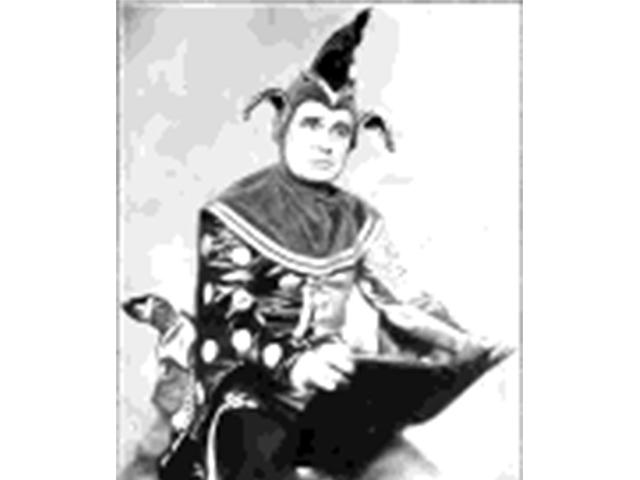
A Youthful Love Sir Henry Lytton’s path to the footlights started with a crush he developed on a young actress. In 1884 seventeen year old Henry Lytton was a student at St. Mark’s College in Chelsea, London. On a visit to the theatre his eye was caught by an attractive young actress called Louie Henri. He courted Ms. Henri and the feelings proved mutual. He took a holiday from school and got married. When he returned to resume his schooling the headmaster wanted to administer the customary punishment for a truant in those days – a sound caning. Lytton thought that he could escape the pain and told the headmaster that if he brought done the can he would be “thrashing a married man.” The headmaster thought for a second and then decided to beat him even harder than he originally planned because of his insolence. Although Lytton might have regretted playing truant he certainly did not regret his choice of partner. Louie became his faithful companion until his death over half a century afterwards. My Wife’s Brother While Louie Lytton did not fear the kind of punishment her husband received for marrying while still at school, she did fear for her job. She had just begun touring with the D’Oyly Carte Opera Company. In those times an actress getting married so young was not the accepted practice. She did want to be parted from her new husband but at the same time she felt the need to hide her married status from other members of the company. She came up with an ingenious solution. She introduced her husband to the company as her brother and asked if he could be given an audition for the chorus. Lytton did well in this trial and was offered two pounds a week to sing in the chorus. Thus he began his acting career using the name of H. A. Henri and posing as his wife’s brother. In the Right Place at the Right Time Lytton’s first tour was with the opera Princess Ida. He was given the job of understudy to the actor playing King Gama but he was not called upon to perform. Lytton’s first opportunity to take on a leading role came in 1887. The famous George Grossmith was playing Robin Oakapple in a production of Ruddigore at London’s Savoy Theatre. His understudy was an actor named Eric Lewis. Lewis was eager to show his skills in a leading Gilbert and Sullivan operatic role but Grossmith never failed to miss a performance. Lewis was continually waiting in the wings but never called to perform. Finally he lost his patience and decided to seek his dramatic fortunes elsewhere. Just after he left Grossmith took ill and Henry Lytton was asked to take his role. From this point onwards there was no turning back in his career. Although Lytton left the D’Oyly Carte Company for a period to try his hands at theatre management, he soon returned. He played a large number of different roles in the Savoy operas. Interestingly enough for a person who could not read music he had a fine ear for rhythm and excellent sense of timing. He was not shy to give his own interpretation to roles. For example, Grossmith had adopted a comic interpretation of role of the jester Jack Point in the Yeoman of the Guards (1888). Lytton thought it better to play Jack Point as a tragic figure and this was much closer to Gilbert’s intention when he wrote the script. Honour and Sadness In 1930 Henry Lytton’s services to theatre were recognized when King George V bestowed a knighthood on him. The following years brought a tragedy. Sir Henry was driving from Manchester to Cambridge when his car skidded and crashed. Although he was not seriously injured, his passenger, Bertha Lewis, died shortly afterwards from her injuries. Ms. Lewis was one of the leading actresses and singer of the D’Oyly Carte Company and her death was a serious blow. Sir Henry recovered from his injuries to celebrate fifty years in theatre in 1934. A special fund was set up by his admirers and he was presented with a testimonial album. The album was signed by the then Prime Minister, Ramsay MacDonald. Previous Prime Ministers Stanley Baldwin and David Lloyd George also signed. Sir Henry Lytton died in 1936.]]>

Categories
Editorial

Sir Arthur S. Sullivan (1842-1900)

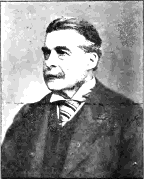
The Beginnings of a Great Composer Arthur Seymour Sullivan was born in London on 13th May 1842. Music was part of his life from his earliest years since his father, Thomas, served as Bandmaster at the Royal Military College in Sandhurst. Although the family financial means were stressed the relationships between family members were very warm. As his surname suggests, Thomas Sullivan was of Irish origin but his wife was Italian. Arthur was close to both his parents and to his talented older brother, Frederick. Everything was in place for a happy childhood but Arthur Sullivan had health problems from an early age. He was also burdened with a second name that he detested. If you see what the initial of his names spell out it is easy to understand why Sullivan wished his middle name forgotten! Coming from such a musical family it is hardly surprising that Arthur Sullivan learned to play the flute and most other wind instruments as a young child. He also had a fine voice. He was appointed “first boy” in the choir of Queen Victoria’s Chapel Royal. Albert, the Prince Consort, was so delighted with Sullivan’s singing that he rewarded him with a gold half sovereign coin. This was a most generous present at the time. In twenty-first century terms it might have been worth as much as 100 pounds in purchasing power terms. Even before the young Arthur Sullivan had made his name for himself in the Chapel Royal Choir he had published his first musical composition. Sullivan was not even twelve years old when he composed the piece of religious music named “O Israel.” It is easy to understand how this young musical genius won the prestigious Mendelssohn Scholarship to the Royal Academy of Music. He continued his musical education in Germany where he became acquainted with the composer Franz Listz. While studying at Leipzig 18 year old Sullivan’s music first came to public attention with a performance of his composition for Shakespeare’s “The Tempest”. The performance was repeated the following year at London’s Crystal Palace. Now back resident in London Arthur Sullivan supported himself as a church organist while at the same time writing classical music such as the Prince of Wales march. The death of his father caused him great distress but he turned his feelings in a creative direction to write a work called In Memoriam. On a happier note Sullivan became friendly with Sir George Grove who later became a famous figure in his own right through his Dictionary of Music. Grove and Sullivan travelled together to Vienna in a search for a lost score of Schubert. They were about to give up their search and return to England. Before packing their bags and leaving an old cupboard caught their attention. In a dramatic moment in musical history they discovered the manuscript of Schubert’s Rosamunde in this cupboard! Gilbert and Sullivan At the time of Gilbert and Sullivan’s first meeting in 1869 the latter had already established a reputation as a star of London’s serious music scene. In truth he had also turned his hands to writing light music for the playwright F.C.Barnand but he certainly had no intentions of focusing on this area of music. Sullivan and Gilbert were first introduced by their mutual friend, dramatist and musician Frederick Clay. Clay was working with Gilbert on a play entitled “Ages Ago” and he invited Sullivan to see it. Although they made each other’s acquaintance at this time it took another 6 years before they first worked together. London theatre promoter John Hollinshead brought Gilbert and Sullivan together in 1871 to produce the one act comedy “Thespsis.” This comedy based on an Ancient Greek theme ran for 64 performances. This was a reasonable run for a production put together so quickly but with this play behind them, Gilbert and Sullivan continued their separate careers. In Sullivan’s case this included writing music for Shakespeare’s “Merry Wives of Windsor”, and a hymn of thanks for the recovery of the Prince of Wales from a serious illness. The man who finally brought Gilbert and Sullivan into their famous partnership was theatre impresario Richard D’Oyly Carte. In 1875 D’Oyly Carte encouraged Gilbert to approach Sullivan to write a score for his comic opera “Trial for Jury”. Gilbert was confident that the serious composer Sullivan would not be interested in writing music for his work, but Sullivan found the script hilarious and was happy to co-operate. Arthur Sullivan’s older brother Frederick played the role of the Judge and was a great hit. The opera ran for over three months and would have continued longer but Frederick Sullivan took ill and died. Arthur was close to his brother and his early death delivered him a heavy blow. As with the death of his father years earlier he expressed his grief through his music. Sullivan’s composition “The Lost Chord” remains very popular to this day although not everyone knows the sad background behind its composition. Sullivan was very sensitive over this work. When he found out someone was making a parody of it he wrote to them to explain how he came to write the ‘Lost Chord” and he urged the parodist not to proceed with something he would consider disrespectful of his brother’s memory. Although saddened by his brother’s death, Sullivan must have found some consolation in the success of his music. The popularity of Trial by Jury convinced Richard D’Oyly Carte that the partnership between Gilbert and Sullivan was a potential gold mine. Their co-operation on the comic operas HMS Pinafore (1878) and the Pirates of Penance (1879) proved that D’Oyly Carte had correctly assessed public taste. The operas quickly became very popular in England and also in the United States. Sullivan’s light music reached a far greater audience than his serious music ever reached with even the delivery boys in the streets of London humming tunes from the operas. He became one of the pioneers of style of opera that gently poked fun at while at the same time became an integral part of British culture. His fame resulted in the bestowal of a knighthood by Queen Victoria. It is interesting to note that these D’Oyly Carte productions were also pioneers in the use of the latest technology. When a scene in the opera Ruddigore (1887) demanded the theatre to be darkened, the question arose how could Sullivan possibility conduct the orchestra when they would no longer be able to see him gesturing with his baton? The ingenious solution was to provide him with a baton lit by electricity. A Difficult Partnership The success of the series of Gilbert and Sullivan operas throughout the 1880s elevated Gilbert and Sullivan into the mega-stars of the late Victorian entertainment scene. It also made them both into very wealthy men. Sullivan’s addiction to gambling at the tables of Monte Carlo meant that the income from the operas became indispensable to the kind of lifestyle he aspired to lead. He certainly realised that he was earning far more than he might hope to get as a classic composer but his sense of artistic self-esteem was damaged. He did not want his reputation to rest on comic opera but wanted to take his place alongside Franz Listz and the other highly-respected classic composers of the era. He regularly struggled with his need for funds that his partnership with Gilbert answered and his desire to break away and make his name as a classical composer. Gilbert’s contentious personality did not make their co-operation any easier. It took all the diplomatic skills of Richard D’Oyly Carte and his wife Helen to put the partnership back together after a serious of quarrels and breakups. At one point he wrote angrily to Gilbert about how he had become burned out writing music for comic opera and was angry how he thought that the emphasis is always on Gilbert’s words with his music “never allowed to rise and speak for itself.” The most famous dispute between them over the expenses of a production ended up in a legal case when Gilbert took Sullivan and D’Oyly Carte to court in a dispute over 200 pounds spent on a carpet for theatre auditorium. The Closing Curtain Gilbert and Sullivan came together for the last time in 1896 for the light opera the Grand Duke. Although it was nowhere near the success of their earlier operas, the audience gave them enthusiastic applause when they came out and took their bows from the opposite end of the stage. Sullivan resumed writing music on more serious themes working on a score for a ballet to mark Queen Victoria’s Diamond Jubilee. The liver complaint that he had suffered from since his earliest years became increasingly serious. He had almost died from this on previous occasions and finally on November 22nd 1900 he succumbed. He was buried in St.Paul’s Cathedral. Sir William Gilbert expressed genuine sadness at his death and chose to focus on all they had accomplished together and ignore the ill-feeling that had often been expressed between them.]]>

Categories
Editorial

It’s Good to Be Bad: Shining the Spotlight on the Villain

And, really, if we take a quick look at some of the famous and infamous villains, such as Dr. Hannibal Lecter, Hans Gruber, Col. Hans Landa or The Joker, the films in which they appeared wouldn’t have had such an impact without them, or they would be something entirely different. And most actors relish playing those roles, as they can get away with a lot more, as opposed to when they are playing the hero. We always root for the heroes, but they are often one-dimensional characters, limited by the requirements of the script and the expectations of the audience, as they have to be the epitome of all that is good and righteous. Ok, maybe every now and then, there comes a hero that is a bit more complex and dark, with his own demons, but still, he has to obey some rules. A villain doesn’t have to do any of that. He’s not constrained by morals, ethics, and while we may not love them, we certainly love to hate them. If a villain is smart, powerful, ruthless, cunning and often charismatic, we feel that much more satisfied when the hero triumphs. But this is not only true of films. Examples of this can also be found in literature, mythology and folklore of all cultures, and while the line between these three is often blurred, and they share some of the stories and characters, the rules are almost the same. As this subject is really broad, this time we’re going to focus on one well-known Hero vs. Villain rivalry, the one between Robin Hood and the Sheriff of Nottingham. Without question, the Sheriff of Nottingham is Robin Hood’s principal nemesis. There have been many incarnations of both Robin and the Sheriff in films, literature, folklore and each of them brought something new, establishing a distance from the original story in terms of accuracy. It is almost impossible to determine the real facts, or even if Robin or Sheriff were historical figures, but, that’s not our concern at this time. We’re going to focus on what’s common to all the interpretations, the antagonism between the two of them. A good source, if you’re interested in a more in-depth study, is “Robin Hood: A Collection of All the Ancient Poems, Songs, and Ballads, Now Extant, Relative to That Celebrated English Outlaw; To Which Are Prefixed Historical Anecdotes of His Life” by Joseph Ritson (PIBN: 1000597106). We practically know all there is to know about Robin Hood, but the same cannot be said about the Sheriff of Nottingham. The Sheriff himself was appointed by the King, as a legal authority, but that certainly didn’t make him the moral authority, as he and his henchmen were rotten and corrupt, introducing unfair taxes and robbing the people they supposed to protect, executing everyone who stood in their path. He is most commonly portrayed as intelligent, ruthless, greedy figure, who will do anything to stop Robin Hood, the only one brave enough to stand up to him. While we are more familiar with Robin, as he is the hero of this story, and more attention has been given to him and the people around him, such as the Merry Men, or Maid Marian, some space has been left for the Sheriff of Nottingham to counterbalance the good deeds done by Robin, thus making the story more suspenseful and making the hero more likable by setting him up against a truly heinous villain. And although the Sheriff doesn’t have the support of the people, or his associates, which might assist him sometimes, but at the same time have their own agenda, he still has considerable means at his disposal which he uses to battle Robin, including his blackmail, bribe, money or worse. Even though he is evil, he isn’t just a mere psychopath, spewing venom, but a more shrewd, calculated figure, driven by ambition and greed, using his intellect in addition to violence to remove the opponents who stand in his way. In that aspect, he serves as a perfect foil for Robin Hood, displaying character traits of equal intensity, but on the opposite end of the scale. Also, some of the tactics employed by Robin and his men, such as theft, are justified as they present the only way of fighting the villainous authority figure. And that is the key fact that explains our perception of a hero: as someone who is defined by his great deeds, and not necessarily someone who is morally incorruptible. That, in turn, defines the role of a villain, as well, who isn’t burdened by similar requirements. The villain’s job is to provide the archenemy and moral nemesis for our hero. That’s what makes a villain. However, being a great villain is something a lot more complex, as the author needs to infuse the character with a human element, motivation and the reasons for his wrongdoings, making him into something more than a cardboard cutout. As a consequence of that, the story sets itself apart from the bunch, ultimately becoming something more: a legend.]]>

Categories
Book Reviews

Pictures Of Lily

Categories
News

Who Really Discovered America?

Who Really Discovered America? For centuries children learned how Christopher Columbus discovered America in 1492. This year came to represent a major turning point in human history – a transition between the Medieval World and Modern Worlds. The United States placed a particular significance on this event. In 1892 a major Columbian Exhibition was held in Chicago and special stamps and commemorative coins issued to marked the four hundredth anniversary of America. Columbia University and the South American country of Colombia are two more very prominent examples of the importance assigned to Columbus’s voyage. Yet even the most enthusiastic supporters of Columbus must admit that he never set foot on the North American mainland. The whole concept of discovering America has also become controversial since it seems to suggest that the continent was empty while in fact the history of the aboriginal Americans goes back many years before Columbus arrived. With these thoughts in mind it is appropriate to take a new look at the Columbus legend. The Historic Voyage Columbus’s 1492 voyage is well documented. He was convinced that by sailing westwards he could reach the Orient much faster than by travelling around the coast of Africa and across the Indian Ocean. Contrary to the popular belief Columbus did not subscribe to the Flat Earth view held by many people in the medieval era. Although he was aware that the world was round he nevertheless believed that its circumference was much less that others believed. He sought to persuade the Kings of Portugal and England to support this exploratory trip to discover a new faster route to the valuable treasures of the Orient. He did not succeed in enlisting their support but he did succeed with King and Queen of Spain. As well as the thoughts of financial gain they saw this mission as a way of spreading their Catholic faith to the heathens. With aid from the Spanish monarchs Columbus set sail from Spain On August 3, 1492 with three of the most famous ships in history: the Nina, the Pinta and the Santa Maria. On October 12th they reached the land Columbus believed to be Asia, but was in fact the Bahamas. He undertook another two trips to the area exploring more of the Caribbean islands and the coast of South America but never North America. Many Other Candidates for the “Discover of America” tile The significance of Columbus’s voyage is undeniable. These trips opened the way for the Spanish conquest of Central and South America a short while afterwards. With the conquest came the Spanish language and Catholic religion and the annihilation of native peoples and their cultures. These are all key events in early modern history but they still do not make Columbus the discoverer of America. The real discovers of America must be considered the aboriginal peoples whom some claim might have migrated into the Continent from Siberia, or maybe even from the Middle East according to some of the more outlandish theories. Actually, the idea that people from the Middle East settled in North America thousands of years ago might not be as strange as it sounds. Modern researchers believe it very probable that the well-known seafaring people the Phoenicians reached North America in their search of new trading opportunities thousands of years ago. The Phoenicians lived in the area occupied today by Lebanon and are well-known for founding the state of Carthage in North Africa. It is possible that they had the skills to undertake such a long sea voyage. Stronger evidence supports claims that a group of Vikings led by Leif Ericson settled in Newfoundland in the tenth century. If by “Discovery of America” we really mean the European discovery of this content, the Vikings probably have the stronger claim to be America’s discoverers.]]>

Categories
Editorial

Richard The Third

Richard the Third is believed to be one of Shakespeare’s earliest plays. It is also the second longest in the collection, with only Hamlet being longer. It is so long, in fact, that its full text is rarely played out. With five acts, each comprised of at least four scenes, it is a monumental accomplishment, even for the most prolific writer in the English language. It is crowded by a litany of characters, with most being from royal families, but including clergy, elected officials, and a handful of ghosts for good measure. Perhaps its best known phrase is the beginning of a speech given by Richard the Third at the start of the second scene. The oft-quoted line, “Now is the winter of our discontent”, has been referenced in popular culture, including the movie “Being John Malkovich”, and even used as the title of a novel by Steinbeck. The plot is complex and demands rigourous attention to the characters and the storyline. It twists and turns through elaborate schemes with different members of different royal families manipulating one another in a fierce battle for power. With his plot to gain the throne having succeeded, Richard goes on to rule for only two years, during which members of rival families make efforts to have him removed. In the finale, his wicked ways return to haunt him on the fields of the Battle of Bosworth where his followers abandon him and the ghosts of his victims admonish him to “despair and die”. His imminent death occurs at the hands of the Earl of Richmond who subsequently assumes the throne. As with all of Shakespeare’s creations, the play contains elements contrary to the principal themes. Some of the despised king’s speeches draw sympathy from the audience and, despite it being classified as a tragedy, it is infused with comedic elements. To be sure, though, it is a dry and ironic humour. And, for all the murderous acts alluded to in the story, acts of physical violence are notably omitted. Richard the Third is available, in unabridged form, from forgottenbooks.org. It is faithfully reproduced from a stage adaptation that was originally published in 1822. As such, it contains details about costumes and notes about how it was to be played. Specifically, there is a diagram of the arrangement of characters at the closing of the final scene. The text has a classic, yet spartan, appearance that lends an ominous atmosphere to the script. It also contains a list of the actors and their corresponding roles as played at two different theatres as well as a list of other publications in the same collection. There is renewed interest in the historical figure of Richard the Third thanks to a bizarre post-mortem on a skeleton found beneath a church in 2012. DNA studies confirmed its identity and anatomic analysis showed evidence of the deformed figure depicted by Shakespeare. It also identified multiple crushing and penetrating wounds to the skull, corresponding to the violent end to a tyrannous reign. Finally, just two weeks ago, the identification of parasitic eggs at the site of the inauspicious burial added yet further to the stranger-than-fiction legacy. For some weary followers, it may be an epilogue, drawing the story of Richard the Third to a close and leaving Shakespeare’s play to tell the tragic tale of England’s most infamous king.]]>

Categories
Editorial

King Ludd Versus Modernisation

The Wronged Apprentice Historians have found some evidence of person around whom the Ludd legend might have developed. It is possible he might have been an apprentice cloth worker in the late 1700s in the Midlands county of Leicestershire. His employer thought that Ludd could work harder and decided to report his laziness to the local justice of the peace. Ludd faced a whipping and became so enraged by his master’s action that he smashed the knitting machine with a hammer. Yet the Ludd who lay behind the violent industrial unrest in the second decade of the nineteenth century is not yet identified with a particular individual. Most historians believe that he was an imaginary character who conveniently allowed local activists to portray themselves as part of a more powerful movement, or perhaps to shift responsibility for violent actions. The Years of Ludd The first record of the name Ned Ludd in connection with an industrial dispute appeared on letters sent to mill owners in Nottingham in 1811. The frame knitters felt threatened by the introduction of powered knitting machinery in local factories. The letters were followed by attacks on the factories and hundreds of these modern knitting frames were smashed. Many of these machines were built by a manufacturer named Enoch, but Enoch also curiously enough made the large hammers Ludd’s followers used to smash the machines. Thus the expression began to circulate, “Enoch did make it, and Enoch will break it.” This was a period of great distress in the Midlands and North. Prices were rising and workers who had supported themselves by working from home were losing their independence and being forced into the highly-disciplined factory environment. Gathering around the banner of Ned Ludd weavers and cloth finishers attacked the new factories and destroyed the new machinery. On a number of occasions the factory owners saw what was coming and defended their business with firearms. Soldiers were also dispatched to restore order. Draconian laws were passed introducing the penalty of death for destruction of mill machinery. When the followers of Ned Ludd killed Yorkshire mill owner William Horsfall in 1812, over 60 people were arrested for this murder and an attack on a Huddersfield factory. Of the arrested men seventeen were executed on the gallows. In another prosecution for Luddite activity in Lancashire one of those arrested and executed was a 12 year old boy. By 1817 these oppressive measures had succeeded in breaking the Luddite movement and worker unrest took other avenues. The Power of Ludd The obvious question is how could the Ludd character form a rallying point for workers in different industries across a wide geographical area? Nobody today believes that Ludd was a real person who stood at the head of an organized movement. The best way of understanding this phenomenon is to place Ludd in a similar category as Robin Hood. In a similar way that Robin Hood stories came to represent the struggle of ordinary people against a repressive, powerful authority, Ludd took on the role of the protector of the workers against the encroachment of the new factory system. Ludd upheld the rights of the downtrodden handloom worker against the threat to their livelihoods from new technology and greedy employers.]]>