Categories
Breaking News

Newly-Restored Remnant of Circus Maximus Opened to Public

the Telegraph, the seven-year-long excavation of the remaining corner of the Circus Maximus yielded massive archaeological finds. Items such as fragmented golden bracelets and necklaces, a gilded glass goblet with the image of a horse, and over 1,000 bronze coins dating to the third century CE were found within the ruins. Additional finds include the remains of a triumphal arch, constructed of Tuscan white marble, erected in honor of Emperor Titus’ quashing of the Jewish Rebellion in 70 CE. The arch itself would have been the largest of its kind at the time it was constructed, according to Marialetizia Buonfiglio, the archaeologist who spearheaded the excavation efforts. Its position drew the eyes of everyone within the arena, and was used as the spot where Roman emperors would enter the Circus Maximus, often to the roars of hundreds of thousands of patricians and plebeians alike. It is thought that the Circus Maximus was used for sporting events as far back as around 800 BCE, as Romulus, the mythical founder of Rome, is said to have hosted horse races on the central track. The Imperial Roman-era version of the complex was largely destroyed in 64 CE in a fire; subsequent emperors attempted to rebuild it, and the final touches were put on the reconstruction efforts – at great expense – by Emperor Trajan in 104 CE. Games continued to be held there until the sixth century CE. There is still plenty to discover by archaeologists when it comes to the Circus Maximus. The original chariot track, for example, is still buried beneath approximately 30 feet of accumulated soil and rubble, a result of the disused sports complex being repurposed as farming fields and even industrial factories by the nineteenth century. During the early to mid-twentieth century, the Circus Maximus was repurposed once again, most notably by Mussolini, as a parade ground for displays of fascist propaganda. ]]>

Categories
Breaking News

Mesolithic Man Burial Site Studied in Ireland

Categories
Breaking News

Did Acceptance of Autism Fuel Evolutionary Success?

Time and Mind argue that integration of people with such skills into a community would have played a vital role in the development of specialists. A compelling example comes from a 2005 ethnographic study of a reindeer herder from Siberia. The man held a remarkably detailed memory of the parentage, character and medical history of each of the 2,600 reindeer under his care. The grandfather, who was a respected member of his community with a wife, son and grandchildren despite being uncomfortable in the company of other humans, made a vital contribution to the management and survival of his reindeer herd, and the community as a whole. Of course, evidence of ancient autism is hard to detect. “The archaeological record doesn’t give us a skeletal record for autism, but what it does do is give us a record for other people who have various differences and how they have been integrated.” Dr. Spikins said. Clues concerning autism’s long history can be found in cave art and other artefacts, however. “There has been a long-standing debate about identifying traits of autism in Upper Paleolithic cave art.” “We can’t say some of it was drawn by someone with autism, but there are traits that are identifiable to someone who has autism. It was also roughly at that time that we see collaborative morality emerging.” Dr Spikins explained. The study can be found here Image courtesy of University of York ]]>

Categories
Breaking News

Waterlogged Anglo-Saxon Cemetery Yields Well-Preserved Graves

Heritage Daily, Historic England Chief Executive Duncan Wilson said that the new find will provide greater levels of understanding of rural Middle-Saxon communities and their religious beliefs. The potential of this site to reveal the story of those who once lived there is “immense,” Wilson added. MOLA archaeologist James Fairclough also commented on the find and how the details of Christian Anglo-Saxon burial practices were preserved in “remarkable” detail. Fairclough said that the chalky, alkaline waters of the River Wensum and the acidic sand in its banks created ideal conditions to preserve the wooden graves and the skeletons held within. The finds from the dig, once properly cleaned, catalogued and analyzed, will be on display at Norwich Castle Museum, according to museum curator Tim Pestell. ]]>

Categories
Breaking News

Remains of 13th Century 'Siberian Robin Hood' Discovered

the Siberian Times: “At the moment we have a birch bark quiver, two bone plates with elaborate ornaments, iron arrowheads, wooden arrow shafts, birch bark linings for a saddle, the remains of ribbons, likely silk, and what is left of a leather strap. Initially we thought that the bone plates were details of the bow, but they turned out to be the decorations of the quiver.” The warrior is believed to be Mongolian, although no other quivers like the one at the burial site have ever been found. The shape of the arrow heads suggest the man was a warrior, although they could also have been used for hunting. Archeologists are hopeful they’ll receive permission to examine the sarcophagus next year. In the meantime, steps have been taken to preserve the site, and work will continue to find the deceased archer’s bow. Vasily Oinoshev, the director of the Agency for Cultural and Historical Heritage of the Altai Republic, says in the Siberian Times: “The quiver is a very interesting one. It has separate ‘pockets’ for different types of arrows. This quiver is a great find, it is very well preserved. It will be important to examine it more thoroughly to understand its construction,” adding, “Sadly we cannot go and excavate the grave immediately. We need to have a special permission for work. Excavations are allowed in the period from 1 April to 1 November. So as soon as we get all the permits we will go to work on this grave. “ “We are doing all we can to ensure the safety of the grave in winter and to ensure the security of other archaeological objects. I have many questions to how these items were found. The story was that the locals found the grave in a hole in a cliff and took some items from there. But I am not completely sure they have not unearthed it. We need to check all this thoroughly.” Mongolians conquered the region of Altai in the twelfth century, and the area stayed under Mongolian control into the fourteenth and fifteenth centuries, yet finds from this time are rare in Altai. ]]>

Categories
Breaking News

Massive 1,500-Year-Old Stone Complex Discovered in Kazakhstan

Live Science, there were several types of stone structures discovered by archaeologists from the Siberian Department of the Russian Academy of Sciences and Kazakhstan’s Mangistau State Historical and Cultural Reserve. These structures range in size from a modest 13 feet by 13 feet to as large as 112 feet by 79 feet, and are made from stone slabs that were inserted vertically into the ground. Many of the structures have a passing resemblance to Stonehenge, the researchers report. Several of the slabs have also been carved to depict a wide variety of items, including weapons and animals. More than just stone structures were found. Archaeologists unearthed artifacts left behind by those that inhabited the complex, including a saddle featuring silver ornamentation which, like many of the stone structures, depicts animals such as deer, wild boar and prey animals that bear a passing resemblance to lions. Research into the saddle has led researchers to believe ancient artisans originally designed the embellishments using leather before gluing them to wooden boards. These pieces of leather would then have been covered by silver plates and held together until an impression was formed in the silver. The stone complex was originally discovered in 2010 by an amateur metal detector operator who found several artifacts, including parts of a silver saddle. It wasn’t until 2014 that the funds for archaeological research into the region could be secured; the fruits of this archaeological team’s labor, which includes the discovery of several more artifacts, have been recently published. Much of the excavation work and subsequent study has been preliminary in nature, according to the researchers. However, initial analysis indicates that some of the formal details of the stone enclosures and their construction methods point to nomadic tribes. Taking the artistry of the saddle into consideration, researchers are speculating that the Huns, a nomadic group of Eurasian warriors as famous for their horsemanship as they were notorious for their military dominance during the fifth century CE, may have been linked to the site. In fact, due to the design of the saddle, the precious metals involved in its construction and its artistry, archaeologists are nearly certain that its owner held privileged status. The saddle may even bear some indications as to which particular clan the individual belonged to. It could have been left behind as part of a burial ceremony or some other ritual event, researchers suggested; while there were skeletal remains discovered in the structure where the saddle was found, there are no indications that the skeleton was buried at the same time the saddle was left there. Additional research on the complex and other discoveries is ongoing. A research paper on the silver saddle is planned for 2017. The original research paper, published in the journal Ancient Civilizations from Scythia to Siberia, can be found online here Images of the stone complex can be found at Live Science]]>

Categories
Breaking News

Dairying in the Mediterranean Dates Back Over 9,000 Years

Proceedings of the National Academy of Sciences. The results suggest that dairying was present in the region right from the onset of agriculture. By analysing Neolithic pottery, the multidisciplinary team found widespread proof of prehistoric milk production. Two main sources of evidence were used by the researchers behind the study. More than 500 pottery vessels were rigorously tested for evidence of milk and carcass fats. In addition, the remains of domesticated animals were excavated from 82 different sites in southern Europe dating from the fifth to seventh millennia BCE. The animals were analysed for their age at time of death. A correlation quickly emerged; the slaughter profiles of the animals matching the fats detected in the pots. The team’s findings show different intensities of dairying and non-dairying activities throughout the northern Mediterranean. Cynthianne Spiteri, University of York; Mélanie Roffet-Salque, University of Bristol; and Roz Gillis, Centre National de la Recherche Scientifique; undertook the pioneering research as part of their PhDs. Spiteri said in a press release: “At the onset of food production in the northern Mediterranean region, milk was an important resource to these early farming communities. “It is likely to have played an important role in providing a nourishing and storable food product which was able to sustain early farmers, and consequently, the spread of farming in the western Mediterranean.” Just how important milk and dairy production were in the northern Mediterranean has long been a contentious source of fascination among historians and archaeologists. Previous research had suggested that the desire for milk may have been the driving force behind the domestication of animals such as cows, goats and sheep. Significantly, the study is the first to combine both an analysis of fat residue from cooking vessels with a record of the domesticated animals that actually lived in an area, allowing far more detailed insights into prehistoric agricultural and dairying habits than was available previously. “In this work, we integrate for the first time the findings of the analyses of lipid fats extracted from hundreds of cooking pots with the reconstruction of the actual herds at tens of sites, based on the remains of sheep, goats and cattle.” explained Dr. Roffet Salque, from the School of Chemistry at the University of Bristol. “Our earlier work had demonstrated that milk use was highly regionalised in the Near East in the 7th millennium BC, and this new multidisciplinary study further emphasises the existence of diverse use of animal products in the northern Mediterranean Neolithic.” explained Professor Richard Evershed, also from the University of Bristol. Intriguingly, northern Greece appears to have been a notable exception when it came to the widespread practice of Neolithic dairying. “Dairying was clearly practiced both in the east and west of the region, but it is still surprisingly barely detectable in Northern Greece, where the lipids from pots and the animal bones tell the same story: meat production was the main activity not dairying.” The results are particularly astounding given that much of the modern population in the region are lactose intolerant – i.e unable to digest milk. “We presume this was also true back in the early Neolithic period, although this is still to be confirmed through genetic testing of ancient skeletons.” said Professor Oliver Craig from the University of York. “Despite this deficiency, our research shows that they certainly exploited milk because we have found organic remnants in the pots they were using.” It is a fact which raises fascinating questions as to how exactly these prehistoric farmers processed milk to enable their communities to consume it. “What is particularly intriguing is that lactose intolerance was clearly no barrier to milk use.” said Roffet-Salque. “The major question that still remains is how the milk was being processed to make it palatable to these early Neolithic farmers.”]]>

Categories
Breaking News

Archaeologists Discover Further Details of London’s Curtain Theater

The Guardian, researchers found additional unique features of the Curtain’s stage, including what could have been a tunnel that ran beneath it to allow actors to pass from one side to the other undetected. The innovation could have led to Shakespeare – and other playwrights of his day – writing plays with the capabilities of the Curtain in mind, according to Museum of London Archaeology senior archaeologist Heather Knight. Knight remarked that with the Curtain stage so different from a typical thrust stage, which has places for the audience to stand on three of its four sides, the Shoreditch theater might have led to the development of new and interesting types of theatrical experiences. One of Shakespeare’s most beloved history plays, Henry V, is thought to have been first performed at the Curtain, though historical record is spotty. The famous line from the play’s prologue, where the Chorus describes the story as being portrayed in “this wooden O”, seems to contradict the idea that the Curtain was the first place Henry V was performed. However, historians have pointed out that the descriptive line simply may have been added to performances set in more traditional venues, and these versions of the play are the ones that have survived to this day. The excavation efforts are the first step in a massive development being undertaken in Shoreditch, including the construction of a mixed-use complex of apartments, offices, and retail space dubbed “The Stage” on the site of the Curtain. Detailed plans for the construction have been altered after the discovery of the Curtain’s foundations buried under a layer of gravel and rubble from a former Medieval monastery that had existed on Curtain Road at one time. It is common to find the ruins of many monasteries throughout England, especially from the period after King Henry VIII orchestrated England’s split from the Roman Catholic Church. In addition to the revelations of the size and dimensions of the theater, other artifacts have been discovered as well. Pieces of green-glazed ceramics, typically used as money-boxes for collecting entry fees from paying customers, have been found on the site; the possible remnants of costumes in the form of an assortment of pins and glass beads were also recovered. The new mixed-use office complex will incorporate a visitor center where archaeological finds from the Curtain will be on display. The center is slated for a 2019 opening date. ]]>

Categories
News

Black and Brown Triangles – Himmler Targets Gypsies

Categories
Breaking News

Sex With Neanderthals Still Benefiting Humans

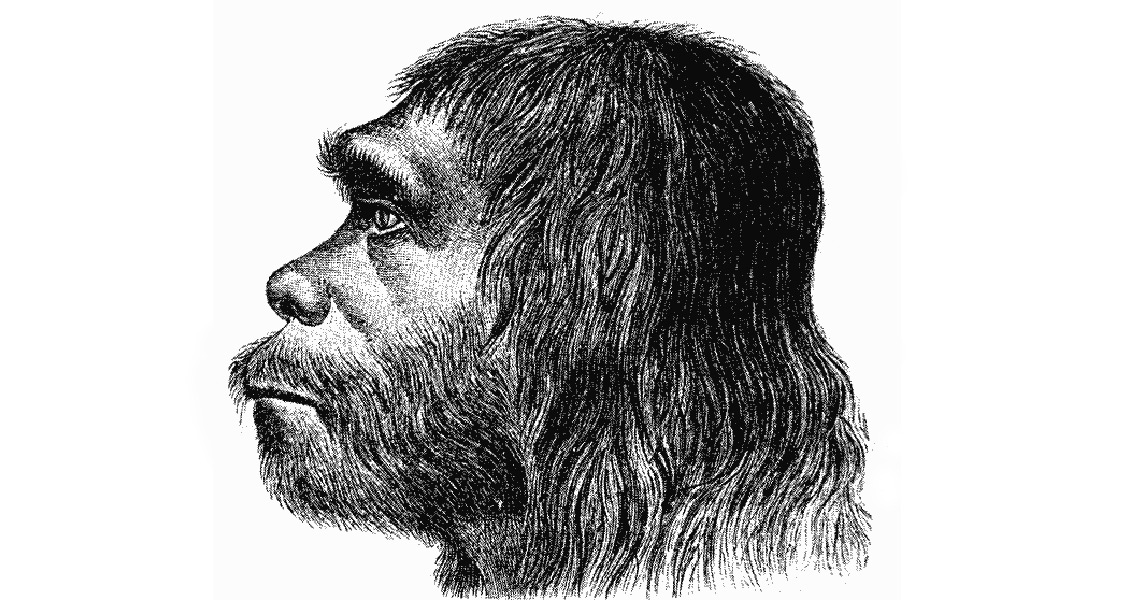
in Science Daily. Titled ‘Archaic Hominin Admixture Facilitated Adaptation to Out-of-Africa Environments’, the study by Rachel M. Gittelmann, Joshua G. Schraiber, Benjamin Vernot, Carmen Mikacenic, Mark M. Wurfel and Akey has been published in the journal Current Biology. It argues that as humans left Africa, interbreeding with Neanderthals and other archaic hominins allowed them to develop various traits for survival. Neanderthals left Africa hundreds of thousands of years before modern humans, around 300,000 years ago. Modern humans made their way away from the continent sometime between 100,000 and 60,000 years ago. It has been well established that as modern humans made their way to new parts of the world, they encountered and sometimes had children with various archaic humans, such as Neanderthals and Denisovans. Remains of this breeding can still be seen in people today. Previous studies have shown that non-African humans inherited about 2% of their genome from Neanderthals. People of Melanesian ancestry take between 2% and 4% of their genome from Denisovan ancestors. In the study, the researchers searched a sample of 1,500 individuals from East Asia, Europe and South Asia, as well as 27 from Island Melanesia, for archaic DNA sequences in their human genomes. In particular, the team were searching for archaic DNA sequences which appeared at a higher frequency than one would expect unless the genes were beneficial in some way. Neanderthal and Denisovan DNA sequences are typically found at low frequencies, generally less than 5%. However, Gittelmann et al found 126 locations where the archaic sequences exist at much higher frequencies, up to 65%. 31 of those regions are involved in human immunity, while seven play a role in determining characteristics of our skin. These attributes inherited from archaic hominins could have played a vital role in our survival after leaving Africa, allowing human populations to spread. “The ability to increase to such high population frequencies was most likely facilitated because these sequences were advantageous,” Akey explained. “In addition, many of the high-frequency sequences span genes involved in the immune system, which is a frequent target of adaptive evolution.” As humans left Africa they encountered a host of unfamiliar, challenging environments. Tellingly, the team’s results suggest that many of the genes received from Neanderthals and Denisovans are connected to interactions with the environment. Hybridization through interbreeding, therefore, could have been the most efficient way for humans to adapt to the potentially hostile new lands they were encountering.]]>