Categories
Peace of Vereeniging Ends Second Boer War


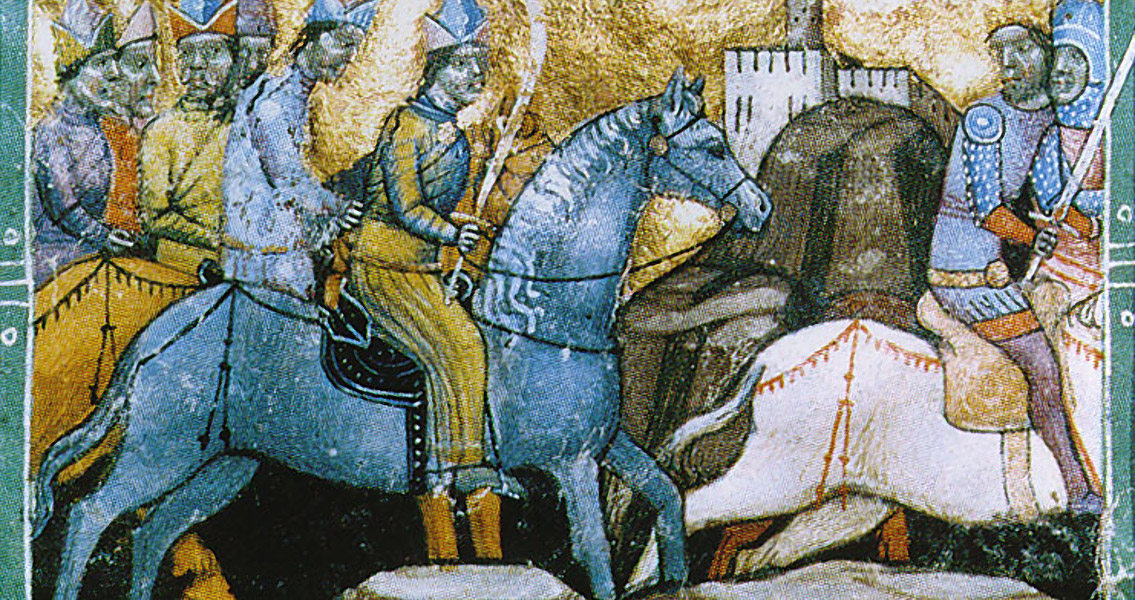
Scientific Reports, a group of scientists claim to have an explanation. The paper argues that the Mongol Conquest of Europe was halted in western Hungary by bad weather. The authors, Ulf Büntgen from the Swiss Federal Research Institute and Nicola Di Cosmo from Princeton University in the USA, believe that the Mongol army simply could not cope with the harsh Hungarian winter of 1242. Natural archives, analysis of environmental drivers and historical records were used to reach the surprising conclusion. In particular, tree ring data was utilised to gain insights into the weather in the region between 1230 and 1250 CE. “Documentary sources and tree-ring chronologies reveal warm and dry summers from 1238–1241, followed by cold and wet conditions in early-1242.” the authors write, in the abstract to their study. Put simply, in the late 1230s, when the Mongol invasion into Europe started in earnest, the warm and dry weather was ideal for the movement of the Mongol army, who were mostly traveling on horseback. The early 1240s were cold and wet, however. Initially this proved advantageous to the Mongols, freezing the Danube and allowing them to cross with ease. When Spring came on the other hand, and the ice started to thaw, the land turned to swamp and the Mongol horses simply could not move. “Small climatic fluctuations resulted in marshy terrain across the Hungarian plain, which led to reduced pastureland and decreased mobility, as well as hampering the military effectiveness of the Mongol cavalry,” the authors said in a press release. “These circumstances arguably contributed to the determination of the Mongols to abandon Hungary and return to Russia.” they explain in their study. Genghis Khan launched the Mongol Conquests in 1206, and within a few years had conquered huge swathes of land, creating the largest empire in history. Following Khan’s death in 1227, his descendants took up leadership of the Mongol armies and pushed into Europe, crossing the Danube in 1242 and killing half of Hungary’s population. Historians have offered a number of explanations as to why the invasion of Europe seemed to end so abruptly. Some have claimed the attacks on Eastern Europe were simply a warning, designed to discourage European incursions into Asia. This reasoning claims that the invasion stopped simply because it was never intended to go any further. Others claim the Mongols were ill prepared for combat in the more densely populated towns of Austria, the next country on their path, or were simply scared off by the defiant resilience of Polish and Hungarian soldiers. A particularly popular explanation is that the death of the then Mongol leader, Great Khan Ogedei, saw the European campaign brought to an end. Büntgen and Di Cosmo however, claim that the Mongol withdrawal shows the remarkable power of the environment to shape the course of history. “While overcoming deterministic and reductionist arguments, our ‘environmental hypothesis’ demonstrates the importance of minor climatic fluctuations on major historical events.” Their research study is currently available online]]>

Scientific Reports, can be found online here Image courtesy of E. Trinkaus and A. Soficaru]]>

Malleodectes mirabilis by the researchers behind the study published recently in the journal Scientific Reports. “Malleodectes mirabilis was a bizarre mammal, as strange in its own way as a koala or kangaroo,” said study lead author Professor Mike Archer, from UNSW. “Uniquely among mammals, it appears to have had an insatiable appetite for escargot–snails in the whole shell. Its most striking feature was a huge, extremely powerful, hammer-like premolar that would have been able to crack and then crush the strongest snail shells in the forest.” Archer and his team have been carrying out excavations at the Riversleigh World Heritage Fossil Site across four decades. Nothing remains of the cave except its limestone floor, which contains fossils of creatures who either fell into or lived in the cave throughout its history. Over the years the cave’s walls have worn away, but the fossil deposits there still cover the last 24 million years of Australian history. Teeth and other partial remains of Malleodectes had been found in the cave previously, but the discovery of a well preserved juvenille’s skull in a 15 million year old Middle Miocene cave deposit revealed just how strange the creature was. An acid bath allowed researchers to extract the remains from the limestone casing, and commence analysis involving techniques such as micro-computed tomography. UNSW Professor Suzanne Hand, a member of the team involved in the research, offered an explanation as to how the young animal may have died. “The juvenile malleodectid could have been clinging to the back of its mother while she was hunting for snails in the rocks around the cave’s entrance, and may have fallen in and then been unable to climb back out,” she said in the UNSW press release. At the time of its death the creature was teething, with its adult teeth embedded in its jaw and on the verge of erupting. The unusual creature, which went extinct millions of years ago, is believed to have been a distant relative of modern Tasmanian Devils. “Although it is very different from the others, it appears to have been related to the dasyures – marsupial carnivores such as Tasmanian Devils and the extinct Tasmanian Tigers that are unique to Australia and New Guinea.” Professor Archer said. Since they started forty years ago, UNSW’s annual expeditions to the Riversleigh site have yielded a host of remarkable, extinct creatures, including leopard like, potentially tree dwelling crocodiles known as drop crocs; and Dromornis, one of the largest birds to have ever existed, which is occasionally referred to as the ‘Duck of Doom’. Like many of the other strange, wonderful and occasionally terrifying creatures unearthed in Riversleigh’s rocks, it’s believed Malleodectes mirabilis went extinct as the result of a period of severe climate change that started around fifteen million years ago. “This climate change-driven transformation in Australia’s wildlife over the last 15 million years is a timely reminder of the probable outcome of the next cycle of climate change, one we appear to have triggered ourselves,” remarked Archer. Image courtesy of Karen Black and Suzanne Hand/UNSW]]>

The Post and Courier in Charleston, adding, “I have no doubt that this will be a hotly debated topic for some time, as paradigm shifts often take a while to gain acceptance, but the evidence appears to be solid.” It all started with a chert chopper (also known as the Topper Chopper) – a piece of rock with the face of a blade hammered out of it, that was discovered in the early 1990s by Al Goodyear, who has since retired from the S.C. Institute of Archaeology and Anthropology at the University of South Carolina. The pieces were relatively small, as were the blades cut into them, suggesting they may have been used to carve ornaments from ivory, bone, and antler. They were dug up from soil sediments deeper than the Clovis tools which date humans in North America back to between 12,000 and 13,000 years ago. Critics argue whether or not the stone tools were actually pre-Clovis and whether or not the stone pieces had actually been hammered by humans or split apart by nature. Recent analysis of Goodyear’s artifacts has ascertained they could not have occurred naturally. The dispute is still ongoing in certain quarters, and now the team has gone even deeper and found even earlier evidence of humans. Since the 1930s, it’s been widely accepted that the first humans to inhabit North America were the Clovis people, who appeared around 13,500 years ago. Artifacts from the Clovis culture are found across most of the United States and as far as Panama to the south. This theory has seen challenges in recent decades following the discovery and dating of pre-Clovis sites in Texas (Buttermilk Creek) and Virginia (Cactus Hill). The research team is currently organizing the findings to be published for peer-review. Image courtesy of the University of South Carolina]]>

Internet Archaeology. The virtual model is available here]]>

Plos One, the study sheds new light on the complexity of this Late Neolithic culture, hinting at the complicated social conventions that could have been at play. Led by Karl-Göran Sjögren from Göteborg University, Sweden, the new study involved an investigation of cemetery populations from the Corded Ware Culture in southern Germany. As well as providing insight into individual mobility in the period, Sjögren and colleagues’ work revealed information about people’s diets. Sometimes referred to as the Battle Axe Culture or Single Grave Culture, the Corded Ware Culture is often tied in with the diffusion of proto-Germanic and proto-Balto Slavic languages through Europe. Recent DNA research has concluded that the culture was strongly influenced by the Yamnaya Culture that arose on the steppes of eastern Europe and western Eurasia after 3000 BCE. Archaeologists define the Corded Ware Culture by material traits, such as burials in flat graves covered by small mounds and cord ornamented pottery. The culture existed across large swathes of Europe from 2800 cal. BCE to 2200 cal. BCE, and it is widely believed that the people based their lives around mobile, pastoral economies dependent on cattle and cereal cultivation. The authors examined seven sites in southern Germany, including two large cemeteries: one at Lauda-Königshofen named “Wöllerspfad” and another at Bergheinfeld called “Hühnerberg”, and several burials in gravefields. Human bones and tooth enamel from each of the sites were carbon dated and subjected to dietary isotope analysis, providing insights into both diet and mobility. Results suggest that the Corded Ware People enjoyed mixed diets built on the consumption of both plants and meat. There was also substantial variation between the sites, suggesting that some practiced arable and dairy farming more intensely. Surprisingly, 42% of the people buried at one of the large cemetery sites were found to have originated from outside the local area. In particular, women seem to have enjoyed considerable mobility; the study authors suggest that this could be evidence the Corded Ware Culture practiced exogamy, that is, the practice of only allowing marriage outside of a social group. Exactly what form this practice took is of course unknown, but it undoubtedly raises some intriguing questions about Corded Ware societies. “Our results suggest that Corded Ware groups in southern Germany were highly mobile, especially the women.” wrote Sjögren, in the recently published study. “We interpret this as indicating a pattern of female exogamy, involving different groups with differing economic strategies, and suggesting a complex pattern of social exchange and economic diversity in Late Neolithic Europe.” ]]>
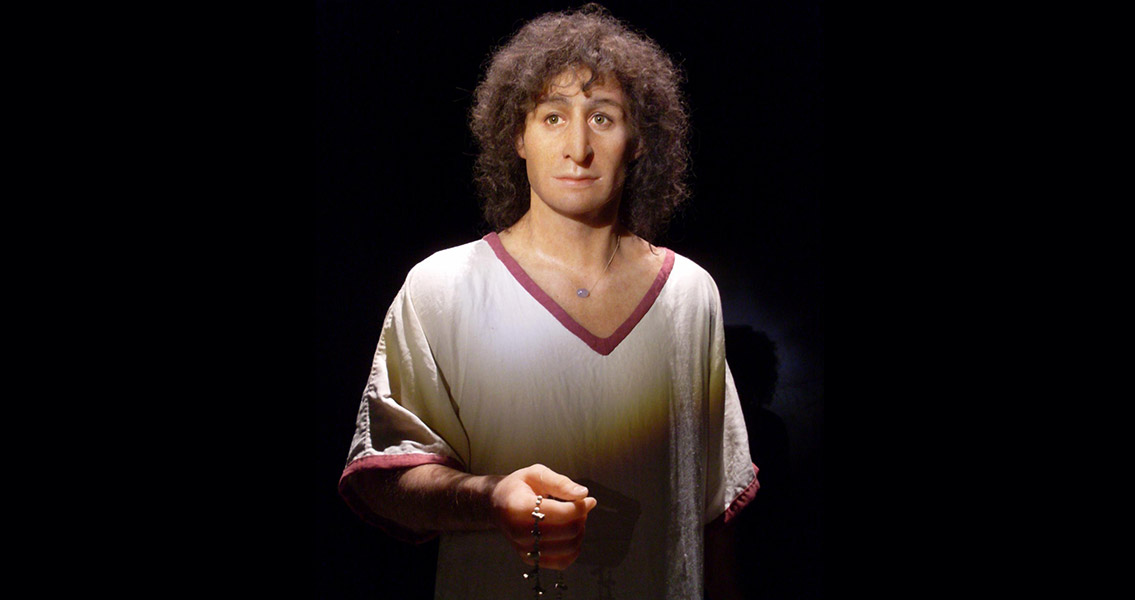
PLOS ONE Image courtesy of M.Rais]]>

Phys Org as saying, “We show that when marine reptiles first entered the oceans in the Triassic period, they rapidly became very diverse and had many morphological adaptations related to feeding on varied prey. Within a relatively short space of time, marine reptiles began feeding on hard-shelled invertebrates, fast-moving fish and other large marine reptiles. The range of feeding-related morphological adaptations seen in Triassic marine reptiles was never exceeded later in the Mesozoic.” This new research utilized the fossil record of Mesozoic marine invertebrates to measure variations in the function and shape of their teeth and jaws. Up until now, studies have been based primarily on estimations of the creatures’ biodiversity through time. The new study looks at the range of sizes and shapes, and then ties characteristics of the shape to modes of life, including their specialized feeding modes. Michael Benton, professor and co-author of the study, told Phys Org, “We always knew that the marine reptiles expanded relatively fast into a world in turmoil, after a devastating mass extinction event that killed as many as 95 per cent of species. But what was unusual was that they were inventing entirely new modes of life that had not existed before the End-Permian mass extinction. Our work shows they expanded into nearly every mode of life, indicated by their feeding habits and range of body sizes, really much faster than might have been imagined.” Interestingly, only 30 million years after the evolutionary burst of marine reptiles, they were victims of a number of extinction events which occurred in the Late Triassic that wiped most of the groups out. The research shows these events removed numerous specialized niches and adaptations, and had a long-term effect on the evolution of marine reptile. This research has been published in the journal Paleobiology ]]>