Categories
News

William Kidd is Executed for Piracy

Quedagh Merchant. The 500 ton vessel was laden with gold, spices and other riches, providing a lucrative haul for Kidd and his crew. Unfortunately, it was partly owned by a minister in the court of the Indian Grand Moghul, who complained to the influential East India Company. Kidd suddenly found himself a wanted man. Seemingly believing he could clear his name on the basis that the vessel was a legitimate target, Kidd handed himself in, but he was undone by changing attitudes towards piracy. The support he expected from members of the political elite, such as his employer Lord Bellemont, never materialised. The trial had become a political event. The Tory party which dominated Parliament attempted to use it to attack the Whigs who had sponsored privateers, and the Whigs responded by turning on Kidd, attacking his character and reputation rather than defending it, to distance themselves from connections to piracy. In early May 1701, Kidd was found guilty of piracy and Moore’s murder, and sentenced to death. ]]>

Categories
Breaking News

Decade Old Discovery Leads to New Dinosaur Species

Spiclypeus shipporum. This discovery brings the total known dinosaur species found in the Judith River Formation in Montana to nine. This new dinosaur was identified by bones that had been preserved in a silty slope which had once been part of an ancient floodplain, including the skull, backbone, hips and part of the legs from a single animal. What makes Spiclypeus shipporum unique among horned dinosaurs is the manner in which the bones over its eyes were oriented sideways out from the skull, and the unusual way bony spikes emanated from the edge of the frill, with some projected outward as others curled forward. “This is a spectacular new addition to the family of horned dinosaurs that roamed western North America between 85 and 66 million years ago,” Jordan Mallon, the author of the study, explained in a press release from the museum. “It provides new evidence of dinosaur diversity during the Late Cretaceous period from an area that is likely to yield even more discoveries.” After the first bone fragments were found simply lying on the ground, a team from the museum spent another two years excavating and recovering the remaining fossils. An examination of the bones suggests a life of pain for the dinosaur, with the upper section of the arm bone showing obvious signs of bone infection and arthritis. Despite this condition, further analysis involving the growth rings found inside of the bones indicates the dinosaur lived long enough to reach maturity, and was around 10 years old at the time of death. Ceratopsids were megaherbivores which arose within the Late Cretaceous period and quickly diversified in North America and Asia, becoming one of the most expansive dinosaur groups at the time. Their horned craniums and ornamental frills make them easy to recognize. The study, which was published in PLOS ONE, notes that none of the nine species found at the Judith River Formation has been unearthed in states lying to the south of Montana, which suggests the dinosaur fauna found in western North America 76 million years ago were highly localized. Some of Mallon’s earlier research shows that communities of herbivores that are considered as being species-rich may have been possible because of dietary specializations, a phenomenon referred to as niche partitioning. Recognized as historically important, the Judith River Formation (included within the Judith River Group) is a geologic, fossil-bearing formation located in Montana. It dates back to the Cretaceous period, 80 to 75 million years ago, and corresponds to the “Judithian” age of land vertebrates. The dinosaur’s name, Spiclypeus, is derived from the Latin word which means “spiked shield”, and shipporum is to honor the Shipp family. For more information, the full article is available here Image courtesy of Mike Skrepnick (c) Mike Skrepnick]]>

Categories
Breaking News

Roman-Era Treasure Trove Found Off Israeli Coast

Categories
Breaking News

5,000-Year-Old Kurgan-Style Tumulus Discovered in Istanbul

Categories
Breaking News

Tombs Show Ancient Egyptians and Nubians Integrated

Anthropologist, is bringing that assumption into question. Study author Michele Buzon, associate professor of anthropology at Purdue University, has been excavating Nubian burial sites in the Nile River Valley to better understand the connection between Nubians and Egyptians. In particular, her research focuses on the period after the Egyptian colonisation of ancient Sudan. “There are not many archaeological sites that date to this time period, so we have not known what people were doing or what happened to these communities when the Egyptians withdrew.” Buzon explained, in a Purdue University press release. Buzon’s research was funded by the National Science Foundation and the National Geographic Society’s Committee for Research and Exploration. Led by the University of California Santa Barabara, Buzon’s colleagues on the project were Stuart Tyson Smith from UCSB, and Antonio Simonetti from the University of Notre Damme. Remarkably, Buzon and colleagues have found something of a two way cultural exchange between Egypt and the Nubians. When the colonisation happened, Nubian culture was not simply replaced with Egyptian. Rather, a kind of hybrid identity formed which fused elements of both peoples. “It’s been presumed that Nubians absorbed Egyptian cultural features because they had to, but we found cultural entanglement, that there was a new identity that combined aspects of their Nubian and Egyptian heritages.” explained Buzon. “And based on biological and isotopic features, we believe they were interacting, intermarrying and eventually becoming a community of Egyptians and Nubians.” Covering the Eighteenth, Nineteenth and Twentieth Dynasties of Ancient Egypt, the New Kingdom Period saw some of Egypt’s most well known and successful pharaohs. By the Third Intermediate Period however, the Egyptians had lost control following years of infighting. In around 1050 BCE the Nubians defeated Egypt, and took control as the 25th Dynasty. “We now have a sense of what happened when the New Kingdom Empire fell apart, and while there had been assumptions that Nubia didn’t function very well without the Egyptian administration, the evidence from our site says otherwise,” said Buzon. “We found that Tombos (the site under investigation) continued to be a prosperous community. We have the continuation of an Egyptian Nubian community that is successful even when Egypt is playing no political role there anymore.” Burial features and skeletal health analysis have been the focus of Buzon’s study. Tombs known as Tumulus graves show how the cultures merged. Although the physical structures of these tombs are distinctly Nubian, according to Buzon the burial practices on display reflected an Egyptian influence. “We found some (bodies) that combine a mixture of traditions. For instance, bodies were placed on a wooden bed, a Nubian tradition, and then placed in an Egyptian pose in an Egyptian coffin.” Even markers on the skeletons discovered within the tombs point to this fusion of two separate cultures. “This community developed over a few hundred years and people living there were the descendants of that community that started with Egyptian immigrants and local Nubians,” Buzon said. “They weren’t living separately at same site, but living together in the community.”]]>

Categories
Breaking News

Foundations of Shakespeare’s Curtain Theatre Found in Shoreditch

Guardian, renowned Shakespeare archaeologist Julian Bowsher, who specializes in the locations of the sites the Bard performed at as an actor and the locations where his plays themselves were performed; indicated that the Curtain’s rectangular design was a bit of a shock. As the site where the very first performances of such plays as Henry V and Romeo and Juliet might have taken place, the Curtain’s squared-off shape clashes with Henry V’s famous prologue, where the stage was referred to in shape as a “wooden O”. Bowsher said that he’ll have to revise his previous scholarship on The Curtain, as the evidence seems clear that before it was a playhouse, it had likely been an Elizabethan-era tenement. All indications point to the theater being converted once more into a block of flats after The Curtain was no longer in use as a playhouse, the archaeologist added. According to Heather Knight, the excavation’s senior archaeologist, the theater’s remains are some of the best preserved of all of the Tudor-era playhouses excavated to this day. The key to the preservation is actually due to its status as a conversion, the theater being reused as a tenement house led to far more of the structure surviving to the modern era, much more than the South Bank theaters known to have been some of Shakespeare’s most famous haunts, the Rose and the Globe. The current Globe is of course a reconstruction, while the original structures are nothing more than barely visible traces of foundation. The curtain’s architectural remains include a collection of brick walls, some as tall as 1.5 meters. Additionally, the area within the stage where the groundlings would have stood, a sloping surface covered in gravel, has also survived partially. Also surviving are some limited documentation from the era that tell us that the Curtain was set just 100 meters from another playhouse on the outskirts of the city of London, and stood in a fair meadow. The name of the playhouse itself comes from Curtain Road, a medieval pathway that ran parallel to a priory’s old curtain wall. Additionally, the theater was the site of one of Shakespeare’s performances as an actor in 1598, when he appeared in ‘Every Man In His Humour’, by Ben Jonson. Apparently the neighborhood the Curtain was situated in was less than idyllic. Theater manager Richard Burbage, a close friend of Shakespeare, had been fined regularly for running an unlicensed tavern, or “tippling house,” in close proximity to the playhouse, according to surviving records. Fights seemed to have been common, such as an incident where a Thames ferryman assailed two actors for not paying their fares. The backstage area of The Curtain is still being excavated. Tours of the site are available every Friday from now until June 24th. ]]>

Categories
News

20 Years Since Anti-Homosexual Amendment Blocked in USA

Romer v. Evans was brought to the US Supreme Court. In 1996 the Supreme Court heard Romer v. Evans, and scrutinised the legality of Amendment Two. By a vote of six to three Amendment Two was struck down for violating the Fourteenth Amendment to the US’ Constitution. Associate Justice Anthony M. Kennedy authored the Supreme Court’s ruling, released on 20th May, 1996: “Laws of the kind now before us raise the inevitable inference that the disadvantage imposed is born of animosity toward the class of persons affected.” For many, the Supreme Court’s verdict on Romer v. Evans was a crucial turning point in the campaign against prejudice based on sexual orientation. For the first time, the US Supreme Court had ruled that discrimination based on sexuality was just as unconstitutional as that based on race or gender.]]>

Categories
Breaking News

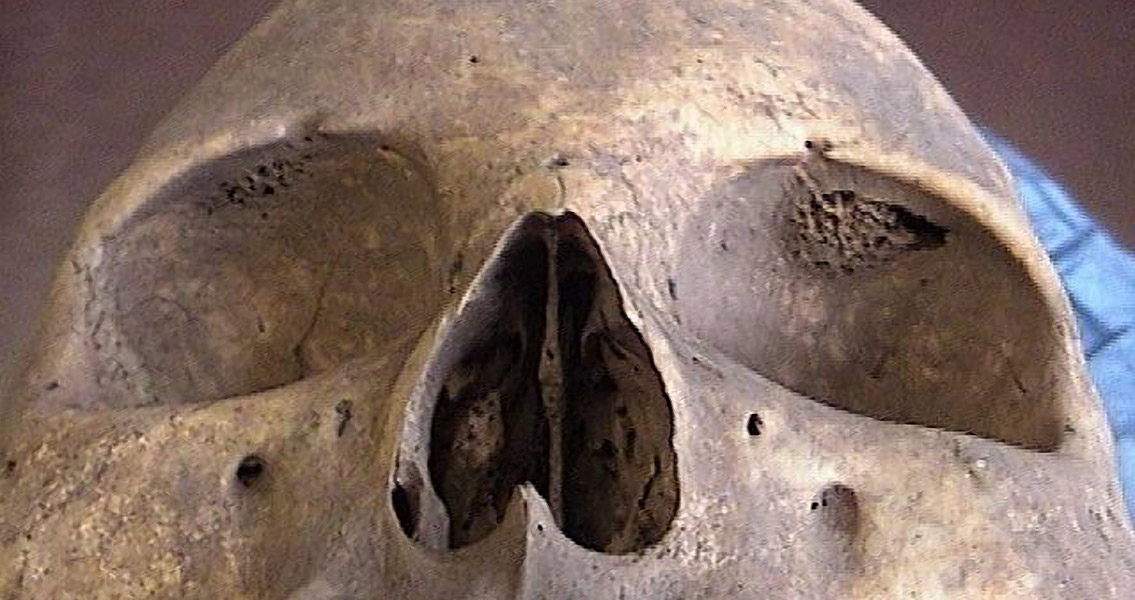
Skull Condition Thought Lost to Time Re-Emerges

Clinical Anatomy, can be found online here Image courtesy of Ann Ross]]>

Categories
News

Anne Boleyn Executed For Adultery, Incest and Treason

jousting accident. Exactly what caused Henry VIII’s and Anne Boleyn’s marriage to fail will likely remain unknown; ultimately Boleyn’s shocking execution was just one of a multitude of remarkable events in the life of the erratic Tudor King.]]>

Categories
Breaking News

New Research Describes Roman Fort Built After Boudican Revolt

An Early Roman Fort and Urban Development on Londinium’s Eastern Hill. ]]>