Categories
Breaking News

305 Million Year Old “Almost Spider” Remains Found

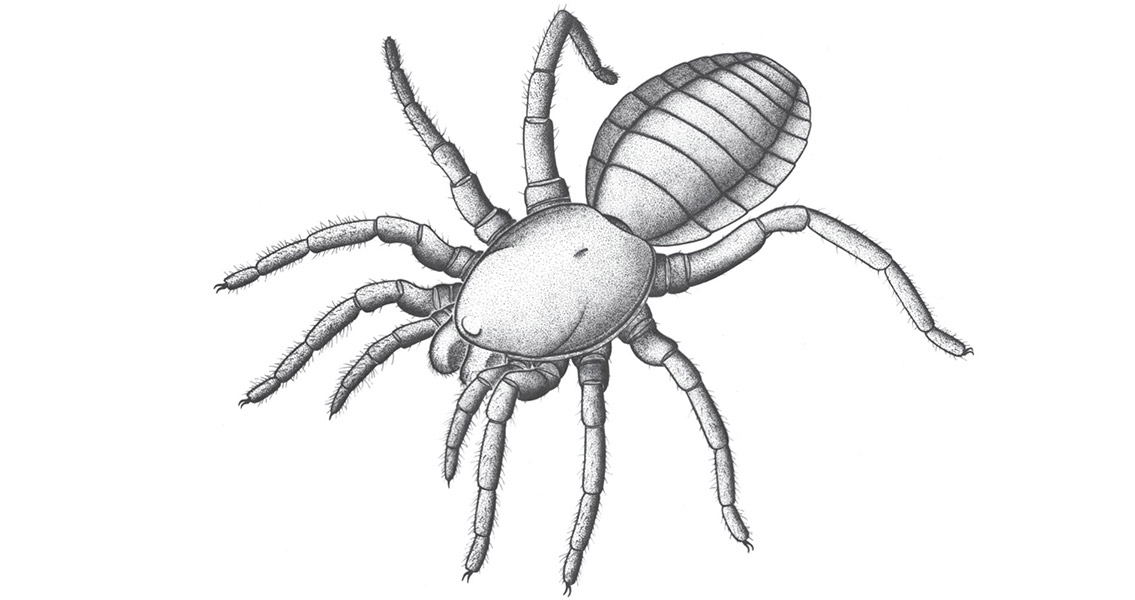
Idmonarachne brasieri as a nod to Idmon, the father of Arachne from Greek mythology – the woman who was transformed into a spider out of the jealousy of the goddess Athena. With the process of evolution producing an arachnid just one step removed from a “true” spider, naming I. brasieri in such a manner seems highly appropriate. The evolutionary journey from arachnid to spider is further complicated by the fact that there is evidence of true spiders living alongside their almost-spider arachnid relatives. The oldest known spider fossil, discovered in eastern France at a Montceau-les-Mines coal seam, also happens to be 305 million years of age. Garwood remarked that this shows an arachnid subspecies that were nearly identical to spiders – though one that eventually died off – likely split from a common ancestor before that date. It has been difficult to pin down the origins and evolutionary pathways of arachnids, said Garwood. One of the first species to dwell on land, arachnids – or their progenitors – began to adopt a terrestrial way of life 420 million years in the past; little of this early history has been recorded in the fossil record. Meanwhile, using DNA analysis to trace the evolutionary relationships between arachnid species also presents difficulties due to the rapid diversification of the creatures. This has resulted in little to no evolutionary changes in their genetics that can be traced. The results are that there is little in the way of knowledge when it comes to how other arachnids like scorpions and spiders are interrelated in the overall scheme of evolution. Garwood and his colleagues say that there are plans to continue to study arachnid fossils in an attempt to glean more information on their mysterious origins. Image courtesy of Garwood, Russell J.; Dunlop, Jason A.; Selden, Paul A.; Spencer, Alan R.T.; Atwood, Robert C.; Vo, Nghia T. & Drakopoulos, Michael (2016)]]>
Categories
Breaking News

Computer Model Reveals How the Largest Dinosaurs Evolved

Categories
Breaking News

Origins of the T.rex: Brains Came Before Brawn

Timurlengia euotica, were discovered over the course of nine years during international expeditions to the Kyzylkum Desert of Uzbekistan. The creature lived around 90 millions years ago, and slots into a 20 million year gap in the fossil record of tyrannosaurs. Although a fellow tyrannosaur, T.eutoica is not the ancestor of T-Rex. About the size of a horse, Timurleniga could have weighed up to six hundred pounds. Its long legs mean it was likely a fast runner. “Timurlengia was a nimble pursuit hunter with slender, blade-like teeth suitable for slicing through meat,” explained Hans Sues, chair of the Department of Paleobiology at the Smithsonian’s National Museum of Natural History, in a press release. “It probably preyed on the various large plant-eaters, especially early duck-billed dinosaurs, which shared its world. Clues from the life of Timurlengia allow us to fill in gaps and better understand the life and evolution of other related dinosaurs, like T. rex.” Perhaps surprisingly, the study, published in the Proceedings of the National Academy of Sciences, suggests that brains came before brawn in the evolution of Tyrannosaurs. Prior to the development of their giant size and strength, Tyrannosaurs developed keen senses and cognitive abilities. These heightened abilities allowed them to reach the top of the food chain after other large meat eating dinosaurs had gone extinct, 80 – 90 million years ago. Although typically associated with North America, T.rex’s and other Cretaceous dinosaurs mostly had their routes in Central Asia. “The discoveries from the Kyzylkum Desert of Uzbekistan are now helping us to trace the early history of these animals, many of which later flourished in our own backyard in North America.” Sues said in the press release. The new species was discovered while Sues and a team of paleontologists led by Steve Brusatte at the University of Edinburgh were sorting through the bones brought back from the Kyzylkum Desert. CT scans of the brain case allowed the team to reconstruct Timurlengia’s brain and gather insights into the development of its abilities. “The ancestors of T. rex would have looked a whole lot like Timurlengia, a horse-sized hunter with a big brain and keen hearing that would put us to shame,” explained Brusatte. Tyrannosaurs originated in the Jurassic Period around 170 million years ago, but they were barely the size of a human. 100 million years later, in the Cretaceous Period, they had evolved into animals like T-rex, which weighed up to 7 tons. The fact Timurlengia was so small, despite living some 80 million years after tyrannosaurs had first appeared, indicates the group’s terrifying size only occurred relatively late in their evolutionary history. For more information: www.pnas.org Image courtesy of © Proceedings of the National Academy of Sciences]]>

Categories
Breaking News

The Evolution of Fins and Limbs More Similar Than Originally Believed

Categories
Breaking News

Island Deer of Panama Hunted to Extinction Long Ago

here Image courtesy of STRI]]>

Categories
Breaking News

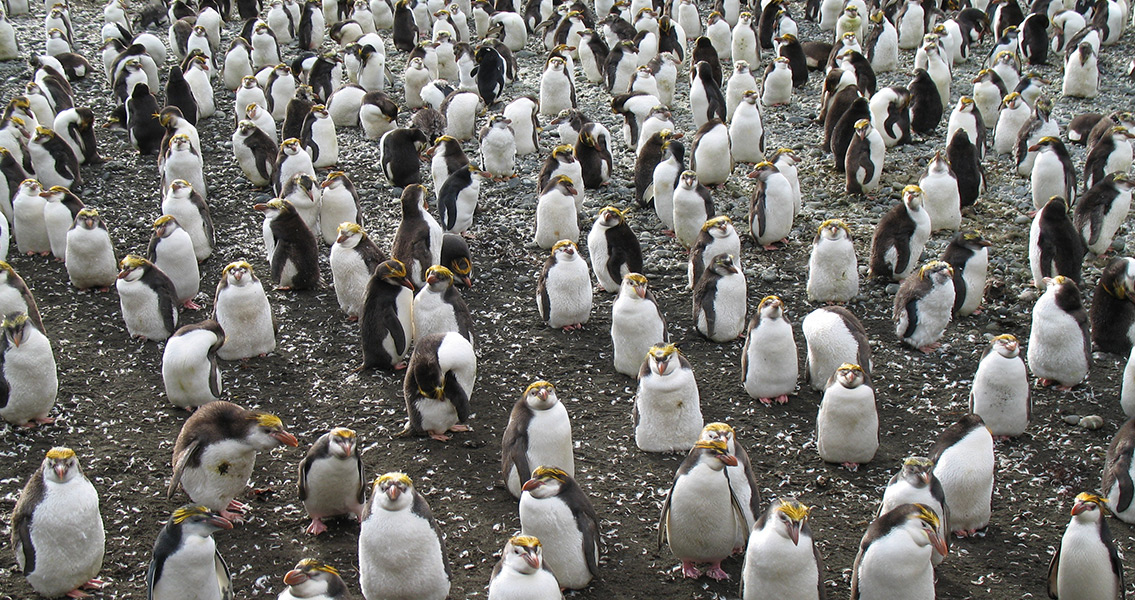
Penguin Brains Were Unaffected By Loss of Flight

Journal of Anatomy. Researchers from the University of Texas at Austin argue that although the loss of flight was responsible for modern penguins’ unique way of walking, it didn’t cause any major changes in the animals’ brain structure. The conclusions have been reached following examination of the skull of the world’s oldest known penguin fossil, from the mid to late Paleocene era in New Zealand. “What this seems to indicate is that becoming larger, losing flight and becoming a wing-propelled diver does not necessarily change the [brain] anatomy quickly,” said James Proffitt, a graduate student at University of Texas’ Jackson School of Geosciences and the leader of the research, in a press release from the University of Texas. Despite modern penguins exhibiting a unique brain, one remarkably different from those of their ancestors, these changes didn’t take place until long after the birds had evolved away from flying. “The way the modern penguin brain looks doesn’t show up until millions and millions of years later.” Proffitt explained. The 60 million year old penguin whose remains were used in the study was likely to have lived a life very similar to modern penguins. Its age, and its position in the line of penguin evolution meant it provided invaluable insights for the study. “It’s the oldest [penguin] following pretty closely after the loss of flight and the evolution of flightless wing-propelled diving that we know of”, Proffitt said. Exactly why penguins evolved to not fly is a mystery that plagued scientists for centuries. It seems massively impractical, Emperor penguins for example, have to walk distances of up to 60km from their rookeries to the sea, a journey which takes several days but could be achieved in a matter of days if the birds flew. Similarly, many penguins are the target of predators such as leopard seals at the point they enter the ocean – a problem which could be avoided if they were able to fly. A 2013 study by scientists from the University of Aberdeen used comparisons with Guillemots to conclude that there is no way for a bird to develop wings which are good for both flying and swimming. According to the scientists, as penguin wings evolved to make them better swimmers, the amount of energy they needed for flying became too great. Proffitt and his partners on the latest study, Julia Clarke; a professor in the Jackson School’s Department of Geological Sciences, and Paul Scofield; the senior curator of Natural History at the Canterbury Museum in Christchurch, New Zealand, assumed that the loss of flight would have impacted brain structure, making the brains of ancient and modern penguins similar in certain regions. Due to the fact the shape of a bird’s skull is influenced by the structure of its brain, the team were able to use X-ray CT scanning to capture digitally the minute details of the penguin skull’s anatomy before applying computer modelling software to form a digital mold of the brain, called an endocast. Their results showed that in reality the ancient penguin’s brain anatomy had more in common with petrels and loons than modern penguins. If the peculiarities of penguin brain structure were a consequence of its initial loss of flight, the changes would have been apparent in the Paleocene skull. Similarities between the ancient penguin and modern diving birds suggest that the actual act of diving could be responsible for the differences in brain structure. “The question now is do the old fossil penguins’ brains look that way because that’s the way their ancestors looked, or does it have something maybe to do with diving?” Proffitt said, in the press release. For more information: www.wileyonlinelibrary.com]]>

Categories
Breaking News

Scientific Research Divulges More Information About “Hobbit” People

H.habilis (its earliest species). The study’s coauthors, Antoine Balzeau with the Muséum National d’Histoire Naturelle, and Philippe Charlier from UVSQ/Paris-Descartes University, performed the medical study of LB1 which is considered the holotype discovery of H.floresiensis, by performing a micro-CT examination of the thickness of the cranial vault and the skull’s cranial structure. They discovered the skull did not, in fact, bear the traits which are common in modern humans, instead it carried traits much more characteristic of ancient hominins like Homo erectus, an extinct human species considered the first species of human to have moved out of Africa. Popularly referred to as “hobbit” because of its characteristic feet and diminutive build, H.floresiensis was thought by many experts to be an extinct species of human. Their skeletal remains were discovered on Flores Island in Indonesia by a joint Indonesian – Australian team of archaeologists who were searching for evidence related to the origins of human migration to Australia from Asia. The remains were indicative of an individual which would have stood around 3.5 feet (1.1 m) high and had a small brain, similar to ancient hominins. The find included one complete skull (the above mentioned LB1) and the incomplete skeletons of nine individuals. This hominin is considered remarkable for not only its small brain and body but also for its relatively recent survival – possibly just 12,000 years ago. Alongside the skeletons researchers found stone tools ranging from between 94,000 and 13,000 years old. Several scientists have suggested, after examining the “hobbit”, that the remains represented a modern human group suffering from disease and microcephaly which resulted in the physical characteristics that are featured in the fossils. However, other studies haven’t supported the hypothesis, and this latest study puts forth additional findings that support the suggestion the fossils do not exhibit pathological features comparable to extinct human species. Some scholars have suggested the ancient H.floresiensis could be connected to the Ebu Gogo myths which were prevalent on Flores Island. The Ebu Gogo, according to island folklore, were human-like creatures that resided in Flores, Indonesia. In the language of the central Flores Nage people, Ebu translates to “grandmother” while gogo means “he who eats anything.” An equivalent colloquial English could be similar to “Granny Glutton.” The Nage describe the Ebu Gogo as fast runners and able walkers who were about 1.5 m tall. Reportedly, they had flat and wide noses, large mouths, broad faces and hairy bodies. The females were described as having “long, pendulous breasts.” They were also said to have murmured in their own language, and were able to repeat what was said to them in a parrot-like manner. Image courtesy of Wikimedia Commons user: Ryan Somma]]>

Categories
Editorial

History of 2015: Migration, Conflict and Society

study by Nick and Isabelle Winder suggested that compassion and a willingness to accommodate ‘defective’ members of a community played a key role in our evolution and development. The study stands in stark contrast to readings of evolution which focus on competition and ‘survival of the fittest’. The Winders’ “Vulnerable Ape hypothesis” argues that small, isolated hominin communities provided few opportunities to enrich the gene pool. Rather than choosing not to mate, early hominins would often pick a close genetic relative, heightening the risk of offspring with ‘faulty’ genes which would put them at a disadvantage. The hypothesis argues that parents had to learn to work together as a community to cope with these disadvantages and ensure the survival of their genes. As Isabelle Winder summarised: “Genetic vulnerability was the trigger that set our ancestors on the path to symbolic language, innovation and pro-social co-operation.” Another study, carried out by the University of Utah’s Professor David Carrier, has added weight to a very different reading of human development. The “Primal Pugilism” theory suggests that aggressive behaviour, and particularly the ability to throw punches, had an important role to play in the development of the human hand. Carrier and his team took the arms of eight different cadavers, and carried out a variety of tests on them to prove that hands clenched in a fist were capable of hitting with more than double the force of an open hand. This was taken as support of the theory that aggression was an evolutionary advantage to early primates. Carrier and colleagues have done previous research along similar lines, including a study arguing that early hominins evolved to have skulls and faces more resistant to violence. The Primal Pugilism or Aggressive Ape theory is a controversial one, placing aggression and violence as drivers of early hominin evolution. In 2014 an article was published in National Geographic accusing the theory of being too simplistic, referring to it as “bro-science”. Whatever one’s opinions on Carrier’s ideas, the strong reactions the theory can trigger surely provide an insight into modern sensitivity and concerns. In November, Dr. Penny Spilkins conducted a new study on human dispersal in the Late Pleistocene around 100,000 years ago. Dr. Spilkins argues that a dramatic shift in the rate and pattern of human dispersal during the period can not be explained by population growth or environmental factors. Instead, Dr. Spilkins argues in the study that humans’ movement out of Africa and to the furthest corners of the globe can be explained in terms of social developments. As human relationships became more complex, laying the foundations for the bonds needed for early societies, so did the potential causes of conflict. The dark side of stronger social bonds was that the level of repulsion one felt at a betrayal, and the desire for revenge became stronger. This, Dr. Spilkins argues, could push humans into living further apart: outcasts forming groups and moving away from the community at large, eventually crossing oceans in search of isolation. The above studies show how a myriad of new techniques and information can be applied to our study of history. All of them are theories, models which attempt to explain the complexities of our development, and are not necessarily mutually exclusive to each other or other theories. The fact that the conclusions they’ve reached can at times seem so controversial, shows just how much value is placed on the past, and just how much there is still to learn. ]]>

Categories
Breaking News

Dinosaur Extinction Opened the Door for Mammal Evolution

Categories
Breaking News

Bird Evolution Shaped by Climate Change and Tectonics

Palaeognathae, Galloanseres, and Neoaves) major crown clades occurred more or less simultaneously around (and probably before) the K-Pg event, thus suggesting common causal factors.” They write in their study. “All avian orders originated during the Paleocene, except for Anseriformes and Galliformes, which originated in the latest Cretaceous, and some orders within the higher ratites, which may have originated in the late Paleocene or early Eocene, taking into account uncertainty.” Two main dispersion routes for birds are mapped out in the study, with the authors theorising that birds reached the Old World through North America, and Australia and Zealandia via Antarctica. Although relying on the existence of a Late Cretaceous and Paleogene landbridge between South and Middle America, something which is hotly debated among experts, Claramunt and Cracraft’s results provide an outline of the connection between bird dispersal and tectonic movements. Another key finding of the paper is that bird diversification rates increased during periods of global climate cooling. “The new time tree also reveals a striking pattern in which avian net diversification rates increased during periods of global climatic deterioration. This pattern is consistent with a model of climate-induced vicariance in which biome fragmentation triggers speciation pulses across entire avifaunas.” claims the study. “This work provides pervasive evidence that avian evolution has been influenced by plate tectonics and climate change.” said Cracraft in the press release. For more information: www.advances.sciencemag.org Image courtesy of Wikimedia Commons user: Keta]]>